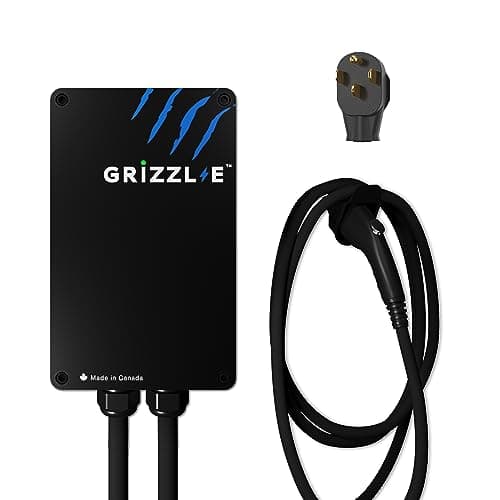
The Grizzl-E Classic is the charger to buy if you want a charger and nothing else. It is a cast-aluminum, UL-certified box that delivers 40 amps with no mandatory app, no Wi-Fi and nothing in the cloud to fail. It works the day it arrives and keeps working long after the smart units have outlived their app support.
In our best Level 2 chargers roundup the Grizzl-E is the runner-up and the pick for the no-app buyer. This is the closer look. We compile published specs and owner reports and do the math - we have not bench-tested the unit - so treat this as documented research on a charger with a strong reputation for durability.
Who it is for
This is the charger for the buyer who is suspicious of software, which is a reasonable thing to be: a smart charger is only as reliable as the company behind its app, while a dumb charger is reliable as long as the electricity flows. If you charge one car on a flat electricity rate and do not need scheduling or energy tracking, you are the target buyer and will likely never wish you had spent more on features. If you want load sharing or off-peak automation, look at the Emporia instead.
The specs that matter
Grizzl-E rates the Classic at 40 amps / 9.6 kW, with a J1772 connector, a NEMA 14-50 plug, and UL certification. Two specs define it:
- Cast-aluminum enclosure, UL certified. Rated for indoor and outdoor use and genuinely rugged - the kind of build that shrugs off a carport winter. Not every budget charger on Amazon can claim a UL listing, and on a device pushing 40 amps unattended for hours, that listing is the spec we would not skip.
- 40 amps on a 50-amp breaker. As a plug-in unit it tops out at 40 amps, which needs a 50-amp circuit under the continuous-load rule and typically 6 AWG copper. There is no 48-amp option, and for most daily driving that is completely fine. The sizing detail is in our amperage guide.
What is good
The Grizzl-E's whole case is longevity and simplicity, and it makes it well. The cast-aluminum enclosure is built to outlast plastic-bodied rivals, the UL certification is real reassurance on a high-current device, and the absence of an app means nothing to update, no cloud support to lose, and nothing to troubleshoot on a bad-Wi-Fi day. You plug in and it charges. For a lot of owners that is exactly the relationship they want with a piece of garage infrastructure.
Where it falls short
The trade-offs are deliberate. There is no smart scheduling or energy monitoring, so off-peak automation and two-car load sharing are off the table - look at a smart unit for those. And the stock cable is stiff in cold weather, a recurring owner note; in a cold climate you will wrestle it a little on the worst mornings. Neither is a defect so much as the cost of a rugged, no-frills design, but both are worth knowing.
Installation notes
As a plug-in unit, the Grizzl-E wants a properly rated NEMA 14-50 outlet on a 50-amp circuit. If that outlet exists, installation is simple; if not, adding one is a job for a licensed electrician who can confirm your panel has the capacity. Do not pair it with a bargain receptacle - a continuous 40-amp draw is exactly what makes a cheap outlet overheat, so buy an industrial-grade, listed 14-50 outlet.
Classic vs Smart: the one decision that actually matters
This is the question most Grizzl-E shoppers arrive with, and United Chargers' own FAQ answers it more plainly than the marketing does: the Smart is the Classic with a Wi-Fi module. Same 40-amp ceiling, same 16 / 24 / 32 / 40-amp settings, same air-tight UL Type 4 cast-aluminum enclosure, same UL and cUL certification under file E510712. What the Wi-Fi buys you is the Grizzl-E Connect app: charge scheduling, live monitoring and energy statistics. What it costs you is a network dependency on a charger whose entire appeal is not having one.
So the honest way to decide is to ask what the app would actually do for you. On a flat electricity rate, with one car, plugged in every night - close to nothing, and the Classic is the better buy. On a time-of-use rate, the scheduling moves your charging to the cheap overnight window automatically, and over a few years that is real money; see our off-peak charging guide for the arithmetic on your own tariff. That is the whole trade. It is not a hardware quality question, because the hardware is the same.
The rest of the Grizzl-E lineup
- Classic - 40 amps, J1772, NEMA 14-50 plug, no app. The unit reviewed above. The Avalanche and Extreme editions are the same charger in a different colour; United Chargers says so directly.
- Smart - the Classic plus the Wi-Fi module and the Grizzl-E Connect app. Still 40 amps. Amazon stock on this specific SKU comes and goes, which is why the connected Grizzl-E we rank below is the Duo Connect rather than the Smart.
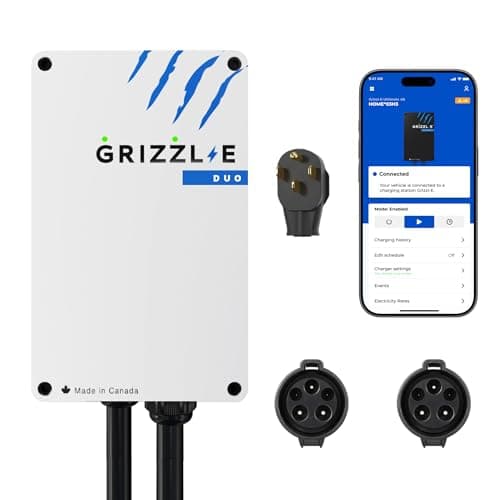
- Duo Connect - two J1772 cables from one unit, sharing the circuit between two cars, with Wi-Fi and the Connect app for scheduling and priority. The right answer for a two-EV garage that is not going to run a second line. Note that Grizzl-E charges a one-time activation fee for the advanced OCPP integration.
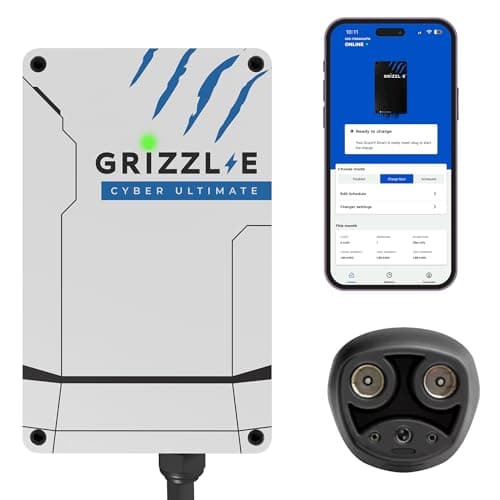
- Ultimate - the step up in electronics rather than in build: 48 amps (adjustable 16-48), hardwire-only, Wi-Fi included. Our Grizzl-E Ultimate review covers it in full, and Classic vs Ultimate settles the speed question.
- Ultimate 80A - the same box rated to 80 amps / 19.2 kW on a 100-amp circuit, with published amperage steps for every smaller breaker. Almost no car can draw all of it; buy it for the flexibility, not the headline.
- Mini - the plug-in-only portable, 40 amps. Not stocked in our catalogue, so we do not rank it here.
Bottom line
The Grizzl-E Classic is the anti-gadget charger, and that is a compliment. It gives up smart features on purpose and spends the budget on a build that will still be charging your car after several app redesigns have come and gone. If you want the smart features too, the answer inside this brand is the Smart or the Duo Connect rather than a different manufacturer - and if you want them cheaper, put it next to our top pick in the ChargePoint vs Grizzl-E comparison, or read the Emporia review. If you just want a charger, buy this one and forget about it.
The Grizzl-E lineup, side by side
Every figure below is United Chargers' own published specification, compiled from the Grizzl-E FAQ and the model pages cited in Sources. The price tier is our own banding of where each model sits against the rest of the category, not a quoted price - live prices render in the picks above and nowhere else.
| Model | Amps / kW | Plug or hardwired | Cable | Smart / Wi-Fi | Safety listing | Price tier |
|---|
| Grizzl-E Classic | 40A / 9.6 kW (16/24/32/40A) | NEMA 14-50 plug | 24 ft | None - no app, no network | UL and cUL, UL Type 4 cast aluminum | Value |
| Grizzl-E Smart | 40A / 9.6 kW (16/24/32/40A) | Plug or hardwired (Classic Connect) | 24 ft | Wi-Fi module, Grizzl-E Connect app | UL and cUL, UL Type 4 cast aluminum | Value plus |
| Grizzl-E Duo Connect | Up to 40A / 9.6 kW shared between two cars | NEMA 14-50 plug or hardwired | Two 25 ft cables | Wi-Fi, scheduling, priority, paid OCPP unlock | UL and cUL, UL Type 4 cast aluminum | Premium |
| Grizzl-E Ultimate 48A | 16-48A / up to 11.5 kW | Hardwired only | 25 ft | Wi-Fi, Ultimate load balancing | UL certified, IP67 / NEMA 4X cast aluminum | Premium |
| Grizzl-E Ultimate 80A (NACS) | 16-80A / up to 19.2 kW | Hardwired only, 100A circuit for 80A | 25 ft | Wi-Fi with external antenna, load balancing | UL certified, UL Type 4 metal enclosure | Premium |
How to pick the right Grizzl-E
Level 1 versus Level 2
Level 1 is the 120-volt cord in the trunk: about 12 amps, roughly 5 miles of range an hour per the US Department of Energy. Level 2 is 240 volts and, per the same source, spans about 2.9 to 19.2 kW. Every Grizzl-E is Level 2. If your commute is short and the car sits for 12 hours a night, Level 1 is genuinely adequate; the reason to buy any of these boxes is that it stops being adequate the moment you drive a normal day.
Amps to kW, and the breaker behind them
Amps x 240 volts / 1000 = kW. A 40-amp Grizzl-E delivers 9.6 kW; the 48-amp Ultimate delivers 11.5 kW; the 80-amp Ultimate delivers 19.2 kW. Because EV charging is a continuous load, the circuit is sized to 125 percent of the draw - so 40 amps needs a 50-amp breaker, 48 needs 60, and 80 needs 100. That last one is a serious electrical job and the reason the 80-amp unit is a specialist purchase rather than an upgrade. Our amperage guide walks the sizing.
NACS or J1772
The Classic, Smart and Duo we rank here are J1772 - the port on nearly every EV built before 2025. The buyable 80-amp Ultimate is NACS (SAE J3400), the Tesla-style connector that Ford, GM, Hyundai, Kia, Rivian and others have adopted on newer cars. Mixing the two works with an adapter in either direction, but the charger you use nightly is the wrong place to add one. Buy the connector your car has; our J1772 vs NACS guide covers which cars are which.
Hardwired or plug-in
The Classic and Duo Connect are plug-in on a NEMA 14-50; the Ultimate is hardwire-only. Plug-in means you can unplug it and take it with you, which matters if you rent - and it means the receptacle is now a part in the current path. On a continuous 40-amp draw a bargain receptacle is the thing that overheats, so if you go plug-in, spend the extra on an industrial-grade, listed NEMA 14-50 outlet. Hardwiring removes that part entirely, which is why every 48-amp-and-up unit in this lineup is hardwired.
Load management for two cars
Grizzl-E's answer to a second EV is hardware rather than software: the Duo Connect splits one circuit between two cables, and the Ultimate line supports load balancing across multiple chargers with equal-share or priority modes. Both keep you off the panel-upgrade path. The trade is honest and worth saying out loud - plug in the second car and the first one slows down, because the circuit's amperage is a fixed pie. See our load-balancing picks and two chargers in one garage.