HUB 01
Home EV Chargers
240-volt Level 2 charging that adds real range overnight — ranked on the specs that matter, priced live, and honest about which features you can skip.
We earn a commission when you buy through our Amazon links, at no extra cost to you. It never affects our rankings, and we say so when the cheaper product is the better buy. How this works.
A Level 2 home charger runs on a 240-volt circuit and adds roughly 25 miles of range per hour - about five times what a standard wall outlet manages, and up to 40 miles per hour on the fastest units. For anyone who drives daily it is the upgrade that turns charging from a chore into something that happens while you sleep. The hard part is not whether to buy one; it is cutting through a category full of amperage numbers and app features to the unit that actually fits your house.
What to buy first
For most people the answer is the Emporia Level 2: it is 48-amp capable when hardwired, has genuine energy monitoring and scheduling, and undercuts the established brands on price. If you would rather own a sealed box with no app to manage, the Grizzl-E Classic is the rugged, no-nonsense pick. Our full ranking, with live prices, is the best Level 2 chargers roundup; if budget or smart features are your priority, jump to best budget chargers or best smart chargers.
How the category divides
The meaningful splits are only three, and none of them is the brand:
- Amperage. The number sets the speed and the circuit it needs. We rank the field by power: 48-amp (11.5 kW, the fastest, needs a 60-amp circuit and a hardwire), 40-amp (9.6 kW, the sweet spot for most, a 50-amp circuit you can plug into), 32-amp (7.7 kW on a 40-amp circuit, often no panel upgrade), and 16-amp (3.8 kW on a small 20-amp circuit, for renters and travel). Below all of them sits Level 1 (an ordinary 110-120V outlet, ~3-5 miles of range per hour, no electrician at all) - enough for a plug-in hybrid or a short commute. Buy the amperage your panel and car can actually use. If you would rather see the whole field as one kilowatt ladder, our fastest home chargers by kW ranking runs from 12 kW down to 9.6 kW and explains the three ceilings - breaker, connector and car - that decide which of those numbers you will ever see. Above all of it sits one rarely useful tier: the 80-amp chargers at 19.2 kW, which need a 100-amp circuit and a car that can accept the current - a short list that does not include most EVs on sale.
- Plug-in vs hardwired. A plug-in charger uses a NEMA 14-50 outlet and is capped at 40 amps; a hardwired unit is a permanent fixture that can run at 48. Renters and movers want plug-in; a clean, fast, permanent install wants hardwired. If the only 240-volt outlet you have is a 4-prong dryer receptacle, our best chargers for a NEMA 14-30 dryer outlet ranks the units built for its 24-amp limit.
- Smart vs simple. Scheduling and energy monitoring earn their keep on a time-of-use electricity plan. If you just want a full battery each morning on a flat rate, a simple charger is cheaper and has less to go wrong.
Shopping by your car
The charger is the same J1772 field for almost every EV - what changes by brand is the plug (NACS or J1772) and the rate your car's onboard AC charger accepts, which caps your real speed. We sort it out per brand: Tesla (NACS, but it ships with a J1772 adapter), Rivian (takes the full 48 amps), Ford Mach-E and F-150 Lightning (and the Lightning's 80-amp asterisk), Chevy Bolt, Equinox EV and Blazer EV, and Hyundai Ioniq and Kia EV6 (800-volt fast chargers that still cap near 48 amps at home). We also sort it out for Nissan Leaf and Ariya (a lower onboard-charger ceiling most units easily clear), the VW ID.4, BMW i4 and iX (11 kW onboard, so they can use a full 48-amp charger), and the Toyota bZ, RAV4 Plug-in Hybrid and Prius Plug-in Hybrid (a lineup split between 7 kW and 11 kW cars, so the right amperage depends on the grade). And if your car left the factory with a NACS port - every Tesla, plus a growing list of 2025 and 2026 models - the best NACS home chargers ranks the wall units with that plug built in, so there is no adapter in the way.
Two vehicle classes break the normal advice in opposite directions, so each has its own ranking. A plug-in hybrid has a small onboard charger - the biggest mainstream PHEV is published at about 7 kW - which makes 32 amps the ceiling worth paying for and 48 amps money the car cannot use, so the best chargers for a plug-in hybrid is written around buying less charger, Level 1 included. An electric pickup is the reverse: a 130-to-200 kWh pack is the one case where the wall unit can genuinely be the bottleneck, so the best chargers for an electric truck sorts out which trims can really use 80 amps, and the cable length a 19-foot vehicle needs.
Shopping by your situation
Some homes have a constraint that decides the charger more than the car does. If you rent or live in an apartment, you want a portable or plug-in unit that installs without an electrician and moves with you. If your panel is tight, a charger with load balancing or power sharing can add a fast charger - or a second one - without a service upgrade. Two EVs? A dual-port charger splits one circuit between both cars - though if what you actually have is two BAYS and one EV, the best chargers for a two-car garage treats it as the geometry problem it is: where the box mounts, and whether the cable reaches whichever bay you park in. Short on wall space rather than panel capacity? The best compact chargers are ranked on published enclosure dimensions - and the shallowest unit is not the one you would guess. And in a hard winter, the best cold-weather chargers are chosen for a cable that stays flexible in the freeze, not just a low temperature rating. Solar on the roof? Only a couple of chargers can actually follow your production - the solar-compatible chargers ranking says which, and why the rest are a schedule rather than a system.
Shopping by the one feature you care about
The smart charger roundup ranks Wi-Fi units on everything they do at once. If you already know which single feature you are buying, three pages go deep on one each. On a time-of-use rate, the chargers with scheduling move charging into the cheap window on their own - including two that do it with an on-box timer and no Wi-Fi at all. If you want to know what the car really costs to run, the chargers with energy monitoring are ranked on the quality of their metering, and on what that number can and cannot honestly tell you. And because a charger runs a 40-amp continuous load unattended for hours, the UL-listed and safety-certified ranking covers what UL 2594 and UL 2231 actually mean, why an ETL mark is equally valid, and how to verify a certification claim rather than believe a bullet point.
What decides the price
You are paying for three things: amperage headroom, smart features, and brand maturity. A well-certified 40-amp smart charger from a newer brand can cost less than half of an established-brand equivalent and do the same job. Where the money is genuinely worth it is a long, flexible cable, a real weatherproof rating (look for UL or ETL and an outdoor NEMA rating - our best outdoor chargers ranking explains why NEMA 4 beats NEMA 3R on an exposed wall), and - if you have two EVs - proper load sharing. If price is the filter, our best EV chargers under $500 covers the band where the fully certified units live, and the best long-cable chargers rank the 25-foot units that reach across a two-car garage. If you want a unit you can unplug and take with you, the best plug-in chargers stay on a NEMA 14-50 outlet; if your panel is tight, the best adjustable chargers dial down to whatever your service can spare. Weighing a permanent wall unit against a take-anywhere portable? See Emporia vs EVDANCE.
The mistake buyers make
Buying more amps than the house or the car can use. The amperage you can actually pull is set by your electrical panel and your car's onboard charger, not by the number on the box. A 48-amp charger needs a 60-amp circuit, and many panels do not have that capacity spare; running a 48-amp unit on a smaller breaker just makes it a slower 40-amp unit you overpaid for. Work out what your panel and car can accept before you choose an amperage: our amperage and breaker guide shows the math, the installation guide covers what the job actually costs, and the cost-to-charge calculator shows what a charge will run you afterward.
New this month
Four situations this hub now answers directly. If the car is new and nobody has looked inside your panel yet, the best chargers for first-time EV owners ranks the field on how cheaply a wrong guess can be undone rather than on which spec sheet wins. If you want no app, no account and nothing in the cloud to fail, the best chargers without Wi-Fi covers the deliberately unconnected units and the two features you genuinely give up. If the driveway holds a Tesla and a J1772 car, the chargers for a mixed Tesla and J1772 household explain why one ordinary charger plus a listed adapter beats a special one. And in an older house, the best chargers for a 100-amp panel rank on how far each unit dials down, including the option that needs no new circuit at all.
Reviewed in full
Three units this hub ranks now have reviews of their own. The DEWALT Level 2 Compact is the shallowest wall box we track at 4.6 inches of projection, CSA certified with a free app and a 3-year warranty - and a 20-foot cable that is the one spec to measure against your garage before buying. The Grizzl-E Duo Connect puts two 25-foot cables on a single NEMA 14-50 plug so two EVs share one circuit with no second electrical job, at 40 amps to one car or 20 amps to each when both are plugged in. And the Grizzl-E Miniis the portable with a wall charger's build - an aluminum Type 4 case, a published UL file, a 25-foot cable and four plug adapters in the box - reviewed against the cheaper units that charge a car exactly as fast once the circuit, not the charger, is the limit.
Down to two chargers? Read the head-to-head
Most people arrive here with a shortlist of two, and a ranking across six units is the wrong tool for that. These pages put a single pair side by side on the specs that separate them - amperage, install type, cable, enclosure, app and price: Emporia vs EVIQO, EVIQO vs ChargePoint, EVIQO vs Wallbox, EVIQO vs Grizzl-E Ultimate, Wallbox vs Emporia, Wallbox vs ChargePoint, Wallbox vs Grizzl-E Ultimate, Wallbox vs Autel, Autel vs Emporia, Autel vs ChargePoint, EVDANCE vs MUSTART for the portables, and two Tesla-side pairings - Tesla Wall Connector vs ChargePoint and Wall Connector vs Universal Wall Connector.
Buying for a particular car, or a particular situation
The amp class you need is usually decided by the car's onboard charger rather than by your preferences, which is why the per-brand pages exist: Porsche, Mercedes EQ and Volvo and Polestar each work back from a published kW figure to an amperage and a circuit. Situation pages do the same for the house rather than the car: first-time EV owners ranks on how cheaply you can recover from guessing wrong, rentals and Airbnbs on covering a guest's car you have never seen, and warranty terms on who pays if the box fails in year three.
Start here
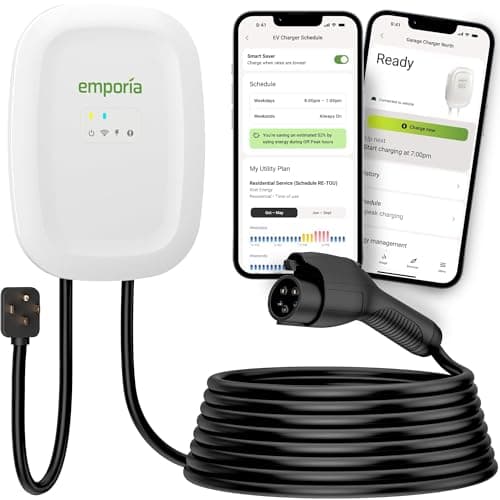
The Best Level 2 EV Chargers for Home, Ranked
The flagship roundup: six Level 2 home chargers ranked on amperage, smart features, cable and build, with the breaker math that sets your real speed.
Read the guide →
Everything in this hub
All of Home EV Chargers
Roundup
The Best Level 2 EV Chargers for Home, Ranked
The flagship roundup: six Level 2 home chargers ranked on amperage, smart features, cable and build, with the breaker math that sets your real speed.
Top pick: Emporia Level 2 (48A) · 6 ranked, 5 with live prices
Check price on Amazon →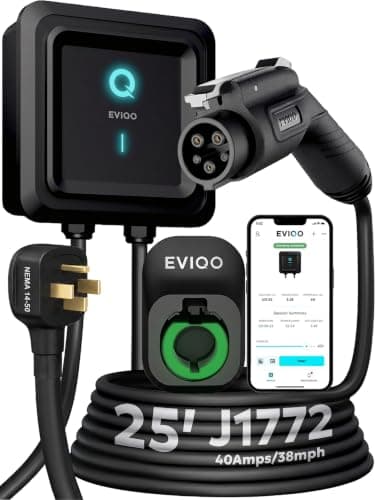
Roundup
The Best Budget EV Chargers for Home
Three inexpensive Level 2 chargers that keep the certification and the cable, ranked on where a low price is safe to pay - and where it is not.
Top pick: EVIQO Level 2 (40A) · 3 ranked, 3 with live prices
$449.99Amazon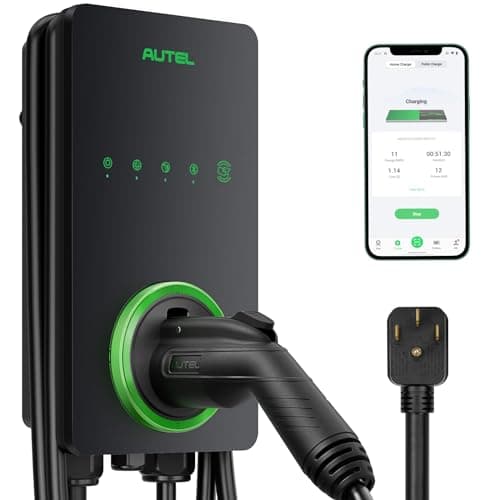
Roundup
The Best Smart EV Chargers for Home
Three Wi-Fi chargers ranked on the smart features that save real money on a time-of-use plan - scheduling, energy monitoring and load sharing.
Top pick: Autel MaxiCharger (40A) · 3 ranked, 2 with live prices
$375.99Amazon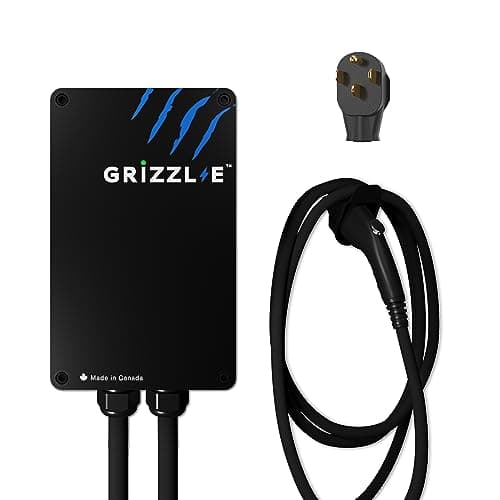
Roundup
The Best Outdoor EV Chargers for Home
Five weatherproof Level 2 chargers ranked for driveways, carports and exterior walls - by NEMA enclosure type, published temperature range and the outdoor wiring rules a plug-in install has to meet.
Top pick: Grizzl-E Classic (40A) · 5 ranked, 4 with live prices
$299.99AmazonRoundup
The Best 48-Amp Level 2 EV Chargers
The fastest home charging is 48 amps / 11.5 kW - which means a 60-amp circuit and a hardwire. Four true 48A chargers ranked on build, certification and value, with the wiring math and the car-acceptance catch.
Top pick: Emporia Level 2 (48A) · 4 ranked, 2 with live prices
Check price on Amazon →Roundup
The Best 40-Amp EV Chargers for Home
40 amps / 9.6 kW is the amperage most homes should buy - full daily speed on a 50-amp circuit, plug-in on a NEMA 14-50 outlet, no panel upgrade. Five true 40A chargers ranked on certification, cable and value.
Top pick: EVIQO Level 2 (40A) · 5 ranked, 4 with live prices
$449.99Amazon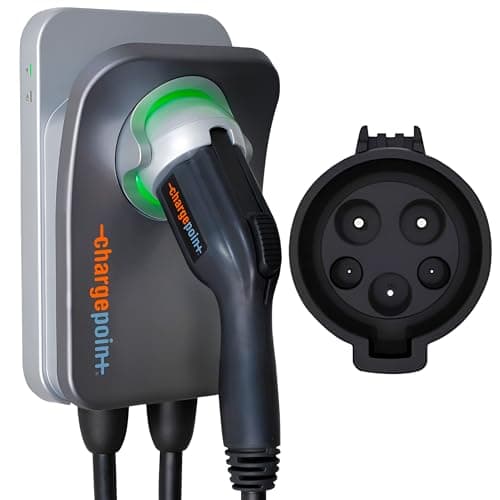
Roundup
The Best 32-Amp EV Chargers for Home
32 amps / 7.7 kW runs on a 40-amp circuit - often without a panel upgrade - and matches the onboard charger in many EVs. Five adjustable chargers you can set precisely to 32A, ranked on control, build and value.
Top pick: ChargePoint Home Flex · 5 ranked, 3 with live prices
$599.00Amazon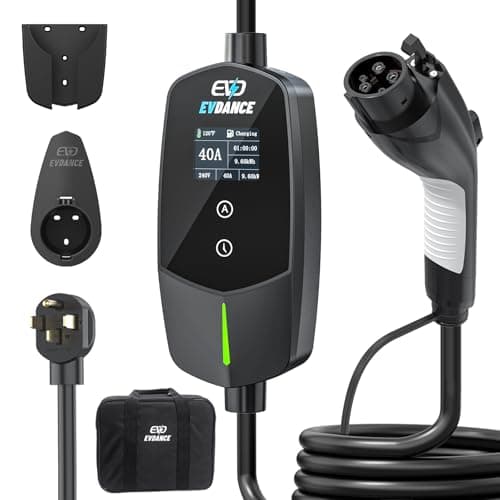
Roundup
The Best 16-Amp Level 2 EV Chargers
16 amps / 3.8 kW is Level-2 speed on a small 20-amp circuit - the answer for renters, tight panels and travel. Four portable and adjustable chargers you can run at 16A, ranked on flexibility and value.
Top pick: EVDANCE 40A Portable · 4 ranked, 3 with live prices
$176.98Amazon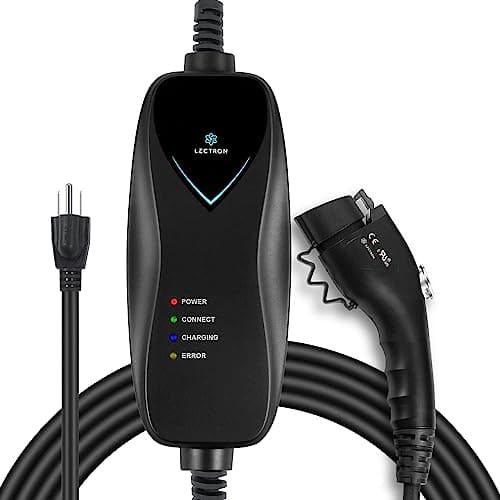
Roundup
The Best Level 1 (110V) EV Chargers
Level 1 charging from a standard 110-120V outlet: the certified cords worth buying, how slow it really is, and the driving patterns it genuinely covers.
Top pick: Lectron Level 1 (15A) · 5 ranked, 5 with live prices
$159.99Amazon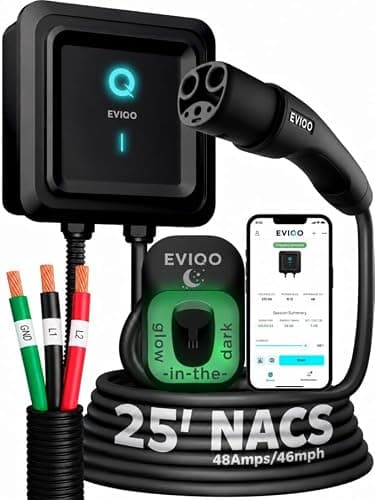
Roundup
The Best NACS Home EV Chargers
Home chargers with a native NACS (J3400) connector: the certified picks worth buying, how they compare to a J1772 charger plus an adapter, and what the plug does not change.
Top pick: EVIQO NACS (48A) · 5 ranked, 4 with live prices
$479.99AmazonRoundup
The Best NEMA 14-50 Plug-in EV Chargers
A NEMA 14-50 plug means no hardwiring - the charger plugs into a 240-volt outlet and can come with you when you move. Five plug-in Level 2 chargers ranked on certification, cable and value, with the outlet rule that keeps them safe.
Top pick: Emporia Level 2 (48A) · 5 ranked, 4 with live prices
Check price on Amazon →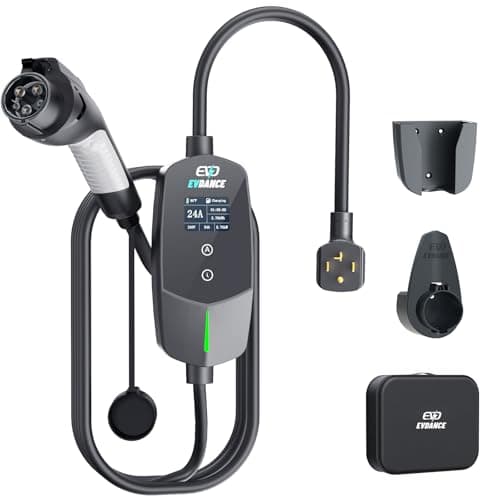
Roundup
The Best EV Chargers for a NEMA 14-30 Dryer Outlet
A NEMA 14-30 dryer outlet supports 24 amps of EV charging, not 40. Five chargers ranked for that outlet - on the 24-amp ceiling, the safety listing and the connector - with the outlet and dryer-sharing rules that keep it safe.
Top pick: EVDANCE 24A NEMA 14-30 (J1772) · 5 ranked, 5 with live prices
$269.99AmazonRoundup
The Best Hardwired EV Chargers for Home
Wiring a charger straight into the circuit is the cleaner, more secure install and the only way to reach 48 amps. Five hardwired-capable chargers ranked on build, certification and value - with the wiring, code and connector details a permanent install has to get right.
Top pick: Emporia Level 2 (48A) · 5 ranked, 2 with live prices
Check price on Amazon →Roundup
The Best Home EV Chargers for a Tesla
A Tesla charges from any J1772 Level 2 charger using the adapter in the trunk, or from a native NACS wall connector. Five picks ranked on speed, build and value - with the 48A-vs-32A onboard-charger catch that decides your amperage.
Top pick: Emporia Level 2 (48A) · 5 ranked, 2 with live prices
Check price on Amazon →Roundup
The Best Home EV Chargers for a Rivian
A Rivian R1T or R1S accepts up to 48 amps / 11.5 kW, so a full-speed charger is genuinely used. Five picks ranked on speed, build and value - plus whether your Rivian has a J1772 or a NACS port and which adapter that decides.
Top pick: Emporia Level 2 (48A) · 5 ranked, 3 with live prices
Check price on Amazon →Roundup
The Best Home EV Chargers for a Ford EV
The Mustang Mach-E and standard F-150 Lightning charge at up to 48 amps on any Level 2 charger; only the Extended-Range Lightning's 80-amp mode needs Ford's Charge Station Pro. Five picks ranked on speed, build and value.
Top pick: ChargePoint Home Flex · 5 ranked, 3 with live prices
$599.00AmazonRoundup
The Best Home EV Chargers for a Chevy EV
A Chevy Bolt, Equinox EV or Blazer EV accepts up to 11.5 kW / 48 amps, but a value 40-amp charger covers most owners overnight. Five picks ranked on value first, with the 48-amp step-up for Ultium SUVs that want their full rate.
Top pick: EVIQO Level 2 (40A) · 5 ranked, 4 with live prices
$449.99Amazon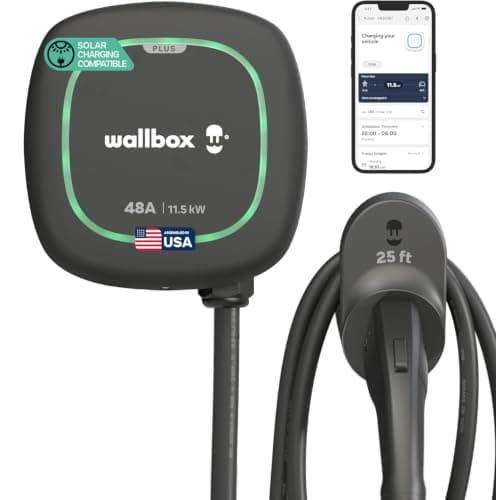
Roundup
The Best Home EV Chargers for a Hyundai or Kia EV
The Hyundai Ioniq 5/6 and Kia EV6 accept about 10.9-11.5 kW / 48 amps on Level 2 AC. Five picks ranked on speed, build and value - plus whether your car has a J1772 or a 2025+ NACS port and which adapter that decides.
Top pick: Wallbox Pulsar Plus (48A) · 5 ranked, 3 with live prices
$699.00AmazonRoundup
The Best Home EV Chargers for a Toyota
Five home chargers matched to Toyota's split lineup - 11 kW cars like the 2026 bZ and RAV4 Plug-in Hybrid XSE that can finally use a 48-amp unit, and 7 kW cars like the bZ4X and Prius Plug-in Hybrid that cannot.
Top pick: Emporia Level 2 (48A) · 5 ranked, 4 with live prices
Check price on Amazon →Roundup
The Best EV Chargers for Apartments and Renters
Portable and plug-in Level 2 chargers for renters and apartment dwellers - no hardwiring, no landlord remodel, and they come with you when you move. Ranked on portability, the outlet they need and value.
Top pick: EVDANCE 40A Portable · 5 ranked, 3 with live prices
$176.98AmazonRoundup
The Best EV Chargers with Load Balancing and Power Sharing
Chargers that manage power so you can skip a panel upgrade - dynamic load balancing that throttles to your home's spare capacity, and power sharing that splits one circuit between two units. Ranked on how the load management works, with live prices.
Top pick: Wallbox Pulsar Plus (48A) · 5 ranked, 3 with live prices
$699.00Amazon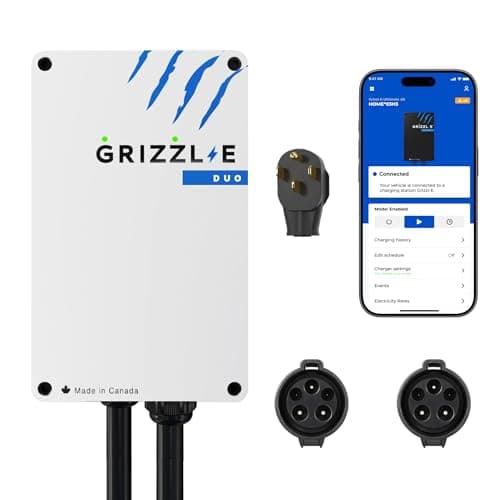
Roundup
The Best Dual-Port EV Chargers for Two Cars
Two EVs on one circuit - a single dual-cable charger like the Grizzl-E Duo, or two units on power sharing. Ranked on how they split the current and the second line they save you, with live prices.
Top pick: Grizzl-E Duo (dual 40A) · 5 ranked, 3 with live prices
$899.99AmazonRoundup
The Best EV Chargers for Cold Weather
For northern winters: chargers ranked on published low-temperature range and - the spec that actually decides it - how flexible the cable stays in a hard freeze. Live prices, honest cable caveats.
Top pick: ChargePoint Home Flex · 5 ranked, 4 with live prices
$599.00AmazonReview
Emporia Level 2 EV Charger Review
Our top overall pick: 48-amp capable when hardwired, with genuine energy monitoring and scheduling at the price of a plain plug-in charger - plus the J1772-versus-NACS fork in Emporia's lineup.
Top pick: Emporia Level 2 (48A) · 2 ranked, 0 with live prices
Check price on Amazon →Review
Grizzl-E Classic Review
The no-app durability pick: a UL-certified, cast-aluminum charger with no Wi-Fi to fail, rated for indoor and outdoor use - plus the Classic-versus-Smart decision in the rest of the lineup.
Top pick: Grizzl-E Classic (40A) · 3 ranked, 3 with live prices
$299.99AmazonReview
ChargePoint Home Flex Review
The established-brand pick: amperage adjustable up to 50A in the app, tied into the largest public charging network app in North America - in hardwired, 14-50 and 6-50 versions, J1772 or NACS.
Top pick: ChargePoint Home Flex · 2 ranked, 2 with live prices
$599.00AmazonHead to head
ChargePoint Home Flex vs Grizzl-E Classic
Polished brand and one app versus a sealed, durable, no-app box: the two answer different questions, and this settles which fits you.
Top pick: Grizzl-E Classic (40A) · 2 ranked, 2 with live prices
$299.99AmazonHead to head
Tesla Wall Connector vs ChargePoint Home Flex
Native NACS and the Tesla app versus an adjustable J1772 charger that works with any EV: which home unit wins comes down to whether you drive a Tesla.
Top pick: ChargePoint Home Flex · 2 ranked, 1 with live prices
$599.00AmazonHead to head
Grizzl-E Classic vs Emporia Level 2
A rugged, no-app box versus a fast, genuinely smart unit priced like a plain charger: this settles which of the two fits how you actually charge.
Top pick: Emporia Level 2 (48A) · 2 ranked, 1 with live prices
Check price on Amazon →Head to head
ChargePoint Home Flex vs Emporia Level 2
Brand maturity and a public-charging app versus near-identical smarts for meaningfully less: which of these two smart chargers earns your money.
Top pick: Emporia Level 2 (48A) · 2 ranked, 1 with live prices
Check price on Amazon →Head to head
JuiceBox 40 vs Wallbox Pulsar Plus
One of these lost its app and cloud when Enel X Way left North America; the other is a supported 48-amp charger. This is the honest comparison.
Top pick: Wallbox Pulsar Plus (48A) · 2 ranked, 1 with live prices
$699.00AmazonHead to head
Autel MaxiCharger vs Tesla Universal Wall Connector
Every feature in a standard J1772 box versus a dual-connector unit that charges Tesla and non-Tesla alike: which wins depends on what you park.
Top pick: Autel MaxiCharger (40A) · 2 ranked, 1 with live prices
$375.99AmazonReview
Wallbox Pulsar Plus Review
The most compact 48-amp charger, with power sharing that lets two Pulsar Plus units split one circuit - plus the 40A plug-in version for anyone who might move.
Top pick: Wallbox Pulsar Plus (48A) · 2 ranked, 2 with live prices
$699.00AmazonReview
Autel MaxiCharger Review
A rugged, weather-sealed 40-amp plug-in charger with a strong app - plus where the 50-amp AC Lite and the 80-amp MaxiCharger fit if your panel has the room.
Top pick: Autel MaxiCharger (40A) · 2 ranked, 2 with live prices
$375.99AmazonHead to head
Emporia Level 2 vs Tesla Wall Connector
The value J1772 smart charger versus Tesla's own 48-amp NACS unit: which fits comes down to what you drive now and next, plus speed, smarts and price.
Top pick: Emporia Level 2 (48A) · 2 ranked, 0 with live prices
Check price on Amazon →Head to head
Autel MaxiCharger vs Emporia Level 2
The everything-included 40-amp Autel versus the 48-amp value Emporia: which wins comes down to whether you want top speed and price, or breadth and a tidy install.
Top pick: Emporia Level 2 (48A) · 2 ranked, 1 with live prices
Check price on Amazon →Head to head
Wallbox Pulsar Plus vs ChargePoint Home Flex
A compact full-speed hardwired unit versus a mature, network-connected all-rounder: which wins turns on whether you value size and speed or the app and support.
Top pick: Wallbox Pulsar Plus (48A) · 2 ranked, 2 with live prices
$699.00AmazonHead to head
Grizzl-E Ultimate vs Emporia Level 2 (48A)
Both hit the full 48 amps; the Grizzl-E Ultimate wins on enclosure toughness, the Emporia on smarts and price - this settles which matters more for you.
Top pick: Emporia Level 2 (48A) · 2 ranked, 0 with live prices
Check price on Amazon →Head to head
Emporia Level 2 vs EVIQO
Two value picks head to head: the 48-amp, app-equipped Emporia against the rock-bottom-priced 40-amp EVIQO, compared on the four things that decide it.
Top pick: Emporia Level 2 (48A) · 2 ranked, 1 with live prices
Check price on Amazon →Head to head
Wallbox Pulsar Plus vs Emporia Level 2
Premium vs value: the small, design-led Wallbox Pulsar Plus against the cheaper, equally fast Emporia, compared on the four things that decide it.
Top pick: Emporia Level 2 (48A) · 2 ranked, 1 with live prices
Check price on Amazon →Head to head
EVIQO vs ChargePoint Home Flex
Budget vs establishment: the low-cost 40-amp EVIQO against the flexible, well-supported ChargePoint Home Flex, compared on the four things that decide it.
Top pick: ChargePoint Home Flex · 2 ranked, 2 with live prices
$599.00Amazon
Head to head
Grizzl-E Ultimate vs ChargePoint Home Flex
Rugged vs flexible: the IP67 hardwired Grizzl-E Ultimate against the selectable, network-linked ChargePoint Home Flex, compared on the four things that decide it.
Top pick: Grizzl-E Ultimate (48A) · 2 ranked, 1 with live prices
Check price on Amazon →Roundup
The Best EV Chargers Under $500
Five Level 2 chargers under $500 - two wall units and two portables plus a 48A step-up - ranked on certification, usable amperage and cable, with the breaker math that sets real speed.
Top pick: EVIQO Level 2 (40A) · 5 ranked, 2 with live prices
$449.99AmazonRoundup
The Best EV Chargers With Long Cables (25 ft)
Home chargers with a documented 25-foot cable, ranked on reach plus speed, build and value - so the plug meets your port however you park, with no extension cord.
Top pick: Emporia Level 2 (48A) · 6 ranked, 4 with live prices
Check price on Amazon →Head to head
EVIQO Level 2 vs Grizzl-E Ultimate
A budget 40A plug-in with double safety listings and an app, versus a cast-aluminum 48A hardwired fixture built to outlast the weather - which one fits your driveway.
Top pick: EVIQO Level 2 (40A) · 2 ranked, 1 with live prices
$449.99AmazonHead to head
Wallbox Pulsar Plus vs Grizzl-E Ultimate
Same 48-amp speed, opposite priorities: a tiny wall box with Power Sharing load management versus a weatherproof cast-aluminum brick built for the elements.
Top pick: Wallbox Pulsar Plus (48A) · 2 ranked, 1 with live prices
$699.00AmazonHead to head
EVIQO Level 2 vs Wallbox Pulsar Plus
A budget plug-in you can install yourself against the smallest, fastest hardwired box with load management: which wins comes down to whether you can even use 48 amps.
Top pick: EVIQO Level 2 (40A) · 2 ranked, 2 with live prices
$449.99AmazonHead to head
EVDANCE vs MUSTART: 40-Amp Portable Chargers
Two portable Level 2 chargers that plug into a NEMA 14-50 and travel: the longer-cabled EVDANCE with an off-peak delay timer against the cheapest-capable MUSTART with an LCD.
Top pick: EVDANCE 40A Portable · 2 ranked, 1 with live prices
$176.98AmazonRoundup
The Best Plug-In EV Chargers
Five plug-in Level 2 chargers - three wall units on a NEMA 14-50 plus two portables - ranked on certification, cable and value, with the 40-amp ceiling and the plug-in-vs-hardwired call spelled out.
Top pick: EVIQO Level 2 (40A) · 5 ranked, 3 with live prices
$449.99AmazonRoundup
The Best Adjustable EV Chargers
Four adjustable-amperage Level 2 chargers - ChargePoint to 50A, Emporia 6-48A, Grizzl-E Ultimate 16-48A, EVIQO 6-40A - ranked on range, certification and value, with the dial-down math for a tight panel.
Top pick: ChargePoint Home Flex · 4 ranked, 2 with live prices
$599.00AmazonRoundup
The Best EV Chargers for a Nissan
Four home chargers matched to the Nissan Leaf and Ariya - all J1772, all 40-amp capable - ranked on certified value, because a Nissan's onboard charger cannot use more than a 40-amp unit already gives it.
Top pick: EVIQO Level 2 (40A) · 4 ranked, 2 with live prices
$449.99AmazonRoundup
The Best EV Chargers for a Volkswagen
Four home chargers matched to the Volkswagen ID.4 - all J1772, three of them 48-amp capable - ranked on value and speed, because a recent ID.4's ~11 kW onboard charger can actually use the extra amps.
Top pick: Emporia Level 2 (48A) · 4 ranked, 2 with live prices
Check price on Amazon →Roundup
The Best EV Chargers for a BMW
Four home chargers matched to the BMW i4 and iX - all J1772, three of them 48-amp capable plus a compact Wallbox - ranked on value, speed and build, because BMW's 11 kW onboard charger uses the full amps.
Top pick: Emporia Level 2 (48A) · 4 ranked, 2 with live prices
Check price on Amazon →Head to head
Emporia Level 2 vs EVDANCE 40A Portable
A permanent, monitored 48-amp-capable smart charger versus a 40-amp portable with an off-peak delay timer you can pack in the trunk - which one fits how you actually charge.
Top pick: Emporia Level 2 (48A) · 2 ranked, 1 with live prices
Check price on Amazon →
Head to head
Grizzl-E Classic vs Grizzl-E Ultimate
The two Grizzl-E chargers compared - the value 40A plug-in Classic against the full-speed 48A hardwired Ultimate with an IP67 shell and adjustable 16-48A output. Which one your circuit and install call for.
Top pick: Grizzl-E Ultimate (48A) · 2 ranked, 1 with live prices
Check price on Amazon →Head to head
Tesla Wall Connector vs Tesla Universal Wall Connector
Tesla's two home chargers compared - the native-NACS Wall Connector (Tesla-only, cheaper) against the Universal Wall Connector with a built-in J1772 adapter that charges both NACS and J1772 cars. Which your driveway needs.
Top pick: Tesla Universal Wall Connector · 2 ranked, 0 with live prices
Check price on Amazon →Head to head
Autel MaxiCharger vs ChargePoint Home Flex
The Autel MaxiCharger against the ChargePoint Home Flex - a feature-loaded 40A unit with Wi-Fi, Bluetooth and an included holster versus a 50A-capable charger wired into North America's biggest public-charging app.
Top pick: ChargePoint Home Flex · 2 ranked, 2 with live prices
$599.00AmazonHead to head
Wallbox Pulsar Plus vs Autel MaxiCharger
The Wallbox Pulsar Plus against the Autel MaxiCharger - a tiny 48A hardwired charger with power sharing versus a feature-loaded 40A unit with Wi-Fi, Bluetooth and an included holster. Speed and size versus features and value.
Top pick: Wallbox Pulsar Plus (48A) · 2 ranked, 2 with live prices
$699.00AmazonRoundup
The Fastest Home EV Chargers, Ranked by kW
Home chargers ranked by delivered kilowatts rather than by amp class - 12 kW to 9.6 kW - with the breaker, connector and onboard-charger ceilings that decide what you actually get.
Top pick: ChargePoint Home Flex · 6 ranked, 3 with live prices
$599.00AmazonRoundup
The Best EV Chargers With Energy Monitoring
Chargers ranked on the quality of their energy metering - per-session kWh, real cost, whole-home context - plus what a charger's meter can and cannot honestly tell you.
Top pick: Emporia Level 2 (48A) · 6 ranked, 4 with live prices
Check price on Amazon →Roundup
The Best EV Chargers With Scheduling and Time-of-Use Control
Chargers that start themselves in the cheap overnight window, ranked - app schedulers and on-box delay timers - plus the car-versus-charger schedule conflict that breaks most setups.
Top pick: Emporia Level 2 (48A) · 6 ranked, 5 with live prices
Check price on Amazon →Roundup
The Best Solar-Compatible EV Chargers
Chargers that can actually follow your solar production - automatic excess-solar modes, fine amperage control, midday schedules - ranked, with the net-metering math that decides whether it is worth it.
Top pick: Emporia Level 2 (48A) · 6 ranked, 4 with live prices
Check price on Amazon →Roundup
The Best UL-Listed and Safety-Certified EV Chargers
Chargers ranked on genuine third-party safety listings - UL 2594, UL 2231, ETL - with what each standard covers, how to verify a claim, and the marketing phrases that mean nothing.
Top pick: EVIQO Level 2 (40A) · 6 ranked, 5 with live prices
$449.99Amazon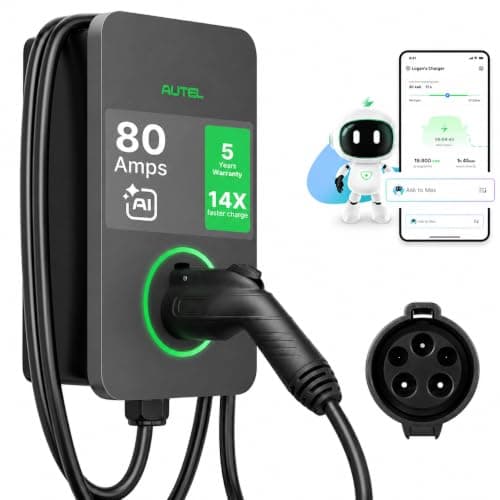
Roundup
The Best 80-Amp EV Chargers
80-amp / 19.2 kW chargers ranked, with the 100-amp circuit math, the naming trap where HCS-80 means a 64-amp output, and the honest list of cars that can actually draw it.
Top pick: Autel MaxiCharger 80A · 5 ranked, 4 with live prices
$908.65AmazonRoundup
The Best EV Chargers for Two-Car Garages
Chargers chosen for a two-bay garage - reach across both bays from one mounting point, mounting flexibility, and a path to a second car later. With the measuring method that decides which one you need.
Top pick: Emporia Level 2 (48A) · 6 ranked, 4 with live prices
Check price on Amazon →
Roundup
The Best Compact EV Chargers
The smallest Level 2 chargers, ranked on published enclosure dimensions - wall face, projection depth and weight - with the mounting-clearance rules that decide whether a small box actually fits.
Top pick: Wallbox Pulsar Plus (40A) · 6 ranked, 5 with live prices
$649.99AmazonRoundup
The Best EV Chargers for First-Time EV Owners
Five home chargers ranked for a first-time EV owner - judged on adjustable amperage, plug-in installs you can undo, real safety listings and no subscription, because the first charger is bought before you know what you need.
Top pick: Emporia Level 2 (48A) · 5 ranked, 4 with live prices
Check price on Amazon →Roundup
The Best EV Chargers Without Wi-Fi
Five home EV chargers that need no Wi-Fi, app or account - ranked on safety listing, enclosure and amperage adjustment, with the two features you genuinely give up and the one workaround for off-peak rates.
Top pick: Grizzl-E Classic (40A) · 5 ranked, 3 with live prices
$299.99AmazonRoundup
The Best Chargers for a Tesla and a Non-Tesla EV
How to charge a Tesla and a J1772 EV from one home charger: the J1772-charger-plus-adapter route ranked against the dual-connector Tesla unit and a dual-port charger, with live prices and the handshake facts that make the adapter route work.
Top pick: Emporia Level 2 (48A) · 5 ranked, 3 with live prices
Check price on Amazon →Roundup
The Best EV Chargers for a 100-Amp Panel
Five chargers for a 100-amp service, ranked on how far they dial down and which ones load-manage - plus the 24-amp dryer-outlet option that needs no new circuit, and the miles-per-hour each setting really delivers.
Top pick: ChargePoint Home Flex · 5 ranked, 4 with live prices
$599.00Amazon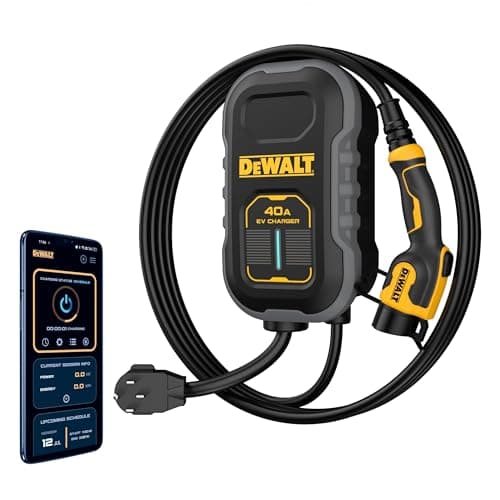
Review
DEWALT Level 2 Compact EV Charger Review
The DEWALT Level 2 Compact reviewed: a 4.6-inch-deep enclosure, CSA certification, Bluetooth and Wi-Fi with a free app, a 3-year warranty, and a 20-foot cable that is the real trade-off. J1772 40A and NACS 48A versions compared.
Top pick: DEWALT Level 2 Compact (40A) · 3 ranked, 3 with live prices
$499.97AmazonReview
Grizzl-E Duo Connect Review
The Grizzl-E Duo Connect reviewed: 40 amps total across two 25-foot cables, 20 amps each when both cars charge, one NEMA 14-50 plug, UL Type 4 metal enclosure, and the overnight math that decides whether the split matters.
Top pick: Grizzl-E Duo (dual 40A) · 3 ranked, 3 with live prices
$899.99AmazonRoundup
The Best Home EV Chargers for a Porsche
Four home chargers for a Taycan or Macan Electric, ranked against Porsche's own 11 kW onboard AC figure: the 48-amp units that deliver the car's full rate, and why the 800-volt road-trip headline changes nothing in the garage.
Top pick: Wallbox Pulsar Plus (48A) · 4 ranked, 2 with live prices
$699.00AmazonRoundup
The Best Home EV Chargers for a Mercedes EQ
Four home chargers for an EQB, EQE or EQS, ranked against the roughly 9.6 kW onboard AC rate Mercedes specs across its US range - which makes a 40-amp unit the exact match and a 48-amp unit money spent on amps the car declines.
Top pick: ChargePoint Home Flex · 4 ranked, 4 with live prices
$599.00AmazonRoundup
The Best Home EV Chargers for Volvo & Polestar
Four home chargers for a Volvo EX or XC, a C40 or a Polestar, ranked against the family's roughly 11 kW onboard AC rate - plus the Volvo-published fact that its NACS adapter is DC-only, so the home charger has to be J1772.
Top pick: Wallbox Pulsar Plus (48A) · 4 ranked, 2 with live prices
$699.00AmazonRoundup
The Best EV Chargers for a Rental or Airbnb
Five chargers for a short-term rental, an Airbnb or a house you rent out - ranked on the three things that only matter when a stranger is plugging in: covering both connector standards, working with no app and no setup, and telling you what the electricity cost.
Top pick: Grizzl-E Classic (40A) · 5 ranked, 3 with live prices
$299.99AmazonRoundup
The Best EV Charger Warranties, Compared
Home EV charger warranty terms compared from each manufacturer's own published page: the 3-year category floor, the 4- and 5-year outliers, and the terms that decide whether a claim is a replacement box or a service call.
Top pick: Grizzl-E Classic (40A) · 5 ranked, 4 with live prices
$299.99AmazonRoundup
Best EV Chargers for a Plug-In Hybrid
Six chargers ranked for a plug-in hybrid, where the car's small onboard charger caps the speed around 7 kW - so 32 amps is the ceiling worth paying for, Level 1 is often genuinely enough, and 48 amps buys nothing at all.
Top pick: Grizzl-E Classic (40A) · 6 ranked, 6 with live prices
$299.99AmazonRoundup
Best EV Chargers for Electric Trucks
Six chargers ranked for an electric pickup: the 48-amp units that match what nearly every truck accepts on AC, the two 80-amp units for the specific trims rated at 19.2 kW, and the cable-length and connector traps that come with a 19-foot vehicle.
Top pick: Wallbox Pulsar Plus (48A) · 6 ranked, 6 with live prices
$699.00Amazon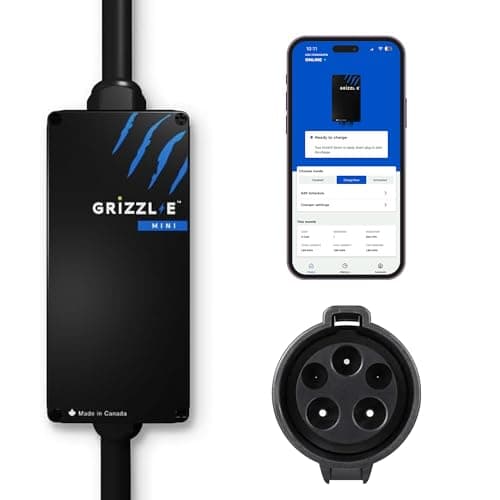
Review
Grizzl-E Mini Review
The Grizzl-E Mini reviewed: 7-40A adjustable, a 25 ft cable, a NEMA 14-50 plug plus four adapters, an aluminum Type 4 indoor/outdoor enclosure, UL file E510712, -22F to 122F and a 3- or 5-year warranty - weighed against cheaper units that charge a car just as fast.
Top pick: Grizzl-E Mini (40A Portable) · 3 ranked, 3 with live prices
$479.99AmazonRoundup
Best EV Chargers for a NEMA 6-50 Outlet
The chargers worth buying when the garage already has a NEMA 6-50 welder outlet: why the plug on the end is the only problem, the 10-gauge adapter that solves it, and the five units we would put on the other side of it.
Top pick: Grizzl-E Classic (40A) · 6 ranked, 5 with live prices
$299.99AmazonRoundup
Best Home Chargers for a Jeep 4xe
Home chargers ranked for the Jeep 4xe plug-in hybrids and the Wagoneer S, built around Jeep's own published 7.2 kW J1772 charge rate - which is why the expensive end of the market is wasted on a Wrangler.
Top pick: Grizzl-E Classic (40A) · 6 ranked, 5 with live prices
$299.99AmazonHead to head
Grizzl-E vs Tesla Wall Connector
The Grizzl-E against the Tesla Wall Connector: connector shape, the 48-amp install both need, warranty terms, what happens when the app company loses interest, and which one belongs in which driveway.
Top pick: Grizzl-E Ultimate (48A) · 4 ranked, 1 with live prices
Check price on Amazon →