HUB 02 · Cables & Adapters
J1772 vs NACS: The Two Home Charging Connectors
For Level 2 AC charging these two plugs deliver identical power at the same amperage - the shape is the only difference, and a small passive adapter bridges either way.
We earn a commission when you buy through our Amazon links, at no extra cost to you. It never affects our rankings, and we say so when the cheaper product is the better buy. How this works.
For home charging there are two connectors that matter: J1772, the long-standing North American AC plug on almost every non-Tesla EV, and NACS (standardized as SAE J3400), the Tesla-style plug now being adopted industry-wide as the emerging standard. Here is the reassuring part: for Level 2 AC charging the two deliver the same power at the same amperage. The plug shape is the only real difference, and a small passive adapter bridges either direction.
The two connectors, briefly
- J1772 is the standard AC connector fitted to nearly every non-Tesla EV sold in North America through 2024, and to the vast majority of home and public Level 2 chargers. If you have driven a non-Tesla EV, this round-shouldered plug is the one you have used.
- NACS (SAE J3400) is the connector Tesla developed, now standardized and adopted as the North American default. It is smaller than J1772 and, on the vehicle side, handles both AC and DC in one plug. Teslas use it, and a growing list of automakers are building NACS ports into 2025-and-newer models.
The key point: same power, different shape
This is the whole thing to understand, and it undoes most of the worry. For Level 2 AC home charging, J1772 and NACS carry the same alternating current at the same amperage. A 40-amp charge is 40 amps and a 48-amp charge is 48 amps whether the plug on the end of the cable is J1772 or NACS - the connector is just the physical interface, not a speed limit. Your real charging speed is set by your circuit and your car's onboard AC charger, exactly as it is covered in our hardwired vs plug-in guide, and it does not change with the plug shape. So a mismatch between your car and a charger is a shape problem, and a shape problem is solved by a small passive adapter that costs a fraction of the charger.
J1772 vs NACS at a glance
| J1772 | NACS (SAE J3400) | |
|---|---|---|
| Origin | The long-standing SAE J1772 AC standard | Tesla's connector, standardized as SAE J3400 |
| Cars that use it | Almost every non-Tesla EV through 2024 | Tesla, plus many 2025-and-newer EVs |
| Home-charger availability | The vast majority of home Level 2 chargers | Tesla wall units and a growing NACS-native selection |
| Level 2 AC power | Same amps, same kW as NACS | Same amps, same kW as J1772 |
| Adapter to bridge | NACS-to-J1772 to use a NACS charger | J1772-to-NACS to use a J1772 charger |
Which connector does your car have?
The rule of thumb covers almost everyone:
- A pre-2025 non-Tesla EV uses J1772. Nearly every non-Tesla built through 2024 has a J1772 charge port for AC charging.
- A Tesla, or many 2025-and-newer EVs, use NACS. Teslas have always used the NACS plug, and a growing list of automakers (including several that shipped J1772 cars for years) are switching new models to NACS ports.
If you are not sure, look at your charge port or your owner's manual - the two plugs look clearly different, with J1772 the larger round-shouldered connector and NACS the smaller, sleeker one. Our do-I-need-an-adapter walkthrough turns this into a two-step check.
What the transition means for you
NACS is on its way to becoming the default, and that shift is real - but it does not make your current equipment obsolete or force a rushed decision. Many automakers have committed to NACS for 2025-and-newer models and are supplying adapters to existing owners, so the two connectors will coexist for years. The installed base of J1772 home and public chargers is enormous and is not going anywhere. The practical upshot is reassuring: whichever port your next car has, a single inexpensive adapter lets it use the other kind of charger at the same speed, so you are never locked out of the network you have or the one that is coming. You do not need to predict the transition to buy the right charger today - you need to match your current car and keep the appropriate adapter on hand.
What it means for buying a home charger
Two clean paths. The simplest is to buy the charger that matches your car's port - a J1772 charger for a J1772 car, a NACS charger for a NACS car - and skip adapters entirely. Because the installed base of home chargers is overwhelmingly J1772, a J1772 car has the widest selection to choose from; a NACS car can pick a NACS-native unit or use an adapter.
The second path is to use a small passive adapter when the plug you have does not match the charger you want:
- A J1772 car using a NACS charger (say, a Tesla Wall Connector) needs a NACS-to-J1772 adapter - the Lectron is the common pick, rated for the full 48 amps.
- A Tesla or NACS car using a J1772 charger (most home and public Level 2 units) needs a J1772-to-NACS adapter - the LENZ is a UL-2251-certified example, and many Teslas shipped with one in the trunk.
Either adapter is inexpensive, passive, and carries the full charging current, so the spec to weigh above all is the safety listing - look for an explicit amperage rating and, ideally, a UL listing. Keep it clipped in the frunk or a door pocket so it is there when you need it.
Home AC and DC fast charging are separate topics. Everything above is about Level 2 AC charging at home. CCS, CHAdeMO and Tesla Supercharging are DC fast charging - a different, higher-power connection with its own hardware and its own adapters. A passive AC adapter does not unlock DC fast charging, and the connector landscape there works differently. The full map is in our connector types explainer.
The takeaway
J1772 and NACS are two shapes for the same job at home - same amps, same kilowatts, same overnight fill. Pre-2025 non-Teslas use J1772; Teslas and many newer EVs use NACS. Buy the charger that matches your port, or bridge a mismatch with a single listed adapter. If your driveway includes a Tesla, our best chargers for a Tesla page covers the NACS-native and dual-connector options in full.
The gear
Recommended gear for this guide
The products this guide refers to, with prices pulled live from Amazon and dated on each card.
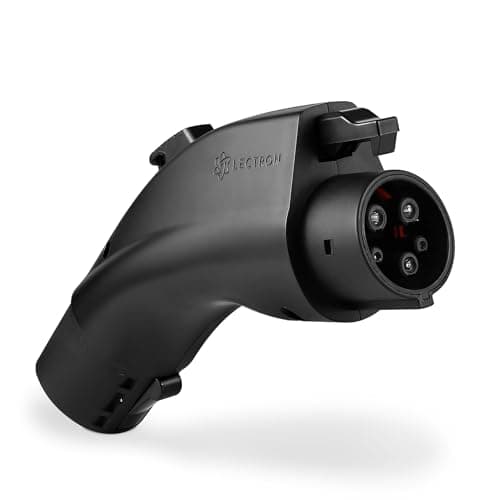
A J1772 car using NACS chargers
Lectron NACS → J1772 Adapter
The default adapter that lets a J1772 car draw from a Tesla-style (NACS) home or destination charger — rated for the full 48 amps.
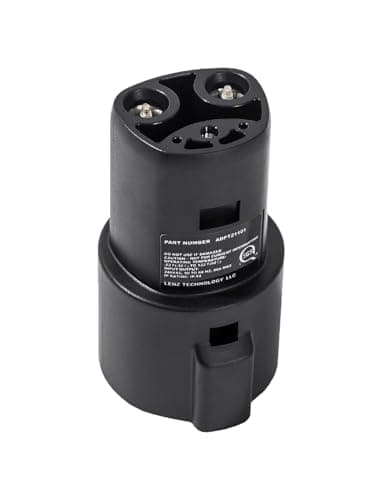
A Tesla / NACS car using J1772 chargers
LENZ J1772 → NACS Adapter
A UL-2251-certified J1772-to-NACS adapter — the one a Tesla or a 2026+ NACS-port EV needs to use the enormous installed base of J1772 chargers.
#ad · As an Amazon Associate we earn from qualifying purchases.
Questions
Frequently asked
Do J1772 and NACS charge at the same speed?
For Level 2 AC home charging, yes. Both carry the same alternating current at the same amperage, so a 40-amp or 48-amp charge is identical whichever plug is on the cable. Your actual speed is set by your circuit and your car's onboard charger, not by the connector shape. The difference between the two is purely physical.
Is NACS the same as Tesla's connector?
Effectively yes. NACS (North American Charging Standard) is the connector Tesla developed, now standardized as SAE J3400 and opened up as an industry standard. Tesla vehicles use it, and a growing number of other automakers are adding NACS ports to 2025-and-newer models. A small adapter bridges it to the enormous installed base of J1772 equipment.
Which connector will my new EV have?
It depends on the model year and brand. Almost every non-Tesla EV built through 2024 has a J1772 port, while Teslas and a growing list of 2025-and-newer vehicles ship with NACS. Check the spec sheet or the port itself - and remember that either way, a listed adapter lets your car use the other kind of home charger without any loss of speed.
Do I need an adapter to charge my EV at home?
Only if your car's port and your charger's plug do not match. A J1772 car with a J1772 charger, or a NACS car with a NACS charger, needs nothing. A J1772 car on a NACS charger needs a NACS-to-J1772 adapter; a NACS car on a J1772 charger needs a J1772-to-NACS adapter. Our adapter walkthrough confirms which, if any, you need.
Keep reading
Related
- EV connector types explainedThe full map - J1772, NACS, CCS and CHAdeMO, and the AC-vs-DC split.
- NACS-to-J1772 adaptersThe adapter a J1772 car needs to use a Tesla-style charger, ranked.
- J1772-to-NACS adaptersThe adapter a Tesla or NACS car needs to use the huge J1772 network.
- Do I need an adapter?A two-step check that tells you whether you need any adapter at all.
- Best chargers for a TeslaNACS-native and dual-connector home chargers for a Tesla driveway.
- Hardwired vs plug-inWhat actually sets your charging speed once the connector is sorted.
More in this section
More Cables & Adapters
Receipts
Sources
- US DOE AFDC - EV charging infrastructure & connectors
- US DOE AFDC - charging at home
- US DOE / fueleconomy.gov - EV charging basics
We do not run a testing lab, and we do not pretend to. Where a measured number came from someone else's lab, we name them and link them. Where we could not verify something, we say so on the page rather than quietly leaving it out. Read our full method.