HUB 03 · Charging Guides
NEMA 14-30 vs 14-50 for EV Charging
Two similar-looking 240-volt outlets, one big difference in charging speed - and a tempting shortcut with an existing dryer outlet that comes with real rules.
We earn a commission when you buy through our Amazon links, at no extra cost to you. It never affects our rankings, and we say so when the cheaper product is the better buy. How this works.
The NEMA 14-50 (a 50-amp outlet) and the NEMA 14-30 (a 30-amp dryer outlet) look almost identical, but they support different charging speeds and are not interchangeable. The 14-50 is the EV-charging default; the 14-30 is a tempting way to reuse an existing dryer circuit. Here is the real difference and how to use each safely.
The core difference: amperage
- NEMA 14-50 - a 50-amp, 240-volt outlet. Supports EV charging up to 40 amps (9.6 kW), the continuous-load maximum on a 50-amp circuit. This is the standard EV plug-in outlet.
- NEMA 14-30 - a 30-amp, 240-volt outlet (the classic dryer receptacle). Supports EV charging up to 24 amps (5.8 kW) - the 80 percent continuous limit of a 30-amp circuit.
So a 14-50 charges roughly 20 to 25 miles per hour and a 14-30 roughly 12 to 15. Both are true Level 2 and both refill a normal day's driving overnight; the 14-50 just does it faster. See what amperage you need.
They are not interchangeable
The pins are keyed differently, so a 14-50 plug will not fit a 14-30 outlet or vice versa. More importantly, you must never put a 14-50 outlet on a 30-amp circuit to "get more speed" - the outlet would invite a 40-amp load onto wire rated for 24, which is a fire hazard. The outlet must match the circuit, and the charger must be set to no more than 80 percent of the breaker.
The dryer-outlet shortcut - with rules
The appeal of the 14-30 is that many homes already have one in the garage or laundry for a dryer, so you might charge with no new circuit. It can work, but mind the details:
- Do not run two things on one circuit. Charging while the dryer runs overloads the 30-amp circuit. A dedicated circuit is always safer.
- Use a charger that supports 14-30 and set it to 24 amps. A portable with adjustable current and the right plug - like the MUSTART or another adjustable portable with a 14-30 adapter - is the usual tool.
- Confirm the outlet and wiring are sound. Old dryer outlets and 3-wire circuits can be tired or non-grounded; have an electrician verify before drawing a continuous EV load.
Which should you choose?
If you are installing a new circuit, choose the 14-50 - it is the EV standard, supports faster 40-amp charging, and fits the widest range of portable and plug-in chargers. Use a 14-30 only to reuse an existing, sound dryer circuit when you cannot easily add a new one, and accept the lower speed. Either way, buy a quality receptacle - cheap outlets are the part that fails - and have it installed by a licensed electrician. For the charger on the other end of the plug, the best Level 2 chargers for home ranks the 14-50 units alongside the hardwired ones.
The gear
Recommended gear for this guide
The products this guide refers to, with prices pulled live from Amazon and dated on each card.
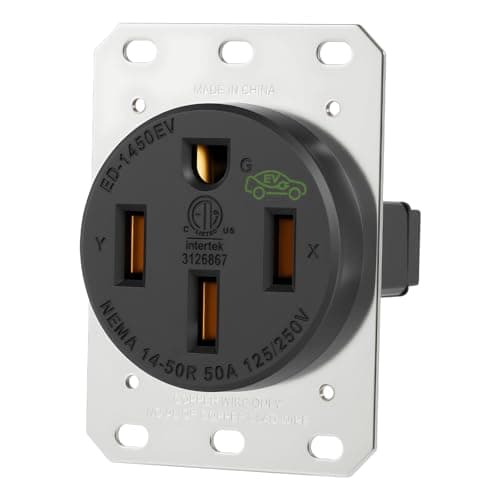
The outlet a plug-in charger needs
Industrial NEMA 14-50 Outlet
The receptacle a plug-in charger actually plugs into — buy the industrial-grade, listed version, because the cheap ones are the exact part that fails.
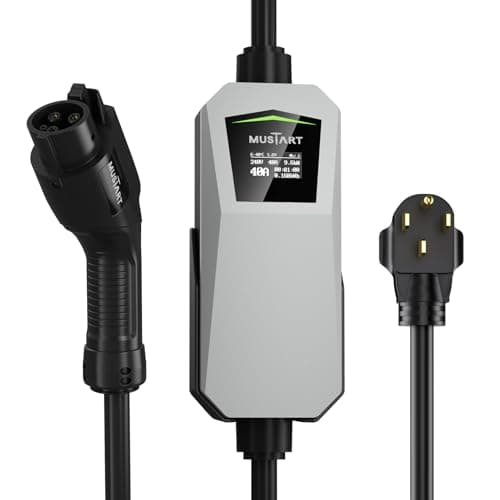
The cheapest capable portable
MUSTART 40A Portable
A budget 40-amp portable with an LCD readout — the value pick when you just need 240V charging that moves with you.
#ad · As an Amazon Associate we earn from qualifying purchases.
Questions
Frequently asked
Can I charge my EV on a NEMA 14-30 dryer outlet?
Yes, with a charger that supports the 14-30 plug set to 24 amps (the 80 percent limit of a 30-amp circuit) - about 12 to 15 miles of range per hour. Do not charge while the dryer runs on the same circuit, and have the outlet verified first.
Is a 14-50 better than a 14-30 for EV charging?
For speed, yes - a 14-50 supports 40-amp charging versus the 14-30's 24 amps. For a new install, choose the 14-50. The 14-30's only real advantage is reusing an existing dryer circuit.
Can I swap a 14-30 outlet for a 14-50 to charge faster?
Not by itself - the circuit and wire must be upgraded to 50 amps too. Putting a 14-50 outlet on a 30-amp circuit is dangerous because it invites a load the wire cannot carry. That is a full electrician job, not an outlet swap.
Keep reading
Related
- NEMA 14-50 outlet guideThe EV-charging standard outlet in depth.
- NEMA 14-50 vs 6-50The other outlet comparison for chargers.
- Best portable chargersAdjustable units that fit either outlet.
- Can I use a dryer outlet?Charging from a 14-30 dryer circuit, done safely.
- Best NEMA 14-30 chargersWhich charger to buy if the 14-30 is the outlet you have.
More in this section
More Charging Guides
Receipts
Sources
We do not run a testing lab, and we do not pretend to. Where a measured number came from someone else's lab, we name them and link them. Where we could not verify something, we say so on the page rather than quietly leaving it out. Read our full method.