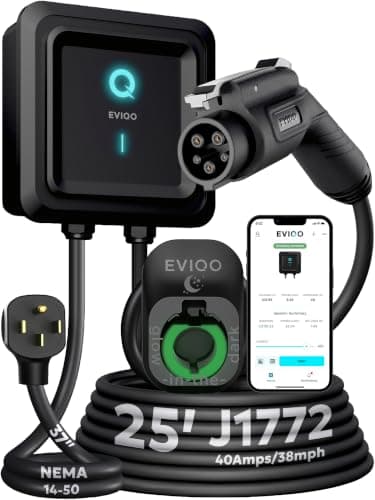
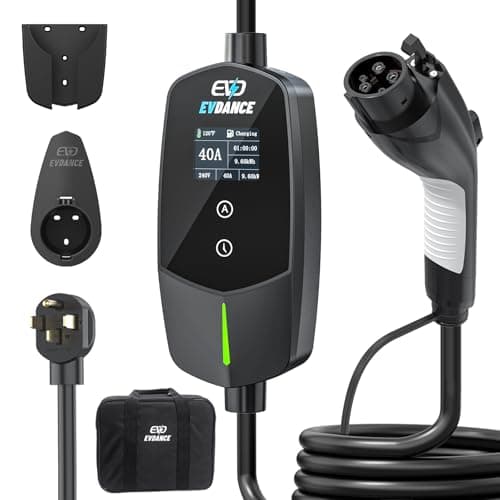
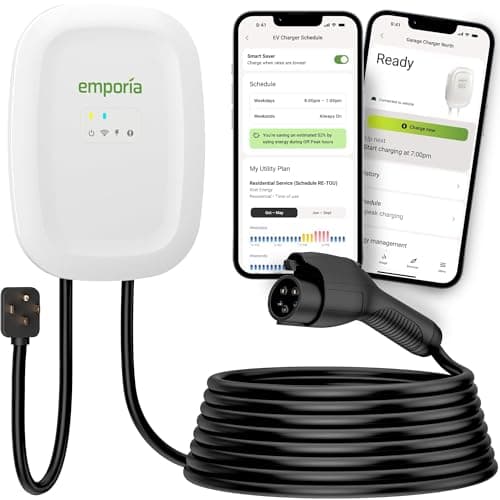
For reach plus everything else, the Emporia Level 2 is the best long-cable charger. It pairs a 25-foot cable with 48-amp capability when hardwired and genuine energy monitoring - the most reach and the most speed in one unit. The EVIQO is the value long-cable pick, matching the 25 feet with a double UL-and-ETL listing at a lower price. The Grizzl-E Ultimate is the rugged 25-foot hardwired option in a cast-aluminum IP67 shell, and the EVDANCE is the 25-foot portable you can unplug and take along.
Cable reach is the spec buyers underestimate most and regret most. Every pick here carries a documented ~25-foot cable - the practical maximum most brands ship - which is long enough to reach either bay of a two-car garage and a charge port on the far side of the car. We compiled the published cable lengths and specs and did the reach and wiring math; we have not bench-tested these units, and we say so. The one capable charger we left off is the MUSTART portable: its 21-foot cable is the shorter counterpoint, and on a reach-first list that four feet is exactly the difference that keeps it out. The ChargePoint Home Flex is out for the same reason at 23 feet - a fine charger, two feet short of the bar this page sets.
Reach and specs, side by side
| Charger | Cable | Amps / kW | Plug type | Smart / Wi-Fi | Safety listing | Price tier |
|---|
| Emporia Level 2 | 25 ft | 6-48A / up to 11.5 kW | NEMA 14-50 plug (40A) or hardwired (48A) | Wi-Fi, energy monitoring | UL listed, Energy Star | Value |
| EVIQO Level 2 | 25 ft | 40A / 9.6 kW | NEMA 14-50 plug | Wi-Fi app scheduling | UL and ETL, IP66 / NEMA 4 | Value |
| Grizzl-E Ultimate | 25 ft | 16-48A / up to 11.5 kW | Hardwired | Wi-Fi, Grizzl-E Connect | UL certified, cast aluminum IP67 / NEMA 4X | Mid |
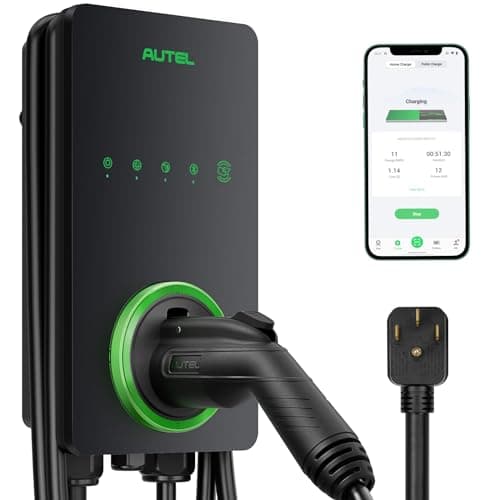
| Autel MaxiCharger | 25 ft + in-body holster | 40A / 9.6 kW | NEMA 14-50 plug | Wi-Fi + Bluetooth | Weather-rated enclosure | Mid |
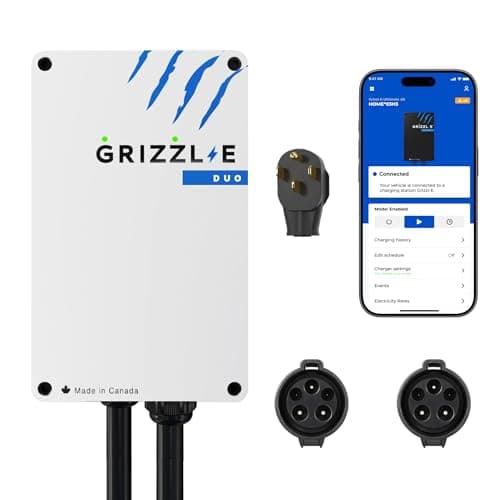
| Grizzl-E Duo | 2 x 25 ft | 16-40A shared / 9.6 kW | NEMA 14-50 plug, two J1772 cables | Wi-Fi, Grizzl-E Connect | UL certified, Energy Star, NEMA 4X | Mid |
| EVDANCE 40A Portable | 25 ft | 40A / 9.6 kW | NEMA 14-50 plug, portable | Delay timer, adjustable current | IP66, rated -22F to 122F | Budget |
The short version
If you want one recommendation: buy the Emporia - it gives you the full reach without giving up speed or smarts. Beyond that:
- Emporia Level 2 - best reach plus speed. A 25-foot cable, 48-amp headroom hardwired, and real energy monitoring, priced like a plain box. Full Emporia review.
- EVIQO Level 2 - best value long cable. The same 25 feet, double-listed UL and ETL with an IP66 rating, usually cheaper. A 40-amp plug-in ceiling and a newer brand are the trade-offs. Full EVIQO review.
- Grizzl-E Ultimate - best rugged 25-foot hardwired. A dedicated 48-amp unit on a 25-foot cable in a cast-aluminum IP67 shell. Hardwired only, and the heavy cable stiffens in deep cold. Full Grizzl-E Ultimate review.
- Autel MaxiCharger - best 25-foot cable management. The same reach with a holster built into the body, so the connector has somewhere to live from day one instead of on the floor. Wi-Fi and Bluetooth both, at a 40-amp ceiling.
- Grizzl-E Duo - the most total reach here. Two 25-foot cables on one box, sharing a single 40-amp circuit between two cars, in the cast-metal Grizzl-E enclosure with the Grizzl-E Connect app. Overkill for one car; unbeatable coverage of a two-bay garage.
- EVDANCE 40A Portable - best 25-foot portable. The same long reach in a charger you can unplug and take with you, plus a delay timer for off-peak charging. It lives on a hook rather than mounted.
Why cable length matters more than buyers expect
On paper a charger's cable length looks like a footnote. In a real garage it decides whether the plug reaches the port at all. Three things make it matter far more than the number suggests:
- Port location varies wildly. Charge ports sit on the front fender, the rear quarter, or a back corner depending on the car. Mount the charger on the wrong wall for your car and a short cable will not stretch across the vehicle to reach it.
- Two-car garages and shared spaces. A 25-foot cable reaches either bay from a single mounting point, so two households, or one household with two cars, can share one charger without moving it. A short cable ties the charger to one parking spot.
- How you park changes daily. Nose-in one night, back-in the next, or pulled forward to make room - each puts the port in a different place. Slack in the cable is what lets you plug in without repositioning the car every time.
The rule is simple: measure the run from where the charger will mount to your car's port, add slack for parking either direction, and buy a cable that covers the worst case, not the best. Our cable length guide walks through how to measure it properly, and the flagship Level 2 roundup ranks the same field on every other spec.
The trade-offs of a longer cable
A longer cable is almost always the safer choice, but it is not free. Twenty-five feet of heavy-gauge charging cable is genuinely weighty, and it has to go somewhere between charges - a long cable pooled on the garage floor gets stepped on, run over, and dragged through grit that works into the connector. The fix is cheap and worth it: a wall-mounted holster to dock the connector and a hook or J-loop to coil the slack keeps the plug off the ground and the contacts clean and dry. Buy the reach you need, then spend a few dollars on managing it. The one caveat specific to these picks is cold weather - every Grizzl-E, the Ultimate included, uses a heavy-duty cable that stiffens in deep cold, which makes a long coil harder to wrangle in winter.
Do not solve reach with an extension cord
If a cable is a few feet short, the tempting fix is a household extension cord. Do not. EV charging pulls 40 amps or more continuously for hours, and an ordinary extension cord is not built for that load - the connections heat up, and a run that is undersized or loose is a genuine fire risk. Manufacturers and safety guidance are consistent on this: charge from the charger's own tethered cable, plugged directly into a properly rated outlet or hardwired. The right answer to a reach problem is a longer built-in cable or mounting the charger closer to where you park - never an extension cord.
Never run a Level 2 charger through a household extension cord or a light-duty adapter. The continuous 40-amp draw can overheat connections that were never rated for it. Solve reach with a longer tethered cable or a closer mount, and plug straight into a rated outlet or hardwire.
Which long-cable pick for your garage
Every pick reaches 25 feet, so the choice comes down to how you install and how fast you want to charge. For a two-car garage where you want the quickest fill and a running record of what it costs, the Emporia hardwired at 48 amps is the one - the reach and the speed together, with energy monitoring on top. If the budget is tighter and 40 amps is plenty for your daily miles, the EVIQO gives you the identical 25 feet and a double UL-and-ETL listing for less, plug-in on a NEMA 14-50. For an exposed wall, a carport, or a driveway post where the charger takes weather, the Grizzl-E Ultimate's sealed cast-aluminum IP67 shell is built for it - just plan for a stiffer cable in deep winter. And if you rent, move often, or want to carry the charger to a second home, the EVDANCE portable is the only pick here you can unplug and pack without giving up the long reach.
Two more that solve narrower versions of the same problem. The Autel MaxiCharger matches the 25 feet and carries its holster in the body of the unit, which sounds like a detail until you have spent a winter picking a grit-covered connector off a garage floor - it is the tidiest 25-foot install here out of the box. The Grizzl-E Duo is the answer when 25 feet in one direction is not the problem and two cars are: two 25-foot cables on one cast-metal box, dividing a single 40-amp circuit, which covers both bays of a garage without a second 240-volt run. If that is your situation, our two-car garage roundup works through the mounting geometry properly.
A longer cable costs you nothing on speed or your bill
It is worth saying plainly, because buyers worry about it: reaching for a 25-foot cable does not slow charging or cost more to run. The tethered cable on each of these units is sized for its full rated current, so 25 feet carries the same 40 or 48 amps as a stubby one, and the energy that reaches the battery - and the dollars on your utility bill - is identical either way. The only real costs of the extra reach are weight and storage, both of which a wall holster and a cable hook solve for a few dollars. What you actually pay to charge comes down to your rate and your car's efficiency, not the cable, and you can run the numbers for your own setup in our cost to charge at home guide. So buy the reach you need; it is close to a free upgrade in everything that shows up on a bill.
The picks, in order
Below the summary table, each charger gets a full card with its score breakdown, pros and cons, and a "don't buy this if" note. In short: the Emporia wins on reach plus speed and smarts, the EVIQO matches the reach for less, the Grizzl-E Ultimate is the rugged hardwired 25-foot fixture, the Autel adds a built-in holster, the Duo doubles the reach with a second cable, and the EVDANCE is the 25-foot portable that travels. Every one clears the practical 25-foot bar; the MUSTART's 21 feet is why it sits on the budget list instead of this one, and the ChargePoint Home Flex misses by two.
How to choose for reach
Reach is a measurement problem before it is a shopping problem. Get the number right first, then pick the charger that meets it.
1. Measure the run from mount to port
Stand where the charger will actually mount and run a tape to your car's charge port in every way you might park - nose-in, back-in, pulled forward. The cable does not travel in a straight line; it drops from the mount, crosses to the car, and reaches the port, so the real distance is longer than the wall-to-bumper gap. Take the worst case, add a couple of feet of slack, and that is your minimum cable length. Under-measuring here is the single most common long-cable regret.
2. 25 ft is the practical max most brands ship
Twenty-five feet is not an arbitrary number - it is where the major brands top out, because past it the cable gets heavy and unwieldy enough to be a nuisance. Every pick here hits it: the Emporia, EVIQO, Grizzl-E Ultimate, Autel, Grizzl-E Duo and EVDANCE. If your measured run needs more than 25 feet, the fix is to move the mount closer to where you park, not to chase a rare extra-long cable or, worse, an extension cord. For most garages, 25 feet is comfortably enough.
3. Tethered length vs where you mount
Cable reach and mounting location trade off against each other. The charger does not have to sit next to the electrical panel - the wiring distance from the panel to the charger is a separate run an electrician handles, so you can often mount the charger centrally and let a 25-foot cable cover both bays. Our how far from the panel guide covers that side. The goal is to put the charger where its cable reaches every parking position, which usually means near the center of the parking area rather than tucked in a far corner.
4. Cable management
A long cable is only an asset if it is managed. Plan for a wall holster to dock the connector and a hook or J-loop to coil the slack, so the plug never sits on the floor collecting grit or moisture. The Emporia, EVIQO, Grizzl-E Ultimate and Grizzl-E Duo are wall-mounted units that make this easy, and the Autel arrives with a holster already built into its body; the EVDANCE is a portable, so it needs a hook or a dedicated spot to live on. Budget a few dollars for management on top of the charger - it protects both the connector and the cable. A holster also keeps the plug at a consistent height, so you are not stooping to the floor to grab a grit-covered connector every night, and coiling the slack means the extra reach is there when you need it and out of the way when you do not. It is the cheapest upgrade on this whole page and the one owners of long-cable chargers most often wish they had bought sooner.
So, which one?
Buy the Emporia for the best combination of reach, speed and smarts. Want the same 25 feet for less? The EVIQO. Want a rugged, weatherproof, permanent 25-foot hardwired install? The Grizzl-E Ultimate. Want the long reach in a charger you can unplug and take with you? The EVDANCE portable. Whatever you pick, measure your worst-case run first - the right cable length is the one that reaches however you park.