HUB 03 · Charging Guides
32-Amp vs 48-Amp EV Charger: Which Do You Need?
The faster charger needs a bigger, pricier circuit - and many cars cannot use the extra speed anyway. Here is how to tell whether 48 amps is worth it for you.
We earn a commission when you buy through our Amazon links, at no extra cost to you. It never affects our rankings, and we say so when the cheaper product is the better buy. How this works.
A 48-amp charger adds range about 50 percent faster than a 32-amp one - but it needs a 60-amp circuit instead of a 40-amp one, costs more to install, and only helps if your car's onboard charger can actually accept 48 amps. For a lot of homes, 32 or 40 amps is the smarter, cheaper choice; for a big battery or a fast-accepting car, 48 amps earns its keep.
The real speed difference
Charging power is volts times amps. At 240 volts:
- 32 amps = ~7.7 kW = roughly 20 to 25 miles of range per hour
- 48 amps = ~11.5 kW = roughly 30 to 37 miles of range per hour
That is a real gap on paper, but consider what it buys in practice. Overnight, both refill a normal day's driving many times over - a 40-mile commute takes under two hours even at 32 amps. The 48-amp advantage only shows up when you routinely deplete a large battery and need it back inside a short window. See how fast will my EV charge for the full math.
The circuit is the real cost difference
This is where the decision usually gets made. Because EV charging is a continuous load, the NEC requires the circuit to be rated 125 percent of the charger's draw:
- A 32-amp charger needs a 40-amp circuit.
- A 40-amp charger needs a 50-amp circuit (often a plug-in NEMA 14-50).
- A 48-amp charger needs a 60-amp circuit, and must be hardwired.
A 60-amp circuit means heavier wire, and on a smaller or fuller panel it can force a panel upgrade - the single biggest swing in an install bill. If your panel has the headroom, the extra cost is modest; if it does not, 32 or 40 amps can save you a large upgrade. See wire and breaker sizing.
Can your car even use 48 amps?
Crucially, the ceiling is often the car, not the charger. Many EVs have an onboard AC charger capped at 32 amps (7.7 kW) or 48 amps (11.5 kW) - and a few base models are limited to 32 amps. If your car tops out at 32 amps, a 48-amp charger delivers exactly 32 and the extra circuit is wasted. Check your car's onboard-charger spec - many of our per-vehicle guides list it - before paying for 48-amp capability.
How to choose
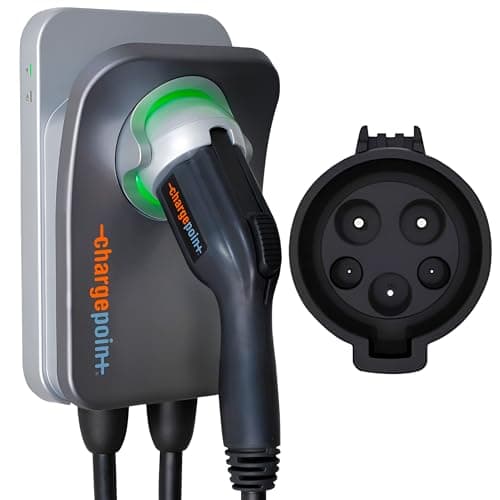
- Pick 32 to 40 amps if your car accepts 40 amps or less, your panel is tight, or you want the cheaper plug-in NEMA 14-50 route. An adjustable unit like the ChargePoint Home Flex can be set to 32 amps now and turned up later.
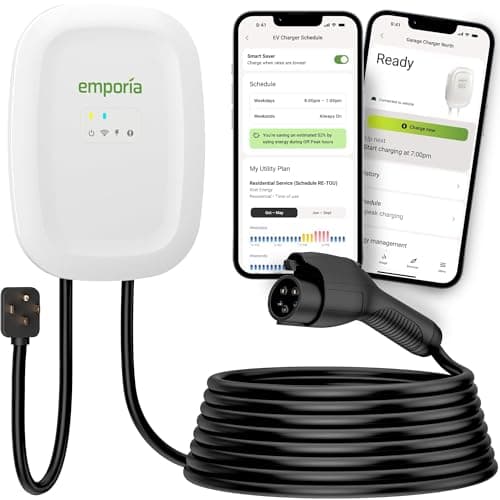
- Pick 48 amps if your car accepts 11.5 kW, you have a big battery or a short charging window, and your panel can take a 60-amp circuit. The Emporia Level 2 delivers it hardwired for value; see the best 48-amp roundup.
A tidy hedge: buy an adjustablecharger. Set it to match today's circuit, and if you upgrade the panel later, dial the amperage up without buying new hardware. Most of the Level 2 home chargers we rankare adjustable, and the table there lists each unit's range.
The gear
Recommended gear for this guide
The products this guide refers to, with prices pulled live from Amazon and dated on each card.
Buyers who want the established brand + one app
ChargePoint Home Flex
The mature, well-supported pick — amperage you dial in up to 50A, wired into the biggest public-charging app in North America. You pay for the polish.
Most homes that want speed and smarts
Emporia Level 2 (48A)
The charger that refuses to charge you extra for being smart: full 48-amp speed and real energy monitoring at roughly the price of a plain plug-in box.
#ad · As an Amazon Associate we earn from qualifying purchases.
Questions
Frequently asked
Is a 48-amp charger worth it over a 32-amp one?
Only if your car can accept 48 amps (11.5 kW) and your panel can support a 60-amp circuit. If either is not true, a 32- or 40-amp charger is the smarter, cheaper choice and refills a normal day's driving overnight with ease.
What circuit does a 48-amp charger need?
A 60-amp circuit, and it must be hardwired - the NEC's 125 percent continuous-load rule means 48 amps of draw needs 60 amps of circuit. A 32-amp charger needs only a 40-amp circuit. See wire and breaker sizing.
How much faster is 48 amps than 32 amps?
About 50 percent faster - roughly 30 to 37 miles of range per hour versus 20 to 25 - but only if your car accepts the higher rate. Overnight, both easily replace a normal day's driving.
Keep reading
Related
More in this section
More Charging Guides
Receipts
Sources
We do not run a testing lab, and we do not pretend to. Where a measured number came from someone else's lab, we name them and link them. Where we could not verify something, we say so on the page rather than quietly leaving it out. Read our full method.