Skip to content
The Charge Curve

HUB 01 · Home EV Chargers

Autel MaxiCharger vs Emporia Level 2

A feature-loaded 40-amp charger with the holster in the box against a 48-amp value smart charger - compared on speed, smarts, install and price.

By Stephen V.Updated How we compare
#ad

We earn a commission when you buy through our Amazon links, at no extra cost to you. It never affects our rankings, and we say so when the cheaper product is the better buy. How this works.

The short answer

Quick picks

  • Emporia Emporia Level 2 (48A)
    01 Emporia Level 2 (48A)
    9.0

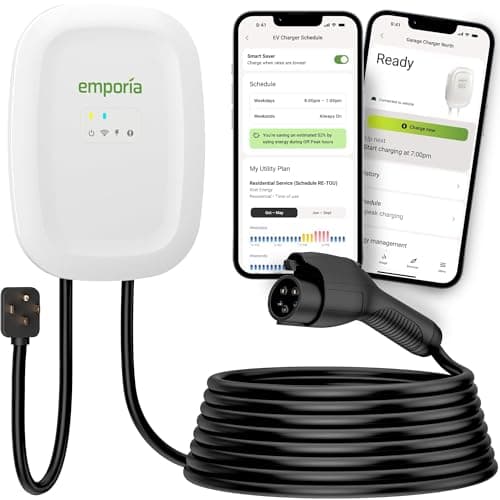
    The charger that refuses to charge you extra for being smart: full 48-amp speed and real energy monitoring at roughly the price of a plain plug-in box.

    Best for: Most homes that want speed and smarts

    $449.00Amazon
  • Autel Autel MaxiCharger (40A)
    02 Autel MaxiCharger (40A)
    8.6

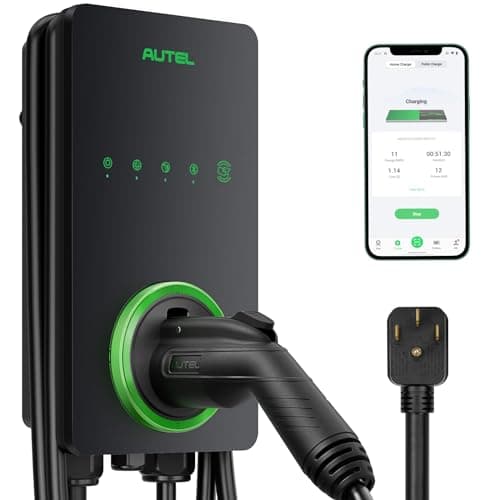
    The everything-in-the-box option: Wi-Fi and Bluetooth both, a weather-rated shell, and a holster included so the install is tidy from day one.

    Best for: Feature-maximalists who want a clean install

    Check priceAmazon

#ad · Live prices from the Amazon Product API, as of Jul 30, 2026. Where we have no verified live price, we show none — we would rather leave a gap than print a number that has gone stale.

Buy the Emporia Level 2 if you want the fastest useful home charging for the least money - it is 48-amp capable hardwired and adds real energy monitoring at close to a plain charger's price. Buy the Autel MaxiCharger if a clean, complete install matters more than raw speed: it ships with a holster and runs both Wi-Fi and Bluetooth, so app control still works when garage Wi-Fi is weak. Both are J1772, so either fits any non-Tesla directly.

These two answer slightly different questions. The Emporia optimizes for speed and value; the Autel optimizes for a polished, everything-in-the-box experience. We compile published specs and compute the math rather than bench-testing - see how we compare.

Speed

The Emporia, by a step. It is rated up to 48 amps / 11.5 kWwhen hardwired, against the Autel's fixed 40 amps / 9.6 kW. The catch is the usual one: the Emporia only reaches 48 amps hardwired on a 60-amp circuit and with a car that accepts it - its plug-in version is also capped at 40 amps, level with the Autel. On a 50-amp circuit the two add range at the same rate. If your panel can support a 60-amp circuit, the Emporia has headroom the Autel cannot match; if it cannot, the speed is a tie.

Smart features

Close, with a nuance. Both have Wi-Fi apps with scheduling; the Emporia adds genuine energy monitoring, the number that matters on a time-of-use plan. The Autel's edge is dual radios - Wi-Fi and Bluetooth - so you can still control it over Bluetooth when the garage Wi-Fi drops, which in a lot of detached garages it does. If you want the most monitoring, Emporia; if you want the most reliable connection, Autel.

Install and cable management

A clean win for the Autel. It ships with a holster in the box, so you get proper cable management from day one instead of buying it later. Both carry a long 25-foot cable and a weather-rated enclosure suitable for a driveway wall. The Emporia does not include a holster, so budget a few dollars for one if a tidy install matters to you.

Value

The Emporia, usually - it tends to sit at the bottom of the smart-charger price band and gives you 48-amp capability and monitoring for it, which is why it tops our best Level 2 roundup. The Autel typically costs a little more, and you are paying for the in-box holster, the second radio and the finish - real things, but not speed. Live prices are on the cards above.

The verdict

Most buyers should take the Emporia: it is faster where it counts, monitors energy properly, and costs less. Choose the Autel if your panel caps you at a 40-amp circuit anyway (removing the Emporia's speed edge), you value a rock-solid Bluetooth fallback, and you want the tidiest possible install straight out of the box. For the deeper write-ups, see the Emporia review and the Autel MaxiCharger review.
In detail

The picks, in full

01
Emporia Emporia Level 2 (48A)

Most homes that want speed and smarts

Emporia Level 2 (48A)

Up to 48A / 11.5kWJ177225ft cableWi-Fi + app
9.0/10

The charger that refuses to charge you extra for being smart: full 48-amp speed and real energy monitoring at roughly the price of a plain plug-in box.

Charge speed
10
Build & weather
8
Smart features
9
Cable & connector
8
Value
10

Pros

  • 48-amp capable when hardwired — quicker than the 40-amp plug-in default most units top out at
  • Genuine energy tracking and scheduling in the app, priced below almost every other smart charger
  • The 25-foot cable reaches either side of a two-car garage

Cons

  • You only get 48 amps hardwired on a 60-amp circuit; the plug-in version is capped at 40A like everything else
  • The app and Wi-Fi are central to the experience, so first-time setup takes longer than a plug-and-go box

Don't buy this if…

you never intend to open an app. A lot of what you are paying for is the software; if a sealed, silent box is what you actually want, the Grizzl-E Classic is the honest call.

$449.00View on Amazon

Price as of Jul 30, 2026. Prices change — Amazon's is the one that counts.

#ad · we may earn a commission from this link to Emporia Level 2 (48A)

02
Autel Autel MaxiCharger (40A)

Feature-maximalists who want a clean install

Autel MaxiCharger (40A)

40A / 9.6kWJ177225ft cable + holsterWi-Fi + Bluetooth
8.6/10

The everything-in-the-box option: Wi-Fi and Bluetooth both, a weather-rated shell, and a holster included so the install is tidy from day one.

Charge speed
8
Build & weather
9
Smart features
9
Cable & connector
9
Value
8

Pros

  • Ships with a separate holster, so you get proper cable management out of the box instead of buying it later
  • Both Wi-Fi and Bluetooth — app control still works when garage Wi-Fi is weak, which it usually is
  • Weather-rated enclosure for indoor or outdoor mounting

Cons

  • 40-amp ceiling, so it is not the fastest choice if your panel could support a 48A circuit
  • The feature set is more than a set-and-forget overnight charger buyer actually needs

Don't buy this if…

your panel can support a 48-amp circuit and raw speed is the goal. The 48A Emporia or Wallbox adds range faster; the Autel's edge is breadth and the in-box holster, not top speed.

Check price on Amazon →

No buyable offer at the last price check (Jul 30, 2026). We show nothing rather than a stale number.

#ad · we may earn a commission from this link to Autel MaxiCharger (40A)

How we picked

We do not run a testing lab

We compiled published specifications from manufacturer manuals and spec sheets, verified the safety listings (UL / ETL), computed the real running and installation costs, checked the wiring math against the NEC continuous-load rule, and read aggregated owner reviews — then scored each product against a published rubric. The scores are judgments from documented research — they are not bench measurements, because we do not have a test lab and we are not going to pretend we do. Every spec and cost figure is cited in Sources.

Questions

Frequently asked

Is the Autel MaxiCharger 48 amps?

No - the home MaxiCharger covered here is a 40-amp / 9.6 kW unit. If you want 48-amp speed on a 60-amp circuit, the Emporia (hardwired) is the pick between these two. A 40-amp charger is still plenty for most cars and homes.

Does the Emporia come with a holster?

No. The Autel includes one in the box; the Emporia does not, so add an inexpensive holster if you want tidy cable management. It is a minor cost, but a real difference on install day.

Which has the more reliable app connection?

The Autel, on paper - it runs both Wi-Fi and Bluetooth, so control still works over Bluetooth when garage Wi-Fi is weak. The Emporia is Wi-Fi only, which is fine near the router and less so in a far detached garage.

Keep reading

Receipts

Sources

We do not run a testing lab, and we do not pretend to. Where a measured number came from someone else's lab, we name them and link them. Where we could not verify something, we say so on the page rather than quietly leaving it out. Read our full method.