HUB 03 · Charging Guides
Can You Install an EV Charger on a 100-Amp Panel?
Older homes often have 100-amp service. Whether a charger fits comes down to a load calculation - and usually to how far you dial the charger down.
We earn a commission when you buy through our Amazon links, at no extra cost to you. It never affects our rankings, and we say so when the cheaper product is the better buy. How this works.
Usually, yes - a 100-amp panel can often run a Level 2 charger, but the answer depends entirely on how much of that 100 amps your home is already using. The clean fix in most tight-panel homes is not a service upgrade; it is buying an adjustable charger and dialing it down to fit the spare capacity. This guide explains how that decision gets made, and why the one step that settles it - a load calculation - is a licensed electrician's job, not yours.
Why 100-amp service is the real constraint
Many older homes were built with 100-amp electrical service, which was plenty before anyone added a fast charger to the garage. The panel has to supply everything at once: the air conditioner, electric range, dryer, water heater and the rest. A Level 2 charger on a 40-amp draw is a large, sustained new load on top of that, and whether the service can carry it depends on the existing peak demand, not just the panel's label.
The way that gets answered properly is a load calculation under NEC Article 220. An electrician adds up your home's demand using the code's method and sees how many amps are genuinely free for a charger. This is not a back-of-envelope estimate a homeowner should attempt - the code has specific demand factors, and getting it wrong risks either a tripping breaker or an unsafe overload. The reader's job is to ask for the calculation, not to run it.
Option 1: dial an adjustable charger down (the cheap fix)
Here is the key point most people miss: you do not have to run a Level 2 charger at its maximum. Almost every quality charger is adjustable, and turning it down is the least expensive way to fit a 100-amp panel. A charger set to 24 amps draws from a 30-amp circuit and still delivers 5.8 kilowatts; set to 32 amps it draws from a 40-amp circuit and delivers 7.7 kilowatts. Both add meaningful range overnight and demand far less of a crowded panel than a 48-amp install.
The ChargePoint Home Flex is adjustable across a wide range up to 50 amps, and the Emporia is adjustable as well - so one unit can be set to whatever your load calculation leaves free today, and turned up later if you upgrade the service. For most tight panels this is the whole answer: buy adjustable, set it to fit. See what amp EV charger do I need and should I upgrade to a 48-amp charger for how to pick the number.
Option 2: load management
If your panel is close to full but you still want faster charging, a load management device (sometimes called dynamic load management, or DLM) watches the whole-home draw and throttles the charger back automatically when the house demand is high - then lets it charge full when the range and dryer are off. That lets a home run a bigger charger than the raw spare capacity would otherwise allow, without tripping the main. Some chargers include this; others use an add-on. Our best load-balancing chargers cover the units built for exactly this situation.
Option 3: a panel or service upgrade
If the load calculation shows the service is genuinely maxed - no room even for a dialed-down charger - then a panel or service upgrade is the real fix, moving the home from 100-amp to 150- or 200-amp service. It is the most expensive path and the reason to price it against simply charging at a lower amperage. Many drivers find a 24- or 32-amp charge is plenty and skip the upgrade entirely. We walk through when the upgrade is unavoidable in do I need a panel upgrade for an EV charger, and the wiring side in EV charger wire and breaker size.
The NEC Article 220 load calculation, the circuit and any service upgrade are all licensed-electrician work. Do not attempt to compute your spare capacity or add a breaker yourself - an overloaded 100-amp service is a fire risk. Have a pro run the calculation and install to code; use this guide to understand the options they will offer.
The takeaway: a 100-amp panel is a constraint, not a wall. For most homes the cheapest route is an adjustable charger set to the spare capacity, with load management or a service upgrade only where the numbers truly demand it. The adjustable units - and how low each one will go - are marked in our ranked Level 2 chargers.
The gear
Recommended gear for this guide
The products this guide refers to, with prices pulled live from Amazon and dated on each card.
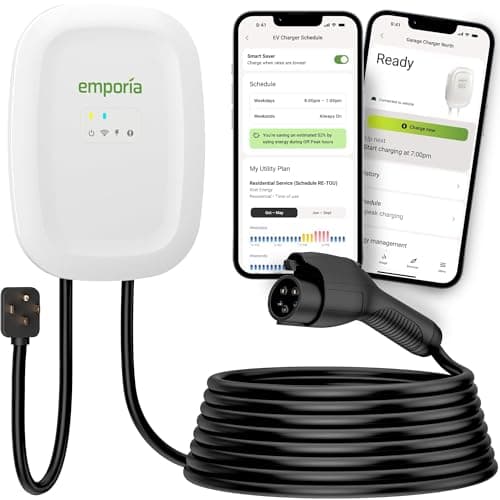
Most homes that want speed and smarts
Emporia Level 2 (48A)
The charger that refuses to charge you extra for being smart: full 48-amp speed and real energy monitoring at roughly the price of a plain plug-in box.
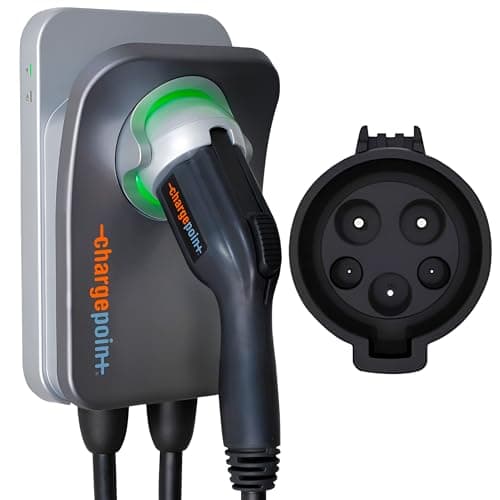
Buyers who want the established brand + one app
ChargePoint Home Flex
The mature, well-supported pick — amperage you dial in up to 50A, wired into the biggest public-charging app in North America. You pay for the polish.
#ad · As an Amazon Associate we earn from qualifying purchases.
Questions
Frequently asked
Will a 100-amp panel definitely run an EV charger?
Not automatically - it depends on your home's existing peak demand. An electrician's NEC load calculation shows how many amps are free. Many 100-amp homes can run a charger dialed down to 24 or 32 amps even if they cannot support a full 48-amp install.
Can I run the load calculation myself?
No. The NEC Article 220 calculation uses specific demand factors and feeds directly into a safe install, so it is a licensed electrician's job. Getting it wrong risks nuisance trips or an unsafe overload. Ask your electrician to run it as part of the quote.
What speed do I get if I dial the charger down?
A charger set to 24 amps delivers 5.8 kilowatts; set to 32 amps it delivers 7.7 kilowatts. Both add strong overnight range - roughly 17 to 31 miles per hour depending on efficiency - while asking far less of a crowded panel than a 48-amp unit.
Is a panel upgrade always required?
No, and it is usually the last resort. An adjustable charger set to your spare capacity, or a load-management device, avoids an upgrade in many homes. Reserve the service upgrade for panels the load calculation shows are genuinely maxed out.
Keep reading
Related
- The EV Charger Load CalculationThe arithmetic behind every panel-upgrade quote, and the method that often changes the answer.
- EV Charger on a 200-Amp PanelThe common case: when 200 amps is plenty, and the loads that make it tight.
- Do I Need a Panel Upgrade for an EV Charger?When a tight service genuinely forces an upgrade.
- What Amp EV Charger Do I NeedPicking the amperage that fits your spare capacity.
- EV Charger Wire and Breaker SizeThe wiring and breaker each charge level requires.
- Should I Upgrade to a 48-Amp Charger?Whether the fastest unit is worth it on a limited panel.
More in this section
More Charging Guides
Receipts
Sources
- EC&M - NEC requirements for EV equipment (Article 625: continuous load, circuit sizing, GFCI)
- US DOE AFDC - charging at home
- US DOE Energy Saver - Electric Vehicles
We do not run a testing lab, and we do not pretend to. Where a measured number came from someone else's lab, we name them and link them. Where we could not verify something, we say so on the page rather than quietly leaving it out. Read our full method.