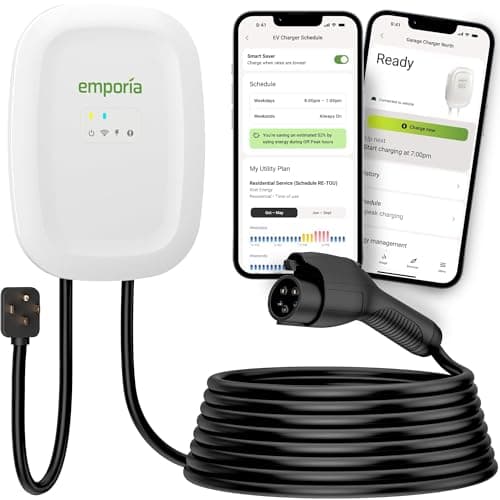
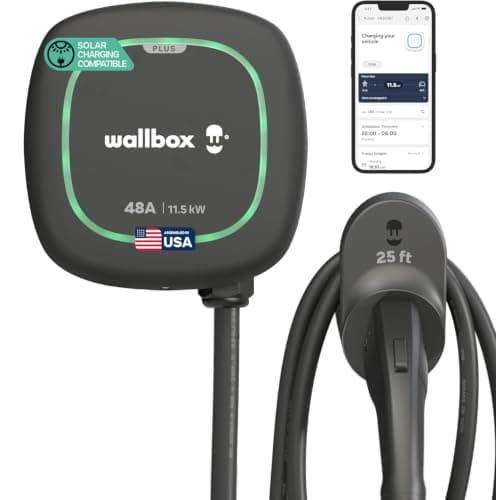
For a Hyundai Ioniq 5 or 6 or a Kia EV6, the best home charger is the Wallbox Pulsar Plus. It is a compact 48-amp hardwired unit that delivers the full rate these cars accept - their onboard AC chargers top out near 11 kW / 48 amps - in one of the smallest bodies you can hang on a wall. If you want the same 48-amp speed with genuine energy monitoring and a lower price, the Emporia Level 2 is the value pick, and our overall winner elsewhere on the site.
The Ioniq 5, Ioniq 6, Kia EV6 (and their EV9 / Ioniq 9 siblings) are famous for one thing: an 800-volt architecture that DC fast-charges from 10 to 80 percent in around 18 minutes at a capable station. But that headline is a road-tripnumber, handled by the car and the network - it has nothing to do with your garage. At home you charge on AC, and there the limit is the car's onboard AC charger, which on these models is about 10.9 to 11.5 kW - roughly 46 to 48 amps. That, not the 800-volt DC spec, is the number that picks your home charger. This page ranks the units that deliver it. We compile published specs and do the wiring math; we do not run a lab.
The spec that matters at home: the onboard AC charger
- Hyundai Ioniq 5: onboard AC charger around 10.9-11 kW - about 46-48 amps at 240 volts.
- Hyundai Ioniq 6: up to about 11.5 kW - 48 amps.
- Kia EV6: around 10.9-11 kW, same ballpark as the Ioniq 5.
So a 48-amp charger feeds these cars everything they can take, and a 40-amp charger gets you within a hair of it. The arithmetic is standard - 48 amps at 240 volts is 11.5 kW, and because charging is a continuous load, a 48-amp charger needs a 60-amp breaker (48 x 1.25 = 60) and a hardwire, while a 40-amp plug-in unit on a NEMA 14-50 needs a 50-amp circuit. There is no benefit to a charger rated above 48 amps here; the car will not take it. Our best 48-amp chargers page covers the full-speed field and the amperage and breaker guide shows the sizing - confirm the circuit with a licensed electrician.
The practical takeaway: ignore the 800-volt DC number when buying a home charger - it is a fast-charging spec, not an AC one. Match your charger to the ~48-amp onboard AC limit: a 48-amp hardwired unit for the full rate, or a 40-amp plug-in if you would rather not run a 60-amp circuit.
The connector catch: 2025 is the NACS dividing line
Hyundai and Kia switched connectors partway through the lineup, so check your model year:
- Pre-2025 Ioniq 5 / 6 and EV6 use a J1772 / CCS1 port. Any J1772 charger on this page plugs straight in at home.
- 2025-and-newer Ioniq 5, Ioniq 6 and EV6 ship with a NACS port. To use a J1772 home charger you add a J1772-to-NACS AC adapter - Hyundai and Kia have been supplying adapters for their owners, and we rank the aftermarket options in our J1772-to-NACS adapters guide.
Either way the charger is the same J1772 field; the adapter (if your year needs one) just bridges the plug. The connector types explainer and the NACS transitionpost have the background - and note that one perk of a NACS port is easier access to Tesla's network on the road, which does not change your home setup at all.
The picks, in order
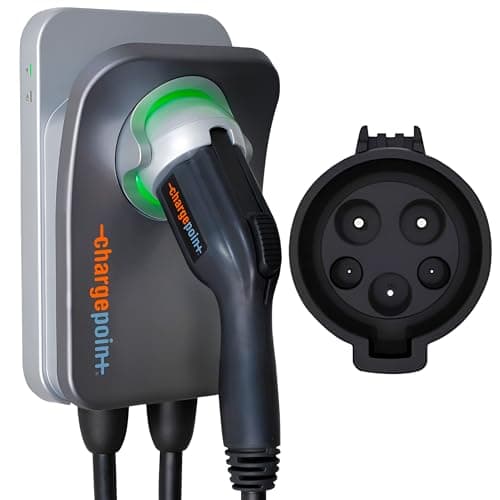
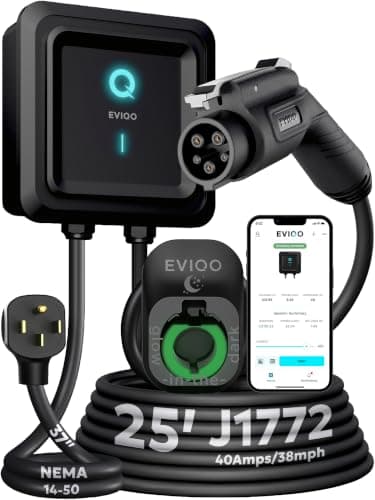
Below the summary table each charger gets a full card with its score breakdown, pros and cons, and a "don't buy this if" note. In short: the Wallbox wins on a compact full-speed install, the Emporia on value plus monitoring, the Grizzl-E Ultimate on rugged build, the ChargePoint on brand and adjustability, and the EVIQO on price for a 40-amp plug-in setup. Every one charges an Ioniq or EV6; match it to your circuit and your port.
How to choose a charger for a Hyundai or Kia EV
The onboard AC limit near 48 amps settles the amperage; the rest is build, port and price.
1. 48 amps is the ceiling worth buying
Because the Ioniq 5/6 and EV6 accept about 11 kW, a 48-amp charger on a 60-amp hardwired circuit delivers their full home rate, and nothing faster helps - the car caps there. A 40-amp plug-in unit gets you nearly all of it on a cheaper 50-amp circuit. Do not pay for a charger rated above 48 amps for these cars; it is headroom the onboard charger cannot use.
2. Confirm your port before you buy an adapter
A pre-2025 Ioniq or EV6 plugs a J1772 charger in directly. A 2025-or-newer NACS-port model needs a J1772-to-NACS AC adapter to use these chargers at home - check whether yours came with one, and if not, our adapter ranking sorts them by the UL 2251 / UL 2252 listing that matters on a part carrying full current.
3. Compact build or rugged build
The Wallbox is the smallest full-speed unit here - a tidy choice next to a car in a garage. If the charger mounts outside, the Grizzl-E Ultimate's cast-aluminum NEMA 4X shell and the EVIQO's IP66 / NEMA 4 rating are built for weather; our best outdoor chargers page ranks the field by enclosure if that is your situation.
4. Cable length, hardwire vs plug-in, and smart features
These cars put the charge port at the rear, so measure from the mount to the back corner and favor a 25-foot cable. Hardwiring unlocks the full 48 amps and is cleaner; a plug-in NEMA 14-50 unit caps at 40 amps but stays portable - spend on the receptacle either way, per our NEMA 14-50 outlet guide. Scheduling and energy monitoring pay off on a time-of-use rate (the Emporia, ChargePoint and EVIQO have them); a plain unit is fine on a flat rate.
So, which one?
Buy the Wallbox Pulsar Plus for a compact, full-speed 48-amp install. Want the same speed with monitoring for less? The Emporia. A rugged box for an outdoor mount? The Grizzl-E Ultimate. Biggest brand and adjustable output? The ChargePoint. On a budget, or happy with a 40-amp plug-in? The EVIQO.