Skip to content
The Charge Curve

HUB 01 · Home EV Chargers

Wallbox Pulsar Plus vs ChargePoint Home Flex

The smallest 48-amp box you can hang on a wall against the established brand wired into the biggest charging app - compared on the things that decide it.

By Stephen V.Updated How we compare
#ad

We earn a commission when you buy through our Amazon links, at no extra cost to you. It never affects our rankings, and we say so when the cheaper product is the better buy. How this works.

The short answer

Quick picks

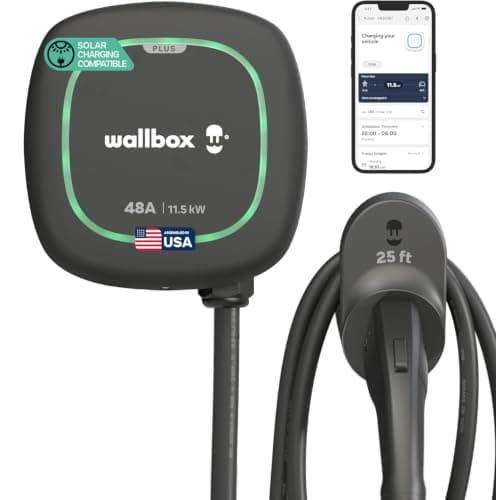
  • Wallbox Wallbox Pulsar Plus (48A)
    01 Wallbox Pulsar Plus (48A)
    8.4

    One of the smallest 48-amp chargers you can hang on a wall — full-speed hardwired charging in a box that barely announces itself.

    Best for: A compact, fast, hardwired install

    $699.99Amazon
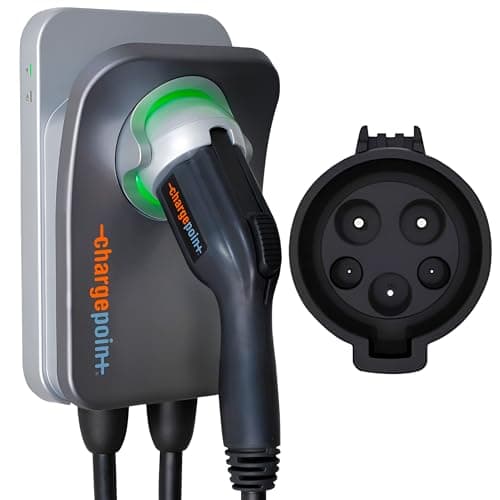
  • ChargePoint ChargePoint Home Flex
    02 ChargePoint Home Flex
    8.2

    The mature, well-supported pick — amperage you dial in up to 50A, wired into the biggest public-charging app in North America. You pay for the polish.

    Best for: Buyers who want the established brand + one app

    $539.00Amazon

#ad · Live prices from the Amazon Product API, as of Jul 30, 2026. Where we have no verified live price, we show none — we would rather leave a gap than print a number that has gone stale.

Buy the ChargePoint Home Flex if you want the established brand, a plug-in option and one app that also maps and pays for public charging - it dials in up to 50 amps and has the longest support track record here. Buy the Wallbox Pulsar Plus if you want a permanent, full-speed 48-amp hardwire in the smallest box on the wall. Both are J1772 and both are genuinely good; the choice is size-and-speed versus network-and-flexibility.

Two well-regarded smart chargers with different priorities. The Wallbox is about a compact, fast, hardwired install; the ChargePoint is about brand maturity and an ecosystem that follows you to public stations. We compile published specs rather than bench-testing - see how we compare.

Speed and circuit

Effectively a tie at the top. The Wallbox hardwires at 48 amps / 11.5 kW on a 60-amp circuit; the ChargePoint is adjustable up to 50 amps and delivers the same real-world 48-amp charge to a car that accepts it (no home EV pulls more than 48 amps AC). The practical difference is flexibility: the ChargePoint installs plug-in on a NEMA 14-50 (capped at 40 amps) or hardwired, while the Wallbox is hardwired only. See hardwired vs plug-in for which suits you.

Size and install

A win for the Wallbox. It is one of the physically smallest 48-amp chargers made - the least obtrusive box in our home roundup, which matters on a cramped garage wall or a visible exterior one. The ChargePoint is a larger, more conventional unit. Both are weather-rated for outdoor mounting; both use a 25-foot cable.

App and network

The ChargePoint's big advantage. It reports into the same ChargePoint app that maps and pays for one of the largest public networks in North America - home and away in one place, with amperage you dial in and a long support history. The Wallbox app covers scheduling and, on a compatible install, Power Boost (whole-home load management) and Power Sharing between two units - but it has historically drawn more owner complaints than the hardware, and it is not tied to a public network. If a single home-and-public app appeals, ChargePoint; if you mainly want set-and-forget scheduling, either is fine.

Value

The ChargePoint costs more than newer-brand rivals - you are paying for maturity and the network, which our ChargePoint vs Emporia comparison weighs against a cheaper equal. The Wallbox is mid-priced for a 48-amp hardwired unit. Neither is the outright value champ (that is the Emporia), but both are fairly priced for what they are. Live prices are on the cards above.

The verdict

Take the ChargePoint Home Flex if you want the safe, established name, the flexibility to plug in rather than hardwire, and one app that spans your garage and the public network. Take the Wallbox Pulsar Plus if you are committing to a clean 48-amp hardwire and want the smallest, tidiest unit on the wall. Read the full Wallbox review and ChargePoint review for the details.

In detail

The picks, in full

01
Wallbox Wallbox Pulsar Plus (48A)

A compact, fast, hardwired install

Wallbox Pulsar Plus (48A)

Hardwired 48A / 11.5kWJ177225ft cableEnergy Star + UL
8.4/10

One of the smallest 48-amp chargers you can hang on a wall — full-speed hardwired charging in a box that barely announces itself.

Charge speed
10
Build & weather
8
Smart features
8
Cable & connector
8
Value
8

Pros

  • Physically tiny for a 48-amp unit — the least obtrusive charger in our home roundup
  • Full 48-amp hardwired speed, matching the fastest home chargers
  • Energy Star and UL certified

Cons

  • Hardwired only at 48A — no plug-in convenience if you might move it
  • The app has historically drawn more owner complaints than the hardware itself

Don't buy this if…

you rent or might take the charger with you. This is a permanent fixture — a plug-in unit or a portable EVSE is the right call for anyone who could move.

$699.99View on Amazon

Price as of Jul 30, 2026. Prices change — Amazon's is the one that counts.

#ad · we may earn a commission from this link to Wallbox Pulsar Plus (48A)

02
ChargePoint ChargePoint Home Flex

Buyers who want the established brand + one app

ChargePoint Home Flex

Adjustable to 50AJ1772NEMA 14-50 plugEnergy Star
8.2/10

The mature, well-supported pick — amperage you dial in up to 50A, wired into the biggest public-charging app in North America. You pay for the polish.

Charge speed
9
Build & weather
8
Smart features
9
Cable & connector
8
Value
7

Pros

  • Output is adjustable in the app up to 50A, so it matches whatever breaker you can install today and more later
  • Reports into the same ChargePoint app that maps and pays for a huge public network — home and away in one place
  • Long track record and responsive support that newer budget brands cannot match

Cons

  • Costs more than equally capable chargers from newer brands
  • The experience leans hard on the ChargePoint account and app; skip it and you are paying for an integration you will not use

Don't buy this if…

price is your first filter. The Emporia matches most of what this does for meaningfully less — here you are paying for brand maturity and the unified app, which are real but not free.

$539.00View on Amazon

$657.9918% off

Price as of Jul 30, 2026. Prices change — Amazon's is the one that counts.

#ad · we may earn a commission from this link to ChargePoint Home Flex

How we picked

We do not run a testing lab

We compiled published specifications from manufacturer manuals and spec sheets, verified the safety listings (UL / ETL), computed the real running and installation costs, checked the wiring math against the NEC continuous-load rule, and read aggregated owner reviews — then scored each product against a published rubric. The scores are judgments from documented research — they are not bench measurements, because we do not have a test lab and we are not going to pretend we do. Every spec and cost figure is cited in Sources.

Questions

Frequently asked

Can the ChargePoint Home Flex be plugged in instead of hardwired?

Yes - it installs plug-in on a NEMA 14-50 outlet (capped at 40 amps) or hardwired for the full 50-amp setting. The Wallbox Pulsar Plus at 48 amps is hardwired only. If you want the option to unplug and take it, that favors the ChargePoint.

Which is smaller?

The Wallbox Pulsar Plus is notably more compact - one of the smallest 48-amp chargers you can buy - which is its main physical advantage over the larger ChargePoint on a tight or visible wall.

Do I need the ChargePoint app to use it?

The charger works without deep app use, but much of what you are paying for is the ChargePoint account and public-network integration. Skip the app entirely and a cheaper unit like the Emporia gives you the same charge for less.

Keep reading

Receipts

Sources

We do not run a testing lab, and we do not pretend to. Where a measured number came from someone else's lab, we name them and link them. Where we could not verify something, we say so on the page rather than quietly leaving it out. Read our full method.