HUB 03 · Charging Guides
EV Charger Maintenance and Care
A home charger asks almost nothing of you - but the few things it does ask keep the connector clean, the cable intact, and the unit safe for a decade.
We earn a commission when you buy through our Amazon links, at no extra cost to you. It never affects our rankings, and we say so when the cheaper product is the better buy. How this works.
Good news first: a home EV charger is close to maintenance-free. There are no filters, no fluids, and no moving parts beyond the connector latch. But a handful of small habits keep it working safely for a decade - and knowing the few warning signs that mean "stop and call an electrician" is the part that actually matters. Here is the whole list.
Care for the connector
The connector (the plug that goes into the car) is the one part you handle every day, so it is the part worth minding. Keep it clean and dry, and do not let it sit face-down in dirt or a puddle between sessions. When you unplug, hang it in a holster or on a hook rather than dropping it on the ground - a dedicated holster or dock keeps grit and water out of the pins and stops the connector getting run over. Inspect the pins occasionally for corrosion or damage; a discolored or melted pin is a stop-now warning (below).
Handle the cable kindly
A Level 2 cable is thick and, in cold weather, stiff. The failure mode is not wear from charging - it is mechanical: kinks from tight coiling, being pinched by a garage door, or run over by a tire. Loop it in wide, loose coils on a hook rather than yanking it into a tight bundle, keep it clear of the door's path, and never drive over it. In freezing climates, uncoil it gently on the coldest mornings; forcing a rigid cable is how the jacket cracks.
The single most valuable habit: give the cable and connector a permanent home - a hook and a holster - so they are never on the floor. Nearly every avoidable charger failure starts with a cable or connector left where it can be crushed, soaked, or driven over.
Water and weather
Chargers rated for outdoor use (look for a NEMA 3R/4 or IP-rated enclosure, like the Grizzl-E Ultimate) are built to live outside, and it is safe to charge in the rain - see can I charge in the rain. Still, basic sense helps: mount an outdoor unit under some cover if you can, keep the connector pointed down or holstered so water sheds off rather than pooling in it, and clear snow away from the enclosure. Do not pressure-wash a charger or blast the connector with a hose.
Occasional checks
- Look at the enclosure a couple of times a year for cracks, water intrusion, or wasp nests (a surprisingly common one in outdoor units).
- Wipe the connector and check the pins for corrosion or discoloration.
- Feel the plug and outlet after a charge on a plug-in unit - warm is normal, hot is not (see warning signs).
- Keep the firmware updated on a smart charger, which mostly happens automatically over Wi-Fi.
Warning signs - stop and call an electrician
A charger is high-current equipment, so a few symptoms mean stop using it and get a licensed electrician:
- A hot (not just warm) plug, outlet, or enclosure, or any burning smell.
- A melted, discolored, or scorched connector pin or outlet face.
- The breaker trips repeatedly.
- Visible damage to the cable jacket - cuts, cracks, or exposed wire.
- A plug that feels loose in the outlet, or an outlet that no longer grips.
None of these are DIY fixes - a continuous 40-amp load is exactly the condition that turns a small fault into a fire. The maintenance you do is the easy part; the discipline to stop at these signs is the important part. For a unit that minimizes fuss in the first place, a sealed, outdoor-rated charger with no app to babysit is the low-maintenance ideal - the Grizzl-E Classic holds exactly that slot in the Level 2 home chargers we rank.
The gear
Recommended gear for this guide
The products this guide refers to, with prices pulled live from Amazon and dated on each card.
- Guide
A permanent, weatherproof 48A install
Grizzl-E Ultimate (48A)
A dedicated 48-amp charger in a cast-aluminum, IP67 shell - the toughest full-speed box here, built to be hardwired to a wall and left to work.
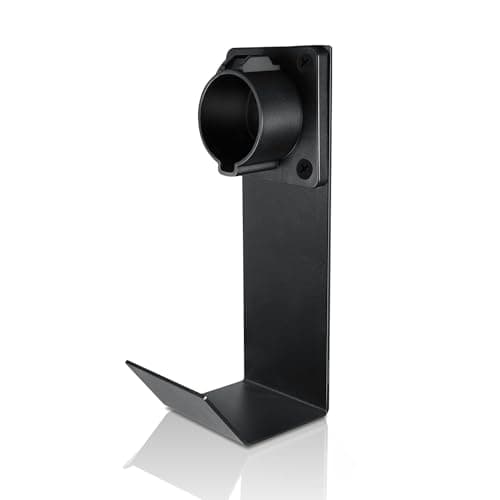
Docking a J1772 connector
Lectron J1772 Holster + J-Hook
A connector dock and cable hook in one — the cheapest fix for a J1772 plug that otherwise sits on the garage floor.
#ad · As an Amazon Associate we earn from qualifying purchases.
Questions
Frequently asked
Do EV chargers need maintenance?
Very little - there are no filters or fluids. The useful habits are keeping the connector clean, dry and holstered, handling the cable gently, and glancing at the enclosure and pins a couple of times a year. The important part is stopping if you see heat, melting or damage.
How long does a home EV charger last?
A quality Level 2 charger is generally built to last many years - often a decade or more - since it has no moving parts beyond the connector latch. Cable and connector damage from poor handling is the most common thing that shortens its life, which good storage prevents.
When should I replace or repair my EV charger?
Stop using it and call a licensed electrician if the plug, outlet or enclosure runs hot, anything is melted or scorched, the cable jacket is damaged, or the breaker trips repeatedly. These are safety issues on high-current equipment, not DIY repairs.
Keep reading
Related
- Can I charge in the rain?Why weather is fine, and the sense to still use.
- EV charger tripping breakerOne of the stop-now warning signs, diagnosed.
- Winter EV chargingCold-weather cable handling and battery behavior.
- Best holsters and organizersThe cheapest maintenance there is: get the connector and cable off the floor.
More in this section
More Charging Guides
Receipts
Sources
We do not run a testing lab, and we do not pretend to. Where a measured number came from someone else's lab, we name them and link them. Where we could not verify something, we say so on the page rather than quietly leaving it out. Read our full method.