HUB 03 · Charging Guides
How Often Should You Charge Your EV?
The old phone-battery advice does not apply. Frequent top-ups are fine and even preferred - here is the healthy band to keep the battery in and how it changes with your chemistry.
We earn a commission when you buy through our Amazon links, at no extra cost to you. It never affects our rankings, and we say so when the cheaper product is the better buy. How this works.
Charge whenever it is convenient. That is the short, slightly counterintuitive answer, and it undoes the single most common piece of bad EV advice - the idea, carried over from old phone and laptop batteries, that you should run the battery down near empty before plugging in. You should not. Frequent top-ups are not just fine for a modern EV battery, they are preferred. This guide explains why the phone myth does not transfer, what a healthy state-of-charge band looks like, and how the answer shifts a little depending on the battery chemistry your car uses.
The phone-battery myth, retired
A lot of drivers arrive at their first EV with a habit learned from gadgets: let it drain, then charge it full, and do not "waste" a charge cycle on a half-empty battery. That advice was never quite right even for phones, and it is actively wrong for an EV. Deep discharges are harder on a lithium battery than shallow ones, and a modern EV pack is happiest living in the middle of its range rather than swinging from empty to full. There is no benefit to arriving home near zero, and a mild cost to it. Plug in when it is convenient, at whatever state of charge you happen to be at.
This is exactly why home charging suits an EV so well. Because you can plug in every night, you never have to run the battery down to justify a charge - you just keep it topped up in its comfortable band with almost no effort. The convenience of never thinking about it is the same convenience that keeps the battery healthy.
The healthy band
The general principle across chemistries is to avoid the extremes: do not leave the battery sitting for long stretches near 100 percent, and do not routinely run it down toward 0 percent. The middle of the range is the low-stress zone. In practice that means topping up before you get low and capping the charge below the top for daily use, so the pack spends its life in a gentle band rather than parked at either edge. The precise numbers depend on your chemistry, which is the one detail worth getting right.
NMC versus LFP: the one thing to check
EV batteries come in two common chemistries, and they want slightly different treatment. An NMC (nickel-manganese-cobalt) pack prefers to live in roughly the 20-to-80 or 20-to-90 percent band for daily driving, with a full 100 percent charge saved for the days you actually need the range. An LFP (lithium iron phosphate) pack is different: it tolerates - and even benefits from - being charged regularly to 100 percent, partly because a periodic full charge helps the car estimate its range accurately. Many manufacturers of LFP-equipped cars specifically recommend charging to full on a regular basis.
So the one thing worth checking is which chemistry your car has, because it flips the daily-limit advice. We lay out the differences and how to tell them apart in NMC vs LFP battery charging, and the general question of where to set your ceiling in should you charge to 100 percent. When in doubt, the owner's manual states the recommended daily and maximum charge levels for your specific pack.
Nightly or every few days?
Either works - the battery does not care whether you plug in every night or every third night, as long as it stays in a healthy band and does not sit at an extreme. For most people, plugging in nightly is simply the easiest habit: it keeps the car near its daily target without any planning, and it means you always leave with enough range. If your daily mileage is low, you might comfortably charge only every few days and never think about it. And charging more often does not cost you more overall - your total energy use is set by the miles you drive, not the number of sessions, as the math in cost to charge an EV per year makes clear. Convenience, not a rule, decides the cadence.
The one thing to avoid is the opposite habit - deliberately letting the car run low before charging because you think you are being kind to the battery. You are not. Top up when it suits you. A smart charger with scheduling, like the Emporia Level 2, makes this effortless: set it to reach your daily target by morning and it holds the routine for you, which is also how you catch the cheapest electricity rates in off-peak time-of-use charging.
What about winter, and long parking?
Two situations shift the advice slightly. In cold weather the battery is less efficient and you may find yourself charging a little more often to keep the usable range up - normal, and covered in winter EV charging. And if you are leaving the car parked for a long stretch - a couple of weeks or more - the guidance inverts: rather than full or empty, leave it around the middle, near 50 to 60 percent, which is the least stressful place for a pack to sit idle. For everyday driving, though, the rule stays simple: charge often, keep it in the band, and do not chase empty.
The bottom line
How often should you charge your EV? As often as is convenient, without ever running it near empty first. Keep an NMC pack in a middle band for daily use and save 100 percent for range days; charge an LFP pack to full regularly as the maker suggests. Frequent, shallow top-ups beat deep drain-and-fill cycles every time, and a home charger is what makes that easy. If you are still setting up that home charging, our best smart chargers cover the units whose scheduling turns this into a habit you never have to think about, the Level 2 home chargers we rank puts those next to the simpler no-app units, and charging overnight is safe to lean on for exactly that.
The gear
Recommended gear for this guide
The products this guide refers to, with prices pulled live from Amazon and dated on each card.
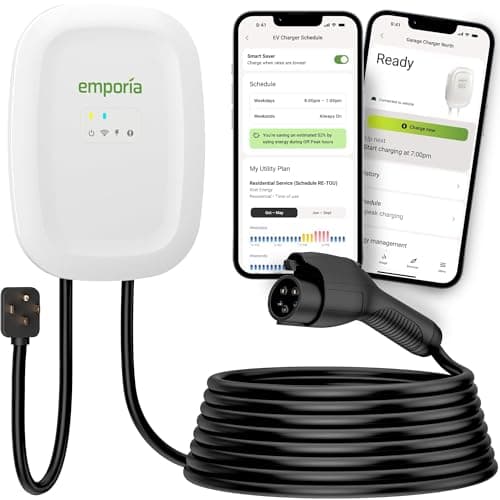
Most homes that want speed and smarts
Emporia Level 2 (48A)
The charger that refuses to charge you extra for being smart: full 48-amp speed and real energy monitoring at roughly the price of a plain plug-in box.
#ad · As an Amazon Associate we earn from qualifying purchases.
Questions
Frequently asked
Should I let my EV battery run down before charging?
No. That is a myth carried over from old phone batteries and it does not apply to EVs. Deep discharges are harder on a lithium pack than shallow ones, so there is no benefit to running near empty first. Plug in whenever it is convenient, at whatever state of charge you are at.
Is it bad to charge my EV every day?
Not at all - frequent top-ups are fine and even preferred. Charging nightly keeps the battery in a healthy middle band without effort. Just avoid leaving it sitting at 100 percent for long stretches on an NMC pack; set a daily charge limit below the top and let a full charge be for the days you need the range.
How high should I charge my EV for daily driving?
It depends on the chemistry. An NMC battery is happiest charged to about 80 to 90 percent for daily use, with 100 percent saved for range days. An LFP battery can and often should be charged to 100 percent regularly. Check your owner's manual or our NMC vs LFP guide to find which your car uses.
What charge level should I leave my EV at if I'm parking it for weeks?
Around the middle - roughly 50 to 60 percent - is the least stressful place for a battery to sit idle for a long stretch, rather than full or empty. For everyday driving, though, just keep it in its healthy band and charge whenever convenient.
Keep reading
Related
- NMC vs LFP Battery ChargingWhich chemistry your car has, and how it changes the limit.
- Should You Charge to 100 Percent?Where to set your daily ceiling for battery health.
- Off-Peak Time-of-Use ChargingTiming frequent top-ups for the cheapest electricity.
- Is It Safe to Charge an EV Overnight?Why leaning on nightly charging is safe and easy.
- Winter EV ChargingWhy cold weather nudges you to charge a little more often.
More in this section
More Charging Guides
Receipts
Sources
- US DOE / fueleconomy.gov - EV charging basics
- US DOE AFDC - charging at home
- US DOE Energy Saver - Electric Vehicles
We do not run a testing lab, and we do not pretend to. Where a measured number came from someone else's lab, we name them and link them. Where we could not verify something, we say so on the page rather than quietly leaving it out. Read our full method.