HUB 03 · Charging Guides
How Much Does an EV Charger Cost?
From a $30 backup cord to a $1,000+ smart bidirectional unit - the price ladder for home EV charging equipment, and the separate cost to install it.
We earn a commission when you buy through our Amazon links, at no extra cost to you. It never affects our rankings, and we say so when the cheaper product is the better buy. How this works.
A home EV charger is cheaper than most people expect - the hardware for a good Level 2 unit lands in a couple-hundred-dollar band, not the four-figure one. The bigger, more variable cost is usually the electrical installation, which is a separate line item. This guide lays out the equipment price ladder tier by tier, then covers the install cost so you can budget the whole project.
The equipment price ladder
EV charging hardware spans a wide range because it covers everything from an emergency cord to a two-way smart unit. Roughly, from cheapest to dearest:
- Level 1 backup cords (~$30 to $150) - a basic 120-volt cord like the Morec Level 1. Slow (3 to 5 miles per hour), useful only as a trunk backup.
- Portable Level 2 EVSE (~$200 to $400) - a plug-in 240-volt charger you can take anywhere. Often the smartest buy if you have a NEMA 14-50 outlet; see the portable roundup.
- Wall-mounted Level 2 chargers (~$350 to $700) - the core of the market. Value smart units like the EVIQO and Emporia sit lower in this band; rugged or fully-featured units like the Grizzl-E Ultimate sit higher.
- Premium, dual-connector and bidirectional units ($700 to $1,000+) - established brands, dual NACS-plus-J1772 boxes, and vehicle-to-home capable chargers. You pay for the network, the second connector, or two-way power. See bidirectional charging.
We quote price brackets here, not exact figures, because they move. For the live, current price of any specific unit, check its product card in our roundups, where prices are pulled from Amazon and date-stamped.
The bigger variable: installation
For most homes the install costs as much as or more than the charger, and it varies far more. The drivers are distance from your panel, whether you need a new circuit or a panel upgrade, and local permit fees. A simple job - a short run to a panel with a free breaker slot - is modest; a long run or a service upgrade can multiply it. Our installation-cost guide breaks down the real numbers, and the install guide covers the process.
How to keep the total down
- Choose a plug-in unit if you have (or can cheaply add) a NEMA 14-50 outlet - it avoids a hardwire and can move with you.
- Do not overbuy amperage. A 40-amp charger on a 50-amp circuit suits most cars and avoids the pricier 60-amp circuit a 48-amp unit needs - see what amperage you need.
- Claim rebates. Many utilities and tax programs offset the hardware or install; see EV charger rebates.
Bottom line: budget a few hundred dollars for a solid Level 2 charger and a separate, house-specific amount for the electrical work. The charger is the easy part.
The gear
Recommended gear for this guide
The products this guide refers to, with prices pulled live from Amazon and dated on each card.
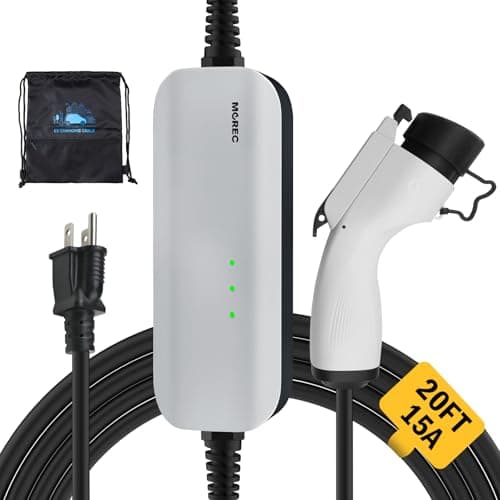
A 120V cord with a live readout
Morec Level 1 (15A)
A plain 15-amp household cord with an LCD that reports voltage, current and temperature while it charges — the one that tells you what the outlet is actually doing.
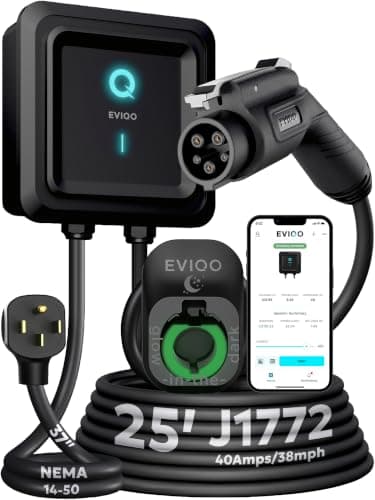
Budget buyers who still want smart features
EVIQO Level 2 (40A)
A double-listed (UL and ETL), IP66-weatherproof smart charger that keeps landing at the bottom of the price band — a lot of certified hardware for the money.
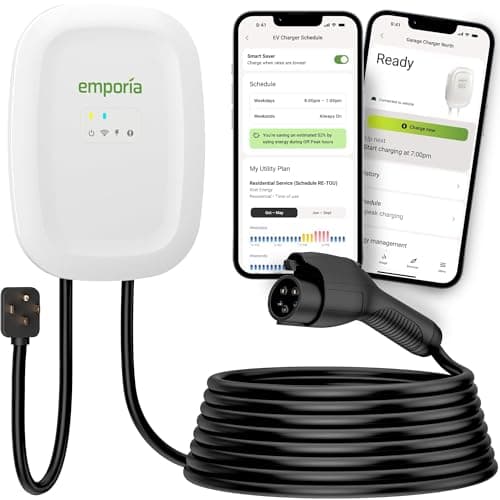
Most homes that want speed and smarts
Emporia Level 2 (48A)
The charger that refuses to charge you extra for being smart: full 48-amp speed and real energy monitoring at roughly the price of a plain plug-in box.
- Guide
A permanent, weatherproof 48A install
Grizzl-E Ultimate (48A)
A dedicated 48-amp charger in a cast-aluminum, IP67 shell - the toughest full-speed box here, built to be hardwired to a wall and left to work.
#ad · As an Amazon Associate we earn from qualifying purchases.
Questions
Frequently asked
How much should I spend on a home EV charger?
For most homes, a solid Level 2 wall or portable charger falls in a couple-hundred-dollar bracket, and that is enough. Spend more only for a specific reason - a second connector, a rugged outdoor enclosure, or bidirectional power. Installation is a separate, house-specific cost.
Is the charger or the installation more expensive?
Often the installation, and it varies far more than the hardware. A short run to a ready panel is modest; a long cable run or a panel upgrade can cost more than the charger itself. Get a quote before you buy.
Why don't you list exact charger prices here?
Prices change constantly, so a number typed into a guide would be stale within days. We quote brackets in prose and show the live, date-stamped price on each product card in our roundups instead.
Keep reading
Related
More in this section
More Charging Guides
Receipts
Sources
- US DOE AFDC - charging at home (equipment and cost basics)
- Qmerit - EV home charging installation costs
We do not run a testing lab, and we do not pretend to. Where a measured number came from someone else's lab, we name them and link them. Where we could not verify something, we say so on the page rather than quietly leaving it out. Read our full method.