Skip to content
The Charge Curve

HUB 01 · Home EV Chargers

The Best Outdoor EV Chargers for Home

Ranked on the one spec that decides whether a charger survives a driveway wall: the enclosure type - plus the temperature range, cable and code details nobody puts on the box.

By Stephen V.Updated How we compare
#ad

We earn a commission when you buy through our Amazon links, at no extra cost to you. It never affects our rankings, and we say so when the cheaper product is the better buy. How this works.

The short answer

Quick picks

#ProductBest forScorePrice
01
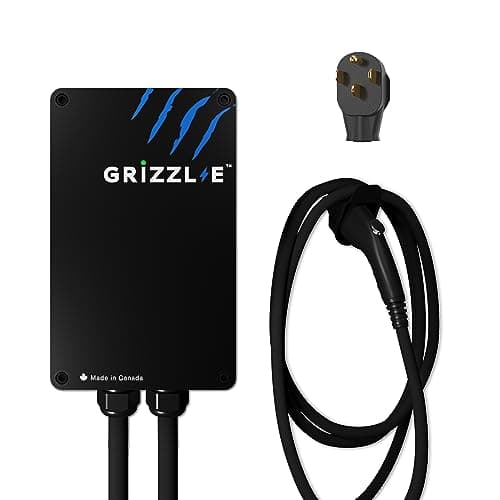
Grizzl-E Grizzl-E Classic (40A)
Grizzl-E Classic (40A)

A UL-certified cast-aluminum box with no app to update and nothing in the cloud to fail — the durability default for people who want a charger, not a gadget.

People who want a charger, not an app
8.0
$299.99Amazon
02
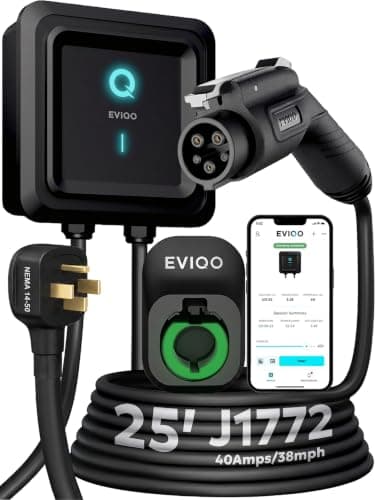
EVIQO EVIQO Level 2 (40A)
EVIQO Level 2 (40A)

A double-listed (UL and ETL), IP66-weatherproof smart charger that keeps landing at the bottom of the price band — a lot of certified hardware for the money.

Budget buyers who still want smart features
8.6
$395.99Amazon
03
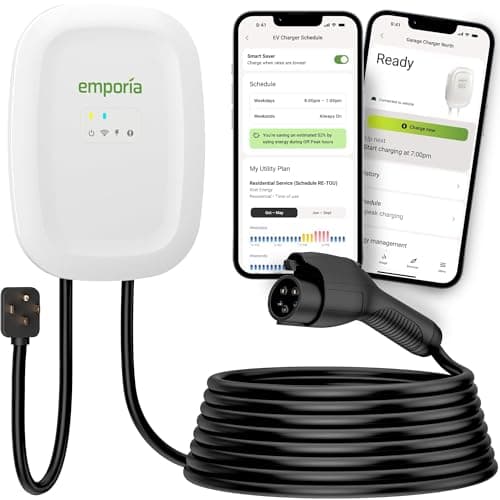
Emporia Emporia Level 2 (48A)
Emporia Level 2 (48A)

The charger that refuses to charge you extra for being smart: full 48-amp speed and real energy monitoring at roughly the price of a plain plug-in box.

Most homes that want speed and smarts
9.0
$449.00Amazon
04
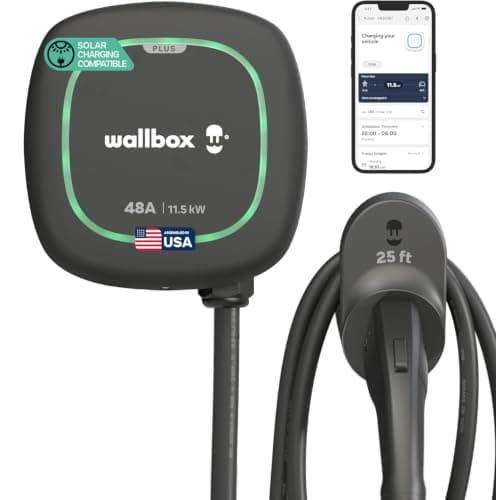
Wallbox Wallbox Pulsar Plus (48A)
Wallbox Pulsar Plus (48A)

One of the smallest 48-amp chargers you can hang on a wall — full-speed hardwired charging in a box that barely announces itself.

A compact, fast, hardwired install
8.4
$614.99Amazon
05
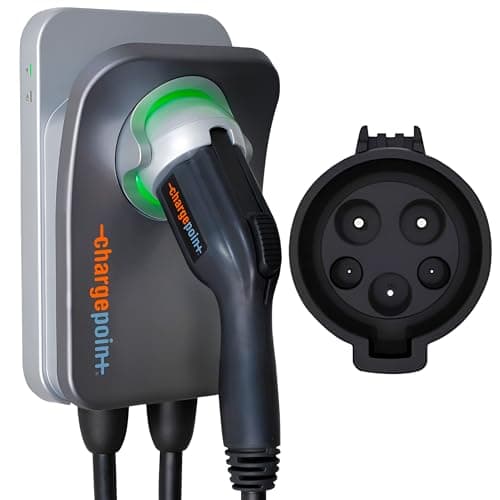
ChargePoint ChargePoint Home Flex
ChargePoint Home Flex

The mature, well-supported pick — amperage you dial in up to 50A, wired into the biggest public-charging app in North America. You pay for the polish.

Buyers who want the established brand + one app
8.2
$539.00Amazon

#ad · Live prices from the Amazon Product API, as of Jul 20, 2026. Where we have no verified live price, we show none — we would rather leave a gap than print a number that has gone stale.

If the charger is going to live outside, buy the Grizzl-E Classic. It is a cast-aluminum NEMA 4 box with an IP67 water-resistance rating and no app or cloud service that can fail on a wall you cannot easily reach - the closest thing in this category to a fixture you bolt up and forget. If you want the same NEMA 4 protection with a Wi-Fi app and a longer cable for less money, the EVIQO Level 2 is the value alternative.

Plenty of EV owners have no garage. The charger goes on a driveway wall, a carport post, the side of a townhouse, or a detached garage that leaks. That changes the buying problem completely: the amperage and app arguments that dominate our main Level 2 roundup matter less than whether the enclosure keeps water out at 2am in a January storm, whether the cable still bends at 10 degrees, and whether the outlet behind it is legal in a wet location. This page ranks the chargers that are actually rated for that job. We compile the published manufacturer specifications and the relevant code requirements - we do not have a weather chamber, and we are not going to pretend we tested one.

The short version

Every unit here is rated by its maker for indoor or outdoor installation, so the ranking is about how much protection you get and what you give up for it:

  • Grizzl-E Classic - best outdoor charger overall. Cast-aluminum NEMA 4 enclosure, IP67 water resistance, UL certified, and nothing in the cloud to go stale. Full Grizzl-E Classic review.
  • EVIQO Level 2 - best value weatherproof pick. IP66 plus NEMA 4, UL and ETL listed, 25-foot cable, Wi-Fi app, and usually the cheapest unit here. It also wins our best budget chargers list.
  • Emporia Level 2 - best fast outdoor pick. NEMA 4 rated, 48-amp capable when hardwired, with genuine energy monitoring. Full Emporia review.
  • Wallbox Pulsar Plus - best compact outdoor install. Type 4 per UL 50E in the smallest body here, but with the narrowest published temperature range - see the heat section below.
  • ChargePoint Home Flex - best brand and app support. Weatherproof, Energy Star certified and backed by a mature support operation, but rated NEMA 3R rather than NEMA 4. Full ChargePoint review.

The spec that decides this category: NEMA 3R versus NEMA 4

"Weatherproof" is a marketing word. The enclosure type is the specification, and the difference between the two you will see on EV chargers is real:

  • NEMA 3R is the outdoor baseline. It covers falling rain, sleet and snow. It does not promise anything about water thrown at the enclosure from the side.
  • NEMA 4 adds protection against windblown dust and hose-directed water. On an exposed wall, in wind-driven rain, or anywhere a pressure washer or a sprinkler head will ever point at it, that is the rating you want.

Four of the five picks here are Type 4: ChargePoint publishes Type 3R per UL 50E for the Home Flex, while Wallbox publishes Type 4 per UL 50E for the Pulsar Plus, and Grizzl-E, EVIQO and Emporia all publish NEMA 4 enclosures. That is not a reason to rule the ChargePoint out - a 3R box under a deep eave or inside a carport is fine, and its brand support is the best here - but on a fully exposed wall the Type 4 units are the safer buy. Some makers publish an IP number alongside the NEMA type: the Grizzl-E is listed as IP67 water resistant and the EVIQO as IP66. Those are the strongest ingress claims in this group.

The practical takeaway: under a solid roof, any rating here works. On an open wall, a post, or anywhere the wind drives rain sideways, buy a NEMA 4 unit and treat NEMA 3R as the compromise it is.

Cold, heat and sun: read both ends of the range

Outdoor chargers publish an ambient operating temperature range, and buyers almost always check the cold end and ignore the hot one. Both matter, and this is where the picks separate. ChargePoint publishes -22 to 122 degrees Fahrenheit (-30 to 50 Celsius) for the Home Flex, and Grizzl-E, EVIQO and Emporia publish ranges topping out at the same 122 degrees. Wallbox publishes -22 to 104 degrees Fahrenheit (-30 to 40 Celsius) for the Pulsar Plus - an 18-degree lower ceiling than everything else here.

That ceiling is not theoretical. A charger on a south or west-facing wall in Phoenix, Sacramento or Dallas sits in direct afternoon sun on top of a 100-plus degree air temperature, and a unit at its thermal limit will throttle its output to protect itself rather than fail outright. If you live somewhere genuinely hot, either pick a unit with the higher ceiling or mount the Wallbox in shade. In the cold, the enclosure is rarely the problem - the cableis. Every charging cable stiffens as the temperature drops, and the Grizzl-E's is a recurring owner complaint in northern winters. It is the one honest strike against our top pick, and it applies to some degree to every charger on this page.

The part people get wrong: the outlet behind the charger

A plug-in charger outdoors is not just a charger outdoors - the receptacle has to be legal for a wet location too, and this is where DIY installs go sideways. Three requirements come into play outside that never came up in the garage:

  • GFCI protection. NEC Article 625 requires receptacles installed to connect EV supply equipment to be GFCI protected. That can come from a GFCI breaker, a GFCI receptacle, or protection built into the unit - your electrician will confirm which applies.
  • A weatherproof enclosure for the receptacle.An EV charging receptacle in a wet location needs an enclosure that stays weatherproof, which in practice means a listed in-use ("bubble") cover deep enough to close over a NEMA 14-50 plug - not the flat flip-lid that comes on a standard outdoor box.
  • Mounting height. The coupling means has to sit at least 24 inches above grade outdoors, unless the equipment is specifically listed and marked otherwise - higher than the 18-inch indoor minimum.

None of that makes an outdoor install exotic; it makes it a job to hand to a licensed electrician who knows Article 625. The receptacle itself is worth spending on either way - our NEMA 14-50 outlet guide covers why the cheap ones are the part that fails under a continuous 40-amp draw, and the installation cost guide covers what the whole job runs. Treat these as standard NEC practice and confirm the specifics against your local code.

Hardwiring is usually the better outdoor answer

Indoors, plug-in versus hardwired is mostly a convenience question. Outdoors it is also a water question: hardwiring removes the receptacle, the cover and the plug from the equation entirely, leaving one sealed entry into a weather-rated box. It also unlocks the full 48 amps on the Emporia and the Wallbox, because a NEMA 14-50 plug lives on a 50-amp circuit and the continuous-load rule caps it at 40 amps. The trade is permanence: a hardwired unit stays with the house. If you rent, or you might move, take the plug-in route and pay for a proper in-use cover. The amperage math behind all of this is in our amperage and breaker guide.

The picks, in order

Below the summary table each charger gets a full card with its score breakdown, pros and cons, and a "don't buy this if" note. In short: the Grizzl-E wins on raw enclosure and the absence of anything to update, the EVIQO on the same NEMA 4 protection for less, the Emporia on speed and monitoring, the Wallbox on footprint, and the ChargePoint on support - with the weakest enclosure rating of the five.

In detail

The picks, in full

01
Grizzl-E Grizzl-E Classic (40A)

People who want a charger, not an app

Grizzl-E Classic (40A)

40A / 9.6kWJ1772NEMA 14-50 plugUL certified
8.0/10

A UL-certified cast-aluminum box with no app to update and nothing in the cloud to fail — the durability default for people who want a charger, not a gadget.

Charge speed
8
Build & weather
10
Smart features
5
Cable & connector
8
Value
9

Pros

  • Cast-aluminum enclosure rated for indoor and outdoor use — genuinely built to outlast plastic-bodied rivals
  • UL certified, which plenty of budget chargers on Amazon cannot claim
  • No mandatory app or Wi-Fi: it charges the day it arrives and keeps working if a server goes dark

Cons

  • No scheduling or energy monitoring — if you want off-peak automation or load sharing, look elsewhere
  • The stock cable stiffens in the cold, a recurring owner note in northern climates

Don't buy this if…

you want app scheduling, energy tracking, or load sharing between two cars. The Grizzl-E is deliberately dumb, and if smart features are the point for you, the Emporia is the better buy.

$299.99View on Amazon

Price as of Jul 20, 2026. Prices change — Amazon's is the one that counts.

#ad · we may earn a commission from this link to Grizzl-E Classic (40A)

02
EVIQO EVIQO Level 2 (40A)

Budget buyers who still want smart features

EVIQO Level 2 (40A)

40A / 9.6kWJ177225ft cableUL & ETL, IP66/NEMA 4
8.6/10

A double-listed (UL and ETL), IP66-weatherproof smart charger that keeps landing at the bottom of the price band — a lot of certified hardware for the money.

Charge speed
8
Build & weather
9
Smart features
8
Cable & connector
8
Value
10

Pros

  • Carries both UL and ETL listings plus an IP66 / NEMA 4 weatherproof rating — unusually well-certified for the price
  • Wi-Fi app with scheduling that undercuts the established brands
  • Long 25-foot cable and a simple plug-in NEMA 14-50 install

Cons

  • Newer brand with a shorter track record than ChargePoint or Wallbox
  • 40-amp ceiling, so not the fastest if your panel could do more

Don't buy this if…

the reassurance of a long-established brand and support network matters most to you. The hardware is well-listed, but if brand maturity is what you are buying, the ChargePoint is the safer pick.

$395.99View on Amazon

$469.9916% off

Price as of Jul 20, 2026. Prices change — Amazon's is the one that counts.

#ad · we may earn a commission from this link to EVIQO Level 2 (40A)

03
Emporia Emporia Level 2 (48A)

Most homes that want speed and smarts

Emporia Level 2 (48A)

Up to 48A / 11.5kWJ177225ft cableWi-Fi + app
9.0/10

The charger that refuses to charge you extra for being smart: full 48-amp speed and real energy monitoring at roughly the price of a plain plug-in box.

Charge speed
10
Build & weather
8
Smart features
9
Cable & connector
8
Value
10

Pros

  • 48-amp capable when hardwired — quicker than the 40-amp plug-in default most units top out at
  • Genuine energy tracking and scheduling in the app, priced below almost every other smart charger
  • The 25-foot cable reaches either side of a two-car garage

Cons

  • You only get 48 amps hardwired on a 60-amp circuit; the plug-in version is capped at 40A like everything else
  • The app and Wi-Fi are central to the experience, so first-time setup takes longer than a plug-and-go box

Don't buy this if…

you never intend to open an app. A lot of what you are paying for is the software; if a sealed, silent box is what you actually want, the Grizzl-E Classic is the honest call.

$449.00View on Amazon

Price as of Jul 20, 2026. Prices change — Amazon's is the one that counts.

#ad · we may earn a commission from this link to Emporia Level 2 (48A)

04
Wallbox Wallbox Pulsar Plus (48A)

A compact, fast, hardwired install

Wallbox Pulsar Plus (48A)

Hardwired 48A / 11.5kWJ177225ft cableEnergy Star + UL
8.4/10

One of the smallest 48-amp chargers you can hang on a wall — full-speed hardwired charging in a box that barely announces itself.

Charge speed
10
Build & weather
8
Smart features
8
Cable & connector
8
Value
8

Pros

  • Physically tiny for a 48-amp unit — the least obtrusive charger in our home roundup
  • Full 48-amp hardwired speed, matching the fastest home chargers
  • Energy Star and UL certified

Cons

  • Hardwired only at 48A — no plug-in convenience if you might move it
  • The app has historically drawn more owner complaints than the hardware itself

Don't buy this if…

you rent or might take the charger with you. This is a permanent fixture — a plug-in unit or a portable EVSE is the right call for anyone who could move.

$614.99View on Amazon

$699.9912% off

Price as of Jul 20, 2026. Prices change — Amazon's is the one that counts.

#ad · we may earn a commission from this link to Wallbox Pulsar Plus (48A)

05
ChargePoint ChargePoint Home Flex

Buyers who want the established brand + one app

ChargePoint Home Flex

Adjustable to 50AJ1772NEMA 14-50 plugEnergy Star
8.2/10

The mature, well-supported pick — amperage you dial in up to 50A, wired into the biggest public-charging app in North America. You pay for the polish.

Charge speed
9
Build & weather
8
Smart features
9
Cable & connector
8
Value
7

Pros

  • Output is adjustable in the app up to 50A, so it matches whatever breaker you can install today and more later
  • Reports into the same ChargePoint app that maps and pays for a huge public network — home and away in one place
  • Long track record and responsive support that newer budget brands cannot match

Cons

  • Costs more than equally capable chargers from newer brands
  • The experience leans hard on the ChargePoint account and app; skip it and you are paying for an integration you will not use

Don't buy this if…

price is your first filter. The Emporia matches most of what this does for meaningfully less — here you are paying for brand maturity and the unified app, which are real but not free.

$539.00View on Amazon

Price as of Jul 20, 2026. Prices change — Amazon's is the one that counts.

#ad · we may earn a commission from this link to ChargePoint Home Flex

How to choose a charger that lives outside

The indoor checklist still applies - amperage, cable length, smart features, certification - but outdoors it is reordered, and two items get added. Here is the order we used.

1. Enclosure type first, everything else second

Decide how exposed the mounting spot really is before you compare anything else. Fully open wall, corner that funnels wind, or a post in the open: buy NEMA 4. Deep eave, carport, or a recessed alcove: NEMA 3R is defensible and opens up the ChargePoint. Nothing about a charger matters if water gets into it, and no warranty covers an enclosure used outside its rating.

2. Both ends of the temperature range

Check the published range against your actual climate, including the hot end. A 122-degree ceiling covers almost anywhere in the US; the Pulsar Plus's 104-degree ceiling is fine in a shaded or northern install and marginal on a sun-baked southwestern wall. At the cold end, all five publish -22 degrees, so the differentiator up north is the cable, not the box.

3. Cable length and how it behaves in the cold

Outdoor mounting points are usually further from the charge port than a garage wall, so measure the real path - around the car, not through it - and add slack. The 25-foot cables on the EVIQO and Emporia are the most forgiving here; the Grizzl-E's 24-foot cable is barely shorter but stiffens noticeably in deep cold. Whatever you buy, a wall holster keeps the connector off wet ground, where road salt and grit do their damage. It is the cheapest accessory that extends the life of the expensive part.

4. Hardwired or plug-in - decide before the electrician quotes

Hardwiring is the cleaner outdoor answer: no receptacle, no cover, no plug exposed to weather, and full 48-amp speed on the units that support it. Plug-in keeps the charger portable and is the right call for renters, but it obliges you to buy a listed in-use cover and an industrial-grade receptacle. Do not economise there - it is the single most common failure point in an outdoor plug-in setup.

5. Certification and GFCI, in writing

A charger pushing 40 amps continuously through a wet-location install is not the place to save money on an unlisted box. Every pick here carries a UL or ETL listing: the Grizzl-E is UL certified, the EVIQO carries both UL and ETL, and the ChargePoint publishes compliance with UL 2594 and UL 2231. Confirm the GFCI arrangement with your electrician rather than assuming the charger covers it.

6. Sun, security and the boring physical stuff

Two things get overlooked until they bite. UV exposure ages plastics and cable jackets faster than most people expect, which is an argument for the metal-bodied Grizzl-E or for a shaded mounting spot. And an accessible driveway charger is a visible piece of hardware: mount it where it is lit and overlooked, keep the connector docked in a holster rather than dangling, and remember that a hardwired unit is a great deal harder to walk off with than a plug-in one.

So, which one?

Buy the Grizzl-E Classic if the charger will be exposed and you want the least to go wrong: metal box, IP67, no cloud dependency. Buy the EVIQO if you want that same NEMA 4 protection plus an app and a longer cable for less. Buy the Emporia if you are hardwiring and want 48-amp speed with real energy monitoring. Buy the Wallbox Pulsar Plus if space is tight and your wall is not in blazing sun. Buy the ChargePoint Home Flex if brand support and one app for home and public charging matter more to you than the step from 3R to Type 4 - and mount it somewhere sheltered.
How we picked

We do not run a testing lab

We compiled published specifications from manufacturer manuals and spec sheets, verified the safety listings (UL / ETL), computed the real running and installation costs, checked the wiring math against the NEC continuous-load rule, and read aggregated owner reviews — then scored each product against a published rubric. The scores are judgments from documented research — they are not bench measurements, because we do not have a test lab and we are not going to pretend we do. Every spec and cost figure is cited in Sources.

Questions

Frequently asked

Can an EV charger be installed outside?

Yes, as long as the unit is rated for it. Every charger on this page publishes an outdoor enclosure rating - NEMA 4 on the Grizzl-E, EVIQO, Emporia and Wallbox, NEMA 3R on the ChargePoint Home Flex. What changes outdoors is the wiring around it: EV receptacles need GFCI protection, a receptacle in a wet location needs a weatherproof in-use cover, and the connector has to sit at least 24 inches above grade.

What is the difference between NEMA 3R and NEMA 4 on an EV charger?

NEMA 3R protects against falling rain, sleet and snow. NEMA 4 adds windblown dust and hose-directed water, so it is the rating to want on a fully exposed wall or anywhere a sprinkler or pressure washer could reach. Both are legitimate outdoor ratings; Type 4 is simply the higher bar, which is why four of our five picks carry it.

Do EV chargers work in freezing weather?

The chargers here all publish an operating range down to -22 degrees Fahrenheit, so the electronics are not usually the limit. The cable is - every charging cable gets stiff in deep cold, and the cast-aluminum Grizzl-E in particular draws that complaint from northern owners. Cold also slows the car's own charging, which is a battery behaviour rather than a charger fault; our charge curve explainer covers why.

Should an outdoor charger be hardwired or plug-in?

Hardwired is the cleaner outdoor install: it removes the receptacle, the cover and the plug from the weather, and it unlocks 48 amps on the units that support it. Plug-in keeps the charger portable for renters and movers, but you must pair it with an industrial-grade NEMA 14-50 receptacle and a listed in-use cover rated to stay weatherproof with the plug inserted.

Does an outdoor charger need a special outlet cover?

If it plugs in and sits in a wet location, yes. The code requirement is an enclosure that stays weatherproof with the plug inserted, which in practice means a listed in-use bubble cover deep enough to close over a NEMA 14-50 plug - not the flat flip-lid on a standard outdoor box. The receptacle itself should be an industrial-grade listed unit, as covered in our NEMA 14-50 outlet guide.

Keep reading

Receipts

Sources

We do not run a testing lab, and we do not pretend to. Where a measured number came from someone else's lab, we name them and link them. Where we could not verify something, we say so on the page rather than quietly leaving it out. Read our full method.