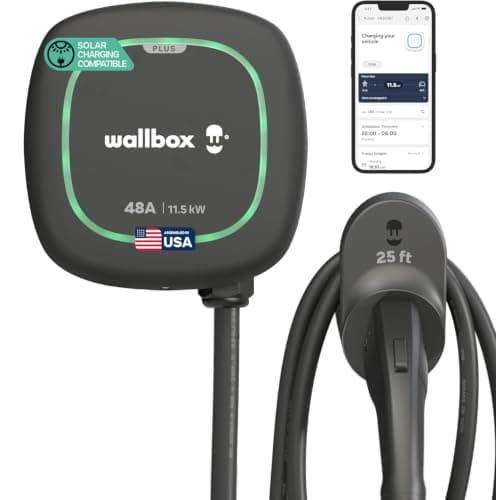
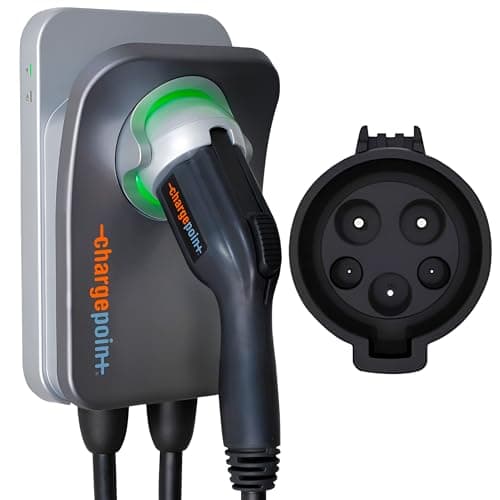
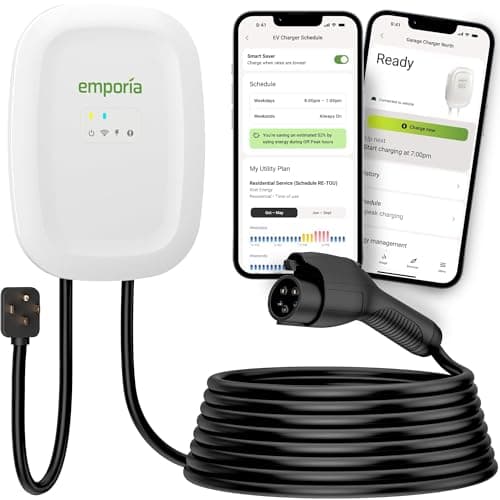
If you are wiring a charger in for good, the Emporia Level 2 is the one to buy for most homes. Hardwired, it delivers the full 48 amps and adds real energy monitoring and scheduling, at the lowest price here - our top pick overall in the main Level 2 roundup, and just as strong wired in. If you would rather have a rugged, hardwired-native metal box with no app and nothing in the cloud to fail, the Grizzl-E Ultimate is the honest alternative: a cast-aluminum IP67 unit with no plug-in version at all.
Hardwiring is a decision, not a spec. A hardwired charger is wired straight into the circuit with no plug in between, and choosing it over a plug-in unit changes three things at once: it unlocks the full 48 amps that a NEMA 14-50 plug caps at 40, it removes the single most common failure point in a home charging setup - the receptacle - and it looks cleaner and is harder to walk off with. The trade is permanence: a hardwired unit stays with the house. This page ranks the chargers genuinely built to be hardwired, and walks through the wiring, code and connector questions a permanent install has to answer. We compile published manufacturer specifications and the relevant NEC requirements - we do not run a test lab, and we will not pretend we bench-measured any of this.
The short version
Two of these units are hardwired-only by design; the other three sell a plug-in variant but are at their best wired in. Here is how they split:
- Emporia Level 2 - best hardwired charger for most. Wired in, it delivers the full 48 amps / 11.5 kW and adds real energy monitoring and scheduling, at the lowest price here. The value pick, and our overall winner. Full Emporia review.
- Grizzl-E Ultimate - best hardwired-native build. A dedicated 48-amp unit with no plug-in version at all, in a cast-aluminum IP67 / NEMA 4X enclosure, UL certified and adjustable 16 to 48 amps. Built to bolt to a wall and be left alone - the pick if you want a metal box and no app. It is the hardwired big brother of the Grizzl-E Classic.
- Wallbox Pulsar Plus - best compact hardwired install. One of the smallest 48-amp units you can hang on a wall, hardwired at the full 11.5 kW, Energy Star and UL certified - the pick when wall space or looks matter.
- Tesla Universal Wall Connector - best for a mixed NACS + J1772 driveway. A hardwired wall unit with a built-in NACS plug and a J1772 adapter, so it charges a Tesla and a non-Tesla EV from one box - the future-proof pick as the connector standard shifts to NACS. Its stock comes and goes, so confirm it is available before you plan around it.
- ChargePoint Home Flex - best adjustable pick and brand support. Hardwired, it dials up to 50 amps in the app and ties into the largest public-charging network in North America. Full ChargePoint review.
Why hardwire at all? Four reasons, one trade-off
Plenty of homes are perfectly well served by a plug-in charger on a NEMA 14-50 outlet. But hardwiring wins on four specific counts, and it is worth being clear about which of them actually matters to you:
- It unlocks 48 amps. A NEMA 14-50 plug lives on a 50-amp circuit, and the continuous-load rule caps a plug-in charger at 40 amps of draw. The only way to pull the full 48 amps / 11.5 kW is to wire the charger straight into a 60-amp circuit with no plug in between. If you want the fastest home charging, hardwiring is not optional - the full field is in our best 48-amp chargers ranking.
- It removes the receptacle - the part that fails. A plug-in charger is only as safe as its outlet, and a cheap NEMA 14-50 receptacle is the exact component that overheats under a continuous 40-amp draw. Hardwiring deletes that failure point entirely - one sealed connection into the unit instead of a plug and socket carrying full current for hours.
- It is cleaner and more secure. No plug, no box on the wall, and a fixture that is far harder to unplug and carry off than a portable brick. On an exposed driveway or carport, that matters.
- It is the better outdoor answer. Outdoors, a plug-in unit needs a weatherproof in-use cover and a wet-location-rated receptacle; hardwiring removes all of that and leaves one sealed entry into a weather-rated box. See our best outdoor chargers ranking for the enclosure ratings that matter there.
The one trade-off is permanence. A hardwired charger stays with the house - you cannot unplug it and take it when you move. If you rent, or you might relocate, a plug-in unit from the main Level 2 roundup or a portable EVSE is the honest call. Everyone else should at least consider wiring it in.
The rule hardwiring runs into: a 60-amp circuit for 48 amps
EV charging is a continuous load, so by code the circuit is sized to 125 percent of the charger's current. That is what makes a hardwired 48-amp install a bigger job than a plug-in one:
- A 40-amp charger needs a 50-amp breaker (40 x 1.25 = 50) and typically 6 AWG copper - and it can plug into a NEMA 14-50 outlet.
- A 48-amp charger needs a 60-amp breaker (48 x 1.25 = 60) and 6 AWG copper, often heavier 4 AWG on a long run - and it must be hardwired.
So before you commit to a hardwired 48-amp unit, confirm your panel can carry a 60-amp circuit - the full breakdown is in our amperage and breaker guide, and the installation cost guide covers what the wiring and any panel work run. A hardwired install is a job for a licensed electrician either way; treat these figures as standard NEC practice and confirm the specifics against your local code.
The practical takeaway: hardwiring is worth it for the clean install and the security even at 40 amps, and it is the onlyway to reach 48. But 48 amps only pays off if your panel can carry a 60-amp circuit and your car's onboard AC charger accepts 11.5 kW - many EVs cap at 7.7 or 9.6 kW. Match the amperage to what your home and car can actually use, then hardwire it.
The connector question: J1772 today, NACS tomorrow
A hardwired charger is a ten-year decision, and the connector standard is changing underneath it. Most non-Tesla EVs sold to date use the J1772 plug, and four of the five chargers here ship with a J1772 connector. But the industry is moving to NACS (the Tesla-style plug, now SAE J3400), and cars from 2025 onward increasingly ship with a NACS port. That does not strand a J1772 charger - a passive adapter bridges the gap for AC home charging - but if your driveway already mixes a Tesla and a J1772 car, the Tesla Universal Wall Connector handles both from one hardwired box: a built-in NACS plug plus a J1772 adapter in the package. For a single-standard household, a plain J1772 unit is simpler and cheaper; the dual-connector unit earns its place only when you genuinely run both - and its Amazon stock comes and goes, so confirm it is available before you plan around it. Our NACS transition explainer covers what the shift means for a charger you buy today.
The picks, in order
Below the summary table each charger gets a full card with its score breakdown, pros and cons, and a "don't buy this if" note. In short: the Emporia wins on value and smart features, the Grizzl-E Ultimate on a dedicated, hardwired-native build, the Wallbox on the smallest footprint, the Tesla on dual-connector flexibility, and the ChargePoint on adjustability and brand support. Every one is genuinely happy hardwired to a wall; the choice is what you want wrapped around that permanent connection.
How to choose a hardwired charger
The install type is decided - you want a charger wired straight into the circuit. What is left is narrower than a general Level 2 choice, because a hardwired buyer has usually committed to a permanent fixture and often an electrician. Here is the order we used.
1. Confirm the circuit and the car first
Before comparing chargers, settle two numbers: whether your panel can carry the circuit you want (a 60-amp circuit for a 48-amp unit, a 50-amp circuit for 40 amps), and what your car's onboard AC charger accepts. Hardwiring is worth doing at any amperage for the clean, secure install - but paying for 48 amps only makes sense if both the panel and the car can use it. Our amperage guide walks the sizing.
2. Build and enclosure, because this one is permanent
A hardwired charger is bolted in for good, often on an outside wall. That makes the enclosure matter more than it does for a plug-in unit you could move indoors. The Grizzl-E Ultimate's cast-aluminum IP67 / NEMA 4X shell is the most rugged here; the Wallbox, Emporia and Tesla use weather-rated bodies, and the ChargePoint is rated for outdoor use as well. If the charger is going outside, weight the build heavily and cross-check our best outdoor chargers ranking, which sorts the field by enclosure type and published temperature range.
3. Connector: single-standard or dual
Match the connector to your driveway. A single-standard household - all J1772, or all NACS with an adapter - is best served by a plain J1772 unit like the Grizzl-E, Emporia, Wallbox or ChargePoint, which is simpler and cheaper. A mixed Tesla-and-J1772 driveway is the one case where the Tesla Universal Wall Connector's built-in NACS plug plus J1772 adapter is worth the premium. Do not pay for the dual connector you will not use.
4. Smart features - worth it, or not, on your rate
Scheduling and energy monitoring pay off on a time-of-use electricity plan, where shifting to off-peak hours is real money - more in off-peak charging. The Emporia, ChargePoint and Tesla give you that; the Grizzl-E Ultimate is built around the hardware rather than an app, which is the point for a set-and-forget install. On a flat rate with a car that charges overnight, the app is a nice-to-have, not a reason to choose. If two EVs will share one circuit, look specifically for load management so the units split the available current safely rather than overloading the breaker.
5. Certification and GFCI, in writing
A charger pushing 40 to 48 amps continuously for hours, hardwired and often unattended, is not the place to save money on an unlisted box. Every pick here carries a UL listing: the Grizzl-E Ultimate is UL tested and certified with built-in GFCI and over-temperature protection, the Wallbox is Energy Star and UL, and the ChargePoint publishes UL compliance. NEC Article 625 also requires GFCI protection on EV supply equipment - your electrician will confirm whether it comes from the unit, a GFCI breaker, or a receptacle, which matters even on a hardwired install.
So, which one?
Buy the Emporia if you want the fastest smart charging hardwired for the least money - the value pick, and the right one for most people. Buy the Grizzl-E Ultimate if the charger is going on a wall for good and you want the toughest hardwired-native box with no app and the least to fail. Buy the Wallbox Pulsar Plus if space or looks matter and you want the smallest full-speed unit. Buy the Tesla Universal Wall Connector if your driveway mixes a Tesla and a J1772 car - stock permitting. Buy the ChargePoint Home Flex if you want to dial the amperage in the app and lean on the biggest brand and public network. And if you might move, or a 60-amp circuit is not in the cards, step back to the best Level 2 roundup and buy a plug-in unit with a clear conscience.