HUB 03 · Charging Guides
Does an EV Charger Need a Neutral Wire?
The charger itself does not use a neutral. Whether you have to run one anyway comes down to how you connect it - 14-50, 6-50, or hardwired.
We earn a commission when you buy through our Amazon links, at no extra cost to you. It never affects our rankings, and we say so when the cheaper product is the better buy. How this works.
The charger itself does not need a neutral. A Level 2 EV charger runs on 240 volts using two hot conductors and a ground - the neutral does nothing for it. But whether your install has to include a neutral anyway depends entirely on how you connect the charger: a plug-in NEMA 14-50 outlet requires a neutral by the receptacle standard even though the charger ignores it, while a hardwired unit or a NEMA 6-50 outlet lets you skip that fourth conductor. Here is exactly why.
What the charger uses, and what it does not
A 240-volt appliance like an EV charger gets its voltage between two hot legs. It also needs an equipment ground for safety. What it does not need is a neutral, which is the return conductor a 120-volt load uses. Because the charger's electronics run entirely on 240 volts, the neutral connects to nothing inside a typical EVSE. So on the charger's side of things, the answer is simply no - two hots and a ground are the full story.
That is worth holding onto, because the confusion always comes from the outlet, not the charger. The connection method is what can force a neutral into the run even when the device on the end never touches it.
It helps to picture how residential 240-volt power is delivered. A home gets two hot legs that are each 120 volts to ground and 240 volts to each other. A pure 240-volt load - a baseboard heater, a well pump, an EV charger - uses only those two hots plus a ground. A load that also needs 120 volts for part of its job, like a range with a clock and lights, taps one hot and the neutral for that portion. The EV charger belongs firmly in the first group: it has no 120-volt sub-loads inside it, so the neutral is along for the ride and nothing more when a 14-50 outlet is involved.
Why a NEMA 14-50 install needs a neutral anyway
The NEMA 14-50 receptacle - the most common plug-in EV outlet, the same one used for ranges - is a four-wire design: two hots, a neutral, and a ground. That standard was written for appliances like electric ranges that genuinely use both 240 volts and a 120-volt neutral leg for things like clocks and controls. When you install a 14-50 for an EV charger, you have to wire it as the standard defines it, which means running the neutral to the receptacle - even though the charger plugged into it leaves that neutral pin unused. You are wiring the outlet to code, not the charger's needs. We cover the receptacle itself in the NEMA 14-50 outlet guide, and why it must be an industrial-grade receptacle.
How hardwiring and a 6-50 outlet skip it
There are two ways to avoid running an unused neutral. The first is hardwiring: a hardwired EVSE connects directly to the circuit with just two hots and a ground - no receptacle, no neutral. The second is a NEMA 6-50 outlet, which is a three-wire design (two hots and a ground, no neutral) built for exactly this kind of 240-volt-only load. Either one lets the electrician run one fewer conductor, which can trim cost on a long run and simplifies the job. The trade-off between a 14-50 and a 6-50 is the whole subject of NEMA 14-50 vs 6-50, and the hardwired-versus-plug-in decision is in hardwired vs plug-in.
| Connection | Conductors | Neutral needed? |
|---|---|---|
| NEMA 14-50 outlet | 2 hots + neutral + ground | Yes - by the receptacle standard (charger leaves it unused) |
| NEMA 6-50 outlet | 2 hots + ground | No |
| Hardwired | 2 hots + ground | No |
So which should you choose?
If you want plug-in flexibility - the ability to unplug the charger, swap it, or take it with you - the 14-50 is the near-universal standard, and running the neutral is just part of doing it right. Many people happily accept one unused conductor in exchange for a plug-in outlet that any portable or plug-in wall unit will match. A smart plug-in unit like the Emporia lives on a 14-50 like this. If you have already decided the charger is permanent, or the run is long enough that saving a conductor matters, hardwiring or a 6-50 is the leaner choice. There is no safety difference between them when each is installed to code - it is a flexibility-versus-simplicity call. A hardwired unit also brings its own set of questions at inspection time, including whether a disconnect switch is required.
Choosing between a 14-50, a 6-50, and a hardwired connection, and running the correct conductors for each, is standard NEC work and a job for a licensed electrician - never a DIY project. Do not omit a neutral from a 14-50 receptacle or repurpose an existing three-wire outlet to save a step; the receptacle must be wired exactly as its standard defines. Use this guide to decide what to ask for, then have a pro install it to code.
The short answer: no, the charger does not use a neutral - but a 14-50 plug-in install still requires you to run one, while hardwiring or a 6-50 outlet lets you leave it out. If saving a conductor is the goal, that is the lever. For the conductor sizing that goes with any of these, see EV charger wire and breaker size, and if you are weighing copper against aluminum on a long run, see copper vs aluminum wire. Whether a given charger is plug-in (neutral needed for the 14-50) or hardwired (no neutral) is marked on every unit in the Level 2 home chargers we rank.
The gear
Recommended gear for this guide
The products this guide refers to, with prices pulled live from Amazon and dated on each card.
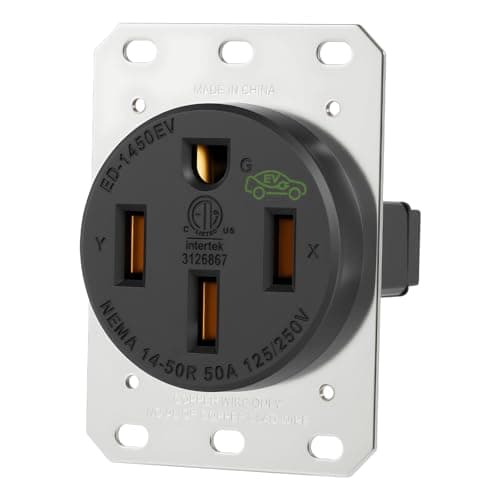
The outlet a plug-in charger needs
Industrial NEMA 14-50 Outlet
The receptacle a plug-in charger actually plugs into — buy the industrial-grade, listed version, because the cheap ones are the exact part that fails.
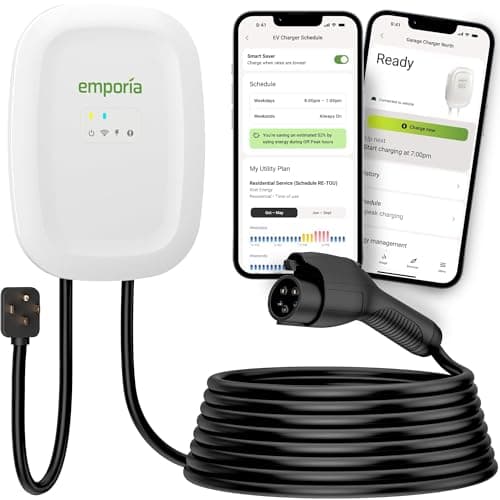
Most homes that want speed and smarts
Emporia Level 2 (48A)
The charger that refuses to charge you extra for being smart: full 48-amp speed and real energy monitoring at roughly the price of a plain plug-in box.
#ad · As an Amazon Associate we earn from qualifying purchases.
Questions
Frequently asked
Does the EV charger use the neutral wire at all?
No. A Level 2 charger runs on 240 volts across two hot legs plus a ground; the neutral connects to nothing inside a typical EVSE. The only reason a neutral appears is the receptacle standard, not the charger.
Then why does a NEMA 14-50 install need a neutral?
Because the 14-50 receptacle is a four-wire standard - two hots, neutral, and ground - and you must wire it as defined. It was designed for ranges that use a neutral. When a charger plugs in, that neutral pin simply goes unused, but it still has to be run. See NEMA 14-50 vs 6-50.
How do I avoid running a neutral?
Hardwire the charger, or use a NEMA 6-50 outlet - both are three-wire (two hots and a ground) and need no neutral. That can save a conductor on a long run. The trade-off is you give up the universal 14-50 plug pattern. Your electrician confirms what your unit supports.
Is a 6-50 or hardwired install safer because it has no neutral?
No - there is no safety difference when each is installed to code. A 14-50 with an unused neutral is perfectly safe; a 6-50 or hardwired connection simply omits a conductor the charger never used. It is a flexibility-versus-simplicity choice, not a safety one.
Keep reading
Related
- NEMA 14-50 vs 6-50The four-wire and three-wire outlets, and when to pick each.
- Hardwired vs Plug-In EV ChargerThe connection choice that decides whether you run a neutral.
- The NEMA 14-50 Outlet GuideHow the four-wire plug-in receptacle is wired.
- Copper vs Aluminum Wire for an EV ChargerSizing the conductors once you know how many you need.
- Best NEMA 14-50 ChargersPlug-in units for the four-wire outlet standard.
More in this section
More Charging Guides
Receipts
Sources
- EC&M - NEC requirements for EV equipment (Article 625: continuous load, circuit sizing, GFCI, disconnect)
- US DOE AFDC - charging at home
- US DOE / fueleconomy.gov - EV charging basics
We do not run a testing lab, and we do not pretend to. Where a measured number came from someone else's lab, we name them and link them. Where we could not verify something, we say so on the page rather than quietly leaving it out. Read our full method.