Skip to content
The Charge Curve

HUB 01 · Home EV Chargers

The Best Level 1 (110V) EV Chargers

The cords that charge from an ordinary household outlet - no electrician, no 240-volt circuit. Ranked on certification, draw and reach, with an honest look at whether 120 volts can keep up with your driving.

By Stephen V.Updated How we compare
#ad

We earn a commission when you buy through our Amazon links, at no extra cost to you. It never affects our rankings, and we say so when the cheaper product is the better buy. How this works.

The short answer

Quick picks

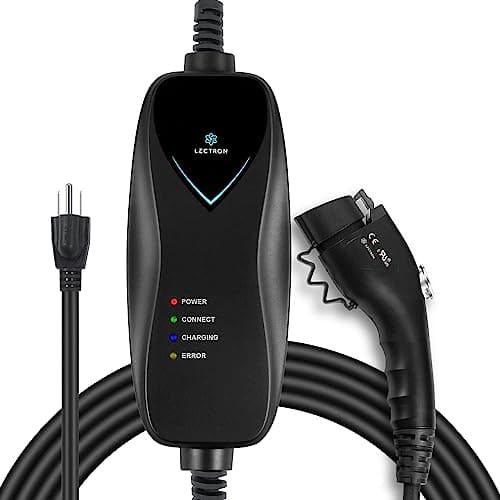
  • Lectron Lectron Level 1 (15A)
    01 Lectron Level 1 (15A)
    7.0

    The Level 1 cord to buy if you buy only one: ETL certified to UL 2594 and Energy Star listed, which most of the 120-volt field on Amazon cannot claim.

    Best for: The certified 120V cord

    $159.99Amazon
  • MACARLON MACARLON 16A Level 1/2
    02 MACARLON 16A Level 1/2
    8.0

    A 120-volt cord that also does Level 2 - it ships with a NEMA 6-20 plug and a 5-15 adapter, so a spare 240-volt outlet roughly doubles your charging speed for no extra hardware.

    Best for: A 120V cord with a 240V upgrade path

    $104.49Amazon
  • Lectron Lectron Level 1 Wi-Fi (15A)
    03 Lectron Level 1 Wi-Fi (15A)
    6.6

    The same 120-volt Lectron cord with an app bolted on - worth it only if you actually want to start, stop and watch a charge from your phone.

    Best for: App control on a 120V cord

    $169.99Amazon
  • WenStorm WenStorm Level 1 (12A)
    04 WenStorm Level 1 (12A)
    7.6

    A deliberately plain 12-amp cord with a long 25-foot lead and no control box to hang - the one that coils smallest and lives in a trunk.

    Best for: A simple long-cable trunk cord

    $123.99Amazon
  • MEGEAR MEGEAR Skysword II (Level 1)
    05 MEGEAR Skysword II (Level 1)
    7.2

    A cheap 120-volt Level 1 backup for the trunk — slow, but it plugs into any household outlet when you have no other option.

    Best for: A 120V emergency backup cord

    $108.29Amazon

#ad · Live prices from the Amazon Product API, as of Aug 10, 2026. Where we have no verified live price, we show none — we would rather leave a gap than print a number that has gone stale.

Level 1 charging means plugging into an ordinary 110-120 volt household outlet - no electrician, no 240-volt circuit, no install. It is slow, roughly 3 to 5 miles of range per hour, but for a plug-in hybrid, a short commute, or a renter with no other option it can be genuinely enough. Our pick is the Lectron Level 1, because it carries an ETL certification to UL 2594 that most 120-volt cords on Amazon cannot claim. The MACARLON adds a 240-volt plug for an upgrade path, the Lectron Wi-Fi version adds app control, the WenStorm has the longest cable, and the MEGEAR is the budget trunk backup.

Almost every buying guide treats Level 1 as an afterthought - the cord you tolerate until you install a real charger. That is right for most drivers and wrong for a meaningful minority. If you drive a plug-in hybrid with a small battery, commute a short distance, or rent somewhere you cannot add a 240-volt circuit, a 120-volt cord plugged in every night may cover your actual driving without spending a dollar on electrical work. This page ranks the cords worth owning and is honest about where the ceiling is. We compile published manufacturer specifications and do the electrical arithmetic; we do not run a test lab.

The short version

  • Lectron Level 1 - best overall. ETL certified to UL 2594 and Energy Star listed, IP65, 15 amps on a standard NEMA 5-15 plug. The certification is the reason to buy it.
  • MACARLON 16A Level 1/2 - best upgrade path. Runs 120 volts today and Level 2 on a 240-volt NEMA 6-20 outlet with the plug in the box, with adjustable current and a schedule. The cheapest way out of the Level 1 ceiling.
  • Lectron Level 1 Wi-Fi - best app control. The same 120-volt hardware with a phone app for starting, stopping and monitoring. Worth it only if you will use it.
  • WenStorm Level 1 - best cable reach. A 25-foot boxless cord drawing 12 amps - the draw an ordinary 15-amp circuit is actually rated to carry continuously.
  • MEGEAR Skysword II - the budget trunk backup. The cheapest way to have a 120-volt cord in the car for the day you need one. Also in our portable chargers roundup.

Be honest about the speed first

Level 1 adds roughly 3 to 5 miles of range per hour. Plugged in for twelve hours overnight that is about 40 to 60 miles - and that number, not the brand on the cord, decides whether Level 1 works for you. The arithmetic is simple: a 120-volt outlet at 12 amps is about 1.4 kW, and at 15 amps about 1.8 kW, against 9.6 kW from a 40-amp Level 2 charger. No 120-volt cord escapes that ceiling, which is why the differences between the units here are about certification, cable and control, not speed.

Ignore the marketing. Some 120-volt listings advertise far higher hourly range figures than the 3-5 miles the US Department of Energy publishes; those numbers do not survive contact with an ordinary household circuit. If a cord promises Level 2 speed from a wall socket, the claim is the problem, not your outlet. Our Level 1 vs Level 2 guide works through the comparison in full.

When 120 volts is genuinely enough

  • Plug-in hybrids. A PHEV battery is small - often 10 to 18 kWh - so an overnight 120-volt charge routinely fills it completely. For most PHEV owners Level 1 is not a compromise, it is the correct answer, and a Level 2 install would be money spent on speed the car cannot use.
  • Short commutes. If you drive under about 40 miles a day and plug in every night, Level 1 replaces what you used. The failure mode is not distance, it is irregularity - a long unplanned trip leaves you without a fast way to recover.
  • Renters and apartment parking. When you cannot touch the wiring, an existing 120-volt outlet within cable reach may be the only charging you have. That makes cable length and a safety listing matter more than amperage - the situation our chargers for apartments and renters page covers in depth.
  • As a backup, for everyone else. Even with a Level 2 charger at home, a 120-volt cord in the trunk turns any building with an outlet into somewhere you can add range - the case made in a portable charger for emergencies.

The one electrical detail that matters: 12A vs 15A

This is where Level 1 shopping gets genuinely technical, and where the listings are least clear. EV charging is a continuous load, and the code sizes continuous loads to 80 percent of the circuit. An ordinary 15-amp household circuit is therefore rated for about 12 amps continuous - which is exactly why so many Level 1 cords are built to draw 12 amps.

A cord that draws 15 or 16 amps is above that limit on a standard 15-amp circuit. To run it flat out you want a 20-amp circuit(which supports 16 amps continuous), and ideally one that is not shared with half the garage. That is the real trade behind the picks: the WenStorm's 12 amps is the circuit-friendly draw, while the 15- and 16-amp cords charge faster but ask more of the outlet. Confirm what your circuit actually is with a licensed electrician - the sizing rules are the same ones in our wire and breaker size guide.

Plug a Level 1 cord straight into the wall. Never run one through a household extension cord or a power strip - a continuous EV load is exactly what overheats an undersized cord, and it is the most common way a 120-volt charge goes wrong. Use a known-good, grounded outlet, and if the plug or the receptacle feels warm, stop and use a different one. See extension cord safety and a plug getting hot.

The picks, in order

Below the summary table each cord gets a full card with its score breakdown, pros and cons, and a "don't buy this if" note. In short: the Lectron wins on the safety listing, the MACARLON is the one to buy if a 240-volt outlet is anywhere in your future, the Lectron Wi-Fi is for app control, the WenStorm reaches furthest on the friendliest draw, and the MEGEAR is the cheap one for the trunk. Every one of them charges at Level 1 speed; the choice is what surrounds that.

In detail

The picks, in full

01
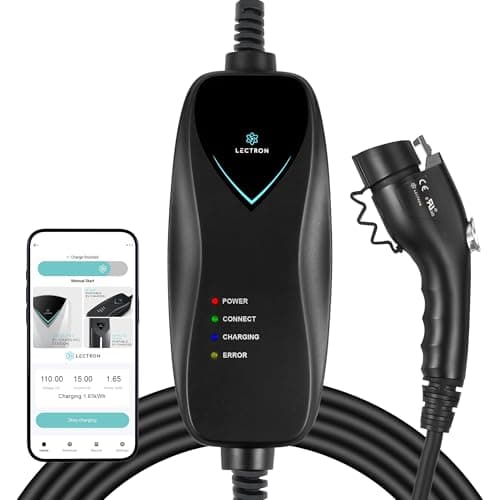
Lectron Lectron Level 1 (15A)

The certified 120V cord

Lectron Level 1 (15A)

Level 1 · 110V15A / 1.65kWNEMA 5-15 plugETL (UL 2594), IP65
7.0/10

The Level 1 cord to buy if you buy only one: ETL certified to UL 2594 and Energy Star listed, which most of the 120-volt field on Amazon cannot claim.

Charge speed
3
Portability
9
Build & weather
8
Cable & connector
7
Value
8

Pros

  • ETL certified to the UL 2594 standard and Energy Star listed - a real third-party safety listing on a cord you leave plugged in unattended overnight
  • IP65 rated with over-voltage, over-current and short-circuit protection
  • 16-foot cable and a plain NEMA 5-15 plug, so it works at any grounded household outlet

Cons

  • Costs more than the no-name 120-volt cords it sits beside - the certification is what you are paying for
  • A 15-amp draw is above the 12-amp continuous limit of a standard 15-amp household circuit, so it wants a 20-amp circuit to run flat out

Don't buy this if…

you drive enough to need a real overnight refill. Level 1 adds roughly 3-5 miles of range per hour no matter whose cord it is - if that will not keep up, buy a Level 2 charger and a 240V outlet.

$159.99View on Amazon

Price as of Aug 10, 2026. Prices change — Amazon's is the one that counts.

#ad · we may earn a commission from this link to Lectron Level 1 (15A)

02
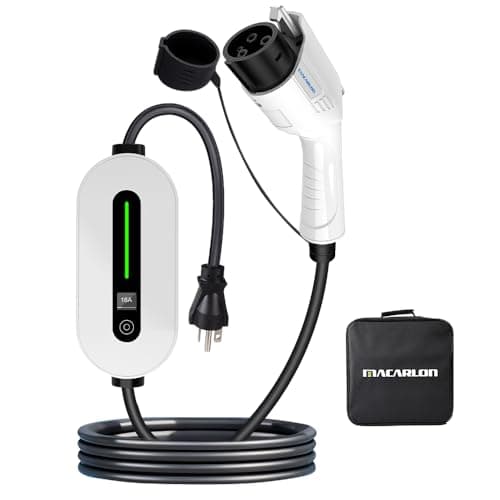
MACARLON MACARLON 16A Level 1/2

A 120V cord with a 240V upgrade path

MACARLON 16A Level 1/2

Level 1/2 · 120-240V8-16A adjustableNEMA 6-20 + 5-1525ft, IP66
8.0/10

A 120-volt cord that also does Level 2 - it ships with a NEMA 6-20 plug and a 5-15 adapter, so a spare 240-volt outlet roughly doubles your charging speed for no extra hardware.

Charge speed
5
Portability
9
Build & weather
8
Cable & connector
9
Value
9

Pros

  • Runs Level 1 on a household outlet (120V / 12A) and Level 2 on a 240V outlet with the included NEMA 6-20 plug - the cheapest way to leave the Level 1 ceiling behind
  • Adjustable current (8/10/13/16A) plus a charge schedule, so it can be dialed down for a weak outlet or set to run off-peak
  • Long 25-foot cable and an IP66-rated body

Cons

  • Its Level 2 mode is 16 amps, not the 40 amps a full-size Level 2 charger delivers - it is a step up from 120V, not a replacement for a wall unit
  • The 240V half only helps if you actually have (or add) a NEMA 6-20 outlet

Don't buy this if…

you have a 240-volt 50-amp outlet available. At that point a 40-amp portable charges several times faster for not much more money.

$104.49View on Amazon

$109.995% off

Price as of Aug 10, 2026. Prices change — Amazon's is the one that counts.

#ad · we may earn a commission from this link to MACARLON 16A Level 1/2

03
Lectron Lectron Level 1 Wi-Fi (15A)

App control on a 120V cord

Lectron Level 1 Wi-Fi (15A)

Level 1 · 120V15ANEMA 5-15 plugWi-Fi app, IP65
6.6/10

The same 120-volt Lectron cord with an app bolted on - worth it only if you actually want to start, stop and watch a charge from your phone.

Charge speed
3
Portability
9
Build & weather
8
Cable & connector
7
Value
6

Pros

  • Wi-Fi app monitors the session and adjusts the charging current remotely - unusual at the Level 1 end of the market
  • IP65 rated for damp garages and outdoor use
  • 16-foot cable on a standard household plug

Cons

  • The most expensive way to add 3-5 miles of range per hour - you are paying for software, not speed
  • Wi-Fi and an app are a lot of moving parts on a cord whose whole job is to trickle overnight

Don't buy this if…

you just want the cord to work when you plug it in. The non-Wi-Fi Lectron is the same charging hardware for less - buy the app only if you will use it.

$169.99View on Amazon

Price as of Aug 10, 2026. Prices change — Amazon's is the one that counts.

#ad · we may earn a commission from this link to Lectron Level 1 Wi-Fi (15A)

04
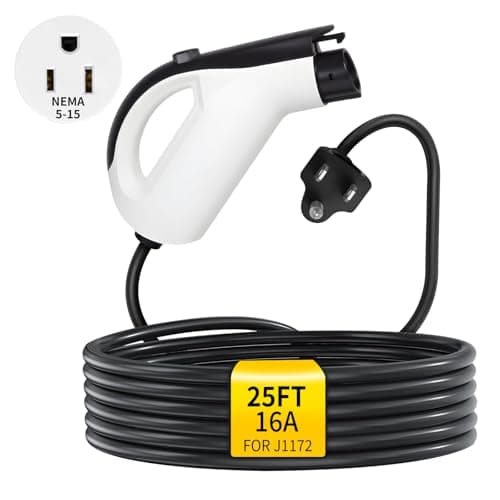
WenStorm WenStorm Level 1 (12A)

A simple long-cable trunk cord

WenStorm Level 1 (12A)

Level 1 · 120V12ANEMA 5-15 plug25ft, boxless, IP55
7.6/10

A deliberately plain 12-amp cord with a long 25-foot lead and no control box to hang - the one that coils smallest and lives in a trunk.

Charge speed
3
Portability
10
Build & weather
7
Cable & connector
9
Value
9

Pros

  • A 25-foot cable - the longest here - so it reaches across an apartment lot or a guest driveway
  • Boxless layout coils smaller and stores more easily than cords with a brick in the middle
  • 12 amps sits inside the 12-amp continuous limit of an ordinary 15-amp household circuit, and built-in temperature monitoring watches for a hot outlet

Cons

  • 12 amps is the slowest draw here - the trade for being circuit-friendly
  • A newer value brand, and the listing states IP55 rather than the IP65 the Lectron claims

Don't buy this if…

you want the fastest 120-volt charge available. A 15- or 16-amp cord on a suitable 20-amp circuit adds range meaningfully quicker.

$123.99View on Amazon

Price as of Aug 10, 2026. Prices change — Amazon's is the one that counts.

#ad · we may earn a commission from this link to WenStorm Level 1 (12A)

05
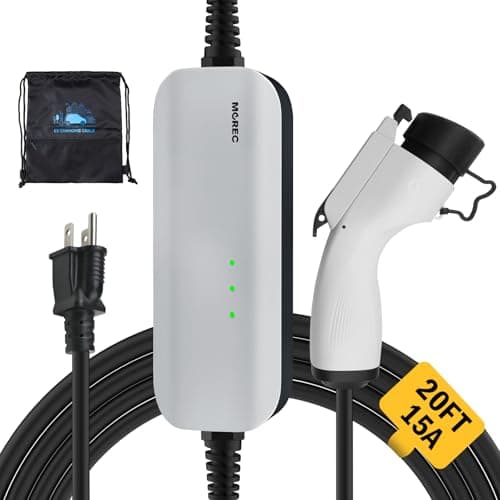
MEGEAR MEGEAR Skysword II (Level 1)

A 120V emergency backup cord

MEGEAR Skysword II (Level 1)

Level 1 · 120V16ANEMA 5-15 plug25ft cable
7.2/10

A cheap 120-volt Level 1 backup for the trunk — slow, but it plugs into any household outlet when you have no other option.

Charge speed
3
Portability
10
Build & weather
7
Cable & connector
8
Value
8

Pros

  • Plugs into any ordinary household outlet — no special circuit required
  • Inexpensive insurance to keep in the trunk
  • Long 25-foot cable

Cons

  • Level 1 only — it adds roughly 3-5 miles of range per hour, against ~25 for Level 2
  • Not a primary home charger for anyone with a daily commute

Don't buy this if…

this is meant to be your only charger and you drive daily. Level 1 is too slow to keep up — buy a Level 2 portable and keep this as a backup, if at all.

$108.29View on Amazon

Price as of Aug 10, 2026. Prices change — Amazon's is the one that counts.

#ad · we may earn a commission from this link to MEGEAR Skysword II (Level 1)

How to choose a Level 1 charger

Speed is off the table - they are all within a mile or two per hour of each other. What is left is four things, in the order they matter.

1. The safety listing

A Level 1 cord sits plugged into a household outlet, unattended, all night. A UL or ETL listing means an independent lab tested it to a standard - the Lectron is ETL certified to UL 2594, and that is the single best reason to pay more than the cheapest listing on the page. Treat an unlisted 120-volt cord the same way you would an unlisted wall charger: a pass.

2. The current draw against your circuit

Match the cord to the outlet you actually have. A 12-amp cord like the WenStorm runs inside the continuous rating of a standard 15-amp circuit; a 15- or 16-amp cord charges faster but wants a 20-amp circuit to do it properly. If you do not know what the outlet is on - and most people do not - the conservative 12-amp draw is the safer default, and an adjustable cord like the MACARLON lets you dial it down.

3. Cable length and where you park

Level 1 outlets are rarely where you want them. A 25-foot cable (the WenStorm, MEGEAR and MACARLON) reaches across a driveway or an apartment bay; the 16-foot Lectron cords assume the outlet is reasonably close. Measure from the outlet to your charge port before you buy - and remember an extension cord is not the fix.

4. The upgrade path

Ask whether 120 volts is your permanent answer or a stopgap. If a 240-volt outlet is plausible - an existing NEMA 6-20, a dryer circuit, a future install - a dual-voltage cord like the MACARLON means the hardware carries over. If you are genuinely stuck at 120 volts, buy the certified cord and spend nothing on capability you cannot use. When you are ready to step up, the 16-amp Level 2 chargers are the next rung, and the full Level 2 field is where most drivers end up.

So, which one?

Buy the Lectron Level 1 unless you have a reason not to - the certification is worth the difference. Buy the MACARLON if a 240-volt outlet exists or could, because it doubles your speed for the price of a plug. Buy the WenStorm if you need the reach or you know you are on a plain 15-amp circuit. Buy the Lectron Wi-Fi only if app control genuinely appeals. And buy the MEGEAR if this is trunk insurance rather than your daily charger.

How we picked

We do not run a testing lab

We compiled published specifications from manufacturer manuals and spec sheets, verified the safety listings (UL / ETL), computed the real running and installation costs, checked the wiring math against the NEC continuous-load rule, and read aggregated owner reviews — then scored each product against a published rubric. The scores are judgments from documented research — they are not bench measurements, because we do not have a test lab and we are not going to pretend we do. Every spec and cost figure is cited in Sources.

Questions

Frequently asked

How fast does a Level 1 charger actually charge?

Roughly 3 to 5 miles of range per hour, so about 40 to 60 miles over a twelve-hour overnight charge. A 120-volt outlet delivers about 1.4 kW at 12 amps or 1.8 kW at 15 amps, against 9.6 kW from a 40-amp Level 2 charger. Ignore any listing promising dramatically more from a household socket - the circuit sets the ceiling, not the cord.

Is a Level 1 charger enough for my EV?

It depends entirely on your daily miles. For a plug-in hybrid, or an EV driven under about 40 miles a day and plugged in every night, Level 1 usually keeps up. For a longer commute, an irregular schedule, or a household that runs the battery low, it will not - you want a Level 2 charger and a 240-volt circuit.

Can I plug a Level 1 charger into an extension cord?

No - not an ordinary household extension cord or power strip. EV charging is a continuous load and that is exactly what overheats an undersized cord. Plug the charger directly into a known-good grounded outlet, and buy a charger with a longer cable instead of extending a short one. See extension cord safety.

Do I need a dedicated circuit for Level 1 charging?

Not strictly, but it is the safer setup. A standard 15-amp circuit is rated for about 12 amps continuous, so a 15- or 16-amp cord wants a 20-amp circuit, and sharing the circuit with other loads invites nuisance trips. If the outlet is old, on a shared circuit, or gets warm in use, have an electrician look at it before you rely on it nightly.

Doesn't my EV already come with a Level 1 cable?

Many do, though a growing number of automakers now ship nothing at all - see does a new EV come with a charger. If yours included one, a second cord is only worth buying for the reach, a safety listing you trust more, or to keep one permanently in the trunk while the other stays at home.

Keep reading

Receipts

Sources

We do not run a testing lab, and we do not pretend to. Where a measured number came from someone else's lab, we name them and link them. Where we could not verify something, we say so on the page rather than quietly leaving it out. Read our full method.