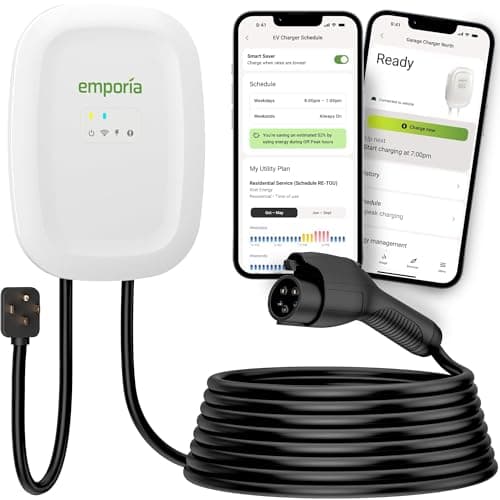
The best home charger for most Toyotas is the Emporia Level 2, because it is the one pick that covers both halves of a lineup that has quietly split in two. Toyota's newest plug-ins - the 2026 bZ, the bZ Woodland, the C-HR BEV and the RAV4 Plug-in Hybrid XSE and Woodland - carry an 11-kW onboard AC charger, the first Toyotas that can genuinely use a 48-amp wall unit. The older and cheaper ones - the 2023-25 bZ4X, the RAV4 Plug-in Hybrid SE and GR SPORT, and the Prius Plug-in Hybrid - top out at 7 kW or less, where a 40-amp or even a 32-amp charger is already more than the car can take. Buy for the car you actually own.
This page exists because Toyota is now the most confusing brand in the driveway. In the space of one model year the lineup went from every plug-in Toyota using J1772 to three different inlets - J1772, CCS1 and NACS- and two very different onboard charging rates. Every number on this page is a published Toyota specification from Toyota's own newsroom, listed in the sources at the bottom. We compiled them and did the arithmetic; we have not bench-tested any car or any charger, and we do not invent per-model charge times.
The good news, and it is genuinely good news, is that the connector churn does not change what you buy. Toyota says all 2026 Toyota BEVs ship with adapters for J1772 and CCS stations as standard equipment, and that 2023-25 bZ4X owners get a complimentary NACS adapter from their dealer. So a normal J1772 wall charger is the right purchase for every Toyota on sale today - the adapter for the newer NACS cars is already in the trunk.
The short version
If you want one recommendation: buy the Emporia. It is the only pick here that is right whether your Toyota is a 7 kW car today or an 11 kW car next time. Beyond that:
- Emporia Level 2 - best for a Toyota overall. Hardwired at 48 amps it delivers the roughly 46 amps an 11-kW Toyota can actually pull, and it dials down in single-amp steps for anything slower. Energy monitoring and scheduling included, at close to plain-box money. You only get 48 amps hardwired on a 60-amp circuit, and the app is central to setup. Full Emporia review.
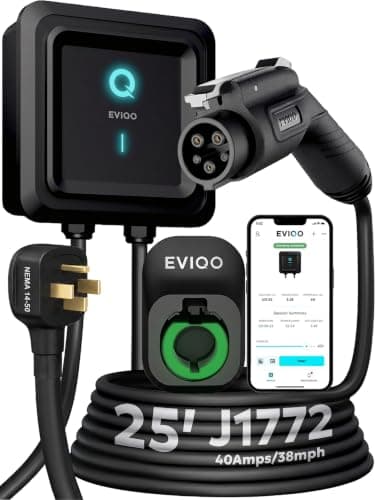
- EVIQO Level 2 - best value for a 7 kW Toyota. A 40-amp J1772 charger with both UL and ETL listings and an IP66 shell, usually at the bottom of the price band. For a bZ4X, a RAV4 Plug-in Hybrid SE or a Prius Plug-in Hybrid it has headroom the car will never use - which is exactly the point. Newer brand, 40-amp ceiling. Full EVIQO review.
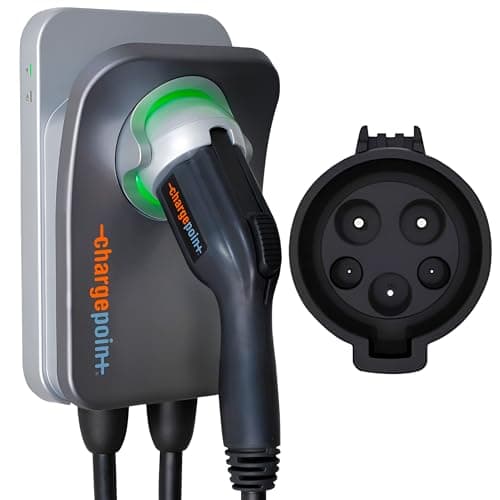
- ChargePoint Home Flex - best when the panel is the problem. Selectable output from 16 all the way to 50 amps, so one unit fits a modest spare circuit or a 60-amp one. The most established brand here, and the most expensive by some margin. Full ChargePoint Home Flex review.
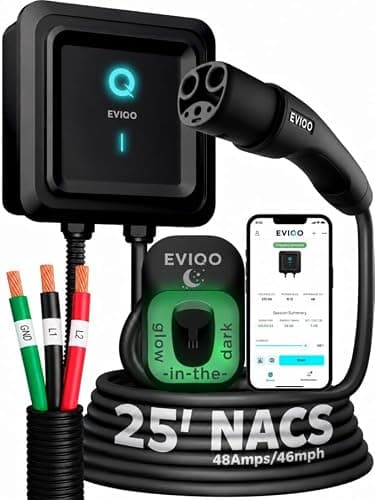
- EVIQO NACS 48A - best for a 2026 bZ you want to plug in bare. A native NACS plug means no adapter hanging off the inlet on the car Toyota built for it. It will not reach a J1772 Toyota without a separate adapter, and it is hardwired only - so this is the pick for a single-car, all-NACS driveway.
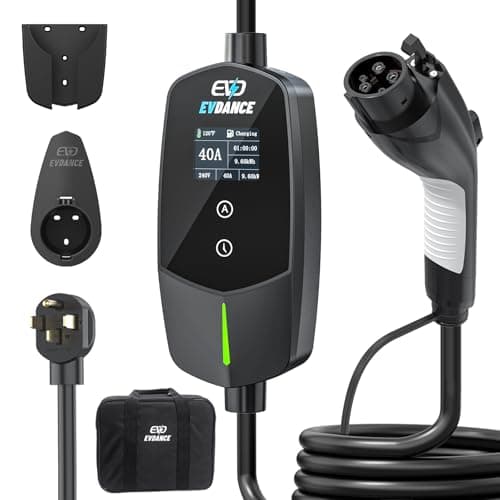
- EVDANCE 40A Portable - best for renters and Prius owners. Plugs into a NEMA 14-50, unplugs to travel, adjusts down to 10 amps, and has a delay timer for off-peak charging. No app and a 40-amp ceiling, neither of which a plug-in hybrid will ever notice.
Which Toyota do you have? The 7 kW / 11 kW split
This is the whole decision, so it is worth being exact. Every figure below is Toyota's own published number:
- 2026 Toyota bZ, bZ Woodland and C-HR BEV. Toyota rates these at an 11-kW onboard AC charger for Level 1 and Level 2 charging - explicitly up from 7-kW capacity on the prior model - behind a NACS port. Battery capacity runs to 74.7 kWh on the larger packs. These are the Toyotas that can use a 48-amp charger.
- 2023-25 Toyota bZ4X. The prior-generation car, at Toyota's stated 7 kW onboard rate, through a J1772 AC inlet. A 32-amp charger already covers it and a 40-amp one has headroom to spare. Toyota is sending these owners a complimentary NACS adapter for public fast charging, which changes nothing at home.
- 2026 RAV4 Plug-in Hybrid XSE and Woodland. An 11-kW onboard AC charger with a CCS1 port. CCS1 carries the J1772 AC section on its upper half, so a standard J1772 charger plugs straight in - and for the first time a plug-in hybrid RAV4 can use a 48-amp unit.
- 2026 RAV4 Plug-in Hybrid SE and GR SPORT. A 7-kW onboard charger with a plain J1772 port. Toyota quotes a Level 2 charge of 10% to 80% in around four hours. A 32- or 40-amp charger is the only ceiling that matters.
- Prius Plug-in Hybrid. Toyota publishes times rather than an onboard kW rating: a 13.6-kWh battery that recharges in about eleven hours on a standard 120-volt outlet, or about four hours on a Level 2 charger. That works out - our arithmetic, not a Toyota specification - to a low single-digit kW onboard charger, well under what any Level 2 unit on this page supplies. Toyota says plainly that no special equipment is needed for home charging.
So the honest summary is short. If your Toyota is an 11 kW car, 48 amps is finally worth buying. If it is a 7 kW car, it is not. Nothing about the connector changes that, and nothing about the charger changes what the car will accept.
Why 48 amps matters on a Toyota now - and only now
A wall charger only offers current; the car's onboard charger decides how much of it becomes charging. The arithmetic is simple and you can check it. At a nominal 240 volts an 11-kW onboard charger draws about 46 amps, which is why a 48-amp charger, and nothing smaller, lets a 2026 bZ or a RAV4 Plug-in Hybrid XSE charge at its rated speed. A 40-amp unit would cap that same car at 9.6 kW, giving up roughly an eighth of its rate.
Run the same arithmetic on a 7-kW Toyota and it lands near 29 amps. A 32-amp charger already clears it. A 40-amp charger is comfortable headroom. A 48-amp charger delivers current the car physically cannot accept, on a circuit that costs more to install - which is why we do not recommend one for a bZ4X or a Prius Plug-in Hybrid unless you are deliberately buying for a future car. Our amperage guide works the onboard-limit rule through in full, and the best 48-amp roundup covers the faster field if you have decided you want it.
The circuit is the other half of that decision, and it is the expensive half. Under the NEC continuous-load rule an EV charger may draw no more than 80% of its breaker, so a 48-amp charger needs a 60-amp circuit, a 40-amp charger needs 50 amps, and a 32-amp charger needs 40. If your panel cannot spare 60 amps that is a real constraint rather than a preference - and on a 7 kW Toyota it costs you nothing at all. Our wire and breaker sizing guide has the full table.
J1772, CCS1 or NACS: what to do about the plug
Toyota moved to the NACS inlet on its 2026 battery-electric cars, kept CCS1 on the fast-charging RAV4 Plug-in Hybrid grades, and left plain J1772 on the rest. That sounds like three different purchases. It is not, because Toyota bridged it for you:
- A NACS Toyota (2026 bZ, bZ Woodland, C-HR BEV). Toyota states that all 2026 Toyota BEVs come standard with adapters for SAE J1772 and CCS stations. Your J1772 wall charger works at home through the adapter that shipped with the car. If you would rather not use one, a native-NACS wall charger like the EVIQO below removes it.
- A CCS1 Toyota (RAV4 Plug-in Hybrid XSE and Woodland). No adapter needed at all. A CCS1 inlet is a J1772 inlet with two DC pins added underneath, so any J1772 charger on this page connects directly.
- A J1772 Toyota (bZ4X, RAV4 Plug-in Hybrid SE and GR SPORT, Prius Plug-in Hybrid). Every J1772 charger fits directly. If a NACS Toyota later joins the driveway, a J1772-to-NACS adapter bridges the gap for a fraction of the cost of a second charger.
Which is why our advice for a Toyota is the boring one: buy a J1772 charger. It fits everything Toyota sells today, directly or through an adapter Toyota already gave you, and it still fits the used EV you buy in four years. If you are unsure which inlet your car has, our guide on telling NACS from J1772 takes about thirty seconds in the driveway.
Does a Toyota plug-in hybrid even need Level 2?
This is the question most brand pages skip, because the honest answer sells less hardware. A Prius Plug-in Hybrid has a 13.6-kWh battery and refills in about eleven hours from a standard 120-volt outlet on the cable Toyota supplies. If the car sits in the garage from six in the evening to seven in the morning, that is thirteen hours of dwell against an eleven-hour fill - Level 1 finishes the job on its own, for the price of nothing, and Toyota says as much.
Level 2 is worth buying for a Prius Plug-in Hybrid when the dwell time is short rather than when the battery is big: a car that comes home at nine and leaves at six, a household sharing one outlet between two plug-ins, or a driver who does two electric round trips in a day. The RAV4 Plug-in Hybrid is a stronger case at any grade - the battery is larger, the electric range is rated up to 52 miles, and a four-hour Level 2 fill turns a mid-day top-up into something you would actually bother doing. Our best Level 1 chargers page ranks the 120-volt field if that is genuinely where you land, and is a home EV charger worth it walks the break-even honestly.
What it costs to run a Toyota at home
Charging a Toyota at home is cheap, and the plug-in hybrids are the cheapest of the lot simply because the batteries are small - a full 13.6-kWh Prius fill is roughly the electricity of running a clothes dryer for a couple of hours at typical residential rates. We work the arithmetic for the bZ4X specifically, with a calculator you can run at your own utility rate, in our Toyota bZ4X home charging cost guide, and the general method for any car is in cost to charge an EV at home. Note that charging at a lower amperage does not change what a full charge costs, only how long it takes - so a 7 kW Toyota on a 32-amp circuit spends exactly what it would on a 48-amp one.
The picks, in order
Below the summary table each charger gets a full card with its score breakdown, pros and cons, and a "don't buy this if" note. In short: the Emporia is the pick that covers both halves of Toyota's lineup, the EVIQO is the value answer for a 7 kW Toyota, the ChargePoint Home Flex is the one to buy when the panel dictates the amperage, the EVIQO NACS suits a single-car 2026 bZ driveway, and the EVDANCE portable is for renters and plug-in hybrid owners who want to take the charger with them. If a different badge shares the garage, our best chargers for a Nissan page covers another low-onboard-rate brand, and Hyundai and Kia covers the 800-volt cars that still cap near 48 amps at home.
How to choose a charger for a Toyota
Five steps, in the order that actually removes options. The first one does most of the work.
1. Find your onboard charger rate - 7 kW or 11 kW
Everything follows from this. An 11 kW Toyota (2026 bZ, bZ Woodland, C-HR BEV, RAV4 Plug-in Hybrid XSE and Woodland) draws about 46 amps and justifies a 48-amp charger on a 60-amp circuit. A 7 kW Toyota (2023-25 bZ4X, RAV4 Plug-in Hybrid SE and GR SPORT) draws about 29 amps, so a 32- or 40-amp charger is the whole story. The Prius Plug-in Hybrid sits below both. Grade matters more than model here: two 2026 RAV4 Plug-in Hybrids on the same lot can have different onboard chargers and different inlets, so check the window sticker rather than the badge.
2. Check what your panel can spare before you fall in love with 48 amps
A 48-amp charger needs a dedicated 60-amp breaker, and plenty of older panels cannot give one up without a subpanel or a service upgrade. If that is your house and you have an 11 kW Toyota, an adjustable charger set to 40 or 32 amps is a perfectly good answer - you lose time, not energy, and you can raise the setting later if the panel changes. Start with do I need a panel upgrade, and load-balancing chargers if the panel is genuinely full.
3. Pick the connector on the same principle Toyota did
Buy J1772 unless every car you will own for the life of the charger has a NACS inlet. Toyota ships J1772 and CCS adapters with its 2026 BEVs and is mailing NACS adapters to bZ4X owners, so a J1772 wall unit is the option that never becomes wrong. A native NACS charger like the EVIQO NACS is a genuine convenience upgrade on an all-NACS driveway - one less thing dangling from the inlet - but it is a convenience, not a requirement, and it makes a J1772 second car harder rather than easier. The best NACS home chargers page ranks that field if you have decided you want it.
4. Hardwired or plug-in
The 48-amp question decides this for you: 48 amps means hardwired, because a NEMA 14-50 plug is rated for 40. If you own the house and have an 11 kW Toyota, hardwire the Emporia and be done. If you rent, might move, or have a 7 kW Toyota, a plug-in unit or a portable on an existing 14-50 outlet is the better shape - it installs without an electrician if a rated outlet already exists, and it leaves with you. Our hardwired vs plug-in guide covers the trade in detail.
5. Then spend the rest on the boring things
With amperage and connector settled, the remaining budget goes where it matters on a device that runs unattended for hours: an explicit UL or ETL listing, a weatherproof rating if it mounts outside, and a cable long enough to reach your Toyota's inlet from wherever the charger ends up. Toyota puts the bZ charge port on the front right-hand side of the car, which is the opposite corner from where a lot of garages have a spare circuit - measure the run before you commit to a 23-foot cable rather than a 25-foot one. Our long-cable roundup is the place to start if the reach is awkward.
So, which one?
Have a 2026 bZ, bZ Woodland, C-HR BEV or RAV4 Plug-in Hybrid XSE and a panel that can spare 60 amps? Buy the Emporia, hardwire it at 48 amps, and use every kilowatt Toyota built into the car. Have a bZ4X, a RAV4 Plug-in Hybrid SE or a GR SPORT? Buy the EVIQO and put the savings toward the install. Panel tight, or genuinely unsure what is coming next? The ChargePoint Home Flex dials from 16 to 50 amps and removes the question. All-NACS driveway, one car, hardwired install? The EVIQO NACS. Renting, or charging a Prius Plug-in Hybrid that barely needs Level 2 at all? The EVDANCE portable - or the 120-volt cable Toyota already supplied, which for a lot of Prius owners is the right answer and costs nothing.
If yours is a 2026 bZ rather than an older bZ4X, check the charge door before you buy any adapter: Toyota moved that car to a NACS port and does not publish whether the inlet also takes Level 2 AC. What each model year needs, and who pays for the factory adapter, is in does my Toyota or Subaru need an adapter.