If you want the simplest way to charge two EVs, buy the Grizzl-E Duo: one rugged cast-metal box with two 25-foot cables that splits a single 40-amp circuit between two cars, installed on one NEMA 14-50 outlet. If you would rather each car had its own dedicated charger, install two Wallbox Pulsar Plus units and turn on Power Sharing - each car charges at full speed when it is alone, and the pair automatically shares the circuit when both are plugged in.
A two-EV household hits the same wall a single-EV one does, only sooner: your panel can usually spare one circuit for charging, not two. There are two honest ways around that, and this page ranks both. One is a dual-port charger - a single unit with two cables that divides one circuit between two cars. The other is power sharing - two separate chargers, wired to the same circuit, that talk to each other so the breaker is never exceeded. Which is right for you comes down to budget, how often both cars charge at once, and whether your driveway mixes connector types. We compile published manufacturer documentation and do the wiring math; we do not run a test lab.
The short version
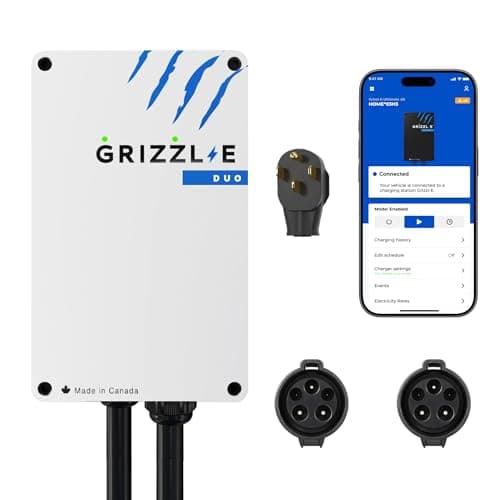
- Grizzl-E Duo - best single-box dual-port charger. Two 25-foot J1772 cables from one cast-aluminum NEMA 4 enclosure, on one NEMA 14-50 plug. Up to 40A / 9.6 kW to a single car; plug in the second and the pair intelligently shares the circuit. One outlet, one install, the cheapest wiring job of any two-car option.
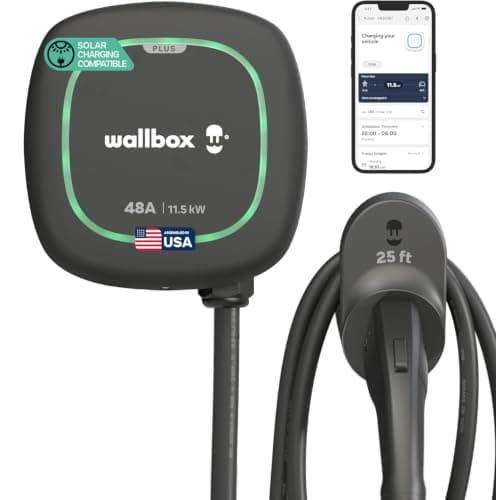
- Wallbox Pulsar Plus (x2) - best two-unit setup. Install two and enable Power Sharing: each car gets its own full-speed connector when it charges alone, and the units divide the circuit when both plug in. More flexible than one shared box, and each Wallbox is a compact 48-amp unit in its own right.
- Tesla Universal Wall Connector - best for a mixed or all-Tesla driveway. Group Power Management shares one circuit across up to six Gen 3 Wall Connectors, and each unit has a native NACS plug plus a J1772 adapter - so a Tesla and a non-Tesla can share the setup. Amazon stock is intermittent; confirm availability.
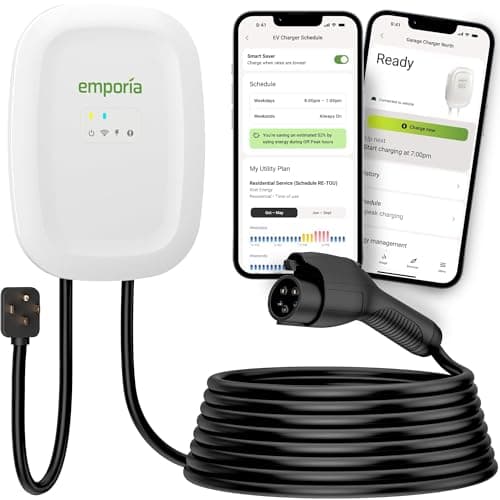
- Emporia Level 2 - best value two-unit pick. Intelligent Load Sharing coordinates two Emporia chargers on one panel, and PowerSmart keeps the total under your service rating - all at the lowest price of the smart units here. Full Emporia review.
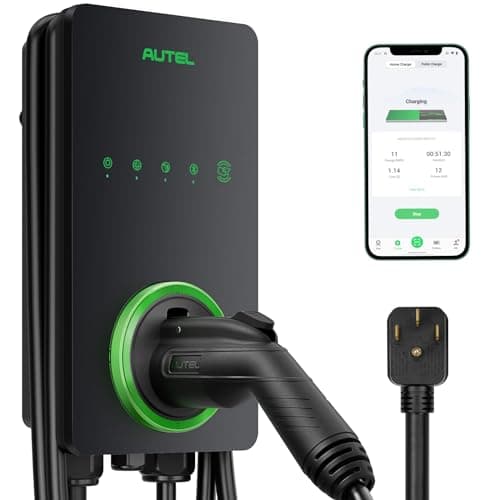
- Autel MaxiCharger - best app-driven two-unit balancing. Local DLB names one charger the master and balances the group in about a second, with Wi-Fi, Bluetooth and a holster in the box.
Two ways to charge two cars
The decision is really about one box or two, and the trade-off is straightforward:
- One dual-port box (the Grizzl-E Duo). Cheapest and simplest: a single NEMA 14-50 outlet and one wall unit serve both cars. The catch is that the two cars alwaysshare one circuit's worth of current, so with both plugged in each gets a slower charge. For most two-car homes that charge overnight, that is a non-issue - there are plenty of hours to go around.
- Two units on power sharing (Wallbox, Tesla, Emporia, Autel). More hardware and a bigger install, but each car has its own dedicated connector and charges at full speed whenever the other is not plugged in. The units only split the circuit when both are actually charging. It is the better answer if the cars often charge at the same time, or if you want a proper connector at each parking spot.
How the current actually splits
With the Grizzl-E Duo, a single car can pull up to the full 40 amps (9.6 kW); plug in the second and the Duo shares the circuit between them so the breaker is never exceeded. It is adjustable to 40, 32, 24 or 16 amps to match whatever circuit it is on. A power-sharing pair behaves the same way in principle - full speed for a lone car, a coordinated split when both charge - but because each car has its own charger, a home that can support a larger shared circuit can give both cars more current at once. Either way, two cars charging simultaneously will each charge more slowly than one car alone; the math is set by the circuit, not the number of cables. Our amperage and breaker guide shows how to size it.
The practical takeaway: if the two cars rarely need a fast charge at the exact same time, the one-box Grizzl-E Duo is the tidy, inexpensive answer. If they often charge together or you want a dedicated connector per car, two units on power sharing is worth the extra install. The load-management mechanics behind both are in our best load-balancing chargers guide.
The picks, in order
Below the summary table each charger gets a full card with its scores, pros and cons, and a "don't buy this if" note. In short: the Grizzl-E Duo is the simplest and cheapest way to serve two cars, the twin Wallbox setup is the most flexible, the Tesla Universal is the pick for a driveway that mixes connector types, the Emporia is the value two-unit option, and the Autel is the tidy app-driven balancer.
How to choose a two-car charging setup
Four questions.
1. One box, or two?
A single dual-port charger like the Grizzl-E Duo is the cheapest and least disruptive install - one outlet, one unit, both cars. Two chargers on power sharing cost more and need a bigger job, but give each car a dedicated connector and more speed when only one is charging. If both cars are usually parked overnight and not in a hurry, one box is plenty; if they frequently need to charge fast at the same time, go with two.
2. The amperage each car actually gets
This is the number that matters. Two cars sharing a 40-amp circuit split roughly 9.6 kW between them, which is still enough to add plenty of range overnight. If you need both cars charging fast simultaneously, you need either a larger shared circuit or a genuine second circuit - and at that point two power-sharing units on a bigger breaker make the most of it. Do not assume "two ports" means "double the power"; it means one circuit, cleverly divided.
3. Connectors, if your cars differ
Most EVs still use J1772, and the Grizzl-E Duo's two J1772 cables cover them. If your driveway mixes a Tesla (NACS) and a J1772 car, the Tesla Universal Wall Connector is the neat answer - a native NACS plug plus a built-in J1772 adapter on each unit, with power sharing across them. Our connector types explainer sorts out which car uses which plug.
4. The install and the wiring
A one-box Duo installs on a single NEMA 14-50 outlet - the same job as any plug-in charger. A power-sharing pair needs the units wired to a shared circuit and a data link between them (Cat 5e for Wallbox, a commissioned group for Tesla). Either way, the circuit and breaker sizing is a job for a licensed electrician; the installation guide covers the costs.
So, which one?
For most two-car homes, the Grizzl-E Duo is the simplest, most affordable answer: one install, two cables, done. If the cars often charge at once or you want a dedicated unit at each spot, install two Wallbox Pulsar Plus chargers on Power Sharing. Mixing a Tesla and a non-Tesla? The Tesla Universal. Watching the budget on a two-unit setup? Two Emporia chargers with Intelligent Load Sharing. Want app-driven balancing with a holster in the box? The Autel.