HUB 03 · Charging Guides
Does an EV Charger Need Its Own Circuit?
Yes, always - hardwired or plug-in. Here is the reason a Level 2 charger cannot share a circuit, even when the plug looks identical to your dryer's.
We earn a commission when you buy through our Amazon links, at no extra cost to you. It never affects our rankings, and we say so when the cheaper product is the better buy. How this works.
Yes. A Level 2 EV charger needs its own dedicated 240-volt branch circuit, and that is true whether the charger is hardwired or plugged into a NEMA 14-50 outlet. It cannot share a circuit with other outlets or appliances, and it cannot piggyback on an existing dryer or range outlet even when the plug is an identical match. This guide explains why the code and the physics both point the same way, and what "dedicated" actually means.
What a dedicated circuit means
A dedicated circuit runs from its own breaker in the panel straight to one device and nothing else. No other outlets, lights or appliances tap into it along the way. For an EV charger that means one breaker, one run of appropriately sized wire, and either a hardwired connection or a single NEMA 14-50 receptacle used only by the charger. Nothing else is allowed to draw from that circuit.
Why sharing is not an option
EV charging is a continuous load - it pulls near its maximum for hours at a stretch, unlike a toaster or a drill that runs for seconds. The NEC treats it accordingly: the branch circuit must be sized to 125 percent of the charger's draw, so a 32-amp charger needs a 40-amp circuit, a 40-amp charger a 50-amp circuit, and a 48-amp charger a 60-amp circuit. That headroom exists to keep the wire and breaker cool under a sustained load. Add anything else to the circuit and you eat into that margin - the combined draw can exceed what the wire is rated to carry continuously, which causes nuisance trips at best and overheating at worst.
This is why a charger gets its own line. It is not a preference or an upsell; it is what keeps a high, hours-long load from cooking a circuit that is also feeding your garage lights and freezer. We cover the sizing in EV charger wire and breaker size and the trips that come from getting it wrong in an EV charger tripping the breaker.
The plug-in case still needs a dedicated circuit
People sometimes assume that because a plug-in charger uses a NEMA 14-50 outlet, and their dryer or range uses a similar 240-volt plug, they can just plug the charger into that existing outlet. You cannot. The matching plug shape is a coincidence of the receptacle standard, not permission to share the circuit. That dryer outlet is on a circuit sized for the dryer, wired for a short-duty appliance, and it feeds only that outlet - putting an hours-long EV load on it can overload the wiring and trip the breaker.
A plug-in charger needs its own dedicated 14-50 circuit run for the charger, terminating in a properly rated, industrial-grade receptacle like an industrial NEMA 14-50 outlet. We spell out the dryer-outlet trap in full in can I use a dryer outlet for EV charging, and what the outlet itself needs to be in the NEMA 14-50 outlet guide.
The breaker-sizing recap
| Charger draw | Power at 240V | Dedicated circuit (125%) |
|---|---|---|
| 32 amps | 7.7 kW | 40-amp breaker |
| 40 amps | 9.6 kW | 50-amp breaker |
| 48 amps | 11.5 kW | 60-amp breaker |
Whichever amperage you choose, the circuit is sized to 125 percent of it and serves the charger alone. A smart plug-in unit like the Emporia still lives on its own dedicated 14-50 circuit; the dedicated-circuit rule does not change with the brand or with whether the unit is plug-in or hardwired. See hardwired vs plug-in for how the two connection types compare.
Running a new dedicated 240V circuit, sizing the breaker and wire, and installing the receptacle or hardwired connection is standard NEC work and a job for a licensed electrician. Do not add a breaker, tap an existing circuit, or reuse a dryer outlet yourself - use this guide to know what to ask for, then have a pro install it to code.
The bottom line: dedicated, every time. One breaker, one properly sized circuit, one charger - hardwired or on its own 14-50 outlet - is the only safe way to run a Level 2 charger. Once the circuit is settled, the charger itself is the easy part: the best Level 2 chargers for home lists the breaker each pick needs.
The gear
Recommended gear for this guide
The products this guide refers to, with prices pulled live from Amazon and dated on each card.
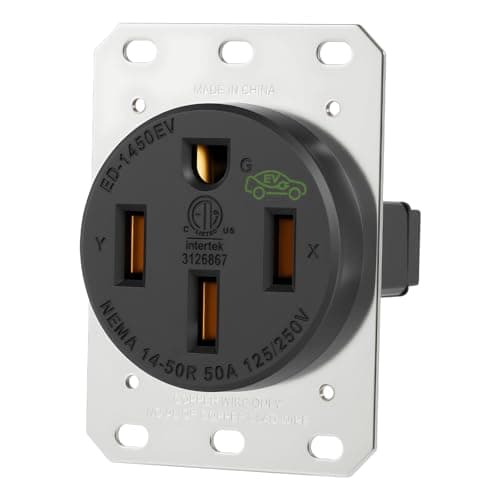
The outlet a plug-in charger needs
Industrial NEMA 14-50 Outlet
The receptacle a plug-in charger actually plugs into — buy the industrial-grade, listed version, because the cheap ones are the exact part that fails.
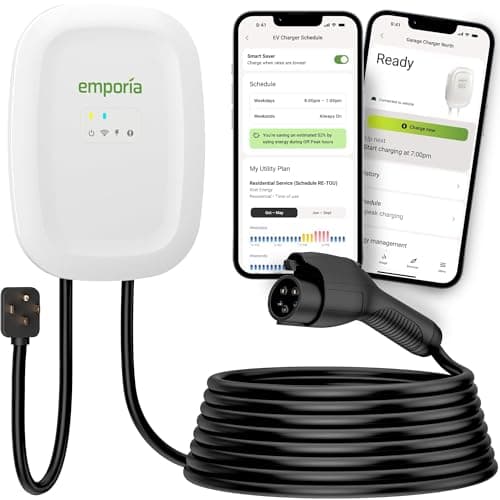
Most homes that want speed and smarts
Emporia Level 2 (48A)
The charger that refuses to charge you extra for being smart: full 48-amp speed and real energy monitoring at roughly the price of a plain plug-in box.
#ad · As an Amazon Associate we earn from qualifying purchases.
Questions
Frequently asked
Can two chargers share one circuit?
Not a standard pair of separate chargers - each needs its own dedicated circuit. The exception is a purpose-built dual charger designed to split one circuit between two cables, which manages the shared current internally. Two independent units cannot simply be wired to the same breaker.
Why can I not use my dryer outlet if the plug fits?
Because the matching plug is a coincidence, not permission. The dryer outlet is on a circuit sized and wired for a short-duty dryer and feeds only that outlet. An hours-long EV load can overload it and trip the breaker. A plug-in charger needs its own dedicated 14-50 circuit. See can I use a dryer outlet.
Does a plug-in charger need a dedicated circuit too?
Yes. Plug-in and hardwired chargers both require their own dedicated 240V circuit. The plug-in version simply ends in a single NEMA 14-50 receptacle used only by the charger, rather than a hardwired connection - the dedicated-circuit requirement is identical.
What breaker does my charger's circuit need?
Size it to 125 percent of the charger's draw: a 32-amp charger needs a 40-amp breaker, a 40-amp charger a 50-amp breaker, and a 48-amp charger a 60-amp breaker. Your electrician confirms the matching wire gauge. Details are in wire and breaker size.
Keep reading
Related
- Two EV Chargers in One GarageHow two chargers share or split circuits.
- EV Charger Wire and Breaker SizeSizing the dedicated circuit to 125 percent of the charger draw.
- Can I Use a Dryer Outlet for EV Charging?Why a matching plug does not mean you can share the circuit.
- The NEMA 14-50 Outlet GuideWhat the plug-in receptacle itself needs to be.
- EV Charger Tripping the BreakerThe trips that come from an overloaded or shared circuit.
- Best NEMA 14-50 ChargersPlug-in units for a properly rated dedicated outlet.
More in this section
More Charging Guides
Receipts
Sources
- EC&M - NEC requirements for EV equipment (Article 625: continuous load, circuit sizing, GFCI)
- US DOE AFDC - charging at home
- US DOE AFDC - EV charging infrastructure
We do not run a testing lab, and we do not pretend to. Where a measured number came from someone else's lab, we name them and link them. Where we could not verify something, we say so on the page rather than quietly leaving it out. Read our full method.