HUB 02 · Cables & Adapters
Do I Need an Adapter to Charge My EV?
Two questions settle it - what plug your car has, and what plug the charger has. Here is the decision in a table, plus the one adapter spec worth caring about.
We earn a commission when you buy through our Amazon links, at no extra cost to you. It never affects our rankings, and we say so when the cheaper product is the better buy. How this works.
Whether you need a charging adapter comes down to two things: the plug your car's charge port takes, and the plug on the charger you want to use. When they match, you plug straight in. When they differ, a small passive adapter bridges them - cheaply and safely, as long as it is properly rated. Here is the whole decision, in plain terms, so you buy the right one or none at all.
Step 1: Know your car's port
North American EVs use one of two AC charging ports. Most non-Tesla cars sold through the last decade use J1772 (the AC part of a CCS port). Teslas, and a growing number of new EVs from other brands, use NACS(the Tesla-style connector, formally J3400). Check your charge port or owner's manual - that is the fixed half of the equation. The full taxonomy is in connector types explained.
Step 2: Know the charger's plug
Home Level 2 chargers come with either a J1772 or a NACS connector on the cable. Most home chargers we rankare J1772; Tesla's wall units are NACS (some are dual). Public and destination chargers are a mix. Whatever is on the end of the cable is the other half of the equation.
Step 3: Match them up
| Your car's port | Charger's plug | Adapter needed? |
|---|---|---|
| J1772 | J1772 | No - plug straight in |
| NACS (Tesla) | NACS | No - plug straight in |
| J1772 | NACS | Yes - a NACS-to-J1772 adapter |
| NACS (Tesla) | J1772 | Yes - a J1772-to-NACS adapter |
That is the entire logic. The adapter is named for the direction it converts - a "NACS-to-J1772" adapter puts a J1772 end on a NACS cable so a J1772 car can use it. If your car and your home charger already share a plug, you need nothing.
The most common real cases
- J1772 car, new J1772 home charger: no adapter. This is the majority of home setups today.
- Tesla (NACS) car, J1772 home charger: you need a J1772-to-NACS adapter - a common, inexpensive item like the FOCSPROD or LENZ. Many Teslas came with one in the trunk.
- J1772 car using a Tesla-style charger(a friend's home unit, some destination chargers): you need a NACS-to-J1772 adapter like the Lectron.
- DC fast chargingis a separate matter - Tesla Supercharger access for a non-Tesla car uses a specific DC adapter and the car's software, not the AC adapters above. See the NACS transition explainer.
The one spec that matters: the safety listing
An adapter sits in the path of the full charging current, so the spec to weigh above all others is the safety listing - look for an explicit amperage rating and, ideally, a UL listing (UL 2252 for NACS-side adapters). Current headroom is easy: home circuits rarely exceed 48 amps, so any adapter rated for 48 or 80 amps has margin. What you are really paying for is a snug, well-built connection that will not overheat or work loose over hundreds of plug cycles. Skip the no-name, unlisted adapters - this is the one place a few dollars saved is not worth it.
Use adapters only for AC home and destination charging, one at a time, fully seated. Do not stack adapters, and do not use an AC adapter for DC fast charging - that is a different, higher-power connection with its own hardware.
The takeaway
Match your car's port to the charger's plug: same plug, no adapter; different plugs, a single properly-rated adapter in the direction you need. Buy a listed one, keep it seated, and connector differences stop being a problem. Start with the connector explainer if you are new to it, then the NACS-to-J1772 or J1772-to-NACS roundup for the pick.
The gear
Recommended gear for this guide
The products this guide refers to, with prices pulled live from Amazon and dated on each card.
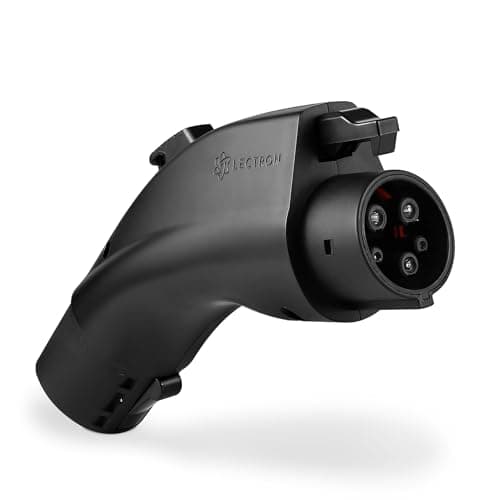
A J1772 car using NACS chargers
Lectron NACS → J1772 Adapter
The default adapter that lets a J1772 car draw from a Tesla-style (NACS) home or destination charger — rated for the full 48 amps.
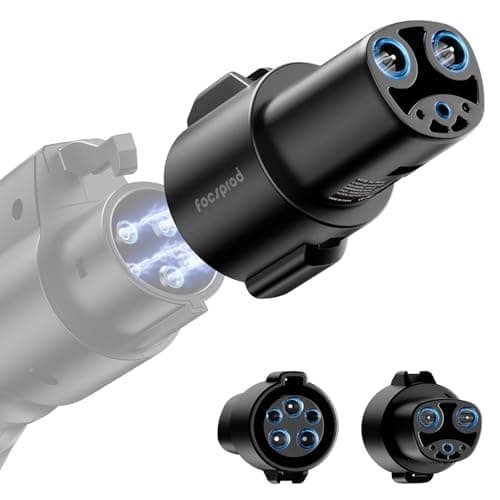
A cheap J1772 → Tesla adapter
FOCSPROD J1772 → Tesla Adapter
A UL-2252-listed budget adapter for charging a Tesla at any J1772 station — cheap insurance for a road trip.
#ad · As an Amazon Associate we earn from qualifying purchases.
Questions
Frequently asked
Do I need an adapter to charge my EV at home?
Only if your car's port and your charger's plug differ. Most non-Tesla cars use J1772 and most home chargers are J1772, so no adapter is needed. A Tesla (NACS) car on a J1772 charger needs a J1772-to-NACS adapter; a J1772 car on a Tesla-style charger needs a NACS-to-J1772 adapter.
Are EV charging adapters safe?
Yes, when they are properly rated and listed. Because an adapter carries the full charging current, buy one with an explicit amperage rating and ideally a UL listing, keep it fully seated, and use it only for AC charging - never for DC fast charging or stacked with another adapter.
Which direction of adapter do I need?
Name it by what it converts to your car's plug. A J1772 car using a NACS charger needs a NACS-to-J1772 adapter; a NACS (Tesla) car using a J1772 charger needs a J1772-to-NACS adapter. Match your car's port to the charger's plug and pick the bridge between them.
Keep reading
Related
- NACS Adapter Compatibility by BrandEvery make in one table: which port, and which adapter at home versus on the road.
- Does My Ford Need an Adapter?Mach-E and Lightning: nothing at home, a DC adapter for Superchargers.
- Connector types explainedJ1772 vs NACS, the full taxonomy.
- Best NACS-to-J1772 adaptersFor a J1772 car using a Tesla-style charger.
- Best J1772-to-NACS adaptersFor a Tesla or NACS car using a J1772 charger.
- The NACS transitionWhy both plugs are common right now.
More in this section
More Cables & Adapters
Receipts
Sources
- US DOE AFDC - EV charging infrastructure & connectors
- US DOE / fueleconomy.gov - EV charging basics
- US DOE AFDC - charging at home
We do not run a testing lab, and we do not pretend to. Where a measured number came from someone else's lab, we name them and link them. Where we could not verify something, we say so on the page rather than quietly leaving it out. Read our full method.