HUB 03 · Charging Guides
Can I Use a Dryer Outlet to Charge My EV?
It is one of the most popular no-install charging hacks - and it works, within limits. Here is the honest version: the amperage, the plug, and the safety rules.
We earn a commission when you buy through our Amazon links, at no extra cost to you. It never affects our rankings, and we say so when the cheaper product is the better buy. How this works.
Yes - a laundry dryer outlet is 240 volts, and with the right portable charger you can use it to charge an EV at Level 2 speeds, no new circuit required. It is one of the most popular ways to start home charging for free. But there are real catches: a dryer circuit is smaller than a dedicated charger circuit, the plug shape matters, and sharing one circuit with the dryer is a safety line you do not cross. Here is the honest version.
Why it works at all
A dryer runs on a 240V circuit, the same voltage a Level 2 EV charger needs. A portable EVSE with the matching plug can tap that circuit and charge the car far faster than a 120V wall socket - typically around 20-24 miles of range per hour versus 3-5. For a renter or anyone avoiding an install, it is a genuinely useful bridge.
The amperage limit is the main catch
A dryer circuit is usually a 30-amp breaker, not the 40-50 amps a dedicated charger circuit uses. Under the continuous-load rule, a 30-amp circuit can only supply 24 amps continuously (30 x 0.8) - so a portable charger set to 24 amps (about 5.8 kW) is the safe maximum on a typical dryer outlet. That is meaningfully slower than a 40-amp charger, but still real Level 2 speed. Most quality portables let you dial the current down to 24 amps or below - do not run a 30-amp circuit at 30 amps continuously.
Set the portable's output to 24 amps or less on a 30-amp dryer circuit. Running it at the full breaker rating for hours violates the continuous-load rule and is exactly how a circuit overheats. If the charger cannot be dialed down, it does not belong on a dryer outlet.
Know your plug: 14-30 vs 10-30
Dryer outlets come in two common shapes, and it matters:
- NEMA 14-30 - the modern 4-prong dryer outlet, with a ground. This is the one you want; most portable chargers offer a 14-30 plug or adapter. It is a close relative of the 14-50 charger outlet.
- NEMA 10-30 - the older 3-prong dryer outlet, with no dedicated ground. Charging safely from a 10-30 is problematic because EV chargers rely on a proper ground for fault protection. Many charger makers advise against 10-30 adapters. If your laundry has a 10-30, the right move is to have an electrician add a proper grounded circuit.
Never share the circuit while the dryer runs
The cardinal rule: the EV and the dryer must not draw from the circuit at the same time. Whether you unplug the dryer to plug in the car, or use a proper transfer/splitter device designed to prevent simultaneous draw, the total must never exceed the breaker. Two 240V appliances on one 30-amp circuit will trip the breaker at best and overheat the wiring at worst. A do-it-yourself Y-splitter that lets both run at once is dangerous - do not use one.
When to stop hacking and add a circuit
The dryer-outlet trick is a fine starting point, but if you charge daily, want more than 24 amps, or have only a 3-prong 10-30, it is worth having a licensed electrician install a proper NEMA 14-50 outlet or a hardwired charger on its own circuit. That unlocks 40-48 amps, removes the sharing headache, and is the setup a permanent EV owner ends up with anyway - and the best Level 2 chargers for home is the ranking for that day. Until then, a dialed-down portable on a grounded 14-30 is a legitimate way to charge.
The gear
Recommended gear for this guide
The products this guide refers to, with prices pulled live from Amazon and dated on each card.
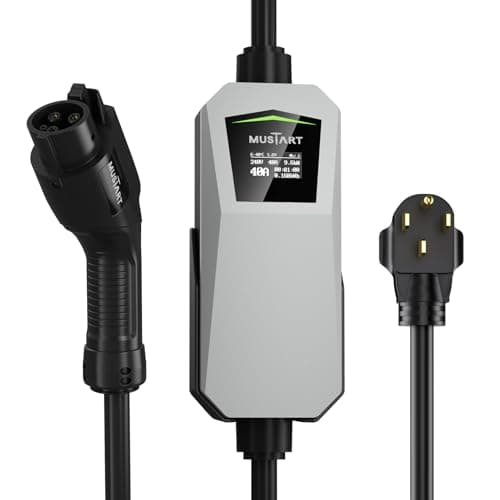
The cheapest capable portable
MUSTART 40A Portable
A budget 40-amp portable with an LCD readout — the value pick when you just need 240V charging that moves with you.
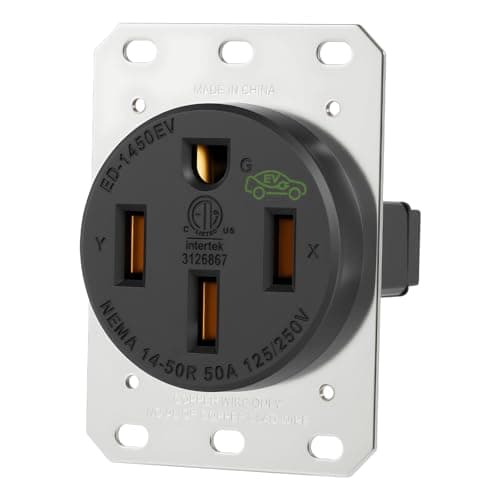
The outlet a plug-in charger needs
Industrial NEMA 14-50 Outlet
The receptacle a plug-in charger actually plugs into — buy the industrial-grade, listed version, because the cheap ones are the exact part that fails.
#ad · As an Amazon Associate we earn from qualifying purchases.
Questions
Frequently asked
Can I charge my EV from a dryer outlet?
Often yes - a dryer outlet is 240V, so a portable charger with the matching plug can charge at Level 2 speeds. The key limits: set the output to 24 amps or less on a 30-amp circuit, use a grounded 4-prong NEMA 14-30 (not an old 3-prong 10-30), and never run the car and dryer at once.
How fast does a dryer outlet charge an EV?
At the safe 24-amp limit of a 30-amp dryer circuit, about 5.8 kW - roughly 20-24 miles of range per hour. That is slower than a dedicated 40-amp charger but far faster than a 120V outlet, and enough to cover typical daily driving overnight.
Is it safe to use a 3-prong (10-30) dryer outlet for an EV?
It is problematic. A NEMA 10-30 has no dedicated ground, and EV chargers rely on a proper ground for fault protection, so many manufacturers advise against 10-30 adapters. The safe path is to have an electrician install a properly grounded circuit instead.
Keep reading
Related
- NEMA 14-30 vs 14-50The dryer plug vs the charger plug, compared.
- NEMA 14-50 outletThe dedicated charger outlet to graduate to.
- Best portable EV chargersThe dialable portables that suit a dryer outlet.
- Best chargers for a 14-30 dryer outletThe 24-amp chargers built for this outlet, ranked with live prices.
More in this section
More Charging Guides
Receipts
Sources
- EC&M - NEC requirements for EV equipment (Article 625: continuous load, grounding)
- US DOE AFDC - charging at home
We do not run a testing lab, and we do not pretend to. Where a measured number came from someone else's lab, we name them and link them. Where we could not verify something, we say so on the page rather than quietly leaving it out. Read our full method.