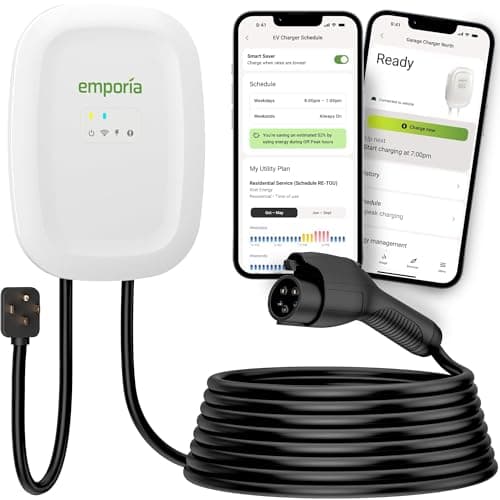
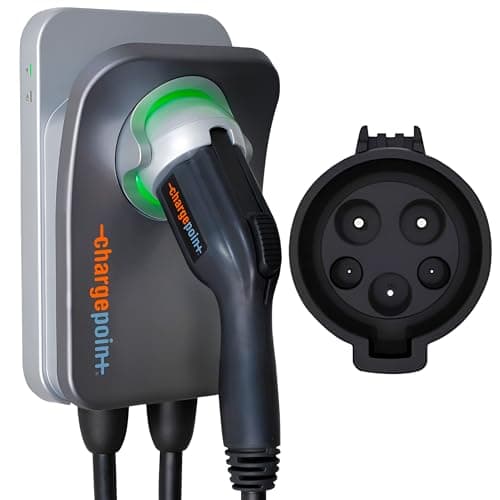
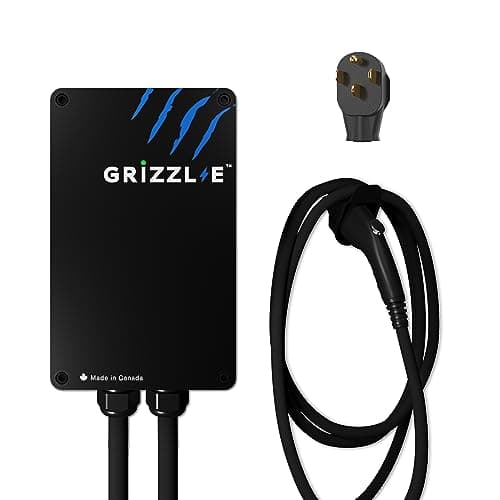
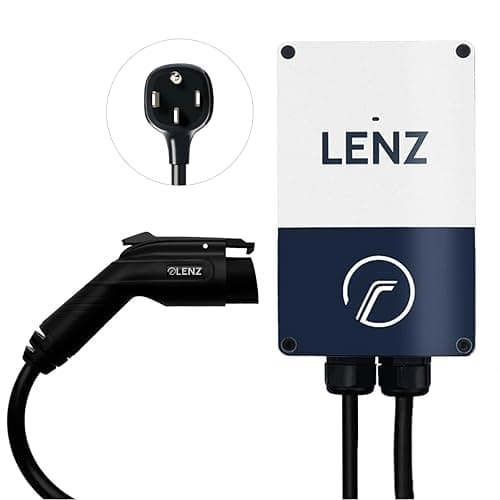
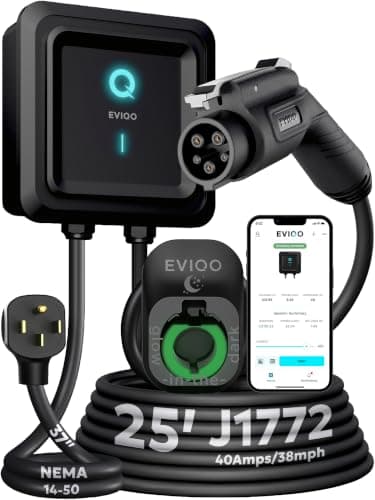
For most Chevy EV owners, the best home charger is the EVIQO Level 2. A Bolt EV or EUV - still the most common Chevy EV in driveways - is completely happy on a 40-amp charger, and the EVIQO is a double-listed (UL and ETL), IP66-weatherproof 40-amp unit that usually sits at the bottom of the price band. If you drive an Equinox EV or Blazer EV and want the full 48 amps those Ultium SUVs accept, the Emporia Level 2 is the smart step up: 48-amp capable when hardwired, with real energy monitoring, for not much more.
Chevy's EV lineup spans two eras, and that decides how much charger you need. The Bolt EV and EUV are the value EVs that put a lot of people into electric driving; the Equinox EV and Blazer EV are newer, larger Ultium-platform SUVs. All of them charge on a standard J1772 Level 2 charger, and all of them can accept up to 11.5 kW / 48 amps - but a Bolt is genuinely well served by less, which is why this page leads with value rather than raw speed. We compile published specs and do the wiring math; we do not run a test lab.
How much charger does your Chevy actually need?
- Bolt EV / EUV (2022+):accepts up to 11.5 kW / 48 amps, and ships with a dual-level portable cord that tops out around 7.7 kW (32 amps). In practice a Bolt's modest battery refills easily overnight on a 40-amp charger - roughly 30 miles of range per hour - so a value 40-amp unit is the sweet spot, not a compromise.
- Equinox EV / Blazer EV: Ultium SUVs with an 11.5 kW / 48-amp onboard charger and a bigger battery to fill. These are the Chevys that actually reward a 48-amp charger on a 60-amp hardwired circuit, though a 40-amp unit still charges them fine overnight.
The arithmetic is standard: 40 amps at 240 volts is 9.6 kW and needs a 50-amp breaker (you can plug it into a NEMA 14-50 outlet); 48 amps is 11.5 kW and needs a 60-amp breaker and a hardwire, because charging is a continuous load sized to 125 percent of the current. So the honest split is simple - a Bolt is a 40-amp car in practice, and an Equinox EV or Blazer EV is the one worth wiring for 48. Our best 40-amp chargers and best 48-amp chargers pages cover each field, and the amperage and breaker guide has the sizing - confirm the circuit with a licensed electrician.
The practical takeaway: buy a value 40-amp charger for a Bolt and pocket the difference - it already meets the car overnight. Step up to a 48-amp hardwired unit only for an Equinox EV or Blazer EV where you want the full 11.5 kW and can run a 60-amp circuit.
Where a low price is safe to pay - and where it is not
A Bolt owner is often shopping value, and value done right is the whole point of this page. What is safe to save on: the smart-app polish, brand recognition, and a metal shell. What is not safe to save on: the UL or ETL safety listing (a charger pushes 40 amps for hours), the weatherproof rating if it mounts outside, and the NEMA 14-50 receptacle a plug-in unit relies on - the cheap outlets are the exact part that overheats, as our NEMA 14-50 outlet guide explains. The EVIQO, Grizzl-E Classic and LENZ Level 2 here all keep their certification while cutting price the right way. It is the same principle behind our best budget chargers roundup.
Connector: J1772 today, NACS arriving
Current Bolt, Equinox EV and Blazer EV models use a J1772 / CCS1 port, so every charger on this page plugs straight in at home. GM is moving to NACS - it offers an adapter for its EVs, and the coming Bolt generation ships with a native NACS port - but for home Level 2 charging that only means a NACS-port Chevy adds a J1772-to-NACS adapter to use these chargers. The connector types explainer has the background.
The picks, in order
Below the summary table each charger gets a full card with its score breakdown, pros and cons, and a "don't buy this if" note. In short: the EVIQO wins on certified value, the Emporia on a path to 48 amps for an Ultium SUV, the ChargePoint on brand and adjustability, the Grizzl-E Classic on no-app durability, and the LENZ Level 2 on a simple low price. Every one charges a Chevy; match it to which Chevy.
How to choose a charger for a Chevy EV
The Chevy decision is really a value-versus-speed call, and your model settles it.
1. Bolt: buy 40 amps and save; Ultium SUV: consider 48
A Bolt EV or EUV is fully served by a 40-amp charger - it refills overnight with room to spare, and buying 48 amps would be paying for headroom the everyday car does not need. An Equinox EV or Blazer EV has a bigger battery and accepts the full 48 amps, so if you can run a 60-amp circuit, a hardwired 48-amp unit uses its full onboard rate. Either car is fine on 40 amps; only the Ultium SUVs make 48 worth the wiring.
2. Keep the certification, cut the frills
The right way to save on a Bolt charger is to give up app polish and brand cachet, never the UL or ETL listing. The EVIQO carries both UL and ETL, the Grizzl-E Classic is UL certified, and the LENZ Level 2 is ETL listed to UL 2594. Skip any uncertified bargain box - it is the one corner that is genuinely dangerous to cut on a unit pushing 40 amps for hours.
3. Plug-in or hardwired
A Bolt on a 40-amp charger can plug into a NEMA 14-50 outlet - a DIY-friendly install if a rated outlet exists, and portable if you move. An Ultium SUV wired for 48 amps needs a hardwire on a 60-amp circuit. If you go plug-in, buy an industrial-grade receptacle per our NEMA 14-50 outlet guide; if you would rather see the plug-in field ranked, our best NEMA 14-50 chargers page does that.
4. Cable length and smart features
The Bolt's charge port is front driver's side; the Ultium SUVs' is front driver's side too - measure and favor a 25-foot cable where the mount is not right next to the port. On features, scheduling and energy monitoring earn their keep on a time-of-use rate: the EVIQO, Emporia and ChargePoint give you that, while the Grizzl-E Classic and LENZ Level 2 keep it simple and cheap.
So, which one?
Buy the EVIQO for a Bolt, or any Chevy where certified value is the goal. Want a path to the full 48 amps for an Equinox EV or Blazer EV? The Emporia. Biggest brand and adjustable speed? The ChargePoint. A sealed metal box with no app? The Grizzl-E Classic. The simplest, cheapest capable plug-in? The LENZ Level 2.