Skip to content
The Charge Curve

HUB 01 · Home EV Chargers

The Best EV Chargers Under $500

The sub-$500 band is where fully certified Level 2 charging lives now - here are five that keep the safety listing and the cable, ranked on where the money goes.

By Stephen V.Updated How we compare
#ad

We earn a commission when you buy through our Amazon links, at no extra cost to you. It never affects our rankings, and we say so when the cheaper product is the better buy. How this works.

The short answer

Quick picks

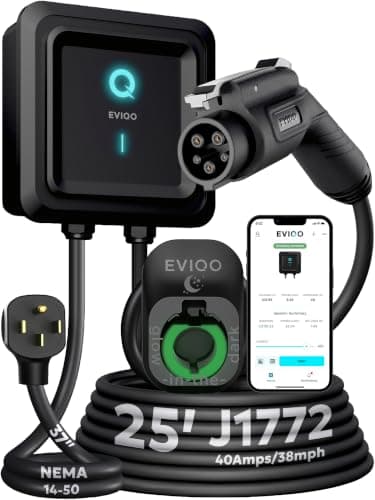
  • EVIQO EVIQO Level 2 (40A)
    01 EVIQO Level 2 (40A)
    8.6

    A double-listed (UL and ETL), IP66-weatherproof smart charger that keeps landing at the bottom of the price band — a lot of certified hardware for the money.

    Best for: Budget buyers who still want smart features

    $395.99Amazon
  • Emporia Emporia Level 2 (48A)
    02 Emporia Level 2 (48A)
    9.0

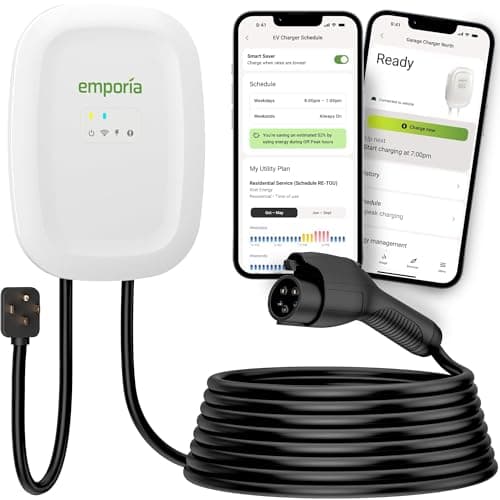
    The charger that refuses to charge you extra for being smart: full 48-amp speed and real energy monitoring at roughly the price of a plain plug-in box.

    Best for: Most homes that want speed and smarts

    $449.00Amazon
  • Grizzl-E Grizzl-E Ultimate (48A)
    03 Grizzl-E Ultimate (48A)
    8.4

    A dedicated 48-amp charger in a cast-aluminum, IP67 shell - the toughest full-speed box here, built to be hardwired to a wall and left to work.

    Best for: A permanent, weatherproof 48A install

    $479.99Amazon
  • EVDANCE EVDANCE 40A Portable
    04 EVDANCE 40A Portable
    8.2

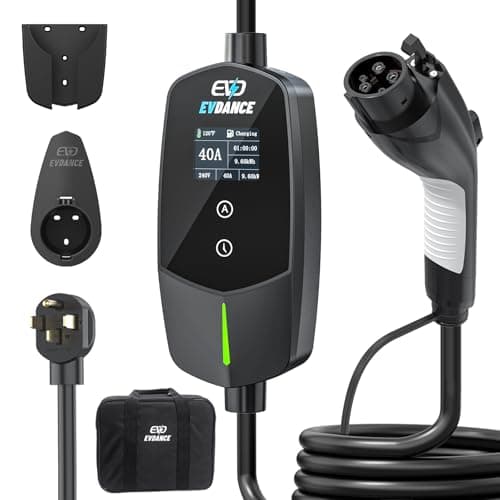
    A 40-amp portable with adjustable current and a built-in delay timer on a long 25-foot cable — off-peak charging without needing an app.

    Best for: Off-peak charging without an app

    $199.98Amazon
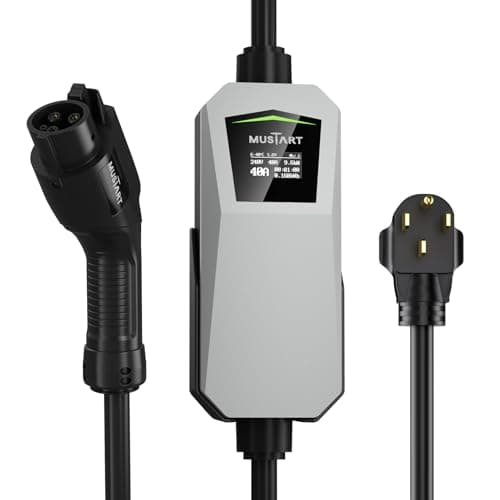
  • MUSTART MUSTART 40A Portable
    05 MUSTART 40A Portable
    8.2

    A budget 40-amp portable with an LCD readout — the value pick when you just need 240V charging that moves with you.

    Best for: The cheapest capable portable

    $159.99Amazon

#ad · Live prices from the Amazon Product API, as of Jul 30, 2026. Where we have no verified live price, we show none — we would rather leave a gap than print a number that has gone stale.

The best EV charger under $500 for most people is the EVIQO Level 2. It carries both a UL and an ETL listing plus an IP66 weatherproof rating, delivers a full 40 amps on a long 25-foot cable, and adds a Wi-Fi app - and it keeps landing near the bottom of the price band. If your panel and car can use more, the Emporia is the step-up within budget: it adds 48-amp headroom when hardwired and real energy monitoring. And if you just need 240-volt charging for the least money, the two portables here are the cheapest honest way into Level 2.

Not long ago, staying under $500 meant giving up either the safety listing or the amperage. That is no longer true. Today the sub-$500 band is exactly where the best certified Level 2 chargers live - full 40-amp units, weatherproof enclosures, and genuine smart features are all inside the budget. This roundup compiles the published manufacturer specs, does the breaker and speed math, and tells you which one fits your house. We have not bench-tested these units and we say so - what follows is documented research, not a lab report.

This page is the price tier a step up from our best budget chargers list, which focuses on the roughly-$300-and-under floor. Under $500 you are no longer shopping the bare minimum; you can have the certification, the cable, the amperage and, on the smart picks, the app - without paying flagship money. The trick is knowing which of those you actually need.

The short version

If you want one recommendation and no reading: buy the EVIQO. It is the most certified hardware for the money and it does everything a single-car home needs. Beyond that, the five picks split cleanly by what you value:

  • EVIQO Level 2 - best under $500 for most people. Double-listed UL and ETL, IP66 weatherproof, 40 amps, a 25-foot cable and a Wi-Fi app, usually at the bottom of the price band. Its shorter brand history is the only real caveat. Full EVIQO review.
  • Emporia Level 2 - the step-up still inside the budget. Adds 48-amp headroom when hardwired and real energy monitoring, at roughly the price of a plain plug-in box. You only get the full 48 amps hardwired on a 60-amp circuit, and the app is central to the experience. Full Emporia review.
  • Grizzl-E Ultimate - the rugged permanent 48A install. A dedicated 48-amp charger in a cast-aluminum IP67 shell, adjustable from 16 to 48 amps. It is hardwired only, and the heavy cable stiffens in deep cold. Full Grizzl-E Ultimate review.
  • EVDANCE 40A Portable - the cheapest smart-ish way in. A 40-amp portable with a built-in delay timer and adjustable current on a 25-foot cable, so you can start on off-peak rates with no app. It lives on a hook rather than mounted like a wall unit.
  • MUSTART 40A Portable - the cheapest capable Level 2 charger here. A true 40-amp portable with an LCD readout at the lowest price in the group. Its 21-foot cable is shorter than the rest, and it is a value brand.

What you should never compromise on, even under $500

A budget is a reason to give up features, never to give up the three things that keep a charger safe and useful. All five picks here hold the line on all three - that is why they are on the list and cheaper unlisted boxes are not.

  • A UL or ETL safety listing. A Level 2 charger pushes 40 amps or more continuously for hours, often unattended overnight. That is the one place an uncertified box is a genuine hazard, not just a cut corner. The EVIQO carries both UL and ETL; the Grizzl-E Ultimate is UL tested with built-in GFCI. This is the spec we would not skip at any price.
  • Amperage you can actually use. Every pick here delivers at least 40 amps - 9.6 kW - which adds roughly 30-plus miles of range an hour and covers almost any daily commute overnight. A charger that tops out below 40 amps is a false economy; the small saving is not worth the slower fill.
  • A decent cable.Four of the five ship a 25-foot cable that reaches either bay of a two-car garage and lets you park nose-in or back-in. The MUSTART's 21 feet is the one shorter cable in the group - fine if the charger mounts close to the port, tight if it does not.

Why $500 now buys a genuinely full-featured Level 2 charger

Certification, weatherproofing, a long tethered cable and Wi-Fi scheduling used to be flagship-only. Competition from newer brands like EVIQO and EVDANCE, plus Emporia pricing a smart 48-amp-capable unit like a plain box, has pushed all of that down into the mid-price band. The EVIQO is the clearest example: a double-listed, IP66, 40-amp smart charger that routinely sits below units it out-specs. So under $500 you are no longer choosing between "safe" and "affordable" - you can have both, and still have change for a proper NEMA 14-50 outlet if you go plug-in.

What the budget does not buy is the fastest possible install for free. The full 48 amps still requires hardwiring to a 60-amp circuit - that is the Emporia (hardwired) and the Grizzl-E Ultimate. A plug-in unit on a NEMA 14-50 is capped at 40 amps by code no matter what the box claims. So the honest reading of this tier is: 40 amps plug-in is plenty for most homes and is where the value sits, and 48 amps is worth the hardwiring only if both your panel and your car can use it. Work that out first in our amperage and breaker guide.

The practical takeaway: under $500 you should never accept a missing safety listing, sub-40-amp output, or a stubby cable to save a few dollars - all three are on offer in this band without the compromise. Spend the saving on the install done right, not on a cheaper box.

The picks, in order

Below the summary table, each charger gets a full card with its score breakdown, pros and cons, and a "don't buy this if" note. In short: the EVIQO wins on certified value, the Emporia is the smart 48-amp step-up still inside budget, the Grizzl-E Ultimate is the rugged permanent 48-amp fixture, and the EVDANCE and MUSTART portables are the two cheapest routes into real Level 2 charging - the EVDANCE adding a delay timer and a longer cable, the MUSTART winning purely on price.

What these chargers cost to run and install

The happy surprise of home charging is how little the electricity itself costs. Covering a couple hundred miles is only a few dollars at typical residential rates - comfortably below what a comparable gas car burns. Every charger on this page does the same job on the energy bill; the smart picks like the Emporia simply let you shift charging to cheaper off-peak hours automatically, and the EVDANCE's built-in delay timer does the same thing manually with no app at all. We show the full arithmetic, with a calculator you can run for your own car and utility rate, in our cost to charge at home guide.

The install is where the rest of a sub-$500 budget goes, and it varies with how you connect. A plug-in unit like the EVIQO, or either portable, runs off a properly rated NEMA 14-50 outlet on a 50-amp circuit - and if a rated 14-50 receptacle already exists, a plug-in charger can go in with no electrician at all, which is a big part of why the plug-in picks here are the cheapest path overall. A hardwired 48-amp unit like the Emporia or the Grizzl-E Ultimate needs a 60-amp circuit run to the wall by a licensed electrician. Weigh the hardware saving against that install cost, because the two together are the real price of getting charging into your garage - the full breakdown, including any panel work, is in our EV charger cost guide.

In detail

The picks, in full

01
EVIQO EVIQO Level 2 (40A)

Budget buyers who still want smart features

EVIQO Level 2 (40A)

40A / 9.6kWJ177225ft cableUL & ETL, IP66/NEMA 4
8.6/10

A double-listed (UL and ETL), IP66-weatherproof smart charger that keeps landing at the bottom of the price band — a lot of certified hardware for the money.

Charge speed
8
Build & weather
9
Smart features
8
Cable & connector
8
Value
10

Pros

  • Carries both UL and ETL listings plus an IP66 / NEMA 4 weatherproof rating — unusually well-certified for the price
  • Wi-Fi app with scheduling that undercuts the established brands
  • Long 25-foot cable and a simple plug-in NEMA 14-50 install

Cons

  • Newer brand with a shorter track record than ChargePoint or Wallbox
  • 40-amp ceiling, so not the fastest if your panel could do more

Don't buy this if…

the reassurance of a long-established brand and support network matters most to you. The hardware is well-listed, but if brand maturity is what you are buying, the ChargePoint is the safer pick.

$395.99View on Amazon

$469.9916% off

Price as of Jul 30, 2026. Prices change — Amazon's is the one that counts.

#ad · we may earn a commission from this link to EVIQO Level 2 (40A)

02
Emporia Emporia Level 2 (48A)

Most homes that want speed and smarts

Emporia Level 2 (48A)

Up to 48A / 11.5kWJ177225ft cableWi-Fi + app
9.0/10

The charger that refuses to charge you extra for being smart: full 48-amp speed and real energy monitoring at roughly the price of a plain plug-in box.

Charge speed
10
Build & weather
8
Smart features
9
Cable & connector
8
Value
10

Pros

  • 48-amp capable when hardwired — quicker than the 40-amp plug-in default most units top out at
  • Genuine energy tracking and scheduling in the app, priced below almost every other smart charger
  • The 25-foot cable reaches either side of a two-car garage

Cons

  • You only get 48 amps hardwired on a 60-amp circuit; the plug-in version is capped at 40A like everything else
  • The app and Wi-Fi are central to the experience, so first-time setup takes longer than a plug-and-go box

Don't buy this if…

you never intend to open an app. A lot of what you are paying for is the software; if a sealed, silent box is what you actually want, the Grizzl-E Classic is the honest call.

$449.00View on Amazon

Price as of Jul 30, 2026. Prices change — Amazon's is the one that counts.

#ad · we may earn a commission from this link to Emporia Level 2 (48A)

03
Grizzl-E Grizzl-E Ultimate (48A)

A permanent, weatherproof 48A install

Grizzl-E Ultimate (48A)

48A / 11.5kWJ177225ft cableCast aluminum IP67 / NEMA 4X
8.4/10

A dedicated 48-amp charger in a cast-aluminum, IP67 shell - the toughest full-speed box here, built to be hardwired to a wall and left to work.

Charge speed
10
Build & weather
10
Smart features
6
Cable & connector
8
Value
8

Pros

  • A dedicated 48-amp / 11.5 kW unit built for the full speed, not a 40-amp charger with a 48-amp mode bolted on
  • Cast-aluminum enclosure rated IP67 and NEMA 4X - the most weather-resistant shell of any 48-amp pick here, listed for indoor or outdoor use
  • UL tested and certified, with built-in GFCI plus over-current, over-voltage and over-temperature protection
  • Amperage is adjustable from 16 to 48 amps, so one unit matches a 40-amp or a 60-amp circuit

Cons

  • Hardwired only - there is no plug-in version, so it is a permanent fixture you cannot unplug and take with you
  • Like every Grizzl-E, the heavy-duty cable stiffens in deep cold, a recurring complaint from northern owners

Don't buy this if…

you want plug-in portability or a polished energy-monitoring app as the centerpiece. This is a rugged, permanent 48-amp fixture; if value and smart features matter more, the Emporia delivers the same 48 amps hardwired for less and adds real monitoring.

$479.99View on Amazon

Price as of Jul 30, 2026. Prices change — Amazon's is the one that counts.

#ad · we may earn a commission from this link to Grizzl-E Ultimate (48A)

04
EVDANCE EVDANCE 40A Portable

Off-peak charging without an app

EVDANCE 40A Portable

40A / 9.6kWJ1772NEMA 14-50 plug25ft, timer
8.2/10

A 40-amp portable with adjustable current and a built-in delay timer on a long 25-foot cable — off-peak charging without needing an app.

Charge speed
8
Portability
9
Build & weather
7
Cable & connector
8
Value
9

Pros

  • A delay timer lets you start on cheaper overnight rates with no app or smart wiring
  • Adjustable current adapts it to different circuits
  • Long 25-foot cable

Cons

  • No smart-app monitoring — the timer is the whole of the scheduling
  • Value brand with a shorter track record

Don't buy this if…

you want full energy monitoring and remote control. This is a capable manual charger; for app-based tracking a wall unit like the Emporia is the one to buy.

$199.98View on Amazon

$209.995% off

Price as of Jul 30, 2026. Prices change — Amazon's is the one that counts.

#ad · we may earn a commission from this link to EVDANCE 40A Portable

05
MUSTART MUSTART 40A Portable

The cheapest capable portable

MUSTART 40A Portable

40A / 9.6kWJ1772NEMA 14-50 plug21ft cable, LCD
8.2/10

A budget 40-amp portable with an LCD readout — the value pick when you just need 240V charging that moves with you.

Charge speed
8
Portability
9
Build & weather
7
Cable & connector
7
Value
10

Pros

  • One of the least expensive true 40-amp portables on Amazon
  • LCD display shows charging status and faults at a glance
  • Outdoor-rated connector and enclosure

Cons

  • Shorter 21-foot cable than some rivals
  • Value brand — fit and finish are functional rather than premium

Don't buy this if…

you need the reach of a 25-foot cable or want a 120V plug in the box too. The Lectron portable is more flexible; the MUSTART's whole pitch is the low price.

$159.99View on Amazon

$169.005% off

Price as of Jul 30, 2026. Prices change — Amazon's is the one that counts.

#ad · we may earn a commission from this link to MUSTART 40A Portable

How to choose an affordable charger

A tight budget makes the decision simpler, not harder - it forces you to spend on the things that matter and skip the things that do not. Here is the order to think in.

1. Certification is non-negotiable

Start here and refuse to move off it. Look for an explicit UL or ETLlisting on the charger itself, not a vague "tested to" claim. The EVIQO is unusual for the price in carrying both UL and ETL plus an IP66 / NEMA 4 weatherproof rating; the Grizzl-E Ultimate is UL tested with built-in GFCI and over-current, over-voltage and over-temperature protection. An unlisted charger might save a little up front, but it is the one component in your garage running near its limit for hours unattended. This is not the corner to cut.

2. Amps you can actually use

Speed comes from amperage, but only up to what your circuit and car allow, and EV charging is a continuous load so the circuit is sized to 125 percent of the draw. A 40-amp charger pulls 9.6 kW and needs a 50-amp breaker and a NEMA 14-50 outlet - the plug-in default, and the ceiling for any plug-in unit. A 48-amp charger pulls 11.5 kW and needs a 60-amp breaker and a hardwired connection - the Emporia hardwired or the Grizzl-E Ultimate. If your panel or your car caps out at 40 amps, paying to reach 48 buys headroom you cannot use. Decide the circuit and check the car first; our what-amp guide and best 40-amp chargers ranking cover the sizing.

3. Wall unit vs portable

Under $500 you can buy either a mounted wall charger or a portable brick, and the choice is about how you live with it, not about capability - a good 40-amp portable charges as fast as a 40-amp wall unit. A wall unit (EVIQO, Emporia, Grizzl-E Ultimate) is tidier, stays put and, hardwired, can reach 48 amps. A portable (EVDANCE, MUSTART) plugs into a NEMA 14-50, unplugs to travel, and is often the cheaper entry point - it just lives on a hook rather than bolted to the wall. If you rent, move often, or want one charger for home and the road, start with our best portable chargers guide.

4. Smart features worth paying for

The smart features that earn their keep are the ones that save money or prevent problems: scheduling to start charging on cheaper off-peak rates, and energy monitoringto see what a charge actually costs. The Emporia gives you both at a plain-charger price - the strongest reason to spend up from the EVIQO within this band. Note the cheaper path to off-peak charging: the EVDANCE portable's built-in delay timer shifts charging to overnight rates with no app and no smart wiring at all. If you are on a flat electricity rate with one car, the app matters far less, and a simpler unit is fine.

So, which one?

Buy the EVIQO unless you have a specific reason not to - it is the most certified 40-amp charger for the money. Want 48-amp headroom and energy monitoring while staying in budget? The Emporia. Want a rugged, permanent, weatherproof 48-amp fixture? The Grizzl-E Ultimate. Want the cheapest way in with off-peak timing built in? The EVDANCE portable. Just want the lowest price on a capable 240-volt charger? The MUSTART - as long as its 21-foot cable reaches your port.
How we picked

We do not run a testing lab

We compiled published specifications from manufacturer manuals and spec sheets, verified the safety listings (UL / ETL), computed the real running and installation costs, checked the wiring math against the NEC continuous-load rule, and read aggregated owner reviews — then scored each product against a published rubric. The scores are judgments from documented research — they are not bench measurements, because we do not have a test lab and we are not going to pretend we do. Every spec and cost figure is cited in Sources.

Questions

Frequently asked

Is a cheap EV charger safe?

It can be, as long as it carries a genuine UL or ETL listing - that is the line between a legitimately affordable charger and a risky one. Every pick here holds that listing; the EVIQO carries both UL and ETL plus an IP66 weatherproof rating. What makes a cheap charger dangerous is skipping the certification, not the low price itself. Never buy an unlisted box to save a few dollars on a device that runs near its limit for hours unattended.

Is a 40-amp charger enough?

For most homes, yes. A 40-amp charger delivers 9.6 kW and adds roughly 30-plus miles of range an hour, which turns an overnight into a full battery for almost any daily commute. It is also the ceiling for any plug-in unit, since a NEMA 14-50 outlet on a 50-amp circuit is capped at 40 amps by code. You only need 48 amps if you drive a lot of miles daily and both your panel and your car can use the extra - see our amperage guide.

Portable or wall charger on a budget?

A 40-amp portable charges just as fast as a 40-amp wall unit, so the choice is about how you want to live with it. A portable like the EVDANCE or MUSTART is often the cheaper entry point, plugs into a NEMA 14-50, and unplugs to travel - ideal for renters or anyone who might move. A wall unit is tidier, stays mounted, and, hardwired, can reach 48 amps. If a clean permanent install matters more than portability, spend the budget on a wall charger.

What does spending over $500 get you?

Mostly brand maturity, app polish, a smaller footprint, or a dual NACS-plus-J1772 connector - not more miles per hour. Speed is set by amperage and your circuit, and you can get a fully certified 40-amp or hardwired 48-amp charger for under $500. Spending more buys a longer support track record, tighter software, or a specific trick like charging both a Tesla and a non-Tesla from one unit. If none of those apply to you, the money is better spent on a proper install than on a pricier box.

Keep reading

Receipts

Sources

We do not run a testing lab, and we do not pretend to. Where a measured number came from someone else's lab, we name them and link them. Where we could not verify something, we say so on the page rather than quietly leaving it out. Read our full method.