HUB 03 · Charging Guides
Tethered vs Untethered EV Chargers
One has the cable permanently attached; the other is a socket you plug your own cable into. Here is which one fits a US home, and why the answer is usually obvious.
We earn a commission when you buy through our Amazon links, at no extra cost to you. It never affects our rankings, and we say so when the cheaper product is the better buy. How this works.
A tethered charger has the charging cable permanently attached, with the connector on the end ready to plug into the car. An untethered (or socketed) charger is a wall box with just a socket - you supply and plug in your own cable each time. The distinction is common in the UK and Europe; in North America nearly every home Level 2 charger is tethered, which makes the choice easy for most US buyers. Here is the full picture so you can be sure.
What each one actually is
Think of it as the difference between a fuel pump with the hose attached and a bare connection you bring your own hose to. A tethered unit is grab-and-go: the cable is there, the J1772 or NACS connector is on the end, you plug into the car. An untethered unit keeps the cable off the wall - you store a separate charging cable (often the car's portable cordset) and connect it between the socket and the car for each session.
Why US home chargers are almost all tethered
In North America the market settled on tethered units for wall-mounted home charging: the Emporia, Grizzl-E, ChargePoint, Wallboxand essentially every other popular home charger ships with the cable attached. Untethered wall sockets are far more common in Europe, where drivers frequently carry a "Type 2" cable. So when you shop US home chargers, tethered is the default and usually the only choice you will see.
The one place the socket idea shows up in the US is the humble NEMA 14-50 outlet paired with a portable EVSE. That is effectively an "untethered" setup - a plain outlet plus a cable you bring - and it is a legitimate low-cost alternative to a fixed tethered box.
The trade-offs
| Tethered | Untethered / socket | |
|---|---|---|
| Convenience | Grab and plug in - cable always there | Fetch, connect, and stow a cable each time |
| Cable length | Fixed at purchase - choose carefully | Swap for a longer or shorter cable anytime |
| Connector | Fixed (J1772 or NACS) - adapt if car differs | Change cable to match the car's port |
| Tidiness | Cable hangs on the wall | No cable on show when not charging |
| US availability | The norm - nearly all home units | Rare as a fixed wall unit; common as outlet + portable |
When untethered makes sense
A socket-style setup is worth considering in three cases. First, if two cars in the household use different connectors, a socket lets each bring its own cable rather than forcing an adapter. Second, if you want the wall to look clean with no cable hanging, an outlet plus a stowed portable does that. Third, if you move often, an outlet-and-portable combination travels more easily than a hardwired tethered box. For everyone else, the always-attached convenience of a tethered unit wins - which is why the market defaults to it.
The practical takeaway
For a typical US home with one or two same-connector EVs, buy a tethered wall charger and simply choose the right cable length up front. If you value a bare wall, a spare-cable-per-car setup, or maximum portability, a NEMA 14-50 outlet plus a portable EVSE gives you the untethered experience for less money. Either way, the circuit behind it is a licensed-electrician job.
The gear
Recommended gear for this guide
The products this guide refers to, with prices pulled live from Amazon and dated on each card.
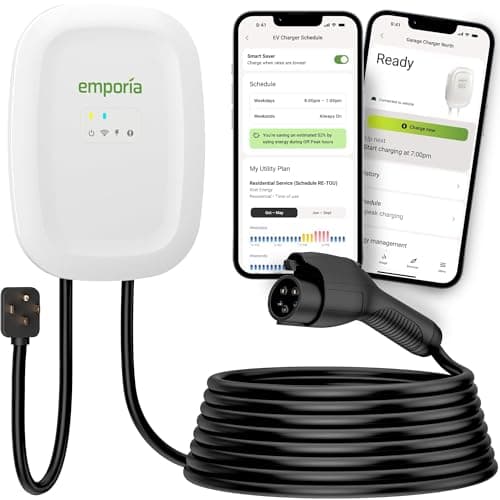
Most homes that want speed and smarts
Emporia Level 2 (48A)
The charger that refuses to charge you extra for being smart: full 48-amp speed and real energy monitoring at roughly the price of a plain plug-in box.
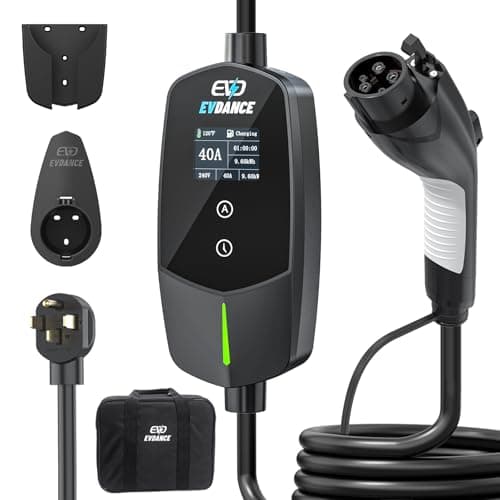
Off-peak charging without an app
EVDANCE 40A Portable
A 40-amp portable with adjustable current and a built-in delay timer on a long 25-foot cable — off-peak charging without needing an app.
#ad · As an Amazon Associate we earn from qualifying purchases.
Questions
Frequently asked
Are US home EV chargers tethered or untethered?
Almost all are tethered - the cable comes permanently attached. Untethered wall sockets are mainly a European format. In the US, the closest untethered option is a NEMA 14-50 outlet used with a portable charging cable you bring yourself.
Is a tethered or untethered charger better?
For most US drivers, tethered - the cable is always there and ready. Untethered makes sense only if you want a bare wall, run two cars with different connectors, or move house often, in which case an outlet plus a portable cable is the practical equivalent.
Can I change the cable on a tethered charger?
No - the cable is fixed, so choose the length and connector carefully at purchase. If you expect to change cables (for a different connector or length), an outlet-and-portable setup is the flexible route.
Keep reading
Related
More in this section
More Charging Guides
Receipts
Sources
We do not run a testing lab, and we do not pretend to. Where a measured number came from someone else's lab, we name them and link them. Where we could not verify something, we say so on the page rather than quietly leaving it out. Read our full method.