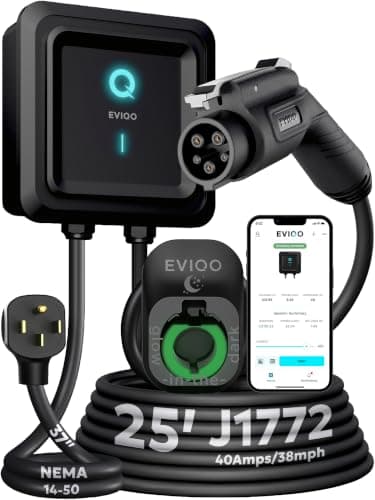
For most homes, the best 40-amp charger is the EVIQO Level 2. It is a true 40A / 9.6 kW unit that carries both UL and ETL listings plus an IP66 weatherproof rating, has a 25-foot cable and a Wi-Fi app, and usually sits at the bottom of the price band - a lot of certified hardware for the money. If you want a little headroom for a future car, the Emporia Level 2 is the smart step up: it runs at 40 amps plug-in today and can be hardwired to 48 later.
40 amps is the amperage most people should actually buy. On a 240-volt circuit a 40-amp charger delivers 9.6 kW- roughly 30 miles of range per hour, enough to refill a normal day's driving several times over while you sleep. It is also the fastest speed you can reach through a plug: a NEMA 14-50 outlet lives on a 50-amp circuit, and the continuous-load rule caps a plug-in charger at 40 amps of draw. That makes 40 amps the practical ceiling for a install that does not require hardwiring or a bigger breaker. This page ranks the chargers that genuinely run at 40 amps, and explains why it is the right number for most homes. We compile published manufacturer specifications and do the wiring math - we do not run a test lab, and we will not pretend we bench-measured any of this.
The short version
Every unit here is a genuine 40-amp charger. Here is how they split by what you value:
- EVIQO Level 2 - best 40-amp charger for most. Double-listed (UL and ETL), IP66 weatherproof, a 25-foot cable and a Wi-Fi app, usually at the lowest price here. It also wins our best budget chargers list.
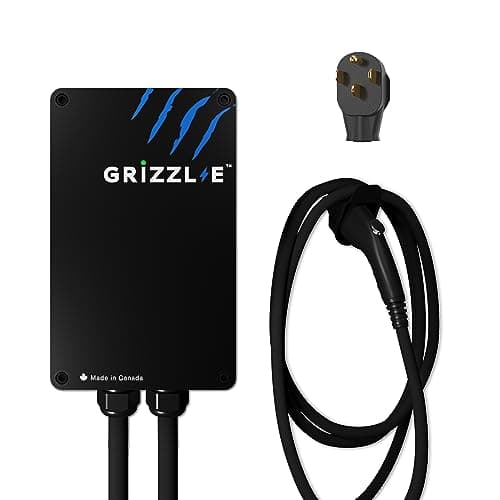
- Grizzl-E Classic - best no-app durability. A cast-aluminum, UL-certified box with no Wi-Fi to fail - the pick for people who want a charger, not a gadget. Full Grizzl-E Classic review.
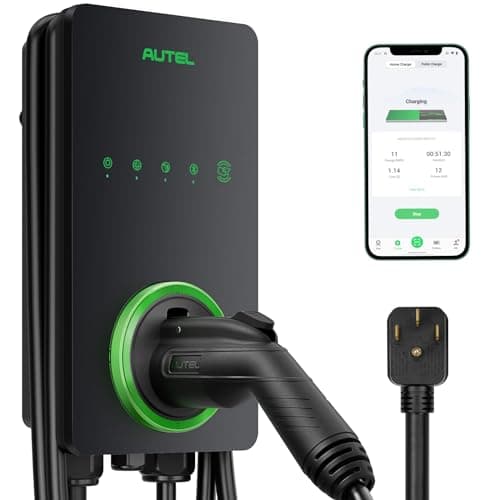
- Autel MaxiCharger - best feature set. Wi-Fi and Bluetooth both, a weather-rated shell, and a holster in the box for a tidy install. It leads our best smart chargers roundup.
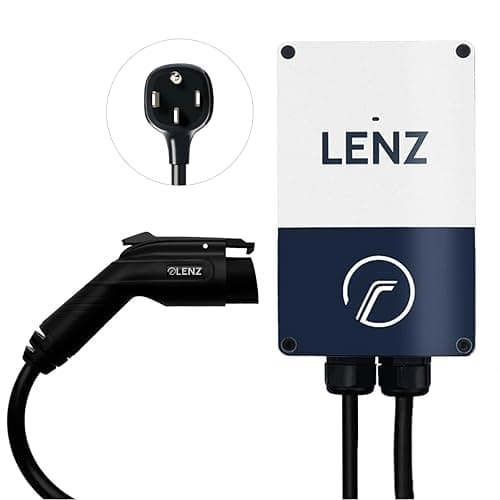
- LENZ Level 2 - best simple plug-in. ETL listed to UL 2594, plug-in NEMA 14-50, and about as basic - and inexpensive - as a good 40-amp charger gets.
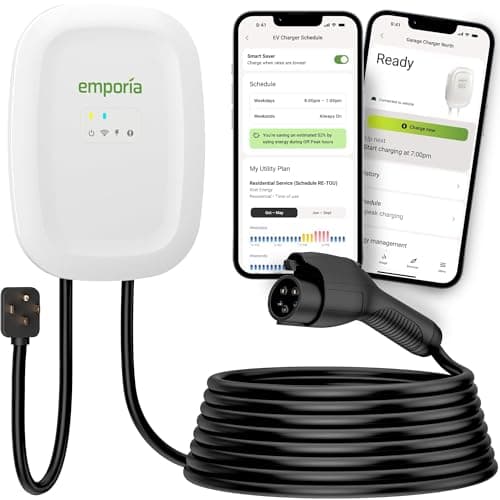
- Emporia Level 2 - best with 48-amp headroom. Runs at 40 amps plug-in on a NEMA 14-50 like the rest, but hardwire it later and it steps up to the full 48. Real energy monitoring, and our overall value winner. Full Emporia review.
Why 40 amps is the right number for most homes
The number on the box is a ceiling, not a promise - what you can actually use is set by two things the charger does not control: the circuit your panel can support, and your car's onboard AC charger. 40 amps lands in the sweet spot on both counts.
- A 50-amp circuit is the common one. EV charging is a continuous load, so by code the circuit is sized to 125 percent of the charger's current: a 40-amp charger needs a 50-amp breaker (40 x 1.25 = 50) and typically 6 AWG copper. That is a circuit most panels can carry without an upgrade, and the same 50-amp circuit an electric range already uses.
- It plugs in. Because a NEMA 14-50 plug sits on that 50-amp circuit, a 40-amp charger can be a plug-in unit - no hardwiring, and portable if you move. Stepping up to 48 amps means a 60-amp circuit and a hardwire; the full field is in our best 48-amp chargers ranking.
- It reaches most cars' ceiling. Many EVs cap their onboard AC charger at 7.7 kW (32 amps) or 9.6 kW (40 amps); only cars with an 11.5 kW onboard charger ever pull 48. For a car that accepts 9.6 kW, a 40-amp charger already delivers everything it can take - and a faster charger would charge it no quicker.
The practical takeaway: unless your panel can spare a 60-amp circuit andyour car accepts 11.5 kW, 40 amps is the amperage to buy. Check your car's onboard AC charging rate in the owner's manual, then match the charger to the 50-amp circuit most homes can run. Our amperage and breaker guide shows the sizing, and confirm the specifics with a licensed electrician.
Plug-in on a NEMA 14-50, and the outlet that matters
The great advantage of a 40-amp charger is that it can plug in. Four of the five picks here ship with a NEMA 14-50 cord that goes into a 240-volt outlet - the same receptacle style a range uses - so if a properly rated outlet already exists, you can often install the charger yourself. The catch is the outlet itself: buy an industrial-grade, listed NEMA 14-50 receptacle, because the cheap ones are the exact part that overheats under a continuous 40-amp draw. We cover that in the NEMA 14-50 outlet guide, and if you would rather see the whole plug-in field ranked by that connector, our best NEMA 14-50 plug-in chargers page does exactly that. Prefer no plug at all? Hardwiring is cleaner and more secure - the best hardwired chargers roundup covers why.
The picks, in order
Below the summary table each charger gets a full card with its score breakdown, pros and cons, and a "don't buy this if" note. In short: the EVIQO wins on certification and value, the Grizzl-E on build and no-app simplicity, the Autel on features, the LENZ Level 2 on a low-fuss low price, and the Emporia on giving you a path to 48 amps later. Every one is a genuine 40-amp charger; the trick is matching its strengths to your house.
How to choose a 40-amp charger
The amperage decision is settled - 40 amps is the right ceiling for a 50-amp circuit and most cars. What is left comes down to four things, and here is how we weighted them.
1. Certification, non-negotiable
A 40-amp charger pushes current continuously for hours, often unattended overnight, so a UL or ETL listing is the one spec we would not skip. The EVIQO carries both, the Grizzl-E is UL certified, and the LENZ Level 2 is ETL listed to UL 2594. Plenty of no-name 40-amp boxes on Amazon cannot claim any of that - and that is exactly the corner not to cut.
2. Plug-in or hardwired
At 40 amps you get the choice. Plug-in on a NEMA 14-50 keeps the charger portable and can be a DIY install if a rated outlet exists - the right call for renters and movers. Hardwiring looks cleaner and is more secure, and it is the better answer outdoors. Either way, do not economize on the receptacle if you go plug-in; see the NEMA 14-50 outlet guide.
3. Cable length and smart features
A 25-foot cable - which the EVIQO, Autel and Emporia all carry - reaches across a two-car garage and lets you park either way around. On features, the split is simple: scheduling and energy monitoring earn their keep on a time-of-use electricity plan, where shifting to off-peak hours is real money. The EVIQO, Autel and Emporia give you that; the Grizzl-E and LENZ Level 2 are deliberately simple. On a flat rate with one car, simple is fine.
4. Weather rating, if it mounts outside
In a sealed garage almost any unit is fine. On a carport or an exterior wall, look for a stated outdoor rating - the EVIQO's IP66 / NEMA 4 and the Grizzl-E's cast-aluminum NEMA 4 shell are built for it. Our best outdoor chargers ranking sorts the field by enclosure type if that is your situation.
So, which one?
Buy the EVIQO unless you have a reason not to - it is the most certified 40-amp charger for the least money. Want a sealed metal box with no app? The Grizzl-E Classic. Want every feature and a holster in the box? The Autel. Want the simplest, cheapest capable plug-in? The LENZ Level 2. Think you might hardwire for 48 amps down the road? The Emporia gives you that path without giving up anything at 40.