HUB 02 · Cables & Adapters
How to Tell if Your EV Has NACS or J1772
Look at the port and check the badge and year. Here is how to read the shape in seconds, the brand rule of thumb, and what each answer means for the charger you can use.
We earn a commission when you buy through our Amazon links, at no extra cost to you. It never affects our rankings, and we say so when the cheaper product is the better buy. How this works.
There are two reliable ways to tell whether your EV charges through a J1772 port or a NACS (Tesla-style) port: look at the shape of the inlet on the car, and check the make, model and year. The shape is definitive - you can read it in a few seconds once you know what you are looking for - and the brand-and-year rule of thumb usually gets you there before you even walk to the garage. This guide covers both, then tells you exactly what each answer means for the charger and adapter you need.
The quick rule of thumb: brand and year
For most cars you can answer this from the driveway without opening the charge door:
- Tesla is NACS. Every Tesla sold in North America uses the NACS connector, now standardized as SAE J3400. If you drive a Tesla, your port is NACS.
- Nearly every non-Tesla EV sold in the US through 2024 is J1772 for AC (home and Level 2) charging, with CCS for DC fast charging. CCS is simply a J1772 plug with two extra high-power DC pins added below it - so at home you are only ever using the J1772 portion.
- 2025 and later is the transition.Several brands - Ford, GM, Rivian, Hyundai, Kia and others - are moving to a native NACS port or shipping NACS adapters with the car. Because that changeover is happening model by model and year by year, the rule of thumb stops being reliable exactly here: a 2025 or 2026 car from one of these brands could be either. When your car is in this window, confirm with the owner's manual or the automaker rather than trusting the badge.
For a deeper map of how the standards relate, our connector types explainer walks through J1772, NACS, CCS and CHAdeMO in plain English, and J1772 vs NACS connectors compares the two home-charging plugs side by side.
The definitive test: look at the port
The rule of thumb is a shortcut; the port itself is the real answer. Open your charge door and compare what you see to these two shapes.
- J1772 / CCS (most non-Teslas): a round housing at the top with five pins, and - on a CCS car, which is the usual case - two large round DC pins directly below it. The whole two-part inlet is a CCS port, but the upper J1772 circle is the part your home charger plugs into. The easy mental picture is a snowman: a round top with two big circles beneath it.
- NACS (Tesla and 2025+ native-NACS cars): a single, smaller, cleaner round housing - also five pins, but in a tighter, more compact pattern - with no separate large DC pins hanging below it. NACS carries both AC and DC through the same pins, so the inlet looks simpler and smaller. One tidy round plug with nothing beneath it.
That is the whole visual test. If the port looks like a round top with two big circles under it, you have J1772 (in a CCS inlet) and use J1772 chargers. If it looks like one small, clean circle, you have NACS and use NACS chargers. The shape never lies, even when the model year is ambiguous.
A couple of edge cases are worth knowing. A few older models - the early Nissan Leaf is the classic example - pair a J1772 inlet for AC home charging with a separate CHAdeMO port for DC fast charging, a legacy standard now being phased out at public sites. For home charging none of that matters: the AC inlet is still J1772, so any J1772 Level 2 charger works. And whatever the car, the AC port on the driver-side or passenger-side charge door is the one your home charger plugs into - that is the connector this guide is helping you identify, and the only one you need to match at home.
The 2025-plus wrinkle, in detail
The reason the port shape matters more than the badge is the wave of non-Tesla cars now shipping with a native NACS inlet. If your 2025 or 2026 EV from one of the transitioning brands came with a compact, Tesla-style port, the "non-Tesla equals J1772" rule would have steered you wrong. This is exactly why we lead with the shape: the year is a hint, but the inlet in front of you is the fact. When you are unsure, the owner's manual states the connector standard outright, and the automaker's support line will confirm it for your specific VIN. If you are thinking ahead to a NACS-native next car, our guide on how to future-proof your EV charger for NACS covers how to keep a J1772 home charger useful across the switch.
What each answer means for your charger and adapters
Once you know your port, the charging picture is simple. The port is the fixed half of the equation; the charger's connector is the other half, and an adapter bridges them only when they differ.
- You have a J1772 port.Plug straight into any J1772 Level 2 charger - which is most home chargers and a large share of public Level 2 stations. To use a Tesla-style (NACS) charger, such as a friend's Wall Connector or some destination chargers, add a NACS-to-J1772 adapter. We compare the two we would buy in Lectron vs EVDANCE.
- You have a NACS port (a Tesla, or a 2025+ native-NACS car). Plug straight into NACS chargers. To reach the enormous installed base of J1772 chargers - most public and home Level 2 units - add a J1772-to-NACS adapter. The two safety-listed picks go head to head in LENZ vs FOCSPROD.
One caution that trips people up: every adapter above is an AC device for home and destination charging. Identifying your port tells you which AC charger and adapter you need, but it does not settle DC fast charging or Tesla Supercharger access - that is a separate question with its own hardware, which we cover in do NACS adapters work at Superchargers.
The short version: check the port shape first. A round top with two big pins below is J1772 (use J1772 chargers, or a NACS-to-J1772 adapter for Tesla-style equipment). One small clean circle is NACS (use NACS chargers, or a J1772-to-NACS adapter for the huge J1772 network). The make, model and year is a useful hint, but from 2025 on the inlet itself is the only sure answer.
The gear
Recommended gear for this guide
The products this guide refers to, with prices pulled live from Amazon and dated on each card.
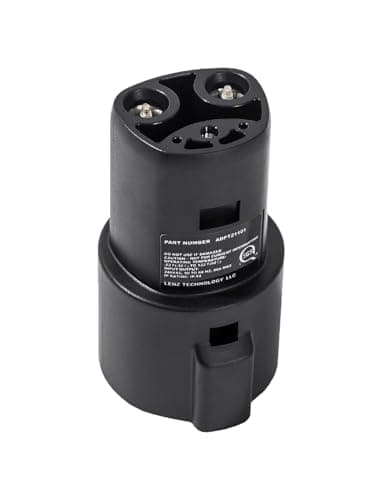
A Tesla / NACS car using J1772 chargers
LENZ J1772 → NACS Adapter
A UL-2251-certified J1772-to-NACS adapter — the one a Tesla or a 2026+ NACS-port EV needs to use the enormous installed base of J1772 chargers.
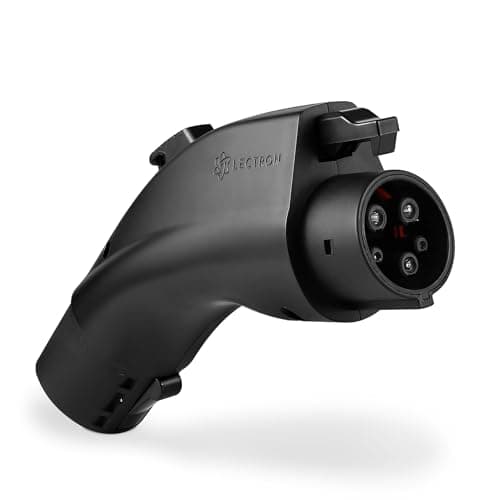
A J1772 car using NACS chargers
Lectron NACS → J1772 Adapter
The default adapter that lets a J1772 car draw from a Tesla-style (NACS) home or destination charger — rated for the full 48 amps.
#ad · As an Amazon Associate we earn from qualifying purchases.
Questions
Frequently asked
How do I tell NACS from J1772 just by looking?
A J1772 port (in a CCS inlet) looks like a round five-pin circle at the top with two large DC pins below it - like a snowman. A NACS port is a single, smaller, cleaner round housing with no separate pins beneath it. If it has the two big circles underneath, it is J1772/CCS; if it is one tidy round plug, it is NACS.
My car is a non-Tesla - does that guarantee it is J1772?
Through 2024, almost always yes. From 2025 on, several brands (Ford, GM, Rivian, Hyundai, Kia and others) began shipping cars with a native NACS port, so a newer non-Tesla could be either. Confirm by the port shape or the owner's manual rather than the badge alone.
Does it matter which port I have for home charging?
It decides which charger plugs in directly and whether you need an adapter. A J1772 car uses J1772 chargers or a NACS-to-J1772 adapter; a NACS car uses NACS chargers or a J1772-to-NACS adapter. Either way any properly rated Level 2 charger can serve the car.
Does my port tell me if I can use a Tesla Supercharger?
Not by itself. A NACS port can physically plug into a Supercharger, but whether a given car is enabled to charge there depends on the automaker and the network, and a J1772/CCS car needs a Magic Dock site or a vehicle-approved DC adapter. See do NACS adapters work at Superchargers.
Keep reading
Related
- NACS Adapter Compatibility by BrandEvery make in one table: which port, and which adapter at home versus on the road.
- Connector types explainedJ1772, NACS, CCS and CHAdeMO, in plain English.
- J1772 vs NACS connectorsThe two home-charging plugs, compared side by side.
- NACS-to-J1772 adaptersFor a J1772 car that wants to use a Tesla-style charger.
- J1772-to-NACS adaptersFor a Tesla or NACS-port car using the J1772 network.
- Do NACS adapters work at Superchargers?Why the AC adapters do not unlock DC Supercharging.
More in this section
More Cables & Adapters
Receipts
Sources
- US DOE AFDC - EV charging infrastructure & connectors
- US DOE AFDC - charging at home
- US DOE / fueleconomy.gov - EV charging basics
We do not run a testing lab, and we do not pretend to. Where a measured number came from someone else's lab, we name them and link them. Where we could not verify something, we say so on the page rather than quietly leaving it out. Read our full method.