HUB 04 · Charging Costs
Do I Need a Separate Meter for EV Charging?
Almost never a requirement - but some utilities offer a special EV rate that can need a second meter or submeter. When it saves money and when a smart charger does the same job.
We earn a commission when you buy through our Amazon links, at no extra cost to you. It never affects our rankings, and we say so when the cheaper product is the better buy. How this works.
For almost everyone, no - a home EV charger runs on your existing electric meter like any other appliance, and no second meter is required. The reason the question comes up is that some utilities offer special EV charging rates, and a few of those involve a second meter or a submeter to bill EV energy separately. Whether that is worth it depends entirely on your utility's program. Here is how to think about it.
The default: one meter, one bill
Your EV charger is just another 240-volt load on your home's panel, and it registers on your normal meter along with everything else. You do not need the utility to install anything extra to charge at home. The energy shows up as a higher-than-before electric bill, and the size of that bump is simply the kWh you add times your rate - the math is in do EV chargers use a lot of electricity. For the vast majority of owners, that is the whole story.
When a utility EV rate changes the picture
Many utilities offer a time-of-use (TOU) plan that prices overnight electricity far below daytime, which is ideal for EV charging. Most of these apply to your whole-home meter - no second meter needed - and you simply shift charging to the cheap window. A smaller number of utilities offer a dedicated EV rate that requires isolating the EV load, which is where a second meter or a submeter comes in: the utility bills the EV energy on a special (often cheaper overnight) rate, separately from the house. Whether that beats a whole-home TOU plan depends on the specific rates and the cost of the extra metering. The off-peak strategy in general is covered in off-peak and time-of-use charging.
A smart charger often replaces the need
Here is the practical shortcut: if your goal is just to know what your EV charging costs (for taxes, reimbursement, or curiosity), you usually do not need a metered utility program at all - a smart charger tracks it for you. A unit like the Emporia logs exactly how many kWh each session used, so you can see your EV energy separately without a second utility meter. And if your goal is to save money, scheduling that charger into a whole-home off-peak window captures most of the benefit a dedicated EV meter would, without the added hardware. So a smart charger answers both of the reasons people ask about a second meter.
How to decide
- Call your utility and ask if they offer an EV or TOU rate, and whether it needs a second meter or submeter.
- Compare the special EV rate (plus any metering cost) against a whole-home TOU plan - often the whole-home plan wins on simplicity.
- If you only want to track usage, a smart charger's energy log is enough; no utility metering required.
Installing a second utility meter or a submeter is coordinated with your utility and done by a licensed electrician - it is not a DIY add-on. Do not attempt to tap or split your service to isolate the EV load yourself. Use this guide to decide whether a metered EV rate is worth pursuing, then let your utility and a pro handle any metering to code.
The short answer: you almost certainly do not need a separate meter to charge at home. Look into a utility EV or TOU rate if you want to save, use a smart charger if you just want to track, and reserve a second meter for the narrow case where your utility's EV program specifically requires one and the numbers pencil out.
The gear
Recommended gear for this guide
The products this guide refers to, with prices pulled live from Amazon and dated on each card.
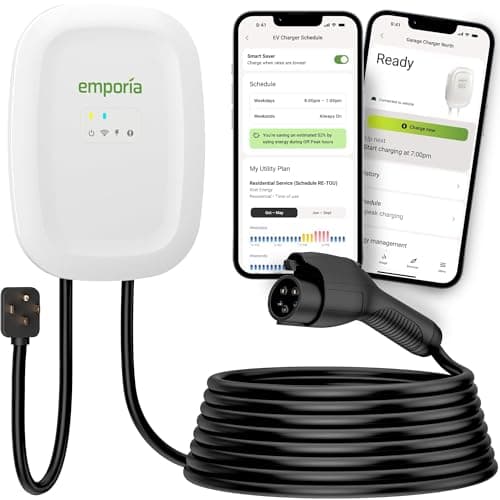
Most homes that want speed and smarts
Emporia Level 2 (48A)
The charger that refuses to charge you extra for being smart: full 48-amp speed and real energy monitoring at roughly the price of a plain plug-in box.
#ad · As an Amazon Associate we earn from qualifying purchases.
Questions
Frequently asked
Do I need a second electric meter to charge my EV at home?
Almost never. A home charger runs on your existing meter like any appliance. A second meter or submeter only comes up if your utility offers a dedicated EV rate that requires isolating the EV load - and even then a whole-home time-of-use plan is often simpler.
Would a separate EV meter save me money?
Sometimes, if your utility's EV rate is cheaper than its whole-home time-of-use rate by more than the cost of the extra metering. Compare the two before committing - many people find a whole-home off-peak plan captures most of the savings with no added hardware.
How can I track just my EV charging usage?
Use a smart charger that logs energy per session, like the Emporia. It shows your EV kWh separately without any utility metering - enough for taxes, reimbursement, or curiosity.
Does an EV charger need its own meter for the circuit?
No - it needs its own dedicated circuit and breaker, but not its own meter. The dedicated-circuit requirement is about safe wiring, not billing - see do EV chargers need their own circuit.
Keep reading
Related
- Condo & HOA EV ChargingGetting a board to yes when you own the unit but not the parking space.
- Off-Peak & Time-of-Use ChargingThe utility rate strategy a second meter is sometimes tied to.
- Do EV Chargers Use a Lot of Electricity?The bill-impact math behind the metering question.
- Cost to Charge at HomeWhat the added energy costs on your existing meter.
- Do EV Chargers Need Their Own Circuit?Why a dedicated circuit - not a meter - is the real requirement.
- EV Charger Rebates & CreditsUtility programs that sometimes accompany EV rates.
More in this section
More Charging Costs
Receipts
Sources
- US DOE AFDC - charging an EV at home
- US EIA - average residential electricity price by state
- US DOE Energy Saver - electric vehicles
We do not run a testing lab, and we do not pretend to. Where a measured number came from someone else's lab, we name them and link them. Where we could not verify something, we say so on the page rather than quietly leaving it out. Read our full method.