HUB 03 · Charging Guides
Installing Two EV Chargers in One Garage
Two EVs have three honest answers: two dedicated circuits, two chargers that share one circuit with load management, or a single dual-port box. Which fits your panel.
We earn a commission when you buy through our Amazon links, at no extra cost to you. It never affects our rankings, and we say so when the cheaper product is the better buy. How this works.
A two-EV household has three legitimate ways to charge both cars at home, and the right one is decided by your electrical panel, not your preference. You can run two fully separate circuits, you can put two chargers on a shared circuit with load management, or you can use one dual-port charger. Each trades cost, speed, and panel capacity differently. Here is how to choose - and how the shared-circuit options let you add a second car without a service upgrade.
Option 1: two separate dedicated circuits
The simplest to understand: each charger gets its own dedicated 240-volt circuit and breaker, exactly as a single charger would. Both cars then charge at full speed simultaneously, with no sharing. The catch is capacity - two full charger circuits is a large added load, and an NEC Article 220 load calculation has to show your service can carry both on top of the house. Plenty of 200-amp services cannot, and a subpanel or panel upgrade may be needed. This is the fastest option and the most demanding on your panel. Both chargers still follow the dedicated-circuit rule.
Option 2: two chargers sharing one circuit (load management)
This is the clever answer for a tight panel. Certain smart chargers support power sharing (also called dynamic load management): two or more units on a single circuit coordinate so their combined draw never exceeds what the circuit allows. When one car charges, it gets the full share; when both are plugged in, they split the available current. You give up simultaneous full-speed charging, but overnight that rarely matters - both cars finish by morning. This is how you add a second charger without a new circuit or a service upgrade. The Wallbox Pulsar Plus (Power Sharing) and the Emporia (PowerSmart) both support this, and the roundup of units that do is best load-balancing chargers.
Option 3: one dual-port charger
A dual-port charger is a single box with two cables that serves both bays from one circuit, dividing the available amperage between whichever cars are plugged in. It is the tidiest hardware answer - one unit, one circuit, two connectors - and it shares the circuit the same way Option 2 does, so plug in the second car and the first car's rate drops. It shines when you want a clean single-box install and both cars park in the same garage. The picks are in best dual-port chargers, and the whole shared-vs-separate question, including whether one charger can simply be moved between two cars, is in can two EVs share one charger.
How to decide
Start with your panel. If a load calculation shows room for two full circuits and you want both cars at top speed at once, run two circuits. If the panel is tight - and most are once you add two chargers - power sharing or a dual-port unit lets both cars charge overnight on the capacity you already have, which is usually the cheaper and simpler path. The one thing you should not do is split a single circuit with an unmanaged splitter; proper load management exists precisely so the combined draw stays within the breaker.
Running a second dedicated circuit, wiring shared-circuit chargers, or installing a dual-port unit is standard NEC work for a licensed electrician - never a DIY project - and every option starts with an Article 220 load calculation on the whole house. Never split one circuit between two chargers without listed load-management hardware. Use this guide to pick the approach, then have a pro size and install it to code.
Two EVs at home is a solved problem. Match the wiring to your panel: two circuits for maximum speed, power sharing or a dual-port charger to add the second car on the capacity you have. If it is two single units on two circuits, both can come from our ranked Level 2 chargers.
The gear
Recommended gear for this guide
The products this guide refers to, with prices pulled live from Amazon and dated on each card.
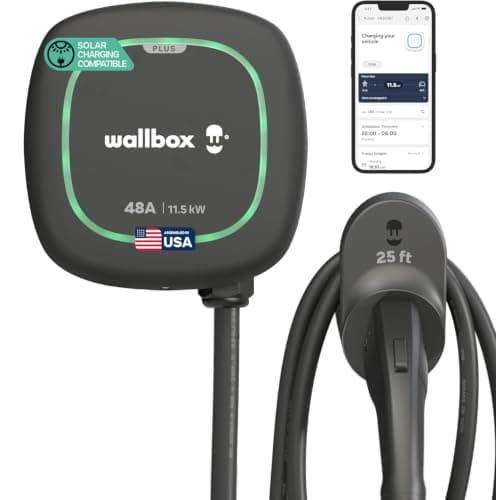
A compact, fast, hardwired install
Wallbox Pulsar Plus (48A)
One of the smallest 48-amp chargers you can hang on a wall — full-speed hardwired charging in a box that barely announces itself.
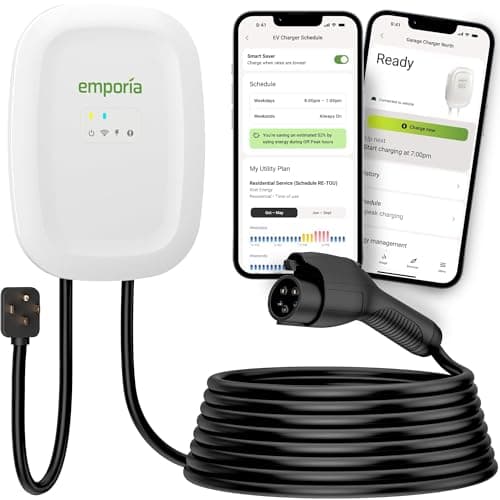
Most homes that want speed and smarts
Emporia Level 2 (48A)
The charger that refuses to charge you extra for being smart: full 48-amp speed and real energy monitoring at roughly the price of a plain plug-in box.
#ad · As an Amazon Associate we earn from qualifying purchases.
Questions
Frequently asked
Can I add a second EV charger without upgrading my panel?
Often yes - by using power sharing (two smart chargers on one circuit) or a dual-port charger, so the combined draw stays within your existing capacity. Both cars charge overnight; they just share the current when plugged in together. Two separate full circuits is what usually forces a panel upgrade.
Do both cars charge at full speed with load sharing?
Not at the same time. When only one car is plugged in it gets the full rate; when both are connected they split the available current. Overnight that is almost always enough for both to finish by morning.
Is a dual-port charger better than two separate units?
It is tidier - one box, one circuit, two cables - and it shares current like any load-managed setup. Two separate circuits are faster (both at full speed at once) but need more panel capacity. See best dual-port chargers.
Can I just use a splitter on one circuit?
No. An unmanaged splitter can let two chargers draw more than the breaker allows. Use listed power-sharing chargers or a dual-port unit that coordinates the draw - that is exactly the problem load management solves.
Keep reading
Related
- Can Two EVs Share One Charger?The shared-vs-separate question in full, including moving one unit.
- Best Load-Balancing ChargersThe smart units that let two chargers share one circuit.
- Best Dual-Port ChargersOne box, two cables - the tidy single-circuit answer.
- Do EV Chargers Need Their Own Circuit?The dedicated-circuit rule each charger still follows.
- Do I Need a Panel Upgrade?The load calculation that decides if two circuits fit.
More in this section
More Charging Guides
Receipts
Sources
- EC&M - NEC requirements for EV equipment (Article 625: continuous load, circuit sizing, GFCI, disconnect)
- US DOE AFDC - charging an EV at home
- US DOE Energy Saver - electric vehicles
We do not run a testing lab, and we do not pretend to. Where a measured number came from someone else's lab, we name them and link them. Where we could not verify something, we say so on the page rather than quietly leaving it out. Read our full method.