HUB 03 · Charging Guides
How to Future-Proof Your EV Charger for NACS
The connector on the wall is changing shape, but for home AC charging the speed is identical either way - and a small adapter bridges the gap in both directions.
We earn a commission when you buy through our Amazon links, at no extra cost to you. It never affects our rankings, and we say so when the cheaper product is the better buy. How this works.
The plug on the end of a home charging cable is changing shape. For most of the last decade, nearly every non-Tesla EV in North America used the J1772 connector for AC charging, while Tesla used its own plug. That plug has now been standardized as NACS - formally SAE J3400 - and automaker after automaker has announced a move to it. The natural worry is that a J1772 charger installed today will be stranded tomorrow. For home AC charging, the honest answer is that it will not be, and this guide explains why and how to buy with the transition in mind.
What NACS changes, and what it does not
NACS, the Tesla-style connector, is becoming the common North American standard, replacing a landscape where J1772 and Tesla's plug lived side by side. But here is the point that dissolves most of the anxiety: the shape of the connector does not change the charging level or the speed. A J1772 Level 2 charger and a NACS Level 2 charger push the same alternating current at the same amperage into the same onboard charger. The plug is a shape, not a speed. We map every plug and how they relate in connector types explained.
Because the electricity behind both plugs is identical, a J1772 home charger is not made obsolete by NACS the way a betamax tape was made obsolete by a format war. The installed base of J1772 equipment is enormous - millions of home units and public stations - and it does not stop working because a new plug shape is gaining ground. What actually bridges the two is not a rewire but a small passive part.
The adapter that makes this a non-issue
A NACS-to-J1772 or J1772-to-NACS adapter is a simple passive connector with no electronics inside - it just re-shapes the plug so a car of one type can draw AC from a charger of the other. It works in both directions. A J1772-to-NACS adapter lets a Tesla or a newer NACS-port car use the vast network of J1772 chargers, and a NACS-to-J1772 adapter lets a J1772 car use a NACS charger. These adapters are inexpensive and widely available, which is exactly why the transition is manageable rather than disruptive. If you are unsure whether you even need one, start with do I need an adapter to charge my EV.
Three ways to future-proof
With that groundwork, here are the three sensible strategies depending on what you drive now and what you expect to drive next.
a. Buy a well-built adjustable J1772 charger now
For most people this is the pragmatic choice. J1772 has the huge installed base, the widest selection of well-reviewed hardware, and the cheapest adapters, and a solid adjustable unit like the Emporia Level 2 serves a J1772 car directly and a NACS car through a small adapter. You are buying into the standard with the most support today, and a future NACS car costs you one cheap adapter, not a new charger.
b. Keep a J1772-to-NACS adapter for a future NACS car
If your next car will have a native NACS port - and increasingly they do, across Tesla and a growing list of Hyundai, Kia, Rivian, and other models - keep a UL-2251-certified J1772-to-NACS adapter in the frunk. It lets that NACS car charge from your existing J1772 home unit and from the enormous public J1772 network. The certification matters on a part carrying full current, which is why we point to listed adapters rather than the cheapest unmarked ones.
c. Or install a NACS charger plus a NACS-to-J1772 adapter
If you are a Tesla household today but keep a J1772 car around, you can flip it: install a NACS charger and use a NACS-to-J1772 adapter for the J1772 car. For a driveway that mixes both, a dual-connector wall unit avoids adapter-juggling entirely - we cover those in best chargers for Tesla.
The one thing you cannot change later
There is a single decision that an adapter cannot undo, and it is worth getting right: the plug on a tethered charger. A tethered unit has the cable and connector permanently attached, so its plug shape is fixed for the life of the charger. Match that plug to the cars you actually expect to own. If you are unsure, an adjustable J1772 unit plus adapters keeps the most doors open, whereas a tethered NACS-only unit commits you. Whether you go tethered at all - versus a unit you could later swap - ties into hardwired vs plug-in.
Home AC and DC fast charging are separate questions
One clarification keeps this from getting muddled. Everything above is about AC charging at home. DC fast charging on a road trip - Superchargers and other public fast chargers - is a separate system, and the NACS transition affects which public networks your car can use, not the charger on your garage wall. Do not let fast-charging headlines drive your home decision. For the home, the message is steady: buy good hardware, keep the right cheap adapter on hand, and the plug-shape transition never becomes your problem. The good hardware, ranked, is in the Level 2 home chargers we rank.
The gear
Recommended gear for this guide
The products this guide refers to, with prices pulled live from Amazon and dated on each card.
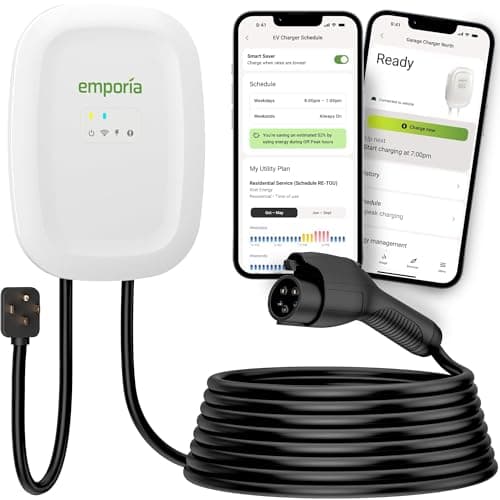
Most homes that want speed and smarts
Emporia Level 2 (48A)
The charger that refuses to charge you extra for being smart: full 48-amp speed and real energy monitoring at roughly the price of a plain plug-in box.
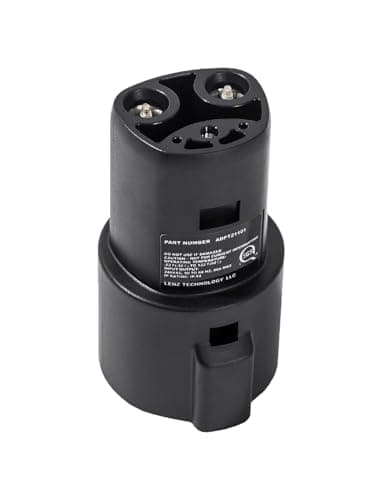
A Tesla / NACS car using J1772 chargers
LENZ J1772 → NACS Adapter
A UL-2251-certified J1772-to-NACS adapter — the one a Tesla or a 2026+ NACS-port EV needs to use the enormous installed base of J1772 chargers.
#ad · As an Amazon Associate we earn from qualifying purchases.
Questions
Frequently asked
Is my J1772 home charger about to become obsolete?
No. NACS is becoming the standard plug shape, but a J1772 charger keeps working, and a small passive adapter lets a NACS-port car charge from it. The J1772 installed base is enormous and does not stop working because a new connector is gaining ground.
Does a NACS charger charge faster than a J1772 charger at home?
No. For home AC charging the connector shape does not change the speed - both push the same current at the same amperage into the car's onboard charger. NACS versus J1772 is about the plug shape, not how fast the car charges.
I'm getting a Tesla but I have a J1772 charger. What do I need?
A J1772-to-NACS adapter. It lets the Tesla (or any NACS-port car) charge from your existing J1772 home unit and from public J1772 stations. Look for one certified to UL 2251, since it carries the full charging current.
Should I buy a NACS or a J1772 charger right now?
For most buyers, a well-built adjustable J1772 charger plus a cheap adapter is the safest bet - the widest hardware choice and the biggest installed base. Choose a tethered NACS unit only if every car you expect to own has a NACS port, because a tethered plug cannot be changed later.
Keep reading
Related
- Connector Types ExplainedJ1772, NACS, CCS - every plug and how they relate.
- J1772-to-NACS AdaptersFor a Tesla or NACS-port car using J1772 chargers.
- NACS-to-J1772 AdaptersFor a J1772 car using NACS chargers.
- Best Chargers for TeslaDual-connector units for a mixed Tesla and J1772 driveway.
- Hardwired vs Plug-InWhy a tethered plug is the one choice an adapter can't undo.
- Best NACS Home ChargersIf you have decided to buy the connector rather than adapt to it.
More in this section
More Charging Guides
Receipts
Sources
- US DOE AFDC - EV charging infrastructure & connectors
- US DOE / fueleconomy.gov - EV charging basics
- US DOE AFDC - charging at home
We do not run a testing lab, and we do not pretend to. Where a measured number came from someone else's lab, we name them and link them. Where we could not verify something, we say so on the page rather than quietly leaving it out. Read our full method.