If you are installing a 240V outlet for a plug-in EV charger, two options come up: NEMA 14-50 and NEMA 6-50. Both are 50-amp outlets that let a charger draw the same 40 amps, so charging speed is identical. The difference is one wire - and it quietly decides which one is cheaper to run.
The only real difference: the neutral
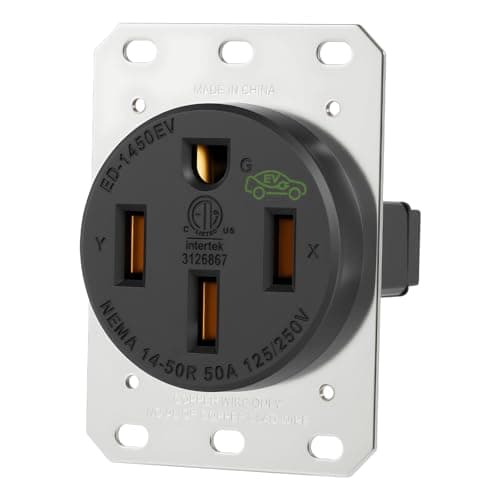
A NEMA 14-50 is a 4-prong outlet: two hots, a neutral, and a ground. A NEMA 6-50 is a 3-prong outlet: two hots and a ground, no neutral. An EV charger only uses the two hots and the ground - it does not need the neutral at all. So for charging alone, the 6-50 supplies everything the charger wants with one less wire.
That missing wire is the whole decision. Running a 6-50 can be cheaper, because the cable has one fewer conductor and the run is simpler - which adds up on a long pull to the panel. The 14-50 costs a bit more but leaves you a neutral for the future.
Why 14-50 is still the default
- It is the standard everyone knows. The 14-50 is the RV-park and welder outlet, so it is universally stocked and every electrician installs it in their sleep. Most plug-in chargers ship with a 14-50 plug by default.
- The neutral is future-proofing. If you ever swap the outlet for something that needs 120V (an RV hookup, some appliances), a 14-50 already has the neutral. A 6-50 does not, and adding one later means a new wire.
- Resale and flexibility. A 14-50 is the more recognized, more flexible outlet if you sell the house or change equipment.
When a 6-50 is the smarter choice
The 6-50 shines when the run is long and you are certain the outlet will only ever charge a car. You save on wire and labor, and you avoid a subtle safety footnote: a poorly-made 14-50 receptacle is a known overheating point on continuous EV loads, and the 6-50 has one fewer current-carrying connection to get wrong. If your charger came with a 6-50 plug or supports swapping to one, and the outlet is charging-only, a 6-50 is a clean, economical pick.
Whichever you choose, match the charger's plug to the outlet, use a quality receptacle, and have it installed on a properly-sized 50-amp circuit by a licensed electrician. Do not adapt one plug type to the other with a cheap dongle.
Bottom line: pick 14-50 for flexibility and because it is what most chargers plug into out of the box; pick 6-50 to save on a long, charging-only run. Speed is the same either way. For the receptacle itself, see our NEMA 14-50 outlet guide, and for whether to skip the outlet entirely, our hardwired vs plug-in guide.
And the third option: the 30-amp NEMA 14-30
There is a third outlet that comes up constantly, and it is the one already on your wall. The NEMA 14-30 is the classic four-prong dryer receptacle - 240 volts, two hots, a neutral and a ground, same family as the 14-50 but on a 30-amp circuit. The continuous-load rule caps a charger on it at 24 amps, which is about 5.8 kW, or roughly 12 to 15 miles of range per hour. That is markedly slower than a 14-50 or a 6-50, and it is still real Level 2 - three times what a household outlet does, and enough to refill a normal day's driving overnight.
Its appeal is that it may cost nothing. If a sound 14-30 already exists in the garage, a portable charger with a 14-30 plug or adapter, dialled to 24 amps, gets you Level 2 without an electrician. The rules that make that safe rather than reckless are short: never run the dryer and the car on the same circuit at once, never fit a 14-50 receptacle to a 30-amp circuit to "unlock" 40 amps, and have an old dryer outlet checked before you put a nightly continuous load through it - three-wire, ungrounded dryer circuits are still out there. The full version of that decision is in NEMA 14-30 vs 14-50, and can I use a dryer outlet for EV charging covers the reuse case specifically.
The three outlets side by side
| Outlet | Circuit | Wires | Max continuous charging | Power | Range per hour | Normally used for |
|---|
| NEMA 14-50 | 50A / 240V | 4: two hots, neutral, ground | 40A | 9.6 kW | About 25-30 miles | RV hookups, ranges - and the EV default |
| NEMA 6-50 | 50A / 240V | 3: two hots, ground (no neutral) | 40A | 9.6 kW | About 25-30 miles | Welders, air compressors |
| NEMA 14-30 | 30A / 240V | 4: two hots, neutral, ground | 24A | 5.8 kW | About 12-15 miles | Electric clothes dryers |
Two things fall out of that table. First, 14-50 and 6-50 are the same speed - the neutral changes the wiring cost and the future flexibility, not the charging rate, because a Level 2 charger only uses the two hots and the ground. Second, the 14-30 is not a near-equivalent: it is a little over half the power, because it is a 30-amp circuit rather than a 50.
How the chargers above line up against each outlet
| Charger | Amps / kW | Plug type | Cable | Smart / Wi-Fi | Safety listing | Price tier |
|---|
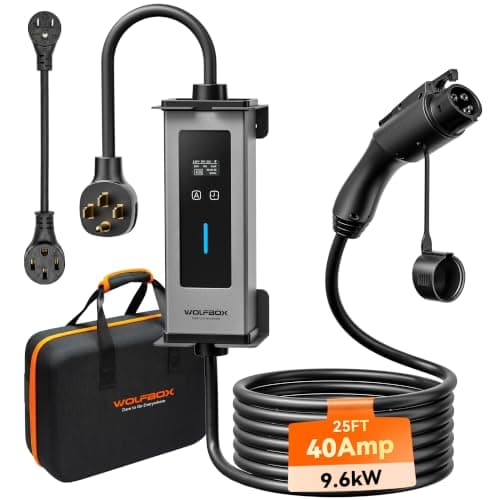
| WOLFBOX 40A Portable | 6-40A / up to 9.6 kW | NEMA 14-50, plus included 5-15 and 6-20 adapters | 25 ft | No app - on-box amp dial and 1-12h delay timer | ETL listed, IP66 / NEMA 4 | Value |
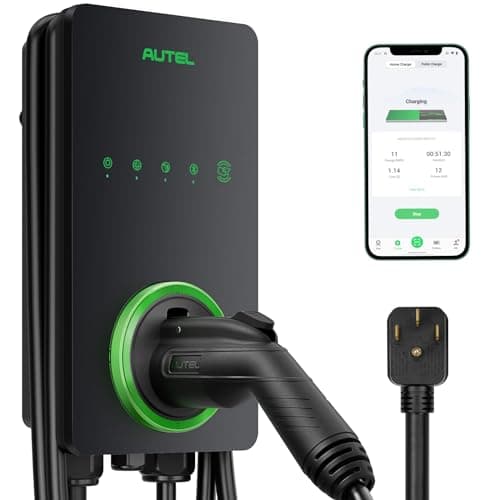
| Autel MaxiCharger | 40A / 9.6 kW | NEMA 14-50 plug | 25 ft + holster | Wi-Fi + Bluetooth, Autel Charge | NEMA 4X weather-rated shell; no UL mark named in our spec set | Mid |
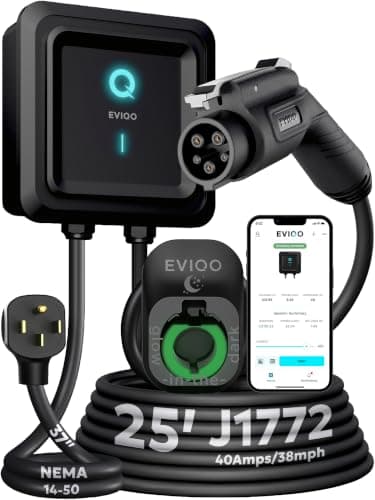
| EVIQO Level 2 | 40A / 9.6 kW | NEMA 14-50 plug | 25 ft | Wi-Fi, EVIQO app | UL and ETL, IP66 / NEMA 4 | Mid |
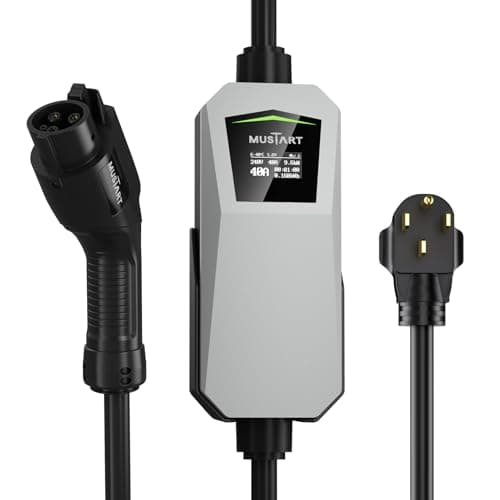
| MUSTART 40A Portable | 40A / 9.6 kW | NEMA 14-50 plug | 21 ft | No app - LCD status readout | Outdoor-rated connector and enclosure | Budget |
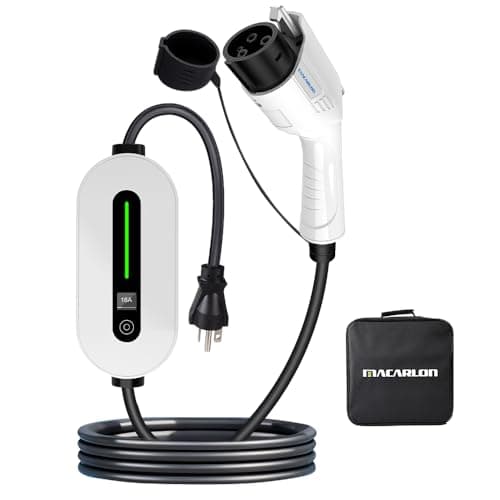
| MACARLON 16A Level 1/2 | 8-16A / 1.4-3.8 kW | NEMA 6-20, plus 5-15 adapter | 25 ft | No app - on-box current select and schedule | IP66 rated body | Budget |
| Industrial NEMA 14-50 outlet | 50A / 125-250V receptacle | NEMA 14-50R, 3-pole 4-wire | n/a | n/a | ETL listed | Budget |
Every figure above is the manufacturer's published claim from its live listing or datasheet. We compile and compare documented specifications, safety listings and code requirements; we do not bench-measure charging rates, and our methodology page says so in those words.
The buyer's guide: picking the outlet, then the plug
Amps to kilowatts, so the outlet choice has a number on it
Amps times 240 volts, divided by 1,000, then take 80 percent for the continuous-load rule. A 50-amp outlet gives 40 continuous amps and 9.6 kW. A 30-amp outlet gives 24 amps and 5.8 kW. A 20-amp 6-20 gives 16 amps and 3.8 kW. Those three numbers are the entire practical difference between the receptacles on this page, and they map directly onto range: about 30, about 14 and about 8 miles per hour of charging on a typical EV.
The neutral is a cost and future-use decision, not a safety one
Both 50-amp outlets are equally safe when correctly installed. The 6-50 has one fewer conductor to pull, which is real money on a long run to the panel, and one fewer current-carrying connection in the receptacle. The 14-50 carries a neutral you will never use for charging but might want later for an RV hookup or a 120-volt load, and it is what almost every plug-in charger ships with, so it needs no plug swap. If the run is short, take the 14-50 and stop thinking about it; if the run is long and the outlet will only ever charge a car, the 6-50 is the cheaper, cleaner answer.
Level 1 vs Level 2 - and the 6-20 middle rung
Every outlet above is Level 2. Level 1 is a plain 120-volt household socket at roughly 5 miles of range per hour, which needs no electrician and no decision. Between them sits the NEMA 6-20: a 20-amp 240-volt outlet, far cheaper to add than a 50-amp circuit, good for 16 amps and 3.8 kW. That is the rung the MACARLON is built for, and for a plug-in hybrid or a short commute it can be the whole answer. Work out which tier you need in Level 1 vs Level 2.
Hardwired skips this page entirely
There is no 48-amp receptacle in the NEMA catalogue for a reason: a plug-and-socket connection is the weak link in a nightly continuous load, and the code keeps cord-and-plug EVSE at 50 amps and 250 volts. If your sizing calls for 48 amps and 11.5 kW, no outlet on this page will get you there - you hardwire onto a 60-amp circuit instead. The trade-off is in hardwired vs plug-in, and the best Level 2 home chargers we've compared marks which units can be installed either way.
Buy the receptacle like it matters, because it does
A 14-50 outlet is the cheapest part of the install and the part most likely to fail. Cheap residential receptacles use thin spring contacts that relax under a 40-amp continuous load; resistance rises, the connection heats, and the heat makes it worse. Spend on an industrial or EV-rated receptacle, have it on a GFCI-protected circuit as the code requires for EVSE receptacles, and look at it once a year. The ranked options are in the NEMA 14-50 outlet roundup, and the 14-50 guide covers installation.
NACS vs J1772 is a separate question from the wall
The outlet decides how much power reaches the charger; the connector on the other end of the charger's cable decides whether it fits your car. Those are independent. A native-NACS charger on a 14-50 plug is still capped at 40 amps, exactly like its J1772 twin. Check your car's port first - how to tell if your EV has NACS or J1772.