HUB 03 · Charging Guides
Charging an EV at an RV Park or Campground
RV parks are an underrated road-trip charging backup - full of 240-volt outlets. Here is which ones work, how fast they charge, and how to do it courteously and safely.
We earn a commission when you buy through our Amazon links, at no extra cost to you. It never affects our rankings, and we say so when the cheaper product is the better buy. How this works.
RV parks and campgrounds are one of the best-kept secrets of EV road-tripping: they are full of 240-volt outlets built for exactly the kind of continuous load an EV draws. With the right portable charger and a couple of plug adapters, an overnight stay can add a real chunk of range. Here is what you will find, how fast each option charges, and how to do it right.
The outlets you will find at an RV site
Most powered sites offer one to three receptacles:
- NEMA 14-50 (50 amp) - the premium RV pedestal outlet, and the jackpot for EV charging. Supports up to 40-amp / 9.6 kW Level 2 charging - roughly 20 to 25 miles of range per hour. The same outlet you would use at home.
- TT-30 (30 amp, 120 volt)- the common "RV 30-amp" outlet. Despite the 30-amp figure it is only 120 volts, so it is effectively fast Level 1 - about 2.4 kW, or 8 to 12 miles per hour with the right adapter. Better than a wall socket, well short of the 14-50.
- Standard 5-20 / 5-15 (120 volt) - a regular household-style outlet for basic Level 1 - 3 to 5 miles per hour. A last resort.
The takeaway: seek out the 14-50 site. It charges at genuine home Level 2 speed and turns an overnight stay into a meaningful top-up.
What to pack
- A portable Level 2 EVSE with a 14-50 plug and adjustable amperage - the WOLFBOX or EVDANCE 40A portable is ideal. Adjustable current lets you dial down for a weaker pedestal.
- The correct plug adapters(for example, a 14-50-to-TT-30) so you can use whatever the site offers - and set the charger's amperage to match the smaller outlet.
- Your car's connector adapter if needed - a NACS or J1772 adapter depending on your port.
Match the charger to the outlet, always. Never draw 40 amps from a 30-amp pedestal - set your portable to 24 amps on a 14-30/TT-30-class supply and 40 only on a true 50-amp 14-50. Overdrawing a campground circuit trips it at best and overheats it at worst.
Etiquette and booking
- Ask and pay.The electricity is not free - book a powered site or ask the office, and expect to pay the nightly RV rate. Do not plug into an unoccupied site's pedestal without permission.
- Do not hog a 50-amp RV site if an actual RV needs it and 30-amp sites are open - be a good guest, especially in peak season.
- Keep the cable safe. Route it so it is not a trip hazard or across a road, and use a weather-appropriate setup - see charging in the rain.
Used courteously, RV parks fill gaps between fast chargers on scenic routes and are a genuinely useful tool for the prepared EV traveler. For the broader trip picture, see our EV road-trip charging guide; for the charger that stays home, our ranked Level 2 chargers.
The gear
Recommended gear for this guide
The products this guide refers to, with prices pulled live from Amazon and dated on each card.
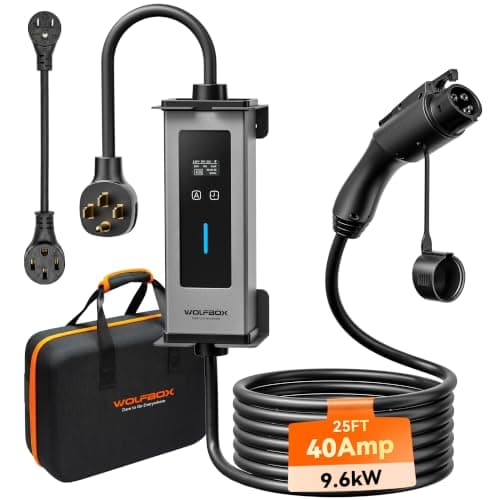
One charger for home and travel
WOLFBOX 40A Portable (Level 1/2)
A dual-level portable that doubles as a wall box — 40 amps on a NEMA 14-50, or Level 1 on a standard outlet with the included adapters. One weatherproof charger for the garage and the road.
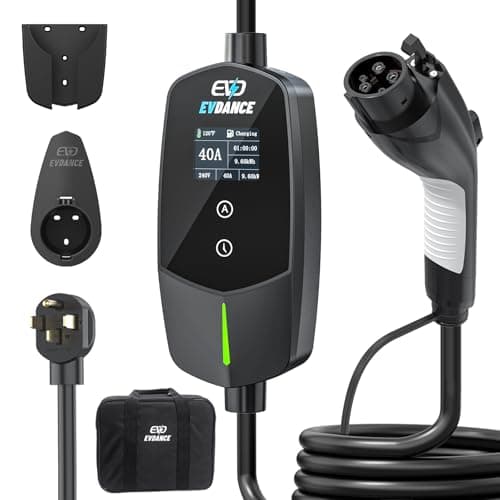
Off-peak charging without an app
EVDANCE 40A Portable
A 40-amp portable with adjustable current and a built-in delay timer on a long 25-foot cable — off-peak charging without needing an app.
#ad · As an Amazon Associate we earn from qualifying purchases.
Questions
Frequently asked
Can you charge an electric car at an RV park?
Yes - many RV sites have a NEMA 14-50 outlet that charges at home Level 2 speed (up to 40 amps / 9.6 kW) with a portable EVSE. Book a powered site, pay the rate, and match your charger's amperage to the outlet you are given.
How fast does an RV park outlet charge an EV?
A 14-50 site adds roughly 20 to 25 miles of range per hour. A 120-volt TT-30 "30-amp" outlet is much slower - about 8 to 12 miles per hour - because it is only 120 volts. A standard household outlet is slower still.
What do I need to charge at a campground?
A portable Level 2 charger with a 14-50 plug and adjustable amperage, the right plug adapters for other pedestal outlets (like TT-30), and your car's connector adapter if needed. Always set the amperage to match the outlet.
Keep reading
Related
More in this section
More Charging Guides
Receipts
Sources
We do not run a testing lab, and we do not pretend to. Where a measured number came from someone else's lab, we name them and link them. Where we could not verify something, we say so on the page rather than quietly leaving it out. Read our full method.