HUB 03 · Charging Guides
Can You Overcharge an EV?
Short answer: no. The car's battery management system cuts off at full, so you cannot force in more. Leaving it plugged in overnight is safe - the 80% habit is about long-term health, not overcharging.
We earn a commission when you buy through our Amazon links, at no extra cost to you. It never affects our rankings, and we say so when the cheaper product is the better buy. How this works.
No, you cannot overcharge a modern EV. The worry is understandable - phones and laptops trained us to unplug things - but an EV is built differently. Every EV has a battery management system (BMS) that monitors the pack and stops charging the instant it reaches full. You cannot push in more energy than the battery is set to hold, so leaving it plugged in does not "overcharge" it. The nuance worth understanding is the difference between overcharging (impossible) and daily charge limits (a longevity habit).
The BMS is the guard
The battery management system is the electronic brain of the pack. It tracks each cell's voltage and state of charge, and when the battery hits its target - 100%, or whatever limit you set - it tells the car to stop drawing current. The charger cannot override that; the car is in control of how much it accepts. This is why an EV differs from a cheap unregulated device: the protection is built into the vehicle, not left to you to manage with a timer. So when people ask whether it is safe to leave an EV plugged in overnight, the answer is yes - it simply stops when full, as we cover in is it safe to charge an EV overnight.
Plugged in is not the same as charging
A key mental shift: an EV left plugged in after it is full is not continuously charging. Once the BMS reaches the target it stops, and the car just sits there connected, drawing only the trickle needed to keep systems awake. There is no harm in that. In fact, staying plugged in lets the car manage its own battery temperature and, on many EVs, run preconditioning on a schedule - both easier when connected. Leaving it on the charger is the normal, intended state.
So why the 80% advice?
Here is where overcharging gets confused with charge limits. The common advice to charge to about 80% for daily use is not about overcharging - you physically cannot - it is about long-term battery health. Lithium-ion batteries with NMC chemistry age a little more slowly if they spend less time sitting at a very high state of charge, so keeping the daily ceiling near 80% and saving 100% for trips is a gentle longevity habit, not a safety requirement. The details, including why LFP batteries flip this rule and are happy at 100%, are in should you charge to 100% and NMC vs LFP charging.
How a smart charger helps
You do not have to babysit any of this. Set the charge limit in the car (most EVs let you pick a percentage), and it will stop there every time. A smart charger like the Emporia adds scheduling on top, so you can also shift charging to cheaper off-peak hours - useful for cost, not for safety - as covered in off-peak charging. But even the simplest charger cannot overcharge your car, because the car, not the charger, decides when to stop. And there is no need to run the battery down before recharging either - top up whenever, as explained in how often should you charge your EV.
Bottom line: overcharging an EV is not a thing that can happen - the BMS prevents it. Leave it plugged in without worry, set a daily limit near 80% if you want to be kind to the battery over the years, and charge to full when you need the range. If you want the charger to handle the daily limit and the schedule for you, the app-equipped picks in the best Level 2 home chargers we've compared do exactly that.
The gear
Recommended gear for this guide
The products this guide refers to, with prices pulled live from Amazon and dated on each card.
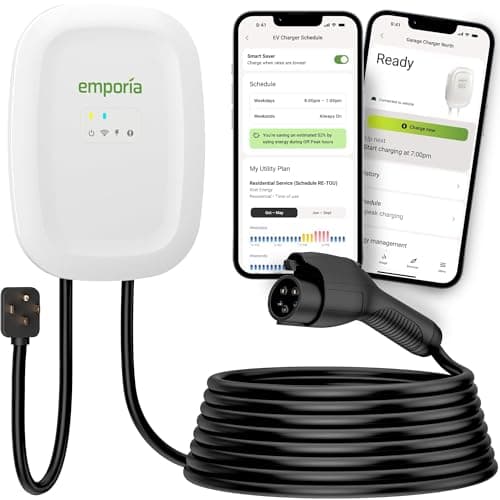
Most homes that want speed and smarts
Emporia Level 2 (48A)
The charger that refuses to charge you extra for being smart: full 48-amp speed and real energy monitoring at roughly the price of a plain plug-in box.
#ad · As an Amazon Associate we earn from qualifying purchases.
Questions
Frequently asked
Can leaving my EV plugged in overnight overcharge it?
No. The battery management system stops charging at your set limit and the car just sits connected after that, drawing only a trickle. Overnight charging is the intended, safe use case.
Is it bad to charge my EV to 100%?
It is not unsafe - you cannot overcharge. Charging to 100% often (on NMC chemistry) can age the battery slightly faster over years, which is why an ~80% daily limit is a common longevity habit. LFP batteries are fine at 100%. See should you charge to 100%.
Do I need to unplug once it is full?
No. Once full the car stops charging on its own; staying plugged in is harmless and even helps with battery thermal management and scheduled preconditioning. You can leave it connected as long as you like.
Can a cheap charger overcharge my battery?
No - the car controls how much it accepts, not the charger. A well-chosen, certified charger matters for safety of the connection, but no home charger can force energy past the car's BMS cutoff.
Keep reading
Related
- Is It Safe to Charge an EV Overnight?Why plugged-in-all-night is the primary design case.
- Should You Charge to 100%?The 80% daily habit and when a full charge is fine.
- NMC vs LFP Battery ChargingWhy LFP packs are happy at 100% and NMC prefer ~80%.
- How Often Should You Charge?Top up freely - no need to run the battery down first.
- Off-Peak & Time-of-Use ChargingScheduling for cost, the other reason to set a smart charger.
More in this section
More Charging Guides
Receipts
Sources
- US DOE / fueleconomy.gov - EV charging basics
- US DOE Energy Saver - electric vehicles
- US DOE AFDC - charging an EV at home
We do not run a testing lab, and we do not pretend to. Where a measured number came from someone else's lab, we name them and link them. Where we could not verify something, we say so on the page rather than quietly leaving it out. Read our full method.