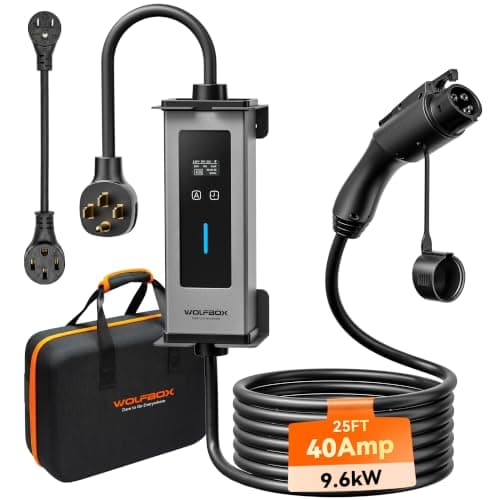
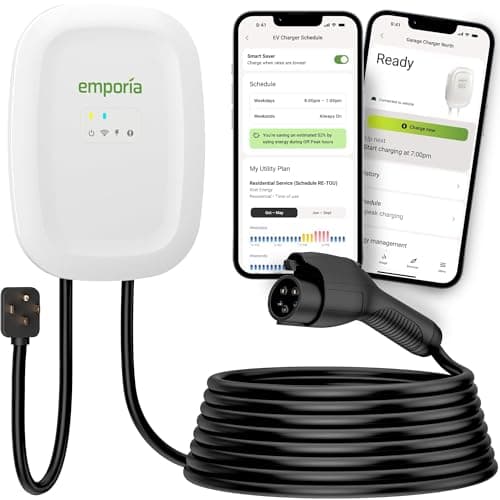
Most home chargers can be installed two ways: hardwired, with the cable run permanently into your electrical panel, or plug-in, using a NEMA 14-50 outlet. The choice sounds technical, but it comes down to one question - do you want the full 48 amps, or do you want to unplug and take the charger with you?
The one difference that matters: 40 vs 48 amps
Every plug-in charger is capped at 40 amps. Not because of the charger - because a NEMA 14-50 plug lives on a 50-amp circuit, and the electrical code's continuous-load rule limits a continuous draw to 80 percent of the circuit, which is 40 amps. To get the full 48 amps a charger is capable of, you hardwire it onto a 60-amp circuit. That is the whole story in one line: plug-in tops out at 40 amps, hardwired can reach 48.
How much does that 40-vs-48 gap actually matter? Less than most people fear. Forty amps is about 9.6 kW and adds roughly 30 miles of range per hour; 48 amps is about 11.5 kW and adds roughly 36. Over a normal overnight charge both fully refill a daily commute with hours to spare. The jump only shows up if you run a large battery close to empty and need it back fast - and only if your car even accepts 48 amps, which many do not. Our amperage guide covers who benefits.
What plug-in gives you
- Portability. Unplug the 14-50 and the charger comes with you - to a new house, or a second outlet on the other side of the garage. For renters and anyone who might move, this is the deciding feature.
- Easy swaps. If the charger fails or you upgrade, you unplug the old one and plug in the new one. No electrician needed for the swap itself.
- A useful outlet. A NEMA 14-50 is a general-purpose 240V outlet - handy for a welder, RV, or future charger even if this one moves on.
What hardwiring gives you
- The full 48 amps. The only way to the top speed, for cars that can use it.
- Fewer failure points. No plug and receptacle to loosen, overheat or corrode - a real consideration outdoors and the reason many electricians prefer it for exterior installs.
- A cleaner look. No visible outlet or plug; the cable disappears into the wall.
Cost and code
The install cost is usually similar. A plug-in job needs a 50-amp circuit and a NEMA 14-50 receptacle; a hardwired job needs a 60-amp circuit and the whip run into the unit. Whichever you choose, running a new 240V circuit is a licensed-electrician job under the electrical code - see our installation guide for what the work involves and how panel distance drives the price.
One safety note on plug-in: buy a quality NEMA 14-50 receptacle and have it installed on the correct circuit. Cheap outlets are a known overheating point on continuous EV loads - covered in our NEMA 14-50 guide.
How to decide
Pick plug-in if you rent, might move, want the flexibility, and your car does not need more than 40 amps - which describes most people. Pick hardwired if you own the home, want the full 48 amps for a car that accepts it, or are mounting outdoors where a sealed connection is the sturdier choice. Either way you can shop the same units - many chargers ship in both versions, and our best Level 2 roundup notes which is which.
What the code actually says about each install
Both paths are ordinary, permitted work under Article 625 of the National Electrical Code, but they are governed by different clauses and that is worth knowing before an electrician quotes you.
- The plug-in path needs GFCI protection at the receptacle. The code requires every receptacle installed to connect EV supply equipment to be GFCI protected, which in practice means a GFCI breaker on that circuit. Charger-side ground-fault detection does not substitute for it. Some units nuisance-trip on a GFCI breaker, so the breaker brand and the charger are worth matching - see GFCI breakers and EV chargers.
- The hardwired path can need a lockable disconnect. Equipment rated over 60 amps, or over 150 volts to ground, has to have a readily accessible disconnecting means that can be locked open. A 48-amp charger on a 60-amp circuit is under that threshold, so most home hardwires do not need one - but an 80-amp unit does, and some inspectors want a disconnect anyway. Ask before the quote is signed: does an EV charger need a disconnect switch.
- Adjustable settings are only allowed on fixed-in-place equipment, and the setting has to be labelled. This is why the amperage dial on a hardwired unit is a legitimate, inspectable way to right-size the circuit, while a portable is what its plug says it is.
The case nobody mentions: the outlet is the weak point
A hardwired connection is two lugs torqued to spec inside a sealed enclosure. A plug-in connection is a plug and a receptacle carrying 40 amps for four to eight hours a night, and the contact between them is a spring. Cheap 14-50 receptacles are a documented failure point under exactly this duty cycle: the spring tension relaxes, resistance rises, the connection heats, and the heat accelerates the process. It is not a reason to avoid plug-in - millions of installs run fine for years - but it is the reason a plug-in install is only as good as the twenty dollars you spend on the receptacle. Buy an industrial or EV-rated one, and check it once a year for discolouration or a plug that has gone loose. The outlet roundup ranks the ones worth using, and a plug getting hot covers what to do if yours already is.
How the six compare
| Charger | Amps / kW | Plug type | Cable | Smart / Wi-Fi | Safety listing | Price tier |
|---|
| Emporia Level 2 | 6-48A hardwired / 6-40A plug-in, up to 11.5 kW | NEMA 14-50 plug or hardwired | 25 ft | Wi-Fi, Emporia app | UL listed, Energy Star | Mid |
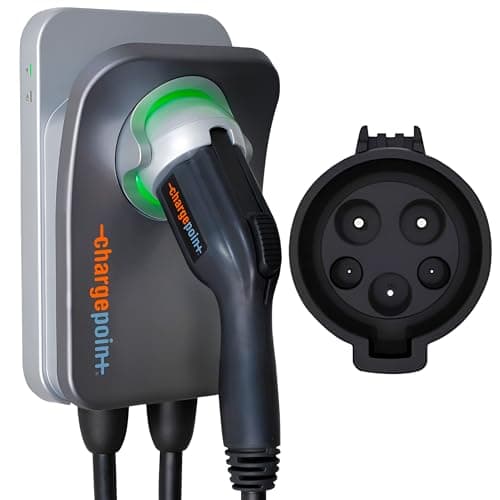
| ChargePoint Home Flex | 16-50A / up to 12.0 kW | NEMA 14-50 plug (to 40A) or hardwired (to 50A) | 23 ft | Wi-Fi, ChargePoint app | UL / cUL (UL 2594, UL 2231), Energy Star | Premium |
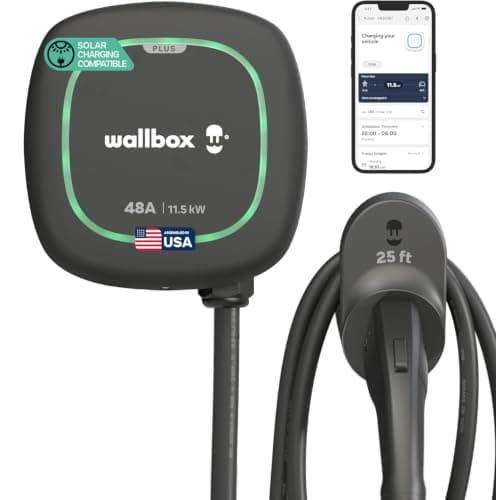
| Wallbox Pulsar Plus | 48A / 11.5 kW | Hardwired | 25 ft | Wi-Fi + Bluetooth, myWallbox, Power Boost | UL listed, Energy Star | Premium |
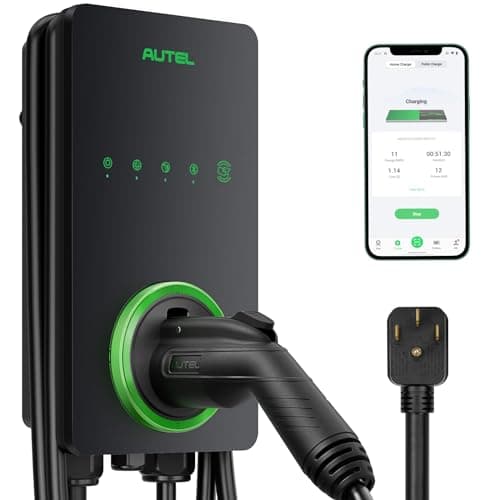
| Autel MaxiCharger | 40A / 9.6 kW | NEMA 14-50 plug | 25 ft + holster | Wi-Fi + Bluetooth, Autel Charge | NEMA 4X weather-rated shell; no UL mark named in our spec set | Mid |
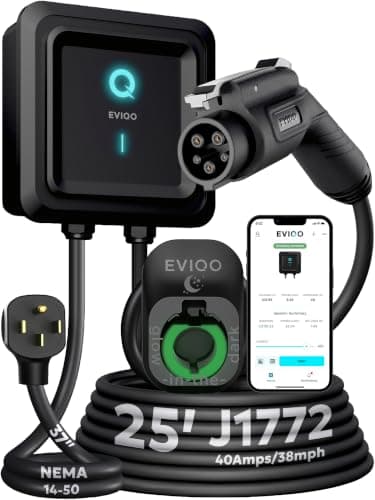
| EVIQO Level 2 | 40A / 9.6 kW | NEMA 14-50 plug | 25 ft | Wi-Fi, EVIQO app | UL and ETL, IP66 / NEMA 4 | Mid |
| WOLFBOX 40A Portable | 6-40A / up to 9.6 kW | NEMA 14-50, plus 5-15 and 6-20 adapters | 25 ft | No app - on-box amp dial and 1-12h delay timer | ETL listed, IP66 / NEMA 4 | Value |
Every figure above is the manufacturer's published claim from its live listing, datasheet or install guide. We compile and compare documented specifications, safety listings and code requirements; we do not bench-measure charging rates, and our methodology page says so in those words.
The buyer's guide: choosing the install, then the box
Buy a charger that does both, and decide later
The cheapest way to be wrong about this is to buy a hardwire-only unit and then move house. The top two picks above ship as plug-in units and convert to hardwired - the electrician removes the plug, runs the whip into the enclosure and sets the amperage label. That keeps the decision reversible for the price of an hour of labour, which is why they lead the list even though the Wallbox is the tidier permanent install.
Amps to kilowatts, and why 40 is usually enough
Amps times 240 volts, divided by 1,000. 32A is 7.7 kW, 40A is 9.6 kW, 48A is 11.5 kW, 50A is 12.0 kW. In range terms the DOE puts Level 2 at roughly 25 miles per hour, and a 40-amp unit lands near 30 on a typical car against about 36 at 48 amps. Over an eight-hour night that is 240 miles versus 288 - both of which are more than a normal day's driving, which is why the plug-in cap is a much smaller loss than it sounds. The arithmetic is in what amp charger do I need, and 32 amps vs 48 amps takes the same question from the other end.
Level 1 vs Level 2 still decides whether any of this matters
Everything on this page is Level 2 - a 240-volt circuit that a licensed electrician installs. Level 1 is the cordset in the trunk on an ordinary 120-volt outlet: roughly 5 miles of range per hour, no install, no decision to make. If you drive under about 40 miles a day the free option may genuinely be the right one, and the hardwired-versus-plug-in question never arises. Run your own numbers in Level 1 vs Level 2 first.
NACS vs J1772 cuts across both installs
Every unit here is J1772. If you drive a Tesla or one of the 2025-onward models with a native NACS (SAE J3400) port, the same hardwired-versus-plug-in choice exists in NACS form - the hardwired NACS units reach 48 amps, the 14-50 plug versions stop at 40, for exactly the same code reason. The connector is a shape, not a speed. See NACS home chargers and J1772 vs NACS.
Load management can beat the panel upgrade either way
If your service cannot spare a 60-amp circuit, hardwiring at 48 amps is not automatically off the table. The code lets an automatic load management system define the maximum load a service has to be sized for, which is how a full-speed charger legally lives on a panel that a plain load calculation would fail. Wallbox calls it Power Boost and drives it from a clamp meter; Emporia does it through its app and Vue monitor. It is usually far cheaper than a service upgrade - the load calculation guide shows how to work out whether you need it, and the load-balancing roundup ranks the units that do it.
What each path costs to install
The two are close, and the circuit is most of the bill either way. A plug-in job is a 50-amp circuit plus a receptacle and a GFCI breaker; a hardwired 48-amp job is a 60-amp circuit and heavier conductors, with no receptacle to buy. Distance from the panel swamps both. Do not choose on install price - choose on portability versus the last six miles per hour, then read the installation cost guide to keep whichever you picked at the cheap end.