HUB 03 · Charging Guides
Why Is My EV Charging Slowly at Home?
Slow home charging almost always traces to one of a handful of causes - and most are a setting or an expectation, not a fault. Here is how to diagnose yours.
We earn a commission when you buy through our Amazon links, at no extra cost to you. It never affects our rankings, and we say so when the cheaper product is the better buy. How this works.
"Slow" home charging is usually one of five things, and most are not a fault at all - they are a limit or a setting. Work down this list in order and you will almost always find the cause. If the fix points to your equipment, we link the pages that help; if it points to your wiring, that is a job for a licensed electrician.
1. You are on Level 1 (120 volts) without realizing it
By far the most common cause. A charger plugged into a normal household outlet is Level 1 and adds only 3 to 5 miles of range per hour - that is not a fault, it is the physics of 120 volts. If a full charge is taking more than a day, this is almost certainly why. The fix is a Level 2 (240-volt) setup; see Level 1 vs Level 2 and the portable Level 2 chargers that plug into a 240-volt outlet.
2. Your car's onboard charger is the ceiling
Even on Level 2, your car - not the charger - sets the maximum AC rate. If your EV's onboard charger caps at 32 amps (7.7 kW), it will never draw more, no matter how big the wall unit is. Check your car's spec (many of our vehicle guides list it). This is normal, not broken - see how fast will my EV charge.
3. The charger's amperage is set low
Adjustable chargers ship with, or get set to, a conservative amperage to match a circuit. If yours is dialed to 16 or 24 amps but your circuit and car support more, you are leaving speed on the table. Check the app or dial setting - an adjustable unit can be raised to match your circuit (never above what the circuit is rated for; see wire and breaker size).
4. It is cold
A cold battery charges more slowly while it warms, and some cars divert energy to heat the pack. On a frigid morning, slower AC charging is expected and temporary. Our winter charging guide covers what is normal and how preconditioning helps.
5. A weak circuit, outlet or connection
Less common, but real: a marginal or failing NEMA 14-50 outlet, a long undersized wire run causing voltage drop, or a loose connection can make a charger throttle back or fault. Warmth at the plug, a discolored outlet, or charging that keeps dropping to a trickle are warning signs - stop and have a licensed electrician inspect it. Do not keep charging through a hot or damaged outlet.
Quick triage:Level 1 plug -> expected slow. Level 2 but capped -> check the car's onboard limit and the charger's amperage setting. Cold -> temporary. Hot outlet or fault -> stop and call an electrician. Still on Level 1 and ready to move up -> our ranked Level 2 chargers.
The gear
Recommended gear for this guide
The products this guide refers to, with prices pulled live from Amazon and dated on each card.
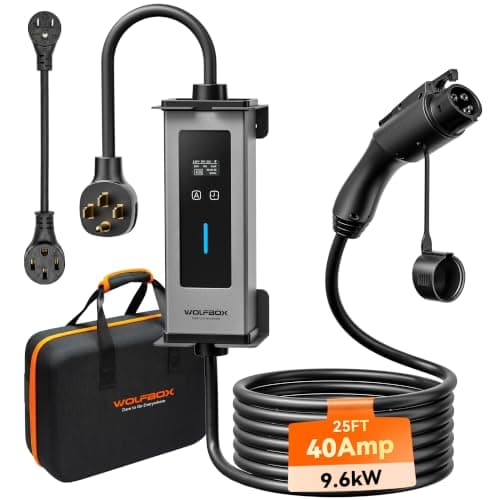
One charger for home and travel
WOLFBOX 40A Portable (Level 1/2)
A dual-level portable that doubles as a wall box — 40 amps on a NEMA 14-50, or Level 1 on a standard outlet with the included adapters. One weatherproof charger for the garage and the road.
#ad · As an Amazon Associate we earn from qualifying purchases.
Time to replace it?
If the fix does not hold, here is what we would buy
Most of the time the steps above get a charger working again, and you should give them a fair run first. But when the same fault keeps coming back after you have worked through them, or the unit is out of warranty, it is worth doing the math: replacing a home charger is often cheaper than paying for a service call to diagnose it, and the new one arrives with a fresh warranty. We are not saying yours is broken - only that if it is, these are the Level 2 chargers we would replace it with. All three lead our ranked Level 2 roundup, and every price is pulled live from Amazon.
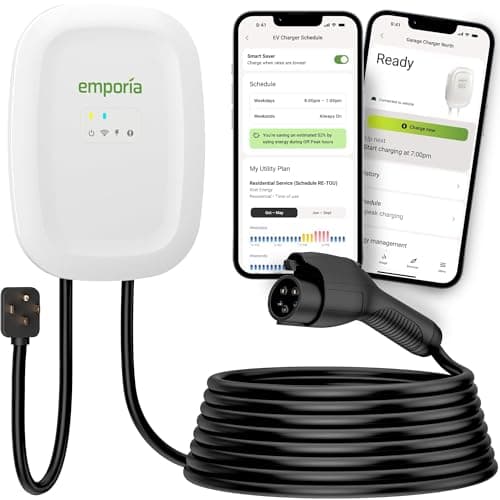
Most homes that want speed and smarts
Emporia Level 2 (48A)
Our top Level 2 pick: 48-amp capable when hardwired, real energy monitoring, priced like a plain plug-in box.
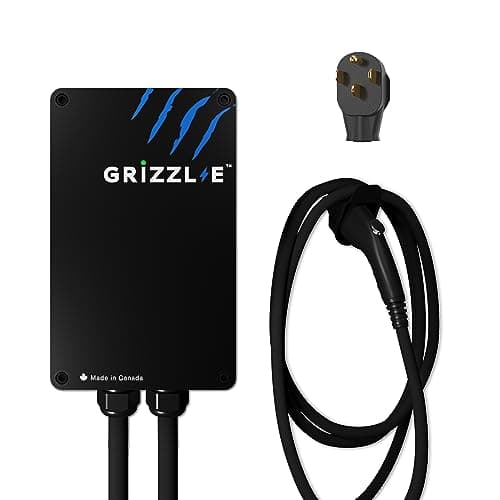
People who want a charger, not an app
Grizzl-E Classic (40A)
The no-app alternative: a UL-certified cast-aluminum box with no Wi-Fi to fail and nothing in the cloud to go dark.
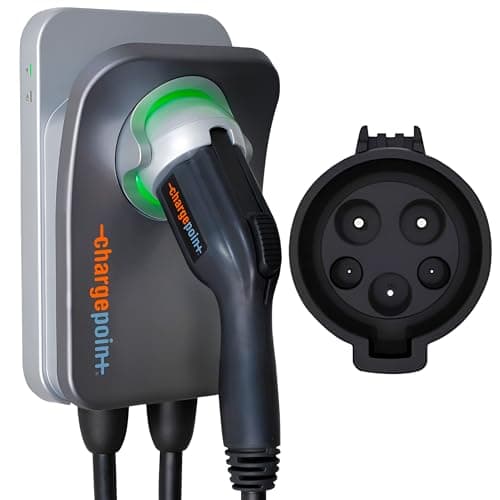
Buyers who want the established brand + one app
ChargePoint Home Flex
The established brand: adjustable up to 50 amps, and one app covers home and public charging.
Full review: Emporia Level 2 →See every Level 2 charger we rank →
#ad · we may earn a commission · As an Amazon Associate we earn from qualifying purchases.
Questions
Frequently asked
Why is my EV charging so slowly at home?
Most often because it is on a 120-volt Level 1 outlet (3 to 5 miles per hour) rather than a 240-volt Level 2 circuit. After that, the usual causes are your car's onboard-charger cap, a low amperage setting, cold weather, or a weak circuit. Work down those in order.
Does a bigger charger fix slow charging?
Only if the charger was the bottleneck. If your car's onboard charger or your circuit is the limit, a bigger wall unit changes nothing. Confirm the real ceiling before upgrading - see 32 vs 48 amps.
Is it bad that my EV charges slower in winter?
No - a cold battery accepts charge more slowly until it warms, and the car may use some energy to condition the pack. It is normal and temporary; see winter EV charging.
Keep reading
Related
More in this section
More Charging Guides
Receipts
Sources
We do not run a testing lab, and we do not pretend to. Where a measured number came from someone else's lab, we name them and link them. Where we could not verify something, we say so on the page rather than quietly leaving it out. Read our full method.