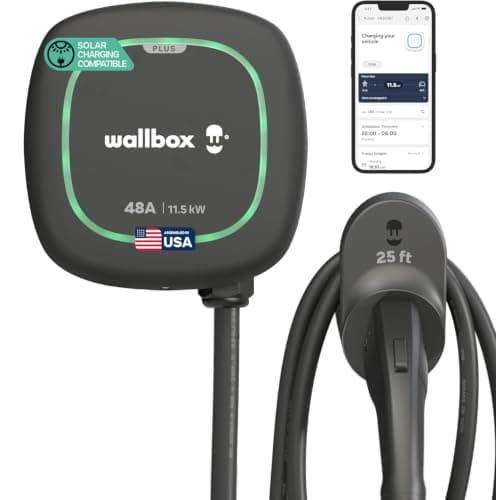
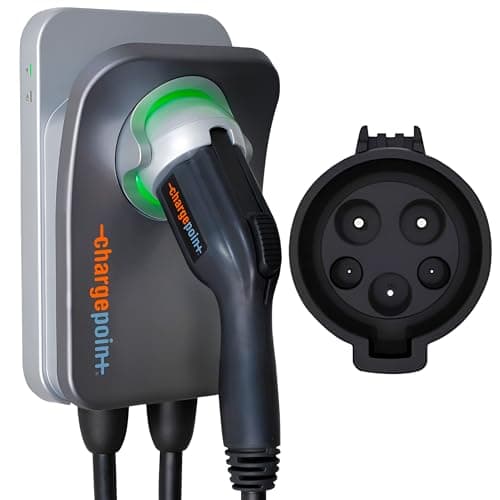
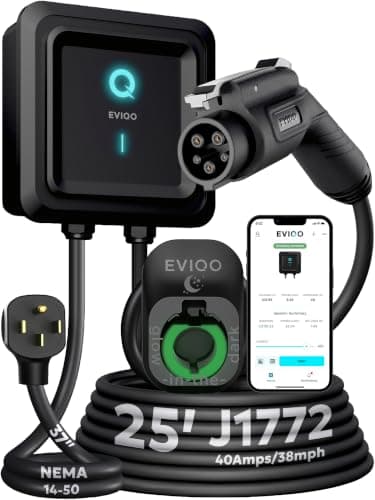
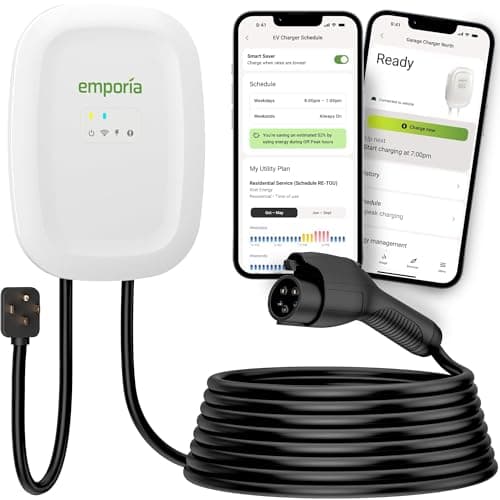
For a Rivian R1T or R1S, the best home charger is the Emporia Level 2. A Rivian accepts up to 48 amps / 11.5 kW, so a dedicated 48-amp charger is speed the truck actually uses - and hardwired, the Emporia delivers all of it, with real energy monitoring and scheduling, for less than anything else here. If the charger will live on an exposed wall next to a truck that spends its life outdoors, the Grizzl-E Ultimate is the same 48 amps in a far tougher cast-aluminum, IP67 shell.
A note on the Grizzl-E Ultimate. United Chargers still sells it, but as of our last price check no J1772 version of the Ultimate had a buyable Amazon listing - only the NACS version did. We have left it ranked because it is still the toughest 48-amp unit we know of, but its link goes to an Amazon search rather than a product page, and we show no price for it until a real one comes back.
A Rivian is a big battery on a heavy, capable platform, and its owners tend to actually use the range - which makes home charging speed matter more here than on a commuter EV. The good news is that the R1T and R1S have a healthy onboard AC charger: about 11.5 kW, or 48 amps at 240 volts. That means a full 48-amp home charger is not marketing headroom you cannot reach - the truck takes all of it. This page ranks the chargers that deliver it, and sorts out the one wrinkle unique to Rivian right now: which plug your specific model has. We compile published specs and do the wiring math; we do not bench-test, and we say so.
First, which port does your Rivian have?
Rivian is mid-transition on the connector, so check your model year before you buy an adapter:
- 2022-2025 R1T / R1S use a CCS1 port, which takes a J1772 plug for Level 2 AC charging. Any J1772 charger on this page plugs straight in - no adapter needed at home.
- 2026 and newer R1T / R1S ship with a NACS port - Rivian puts the switch at model year 2026, not 2025. To use a J1772 home charger you add a J1772-to-NACS AC adapter - Rivian sells its own, and we rank the aftermarket options in our J1772-to-NACS adapters guide.
Either way, the charger you buy is the same J1772 field - the adapter (if you need one) just bridges the plug. If you are hazy on why the standard is shifting, the connector types explainer and the NACS transition post cover it.
Why 48 amps is the right target for a Rivian
On most EVs we tell you not to overbuy amperage, because many cars cap their onboard charger at 32 or 40 amps. A Rivian is the exception: it accepts the full 48 amps / 11.5 kW, so a 48-amp charger genuinely charges it faster than a 40-amp one. The arithmetic is standard - 48 amps times 240 volts is 11.5 kW, and because charging is a continuous load, a 48-amp charger needs a 60-amp breaker (48 x 1.25 = 60) and a hardwire. A plug-in NEMA 14-50 unit lives on a 50-amp circuit and is capped at 40 amps, so to feed a Rivian its full rate you want a hardwired 48-amp charger. That is exactly why our top two picks are hardwire-capable 48-amp units, and why the plug-in EVIQO sits lower here than it would on a page for a slower car. Our best 48-amp chargers ranking covers the full-speed field, and the amperage and breaker guide shows the sizing - confirm the 60-amp circuit with a licensed electrician.
The practical takeaway: if your panel can spare a 60-amp circuit, hardwire a 48-amp charger and let the Rivian pull its full 11.5 kW. If it cannot, a 40-amp plug-in unit still adds roughly 30 miles of range per hour - plenty overnight - you just leave a little speed on the table.
Build matters more on a vehicle that lives outside
Rivians are bought to go places, and a lot of them charge on a driveway, a cabin wall, or an exterior mount rather than a sealed garage. That puts weather rating higher on the list than it would be for a commuter car. The Grizzl-E Ultimate's cast-aluminum NEMA 4X / IP67 enclosure is built for it, and the EVIQO's IP66 / NEMA 4 rating is the value alternative; if an outdoor mount is your situation, our best outdoor chargers page ranks the field by enclosure type. Hardwiring is also the more secure and weatherproof answer outdoors, which our best hardwired chargers roundup explains.
The picks, in order
Below the summary table each charger gets a full card with its score breakdown, pros and cons, and a "don't buy this if" note. In short: the Grizzl-E Ultimate wins on rugged 48-amp build, the Emporia on value plus monitoring, the Wallbox on a compact 48-amp footprint, the ChargePoint on brand and adjustability, and the EVIQO on price for a 40-amp plug-in setup. Every one charges a Rivian; the trick is your circuit and your wall.
How to choose a charger for a Rivian
A Rivian settles two questions most EV buyers have to weigh - it wants the full 48 amps, and it is often mounted outside. That points the decision cleanly.
1. Target 48 amps and a 60-amp circuit
Because the R1T and R1S accept 11.5 kW, a hardwired 48-amp charger on a 60-amp circuit is the setup that uses the truck's full onboard charger. If your panel cannot carry a 60-amp circuit, a 40-amp plug-in unit is a fine fallback - it just charges a little slower. Do not, though, buy a 48-amp charger and wire it to a smaller breaker: that just makes it a slower unit you overpaid for.
2. Confirm your port and get the right adapter
A 2022-2025 Rivian plugs a J1772 charger in directly. A 2026-or-newer NACS-port Rivian needs a J1772-to-NACS AC adapter to use these chargers at home - Rivian sells one, or see our adapter ranking. It is a one-time, inexpensive part, but buy it before install day so you are not stranded with a charger you cannot plug in.
3. Weather rating if it mounts outside
A Rivian on a cabin or driveway wall wants a stated outdoor enclosure. The Grizzl-E Ultimate's NEMA 4X / IP67 cast-aluminum shell and the EVIQO's IP66 / NEMA 4 are built for weather; the Wallbox and ChargePoint are outdoor-rated too. In a sealed garage this matters less and you can buy on features and price instead.
4. Cable length and hardwire vs plug-in
A Rivian is a long vehicle and its charge port is forward on the driver's side, so measure the real path and favor a 25-foot cable - the Grizzl-E, Emporia, Wallbox and ChargePoint all carry one. Hardwiring is the cleaner, more secure and faster answer for a permanent home; a plug-in unit stays portable for renters, but caps you at 40 amps. If you go plug-in, spend on the receptacle per our NEMA 14-50 outlet guide.
So, which one?
Buy the Grizzl-E Ultimate for a rugged, permanent 48-amp install that shrugs off weather. Want the same speed with monitoring for less? The Emporia. Tight wall space? The Wallbox. Big brand and one app for home and road? The ChargePoint. On a budget, or charging in a garage where you do not need 48 amps? The EVIQO.