HUB 03 · Charging Guides
EV Charging for Beginners
Just got your first electric car - or thinking about it? Here is everything about charging, in plain English, without the acronym headache.
We earn a commission when you buy through our Amazon links, at no extra cost to you. It never affects our rankings, and we say so when the cheaper product is the better buy. How this works.
Charging an electric car is simpler than it sounds: most owners plug in at home overnight, the same way you charge a phone, and almost never think about it again. Public fast charging is for road trips, not daily life. This guide covers the handful of things a first-time EV owner actually needs to know - the levels, the plug, the cost - and points you to the deeper guides when you want them.
The one idea that makes it click: you refuel at home
Forget the gas-station model. An EV is topped up while it is parked - overnight in your driveway or garage - so you leave every morning with a "full tank." You only visit a public charger on longer trips. Once that clicks, the rest is detail. The single best upgrade for a new owner is a home Level 2 charger; everything below explains why.
The three levels, quickly
- Level 1 - the cord that plugs into a normal 120-volt household outlet. It adds only ~3 to 5 miles of range per hour. Fine as a backup or for a low-mileage plug-in hybrid; too slow as a primary charger for most.
- Level 2 - a 240-volt charger (the voltage an electric dryer uses). It adds ~20 to 30+ miles per hour, so it refills a car overnight. This is what belongs in your garage.
- Level 3 / DC fast charging - the high-power public chargers on road trips. You do not install these at home; they run on different, industrial power.
The full breakdown is in types of EV chargers, and Level 1 vs Level 2 settles the one that matters at home.
What plug does my car use?
In North America there are two AC home-charging connectors. Most non-Tesla EVs built through 2024 use J1772; Teslas and a growing list of 2025-plus models use NACS (the Tesla-style plug). A cheap adapter bridges the two either way, so you are never locked out - see connector types explained. When you buy a charger, you simply match it to your car's port, or add an adapter.
What you actually need to buy
For most new owners: a Level 2 charger and a 240-volt circuit for it. You have two clean paths:
- A plug-in charger on a NEMA 14-50 outlet - the same outlet a range or welder uses. A value smart unit like the Emporia Level 2 does the job, or a portable charger if you might move.
- A hardwired charger, wired straight to the panel - tidier and unlocks the fastest speeds. See hardwired vs plug-in.
Either way, the electrical work is a job for a licensed electrician. If you rent, you are not stuck - see charging at an apartment.
What does it cost to charge?
Far less than gas - typically 3 to 5 cents per mile at home versus 12 to 18 for a gas car. A typical overnight top-up runs a few dollars. The exact figure depends on your electricity rate and your car; our cost-to-charge guide has a calculator, and EV vs gas does the side-by-side.
That is the whole of it: plug in at home, use Level 2, match the plug, charge overnight. Everything else on this site is a deeper look at one of those steps - and when you are ready to pick the charger itself, the best Level 2 chargers for home is the page to open next.
The gear
Recommended gear for this guide
The products this guide refers to, with prices pulled live from Amazon and dated on each card.
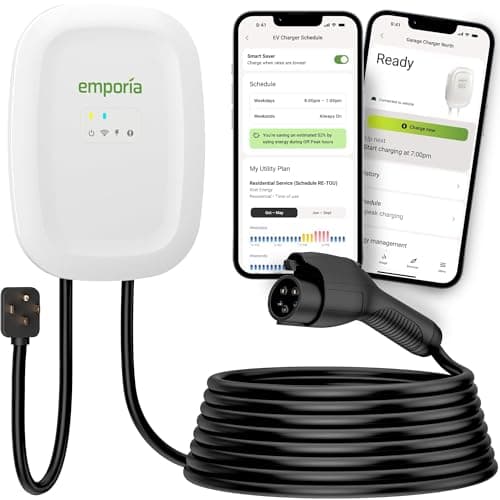
Most homes that want speed and smarts
Emporia Level 2 (48A)
The charger that refuses to charge you extra for being smart: full 48-amp speed and real energy monitoring at roughly the price of a plain plug-in box.
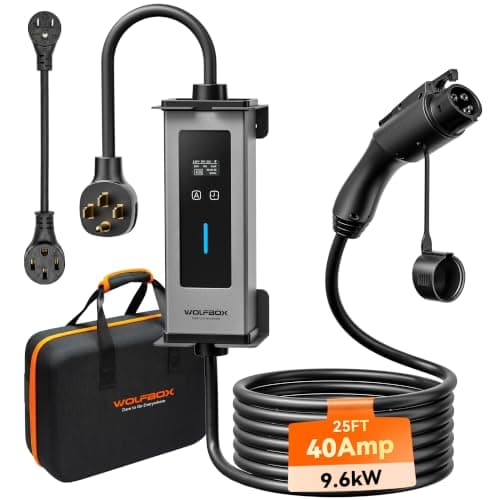
One charger for home and travel
WOLFBOX 40A Portable (Level 1/2)
A dual-level portable that doubles as a wall box — 40 amps on a NEMA 14-50, or Level 1 on a standard outlet with the included adapters. One weatherproof charger for the garage and the road.
#ad · As an Amazon Associate we earn from qualifying purchases.
Questions
Frequently asked
Do I need a special charger to charge an EV at home?
To charge at a useful speed, yes - a Level 2 (240-volt) charger on a dedicated circuit. You can trickle-charge from a normal outlet on Level 1, but it only adds a few miles per hour, which is too slow for most daily driving.
Can I charge a new EV with a regular wall outlet?
Yes, on Level 1 with the cord many cars include - but expect only ~3 to 5 miles of range per hour. It works for a plug-in hybrid or very low mileage; most full-EV owners want Level 2. See Level 1 vs Level 2.
How do I know which charger to buy for my car?
Match the connector (J1772 or NACS) to your car's port, pick Level 2, and choose the amperage your circuit supports. Our best Level 2 roundup and amperage guide walk you through it.
Keep reading
Related
- Do All EVs Use the Same Charger?The two-plug-shapes basics for a first EV.
- Can You Overcharge an EV?Why leaving it plugged in overnight is safe.
- What Does kW Mean in EV Charging?kW vs kWh, the units behind every spec.
- Types of EV chargersLevel 1, 2 and 3 in full.
- Best Level 2 chargersThe units a first-time buyer should shortlist.
- Cost to charge at homeWhat it actually costs, with a calculator.
- How to choose an EV chargerThe five decisions that settle your first purchase.
- Is a home charger worth it?The decision before the shopping starts.
- Can I use a regular outlet?Level 1 vs a 240-volt circuit, for a first EV.
- Is it safe to charge overnight?Yes - and the habits that keep it that way.
More in this section
More Charging Guides
Receipts
Sources
We do not run a testing lab, and we do not pretend to. Where a measured number came from someone else's lab, we name them and link them. Where we could not verify something, we say so on the page rather than quietly leaving it out. Read our full method.