HUB 03 · Charging Guides
Does an EV Charger Increase Home Value?
The honest answer: the charger is a selling point, but the lasting value is the dedicated 240V circuit in the garage. Here is how to add it so it helps later.
We earn a commission when you buy through our Amazon links, at no extra cost to you. It never affects our rankings, and we say so when the cheaper product is the better buy. How this works.
A home EV charger is increasingly a feature buyers look for, and "EV-ready garage" is now a normal listing line. But it is worth being precise about where the value actually lives: not in the plastic box on the wall, which any owner can swap, but in the permitted, dedicated 240-volt circuit behind it. That circuit is the expensive, hard part - and it is what makes a garage EV-ready for the next owner regardless of which charger hangs there.
What buyers are really paying for
The costly, disruptive part of home charging is the electrical work: a dedicated circuit, breaker space (and sometimes a panel upgrade), and the run to the garage. A house that already has that done saves a buyer the cost, the permit, and the wait. The charger itself is comparatively cheap and personal - some buyers want to bring their own, or match the one that fits their car. So the durable value is the infrastructure. If you are installing now and might sell later, the smart move is to make sure the circuit is done to code and permitted, which is exactly what an appraiser or a savvy buyer's inspector will care about.
Leave the circuit, take the charger (or leave it)
A useful way to think about it: a plug-in charger can go with you when you move, but the NEMA 14-50 circuit stays and keeps the garage EV-ready. That is one reason a plug-in unit like the Emporia is a flexible choice - you keep the option to take the box or leave it for the buyer, and either way the valuable circuit remains. The full mechanics of moving a unit are in can I move my EV charger to a new house. If your driveway mixes connector types, a dual-connector unit like the Tesla Universal Wall Connector is the most broadly useful thing to leave behind, because it charges both NACS and J1772 cars.
Be honest about the numbers
We will not put a dollar or percentage figure on the value bump, because there is no single reliable national number and it varies with your market, the buyer pool, and how EV-heavy your area is. What is defensible is the direction and the mechanism: in markets with lots of EV buyers, an EV-ready garage is a genuine differentiator that removes a cost and a hassle for the next owner; in markets with few EVs, it is a nice-to-have that may not move the price much yet. The safe framing is that the circuit protects and modestly enhances value and broadens your buyer pool, not that it returns a guaranteed premium. Anyone quoting you a precise percentage is guessing.
How to add it so it helps later
- Install a properly sized, dedicated 240-volt circuit and pull the permit - an un-permitted circuit can become a problem at sale, not an asset.
- Favor a common, flexible outlet or a well-known charger over an obscure one, so a future owner recognizes it.
- Keep the paperwork: the permit, the inspection sign-off, and the charger's documents. It is proof the EV-ready claim is real.
The circuit that makes a garage EV-ready is standard NEC work for a licensed electrician, and it must be permitted and inspected - an un-permitted 240-volt circuit is a liability at resale, not a selling point. Use this guide to plan the value case, then have a pro install and document the circuit to code.
The bottom line: a charger helps sell the story, but the permitted 240-volt circuit is the asset. Do that part right and the garage stays EV-ready for whoever owns the house next - which is the part a buyer will actually pay to skip. Weigh it against the day-to-day case in is a home EV charger worth it, and if you do add a unit before listing, a plug-in pick from the Level 2 home chargers we rank can come with you if the buyer does not want it.
The gear
Recommended gear for this guide
The products this guide refers to, with prices pulled live from Amazon and dated on each card.
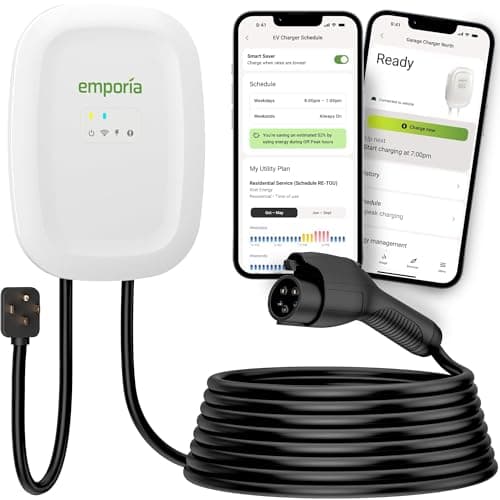
Most homes that want speed and smarts
Emporia Level 2 (48A)
The charger that refuses to charge you extra for being smart: full 48-amp speed and real energy monitoring at roughly the price of a plain plug-in box.
- Guide
Mixed Tesla + non-Tesla households
Tesla Universal Wall Connector
The one wall unit with a built-in NACS plug AND a J1772 adapter — the future-proof pick for a driveway that mixes a Tesla and a non-Tesla EV.
#ad · As an Amazon Associate we earn from qualifying purchases.
Questions
Frequently asked
Does adding an EV charger raise my home's value?
It can help, but the durable value is the permitted 240-volt circuit, not the charger box. An EV-ready garage removes a cost and a hassle for the next owner and broadens your buyer pool, especially in EV-heavy markets. We will not quote a fixed percentage - it varies too much by market to be honest about.
Should I leave the charger when I sell?
Your choice. A plug-in unit can go with you while the valuable circuit stays, keeping the garage EV-ready. Leaving a broadly compatible charger - especially a dual-connector one - is a nice touch, but the circuit is what matters most.
Does the circuit need to be permitted to count?
Effectively, yes. A permitted, inspected circuit is a documented asset; an un-permitted one can raise questions or become a fix-it item during a sale. Keep the permit and inspection paperwork - see permit and inspection.
Which charger adds the most resale appeal?
Something a future owner recognizes and can use with any car. A well-known plug-in unit is safe, and a dual-connector unit that charges both NACS and J1772 is the most universally useful thing to leave behind.
Keep reading
Related
- Is a Home EV Charger Worth It?The day-to-day value case that sits alongside resale.
- EV Charger Installation CostThe circuit cost a buyer is really paying to skip.
- EV Charger Permit and InspectionWhy a permitted circuit is an asset and an un-permitted one is not.
- Can I Move My EV Charger?Take the box, leave the circuit - and keep the garage EV-ready.
- Best Level 2 Home ChargersRecognizable units that make sense to leave for a buyer.
More in this section
More Charging Guides
Receipts
Sources
- US DOE AFDC - charging an EV at home
- US DOE Energy Saver - electric vehicles
- EC&M - NEC requirements for EV equipment (Article 625: continuous load, circuit sizing, GFCI, disconnect)
We do not run a testing lab, and we do not pretend to. Where a measured number came from someone else's lab, we name them and link them. Where we could not verify something, we say so on the page rather than quietly leaving it out. Read our full method.