HUB 03 · Charging Guides
Can I Move My EV Charger to a New House?
A plug-in or portable unit comes with you; a hardwired one takes an electrician at both ends. Either way the new house needs its own properly rated circuit.
We earn a commission when you buy through our Amazon links, at no extra cost to you. It never affects our rankings, and we say so when the cheaper product is the better buy. How this works.
Yes - in most cases you can take your EV charger with you, and how easy it is comes down to how it was installed. A plug-in unit unplugs and moves in minutes; a portable charger is the easiest of all; a hardwired unit has to be de-installed and re-installed by an electrician. The catch that applies to every one of them is the same: the new house still needs a matching, properly rated, dedicated circuit for the charger to plug into or land on. The charger travels; the circuit does not.
Plug-in units: unplug and go
If your charger plugs into a NEMA 14-50 outlet, moving it is genuinely simple - you unplug it, unmount it from the wall, and take it. The hardware comes off in minutes. But it only works at the new house if that house has a matching dedicated 14-50 circuit already, or you have one installed. You cannot count on the new garage having one, and you absolutely cannot solve that by plugging into a dryer or range outlet - that outlet is on a circuit sized and wired for a short-duty appliance, and an hours-long EV load can overload it. We spell out that trap in can I use a dryer outlet for EV charging, and the dedicated-circuit rule in do EV chargers need their own circuit. A smart plug-in unit like the Emporia is a good example: the box moves easily, but it still needs a real 14-50 circuit waiting at the other end.
Portable units: the easiest movers
A portable EVSE is the most move-friendly of all. It is designed to be unplugged and carried, so it needs no de-installation at all - just a matching outlet at the destination. That is why portables and plug-in units are the natural choice for renters and anyone who expects to move. A 40-amp portable like the EVDANCE plugs into any properly rated 14-50 and comes right back out. If you move often, the whole case for portable over wall-mounted is in portable vs wall-mounted, and the apartment and rental angle in best chargers for apartments.
Hardwired units: an electrician at both ends
A hardwired charger is a permanent fixture, so moving it is more involved. It has to be de-installed - disconnected from the circuit and removed - and then re-installed on a new dedicated circuit at the new house, both steps being licensed-electrician work. It is entirely doable, and the charger itself is unharmed by the move, but you are paying for two electrician visits rather than pulling a plug. Whether that is worth it depends on the unit's value and your attachment to it; sometimes selling with the house and buying fresh is simpler. The hardwired-versus plug-in trade-off, including exactly this portability question, is in hardwired vs plug-in, and whether the new install might need a subpanel is in do I need a subpanel for an EV charger.
The new house always needs its own circuit
This is the point people skip. The charger is only half the install - the other half is the dedicated 240-volt circuit it runs on, and that stays with the old house. At the new address you need a properly rated dedicated circuit, sized to 125 percent of the charger's draw, either already present or newly installed by an electrician. That circuit may be a completely different job at the new house: a different panel, a different distance to the parking spot, maybe a different conductor choice. Budget for the circuit at the new address the same way you did originally, using EV charger wire and breaker size and EV charger installation cost as your guide.
De-installing or re-installing a hardwired charger, and running any new dedicated 240V circuit at the new house, is standard NEC work for a licensed electrician - never a DIY project, and never a matter of reusing a dryer or range outlet. Local code can differ at the new address, so the circuit must be permitted and inspected there on its own terms. Use this guide to plan the move, then have a pro handle both ends to code.
Two things people forget: warranty and code
Two loose ends are worth handling before you move. First, warranty and registration: check whether your charger's warranty or app registration is tied to an address or account and update it, so coverage follows the unit. Second, local code: the new jurisdiction may have different rules - a different inspection process, or a local requirement like a within-sight disconnect that your old install did not need, covered in does an EV charger need a disconnect switch. Re-checking the local code at the new address is part of doing the move right, and your electrician will confirm it as part of the new permit.
The bottom line: yes, take your charger with you. A portable or plug-in unit moves easily; a hardwired one moves with an electrician's help. In every case, plan on a matching dedicated circuit waiting at the new house - the charger is the easy part. And if the move is the moment to upgrade, our ranked Level 2 chargers marks which units are plug-in and will move again next time.
The gear
Recommended gear for this guide
The products this guide refers to, with prices pulled live from Amazon and dated on each card.
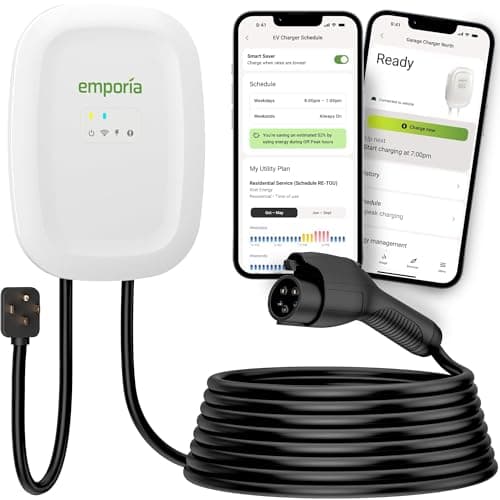
Most homes that want speed and smarts
Emporia Level 2 (48A)
The charger that refuses to charge you extra for being smart: full 48-amp speed and real energy monitoring at roughly the price of a plain plug-in box.
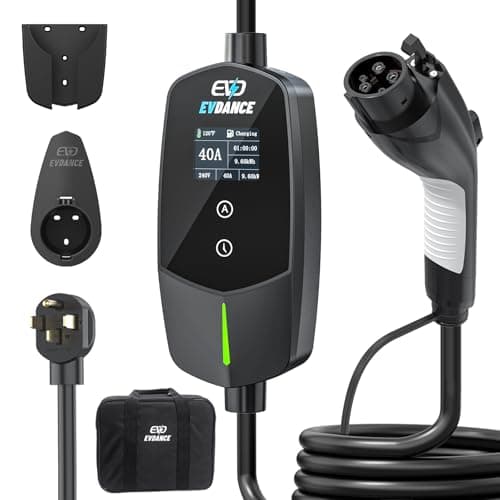
Off-peak charging without an app
EVDANCE 40A Portable
A 40-amp portable with adjustable current and a built-in delay timer on a long 25-foot cable — off-peak charging without needing an app.
#ad · As an Amazon Associate we earn from qualifying purchases.
Questions
Frequently asked
Can I just plug my charger into the dryer outlet at the new house?
No. A dryer or range outlet is on a circuit sized and wired for a short-duty appliance and feeds only that outlet. An hours-long EV load can overload it. The new house needs its own dedicated circuit and a properly rated 14-50 - see can I use a dryer outlet.
Is it hard to move a hardwired charger?
It is more work than a plug-in unit. A hardwired charger must be de-installed and re-installed by a licensed electrician on a new dedicated circuit at the new house. The charger itself is fine to move - you are paying for two electrician visits rather than pulling a plug.
Which charger is easiest to take when I move?
A portable EVSE, followed by a plug-in wall unit. Both come out without rewiring; a portable needs no de-installation at all. That is why renters and frequent movers favor portable and plug-in over hardwired - see portable vs wall-mounted.
Do I need to do anything about warranty or code when I move?
Yes - update any address- or account-linked warranty and app registration so coverage follows the unit, and re-check local code at the new address. The new jurisdiction may require a fresh permit and inspection, and possibly a local rule your old install did not need.
Keep reading
Related
- Hardwired vs Plug-In EV ChargerThe install choice that decides how easily a charger moves.
- Portable vs Wall-Mounted EV ChargerWhy a portable is the easiest unit to take with you.
- Can I Use a Dryer Outlet for EV Charging?Why the new garage still needs its own dedicated circuit.
- Best Chargers for ApartmentsMove-friendly picks for renters and frequent movers.
- Does an EV Charger Need a Disconnect Switch?A local rule the new address may add that the old one did not.
More in this section
More Charging Guides
Receipts
Sources
- US DOE AFDC - charging at home
- EC&M - NEC requirements for EV equipment (Article 625: continuous load, circuit sizing, GFCI, disconnect)
- US DOE Energy Saver - Electric Vehicles
We do not run a testing lab, and we do not pretend to. Where a measured number came from someone else's lab, we name them and link them. Where we could not verify something, we say so on the page rather than quietly leaving it out. Read our full method.