HUB 03 · Charging Guides
Where to Mount an EV Charger: Height & Placement
The circuit sets how fast it charges; where you hang it sets how usable it is day to day. Here is how to plan the spot before the electrician arrives.
We earn a commission when you buy through our Amazon links, at no extra cost to you. It never affects our rankings, and we say so when the cheaper product is the better buy. How this works.
A charger's speed is decided by the circuit behind it, but how pleasant it is to live with is decided by where you hang it. Mount it well and the cable reaches your car's port with an easy loop of slack; mount it badly and you fight a stretched cable every night or dodge a connector sitting on the floor. This is a planning guide - you choose the spot and understand the trade-offs, and a licensed electrician does the actual mounting and wiring.
Mounting height
Manufacturer manuals commonly call for the charger to be mounted with its body somewhere in the range of about 18 to 48 inches off the floor - often around three-and-a-half to four feet - so the connector hangs at a comfortable height and the cable drops naturally without kinking. Treat that as a starting range, not a rule: the number that matters is the one in your unit's own manual, because the mounting height a maker specifies is tied to how their cable exits the box. Mount too low and the connector ends up near the floor; too high and you are reaching up and putting a bend in the cable every time.
Which wall, and which side
The right wall depends entirely on where your car's charge port sits, and that varies by model - front-left on many cars, front-right on some, rear-quarter on others. Park the car exactly where it will normally live, note which corner the port is on, and place the charger so the cable can reach that port with a little slack rather than pulled taut across the bumper. A stretched cable strains the connector and the mount over time; a short easy run lasts. If two cars share the space, plan for the one whose port is hardest to reach.
Cable length is the other half of this. A longer cable buys flexibility - it can reach either bay of a two-car garage or wrap around to an awkward-side port - but it still needs somewhere tidy to live. Plan the reach deliberately rather than hoping it works; we lay out how to size it in the EV charger cable length guide.
Keep it close to the panel
There is a cost tug-of-war built into placement. The car wants the charger near its port, but your wallet wants the charger near the electrical panel. Every foot of 240-volt wire run from the panel to the charger adds material cost and a little voltage drop, so a charger mounted a long way from the panel is a more expensive install. Where you can, favor a spot that keeps the wire run short while still letting the cable reach the car. How far you can practically go is covered in how far can an EV charger be from the panel.
Tidying the cable: a holster and hook
A charger that is not tethered to a cradle tends to leave its connector on the garage floor, where the contacts pick up dust and moisture. A holster docks the connector off the ground so it stays clean and dry, and a J-hook loops the cable so it is not pooled underfoot. Some units, including the Emporia Level 2, come with a holster; many do not, and an inexpensive holster-and-hook add-on set solves it cleanly. It adds nothing to charging speed - it just keeps the install neat and the connector in good shape.
Mounting outdoors
If there is no garage and the charger lives outside, two extra rules apply. First, the unit itself must be weather-rated - a proper outdoor enclosure rating - because a purely indoor charger is not built to sit in rain and sun. Second, mount it high enough to clear the snow line in winter and out of any spot where water pools, and shade it from constant direct sun where you can. Our best outdoor chargers roundup covers which units are genuinely built for it.
The actual mounting and every bit of the wiring - the 240V circuit, working clearances, GFCI protection, and how the unit is anchored to the wall - is a licensed-electrician job under the NEC, not a weekend project. Use this guide to decide what you want and where, then hand a pro a clear brief: the spot, the height, the cable reach, and whether it is indoor or outdoor.
What to hand the electrician
Come to install day with the decisions made and it goes smoothly. Know the exact spot on the wall, the height you want the body of the unit, which side the car's port is on and that the cable reaches it, and whether the location is indoor or outdoor. The electrician handles the code-driven details you should not - clearance, GFCI, conduit, anchoring - and sizes the circuit to the charger. For the full picture of what that install involves, see Level 2 charger installation and what it typically runs in EV charger installation cost. Once the spot is chosen, the cable length you need narrows the field in our ranked Level 2 chargers.
The gear
Recommended gear for this guide
The products this guide refers to, with prices pulled live from Amazon and dated on each card.
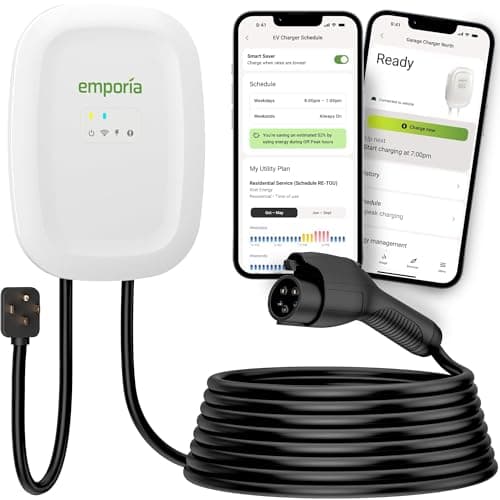
Most homes that want speed and smarts
Emporia Level 2 (48A)
The charger that refuses to charge you extra for being smart: full 48-amp speed and real energy monitoring at roughly the price of a plain plug-in box.
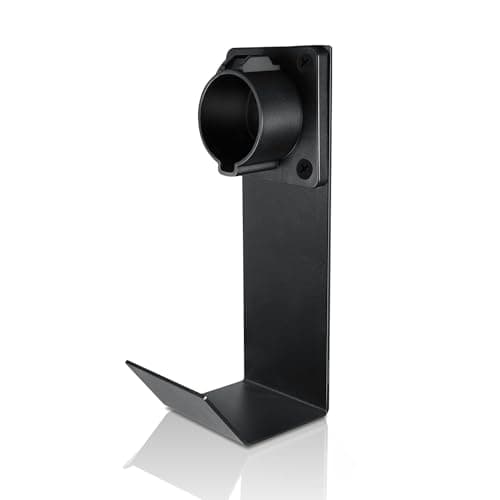
Docking a J1772 connector
Lectron J1772 Holster + J-Hook
A connector dock and cable hook in one — the cheapest fix for a J1772 plug that otherwise sits on the garage floor.
#ad · As an Amazon Associate we earn from qualifying purchases.
Questions
Frequently asked
How high should I mount an EV charger?
Manufacturer manuals commonly put the body of the unit roughly 18 to 48 inches off the floor - often around three-and-a-half to four feet - so the connector hangs comfortably and the cable drops without kinking. Always follow your specific unit's manual, since the ideal height depends on where its cable exits.
Which side of the garage should the charger go on?
Whichever side lets the cable reach your car's charge port with a little slack. Charge-port location varies by model, so park the car where it normally sits, note the port corner, and place the charger so the cable is not stretched taut across the vehicle.
Can I mount an EV charger outdoors?
Yes, if the unit is weather-rated for outdoor use. Mount it high enough to clear winter snow, out of any spot where water pools, and shaded from constant direct sun where possible. An indoor-only charger should not be exposed to the weather.
Do I need a holster for the connector?
It is not required, but a holster keeps the connector off the floor so the contacts stay clean and dry, and a J-hook keeps the cable from pooling underfoot. Some chargers include one; if yours does not, an inexpensive add-on set does the job.
Keep reading
Related
- Weatherproofing an Outdoor InstallEnclosure ratings and mounting for an exposed wall.
- EV Charging Cable ManagementHolsters and hooks that keep the mounted cable tidy.
- Level 2 Charger InstallationWhat the electrician actually does on install day.
- EV Charger Installation CostWhat placement and wire runs do to the final bill.
- How Far From the Panel?Balancing cable reach against a short, cheaper wire run.
- EV Charger Cable Length GuideSizing the cable so it reaches your port with slack.
- Best Outdoor ChargersWeather-rated units built to mount outside.
More in this section
More Charging Guides
Receipts
Sources
- EC&M - NEC requirements for EV equipment (Article 625)
- US DOE AFDC - charging at home
- US DOE / fueleconomy.gov - EV charging basics
We do not run a testing lab, and we do not pretend to. Where a measured number came from someone else's lab, we name them and link them. Where we could not verify something, we say so on the page rather than quietly leaving it out. Read our full method.