HUB 03 · Charging Guides
EV Charger Fault Codes and Warning Lights Explained
A red or flashing light looks alarming, but most faults are ordinary and clear on their own. Here is how to read the light, what the common codes mean, and the order to work through them.
We earn a commission when you buy through our Amazon links, at no extra cost to you. It never affects our rankings, and we say so when the cheaper product is the better buy. How this works.
Almost every home charger tells you how it is doing with a single status light, and the moment that light turns red or starts flashing it feels like something has gone badly wrong. Usually it has not. The large majority of fault indications come from a short list of ordinary causes - a communication hiccup with the car, a warm afternoon, a brief dip in supply voltage - and they clear on their own or after a simple power-cycle. This guide teaches you to read the light, explains the faults it is most likely reporting, and gives you a calm order to work through before you ever call anyone.
How the status light speaks
A charger has no screen on most models, so it communicates through the color and the blink pattern of an LED. The exact scheme differs by brand, but the broad language is remarkably consistent. A steady green light typically means the unit is powered, healthy, and ready - plugged in and waiting, or connected to the car and standing by. A blue or slowly pulsing light usually means a charge is actively in progress, the pulse keeping time with the session. A red light, or any fast or repeating flash, is the unit telling you it has detected a fault and stopped or paused to protect itself.
The pulse and the pause are features, not defects. A charger is designed to hold the cable de-energized until it and the car have exchanged signals, then to interrupt the session the instant anything looks wrong. So a warning light is the safety system doing its job. The question is never whether the light is "bad" - it is what specific condition it is reporting, and your unit's manual is the only place that maps the pattern to the exact meaning.
Blink patterns are brand-specific. Two red flashes on one charger can mean an over-temperature pause; the same two flashes on another can mean a vehicle-communication error. Keep the manual - or a photo of its LED legend on your phone - so you translate the pattern rather than guess at it.
The faults a warning light is usually reporting
Behind the flashing, home chargers detect a fairly small set of conditions. Knowing the categories tells you how worried to be and what to check next.
| Fault category | What it means | First thing to check |
|---|---|---|
| Ground fault (GFCI) | Current leaking to ground was detected and the unit tripped | Moisture at the connector; a single retry after drying |
| Over-temperature | The unit or plug is running hotter than its safe limit | Ambient heat, direct sun, or a warm plug or receptacle |
| Over- or under-voltage | Supply voltage is outside the acceptable window | A brownout or grid event; often clears itself |
| Vehicle-communication error | Charger and car failed to complete their handshake | Reseat the connector; try the other end of the car's cable |
| No power / loss of supply | The unit is not receiving power from the circuit | The breaker, and whether it has tripped |
A ground-fault trip deserves a word of its own. A single trip after rain or a damp connector can be a one-off, and one careful retry once things are dry is reasonable. But a unit that trips its ground fault again and again is not being fussy - it is reporting a real electrical problem, and that is a stop-and-call-a-pro situation rather than a reset-and-repeat one. We cover why in GFCI breakers and EV chargers.
The order to work through it
When the light goes red, resist the urge to jump straight to the worst case. Work these in order and most faults resolve within the first two or three steps.
First, read the code in the manual.Match the exact color and blink pattern to your unit's legend so you know which of the faults above you are actually dealing with. Everything after this is faster once you know the category.
Second, rule out the car.Many "charger" faults are really the vehicle declining to charge - a charge limit already reached, a scheduled-charging setting, or a fault on the car's side. Check the car's own charging screen before blaming the wall unit, and if the charge simply will not start, work through EV charger not charging alongside this page.
Third, power-cycle the unit. A clean reset clears a surprising share of transient faults - a stuck communication state, a one-off voltage blip. The safe way to do it, plug-in versus hardwired, is laid out step by step in how to reset an EV charger.
Fourth, inspect the connector and outlet. Look for moisture, debris, or bent pins at the connector, and for a plug-in unit feel the face of the receptacle - warm is a flag and hot is a stop. A hot plug is its own diagnosis, covered in why an EV charger plug gets hot.
Fifth, contact support - and do not open the unit. If the fault survives the manual, the car check, a reset, and a clean connector, it is time to contact the manufacturer or a licensed electrician. A home charger is a sealed high-current device; there is nothing a homeowner should be opening or repairing inside it.
When a fault light is really a Wi-Fi light
One common false alarm: some smart chargers use a color or a slow blink to signal that they have lost their network connection, not that charging has failed. If the unit still charges the car normally but the app shows it offline, you are looking at a connectivity indicator, and the fix lives in EV charger Wi-Fi not connecting rather than in any charging fault. A unit with a clear, well-documented light scheme makes this distinction easy; the Emporia Level 2 and other well-supported smart units publish a plain LED legend so you are never guessing.
The honest bottom line
A warning light is information, not a verdict. Read the pattern against the manual, rule out the car, give the unit a clean reset, and check the connector, and the overwhelming majority of faults are behind you. The two that warrant real caution are a repeatedly tripping ground fault and any sign of heat at the plug - both point past troubleshooting to an electrician. For everything else, the light is simply the charger keeping you informed while it protects itself. If you are shopping and want to avoid opaque, hard-to-read units, our best smart chargers roundup favors the ones whose apps and lights actually tell you what is happening, and the best Level 2 home chargers we've compared ranks the whole field, app or no app.
Time to replace it?
If the fix does not hold, here is what we would buy
Most of the time the steps above get a charger working again, and you should give them a fair run first. But when the same fault keeps coming back after you have worked through them, or the unit is out of warranty, it is worth doing the math: replacing a home charger is often cheaper than paying for a service call to diagnose it, and the new one arrives with a fresh warranty. We are not saying yours is broken - only that if it is, these are the Level 2 chargers we would replace it with. All three lead our ranked Level 2 roundup, and every price is pulled live from Amazon.
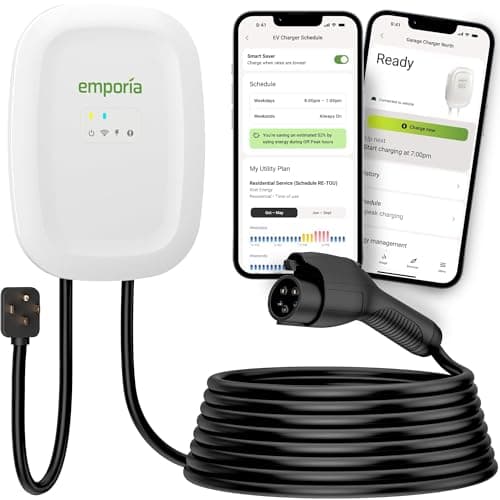
Most homes that want speed and smarts
Emporia Level 2 (48A)
Our top Level 2 pick: 48-amp capable when hardwired, real energy monitoring, priced like a plain plug-in box.
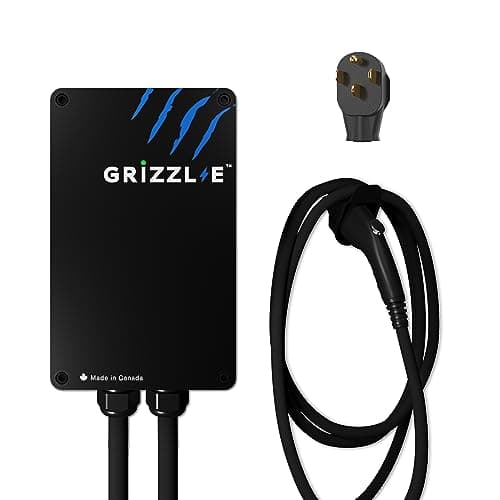
People who want a charger, not an app
Grizzl-E Classic (40A)
The no-app alternative: a UL-certified cast-aluminum box with no Wi-Fi to fail and nothing in the cloud to go dark.
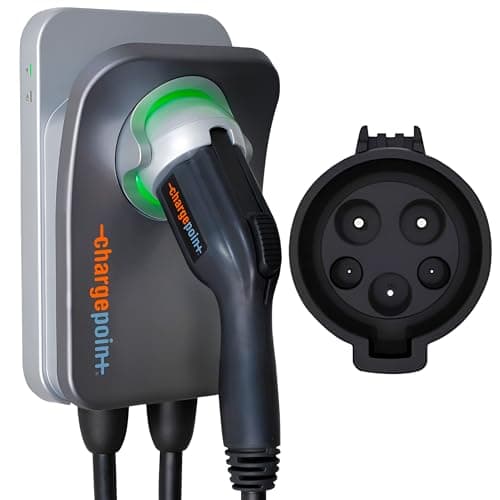
Buyers who want the established brand + one app
ChargePoint Home Flex
The established brand: adjustable up to 50 amps, and one app covers home and public charging.
Full review: Emporia Level 2 →See every Level 2 charger we rank →
#ad · we may earn a commission · As an Amazon Associate we earn from qualifying purchases.
Questions
Frequently asked
What does a red light on my EV charger mean?
A red or flashing light means the charger has detected a fault and paused to protect itself - commonly a ground fault, an over-temperature condition, a voltage problem, or a failed handshake with the car. The exact meaning depends on the blink pattern, which is brand-specific, so check your unit's manual legend to identify which fault it is reporting.
Why does my charger keep showing a ground fault?
A single ground-fault trip after rain or a damp connector can be a one-off, and one careful retry once it is dry is reasonable. But repeated ground-fault trips signal a real electrical problem, not a fussy unit. Stop resetting it and have a licensed electrician inspect the circuit, connector, and wiring.
Can I fix an EV charger fault myself?
You can safely work through the outside checks - read the manual code, rule out the car, power-cycle the unit, and inspect the connector and outlet. You should never open the charger's enclosure. If the fault survives those steps, contact the manufacturer or an electrician rather than attempting an internal repair.
Do all EV chargers use the same fault codes?
No. The broad language is similar - steady green for ready, a pulse for charging, red or flashing for a fault - but the specific blink patterns and their meanings differ by manufacturer. Always translate your charger's pattern using its own manual, because the same flash can mean different things on different brands.
Keep reading
Related
- EV Charger Not ChargingWhen the fault is really the charge failing to start.
- How to Reset an EV ChargerThe power-cycle step that clears most transient faults.
- GFCI Breakers and EV ChargersWhy a repeatedly tripping ground fault is a real problem.
- EV Charger Wi-Fi Not ConnectingWhen the light is a connectivity indicator, not a charging fault.
- Best Smart EV ChargersUnits whose apps and lights clearly report what is happening.
More in this section
More Charging Guides
Receipts
Sources
- EC&M - NEC requirements for EV equipment (Article 625: continuous load, GFCI, terminations)
- US DOE / fueleconomy.gov - EV charging basics
- US DOE AFDC - charging at home
We do not run a testing lab, and we do not pretend to. Where a measured number came from someone else's lab, we name them and link them. Where we could not verify something, we say so on the page rather than quietly leaving it out. Read our full method.