Skip to content
The Charge Curve

HUB 01 · Home EV Chargers

The Best Plug-In EV Chargers

Plug-in chargers run off a NEMA 14-50 outlet, cap at 40 amps by code, and move house with you - here are five, ranked, plus when hardwiring is the better call.

By Stephen V.Updated How we compare
#ad

We earn a commission when you buy through our Amazon links, at no extra cost to you. It never affects our rankings, and we say so when the cheaper product is the better buy. How this works.

The short answer

Quick picks

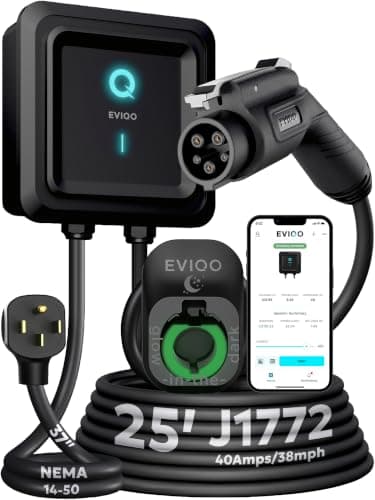
  • EVIQO EVIQO Level 2 (40A)
    01 EVIQO Level 2 (40A)
    8.6

    A double-listed (UL and ETL), IP66-weatherproof smart charger that keeps landing at the bottom of the price band — a lot of certified hardware for the money.

    Best for: Budget buyers who still want smart features

    $395.99Amazon
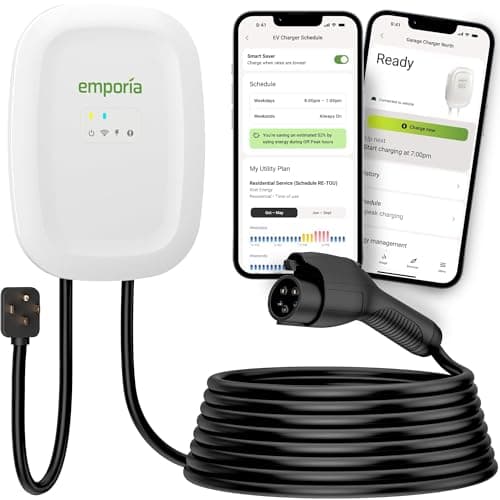
  • Emporia Emporia Level 2 (48A)
    02 Emporia Level 2 (48A)
    9.0

    The charger that refuses to charge you extra for being smart: full 48-amp speed and real energy monitoring at roughly the price of a plain plug-in box.

    Best for: Most homes that want speed and smarts

    $449.00Amazon
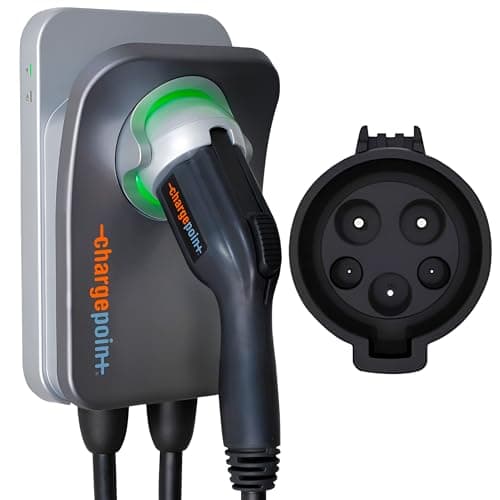
  • ChargePoint ChargePoint Home Flex
    03 ChargePoint Home Flex
    8.2

    The mature, well-supported pick — amperage you dial in up to 50A, wired into the biggest public-charging app in North America. You pay for the polish.

    Best for: Buyers who want the established brand + one app

    $539.00Amazon
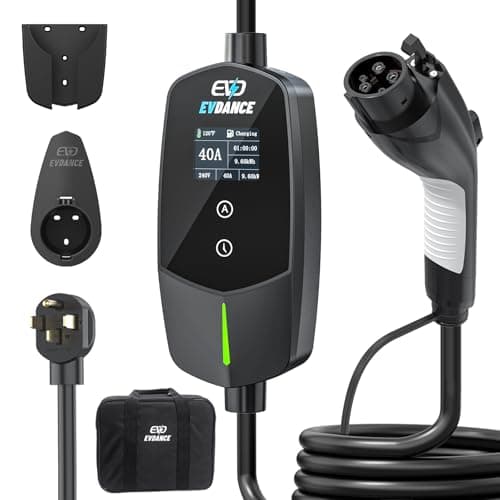
  • EVDANCE EVDANCE 40A Portable
    04 EVDANCE 40A Portable
    8.2

    A 40-amp portable with adjustable current and a built-in delay timer on a long 25-foot cable — off-peak charging without needing an app.

    Best for: Off-peak charging without an app

    $199.98Amazon
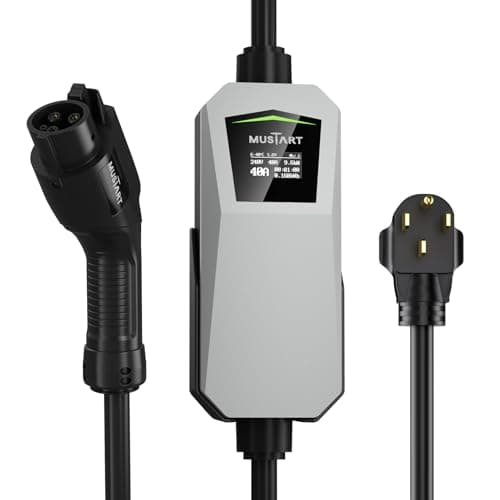
  • MUSTART MUSTART 40A Portable
    05 MUSTART 40A Portable
    8.2

    A budget 40-amp portable with an LCD readout — the value pick when you just need 240V charging that moves with you.

    Best for: The cheapest capable portable

    $159.99Amazon

#ad · Live prices from the Amazon Product API, as of Jul 30, 2026. Where we have no verified live price, we show none — we would rather leave a gap than print a number that has gone stale.

The best plug-in EV charger for most people is the EVIQO Level 2. It plugs straight into a NEMA 14-50 outlet, carries both a UL and an ETL listing plus an IP66 weatherproof rating, delivers the full 40 amps a plug-in unit is allowed on a long 25-foot cable, and adds a Wi-Fi app - usually at the bottom of the price band. The Emporia is the smart step-up that still plugs in, adding real energy monitoring. The ChargePoint Home Flex is the established-brand plug-in with one app for home and the road. And the EVDANCE and MUSTART portables are the two cheapest plug-in routes into Level 2 - unplug them and they travel.

A plug-in charger ends in a NEMA 14-50 plug and drops into a matching outlet, the same way a range or an RV hookup does. That single fact drives everything about this category. If a properly rated 14-50 receptacle already exists in your garage, a plug-in charger can go in with no electrician at all - you hang it, plug it in, and charge. And because it unplugs, a plug-in unit moves with you to a new house or a new spot on the wall, which is why renters and anyone who might move gravitate to it. This roundup compiles the published manufacturer specs and does the breaker math; we have not bench-tested these units, and we say so.

This page is the counterpart to our best hardwired chargers list. The one real trade-off of going plug-in is speed at the very top end: code treats a NEMA 14-50 on a 50-amp circuit as a continuous load and caps a plug-in unit at 40 amps. To reach 48 amps you have to hardwire. For most homes that ceiling never bites - but it is the honest reason the fastest possible install is a hardwired one, and we spell out below exactly who should care.

The short version

If you want one recommendation and no reading: buy the EVIQO. It is the most certified plug-in hardware for the money and it does everything a single-car home needs. Beyond that, the five picks split cleanly by what you value:

  • EVIQO Level 2 - best plug-in for most people. Double-listed UL and ETL, IP66 weatherproof, the full 40 amps, a 25-foot cable and a Wi-Fi app, usually cheapest of the wall units. Its shorter brand history is the only real caveat. Full EVIQO review.
  • Emporia Level 2 - the smart step-up that still plugs in. The plug-in version is capped at 40 amps like every plug-in unit, but it adds genuine energy monitoring and scheduling at roughly the price of a plain box. The app is central to the experience, so setup takes longer than a plug-and-go unit. Full Emporia review.
  • ChargePoint Home Flex - the established-brand plug-in. Reports into the same app that maps and pays for a huge public network, with a long support track record. It plugs in at 40 amps and costs more than newer brands that match most of what it does. Full ChargePoint Home Flex review.
  • EVDANCE 40A Portable - the cheapest smart-ish way in. A 40-amp portable with a built-in delay timer and adjustable current on a 25-foot cable, so you can start on off-peak rates with no app. There is no app monitoring - the timer is the whole of the scheduling.
  • MUSTART 40A Portable - the cheapest capable plug-in here. A true 40-amp portable with an LCD readout at the lowest price in the group. Its 21-foot cable is shorter than the rest, and it is a value brand with functional rather than premium fit and finish.

What a plug-in charger gets you

Two things, and they are the reason this whole category exists:

  • An easier, cheaper install. A plug-in unit needs a properly rated NEMA 14-50 outlet on a dedicated 50-amp circuit. If that outlet already exists, there is no install job at all - you plug in and charge. If it does not, an electrician adds the receptacle, which is often simpler and cheaper than a hardwired run and leaves you a standard outlet you can reuse.
  • Portability. A plug-in charger unplugs. It moves to a new house, to a different wall, or - in the case of the two portables here - into the trunk. A hardwired unit is a permanent fixture that has to be de-installed by an electrician to move. For renters, movers, and anyone who is not certain this is their forever garage, that flexibility is worth more than the last few amps of speed.

The wall units here - the EVIQO, Emporia and ChargePoint - give you the tidy mounted look of a fixed charger with the plug-in convenience underneath. The two portables trade the clean wall mount for the ability to pack the charger and take it anywhere there is a 14-50 outlet.

The 40-amp ceiling, and why it is fine for most homes

Every plug-in charger on this page tops out at 40 amps, and that is not a brand limitation - it is the code. A NEMA 14-50 receptacle on a 50-amp circuit carries a continuous EV-charging load that is limited to 40 amps, which is where 9.6 kW comes from. That adds roughly 30-plus miles of range an hour, which turns an overnight into a full battery for almost any daily commute. The Emporia and ChargePoint can both go faster - the Emporia to 48 amps, the ChargePoint to 50 - but only when hardwired, not on the plug. So the practical reading is simple: if your daily miles fit inside an overnight 40-amp charge, plug-in costs you nothing real; if you drive a lot of miles and your car can accept more, that is the case for hardwiring, which we cover in the hardwired vs plug-in guide and the best 48-amp roundup. Work out what your car can actually accept first with our amperage guide - many EVs cannot use 48 amps of AC no matter what you install.

The outlet is the part that actually matters

The most important component in a plug-in install is not the charger - it is the receptacle it plugs into. A cheap residential-grade NEMA 14-50 is the single most common failure point in home charging: the continuous 40-amp draw works loose or overheats contacts that were never built for it. Buy an industrial-grade, listed 14-50 and have a licensed electrician install and torque it on a properly rated circuit. Our best NEMA 14-50 chargers and outlet guide and the NEMA 14-50 outlet explainer cover the receptacle to buy and why it matters. If you rent an apartment, our apartment charging guide covers the portable-first approach.

The picks, in order

Below the summary table, each charger gets a full card with its score breakdown, pros and cons, and a "don't buy this if" note. In short: the EVIQO wins on certified plug-in value, the Emporia is the smart step-up that still plugs in, the ChargePoint is the mature one-app pick, and the EVDANCE and MUSTART portables are the two cheapest plug-in routes into real Level 2 - the EVDANCE adding a delay timer and a longer cable, the MUSTART winning purely on price. If you are weighing the value wall unit against the value portable directly, our Emporia vs EVDANCE head-to-head puts them side by side.

What a plug-in charger costs to run

The electricity is the cheap part. Covering a couple hundred miles is only a few dollars at typical residential rates - comfortably below what a comparable gas car burns. Every charger here does the same job on the energy bill; the smart picks like the Emporia simply let you shift charging to cheaper off-peak hours automatically, and the EVDANCE's built-in delay timer does the same thing manually with no app at all. We show the full arithmetic, with a calculator you can run for your own car and utility rate, in our cost to charge at home guide. If a tight panel is pushing you toward a lower amperage, our best adjustable chargers list covers the units you can dial down to fit.

In detail

The picks, in full

01
EVIQO EVIQO Level 2 (40A)

Budget buyers who still want smart features

EVIQO Level 2 (40A)

40A / 9.6kWJ177225ft cableUL & ETL, IP66/NEMA 4
8.6/10

A double-listed (UL and ETL), IP66-weatherproof smart charger that keeps landing at the bottom of the price band — a lot of certified hardware for the money.

Charge speed
8
Build & weather
9
Smart features
8
Cable & connector
8
Value
10

Pros

  • Carries both UL and ETL listings plus an IP66 / NEMA 4 weatherproof rating — unusually well-certified for the price
  • Wi-Fi app with scheduling that undercuts the established brands
  • Long 25-foot cable and a simple plug-in NEMA 14-50 install

Cons

  • Newer brand with a shorter track record than ChargePoint or Wallbox
  • 40-amp ceiling, so not the fastest if your panel could do more

Don't buy this if…

the reassurance of a long-established brand and support network matters most to you. The hardware is well-listed, but if brand maturity is what you are buying, the ChargePoint is the safer pick.

$395.99View on Amazon

$469.9916% off

Price as of Jul 30, 2026. Prices change — Amazon's is the one that counts.

#ad · we may earn a commission from this link to EVIQO Level 2 (40A)

02
Emporia Emporia Level 2 (48A)

Most homes that want speed and smarts

Emporia Level 2 (48A)

Up to 48A / 11.5kWJ177225ft cableWi-Fi + app
9.0/10

The charger that refuses to charge you extra for being smart: full 48-amp speed and real energy monitoring at roughly the price of a plain plug-in box.

Charge speed
10
Build & weather
8
Smart features
9
Cable & connector
8
Value
10

Pros

  • 48-amp capable when hardwired — quicker than the 40-amp plug-in default most units top out at
  • Genuine energy tracking and scheduling in the app, priced below almost every other smart charger
  • The 25-foot cable reaches either side of a two-car garage

Cons

  • You only get 48 amps hardwired on a 60-amp circuit; the plug-in version is capped at 40A like everything else
  • The app and Wi-Fi are central to the experience, so first-time setup takes longer than a plug-and-go box

Don't buy this if…

you never intend to open an app. A lot of what you are paying for is the software; if a sealed, silent box is what you actually want, the Grizzl-E Classic is the honest call.

$449.00View on Amazon

Price as of Jul 30, 2026. Prices change — Amazon's is the one that counts.

#ad · we may earn a commission from this link to Emporia Level 2 (48A)

03
ChargePoint ChargePoint Home Flex

Buyers who want the established brand + one app

ChargePoint Home Flex

Adjustable to 50AJ1772NEMA 14-50 plugEnergy Star
8.2/10

The mature, well-supported pick — amperage you dial in up to 50A, wired into the biggest public-charging app in North America. You pay for the polish.

Charge speed
9
Build & weather
8
Smart features
9
Cable & connector
8
Value
7

Pros

  • Output is adjustable in the app up to 50A, so it matches whatever breaker you can install today and more later
  • Reports into the same ChargePoint app that maps and pays for a huge public network — home and away in one place
  • Long track record and responsive support that newer budget brands cannot match

Cons

  • Costs more than equally capable chargers from newer brands
  • The experience leans hard on the ChargePoint account and app; skip it and you are paying for an integration you will not use

Don't buy this if…

price is your first filter. The Emporia matches most of what this does for meaningfully less — here you are paying for brand maturity and the unified app, which are real but not free.

$539.00View on Amazon

$657.9918% off

Price as of Jul 30, 2026. Prices change — Amazon's is the one that counts.

#ad · we may earn a commission from this link to ChargePoint Home Flex

04
EVDANCE EVDANCE 40A Portable

Off-peak charging without an app

EVDANCE 40A Portable

40A / 9.6kWJ1772NEMA 14-50 plug25ft, timer
8.2/10

A 40-amp portable with adjustable current and a built-in delay timer on a long 25-foot cable — off-peak charging without needing an app.

Charge speed
8
Portability
9
Build & weather
7
Cable & connector
8
Value
9

Pros

  • A delay timer lets you start on cheaper overnight rates with no app or smart wiring
  • Adjustable current adapts it to different circuits
  • Long 25-foot cable

Cons

  • No smart-app monitoring — the timer is the whole of the scheduling
  • Value brand with a shorter track record

Don't buy this if…

you want full energy monitoring and remote control. This is a capable manual charger; for app-based tracking a wall unit like the Emporia is the one to buy.

$199.98View on Amazon

$209.995% off

Price as of Jul 30, 2026. Prices change — Amazon's is the one that counts.

#ad · we may earn a commission from this link to EVDANCE 40A Portable

05
MUSTART MUSTART 40A Portable

The cheapest capable portable

MUSTART 40A Portable

40A / 9.6kWJ1772NEMA 14-50 plug21ft cable, LCD
8.2/10

A budget 40-amp portable with an LCD readout — the value pick when you just need 240V charging that moves with you.

Charge speed
8
Portability
9
Build & weather
7
Cable & connector
7
Value
10

Pros

  • One of the least expensive true 40-amp portables on Amazon
  • LCD display shows charging status and faults at a glance
  • Outdoor-rated connector and enclosure

Cons

  • Shorter 21-foot cable than some rivals
  • Value brand — fit and finish are functional rather than premium

Don't buy this if…

you need the reach of a 25-foot cable or want a 120V plug in the box too. The Lectron portable is more flexible; the MUSTART's whole pitch is the low price.

$159.99View on Amazon

$169.005% off

Price as of Jul 30, 2026. Prices change — Amazon's is the one that counts.

#ad · we may earn a commission from this link to MUSTART 40A Portable

How to choose a plug-in charger

Going plug-in narrows the decision to four questions. Answer them in order and the right unit falls out.

1. Confirm - or install - a proper NEMA 14-50 outlet

A plug-in charger is only as safe as the outlet behind it. If you already have a 14-50, confirm it is an industrial-grade, listed receptacle on a dedicated 50-amp circuit - not a shared laundry or garage circuit, and never a dryer outlet borrowed for the job. If you do not have one, an electrician adds it; that install is usually simpler than a hardwired run and leaves you a reusable outlet. Cheap residential 14-50s are the number-one cause of a plug or receptacle running hot, so this is not the corner to save on. The receptacle guide in our best NEMA 14-50 page names the part to buy.

2. Wall unit vs portable

Both plug into the same 14-50 and charge at the same 40 amps, so this is about how you live with it. A wall unit (EVIQO, Emporia, ChargePoint) is tidier, stays put on a mount, and looks like a permanent fixture while still unplugging if you move. A portable (EVDANCE, MUSTART) lives on a hook or in the trunk, plugs in the same way, and is often the cheaper entry point - ideal for renters or anyone who wants one charger for home and the road. Neither is faster; pick on lifestyle. Our best portable chargers guide covers the travel case in full.

3. Smart features worth paying for

The smart features that earn their keep save money or prevent problems: scheduling to start on cheaper off-peak rates, and energy monitoringto see what a charge actually costs. The Emporia gives you both at a plain-charger price; the ChargePoint folds home charging into the same app that pays for public charging. Note the cheaper path to off-peak: the EVDANCE portable's built-in delay timer shifts charging to overnight rates with no app and no smart wiring at all. On a flat electricity rate with one car, the app matters far less and the EVIQO or the MUSTART is plenty.

4. Cable reach

Measure from where the charger will mount or hang to your car's port, in every way you might park, and add slack. Four of the five here ship a 25-foot cable that reaches either bay of a two-car garage; the MUSTART's 21 feet is the one shorter cable, fine if it mounts close to the port and tight if it does not. Reach is the spec buyers most often under-measure, so take the worst case, not the best.

So, which one?

Buy the EVIQO unless you have a specific reason not to - it is the most certified plug-in charger for the money. Want energy monitoring and scheduling? The Emporia. Want an established brand and one app for home and public charging? The ChargePoint Home Flex. Want the cheapest way in with off-peak timing built in, in a charger you can pack? The EVDANCE portable. Just want the lowest price on a capable 240-volt plug-in? The MUSTART - as long as its 21-foot cable reaches your port. And if raw top-end speed matters more than portability, step over to the hardwired list instead.
How we picked

We do not run a testing lab

We compiled published specifications from manufacturer manuals and spec sheets, verified the safety listings (UL / ETL), computed the real running and installation costs, checked the wiring math against the NEC continuous-load rule, and read aggregated owner reviews — then scored each product against a published rubric. The scores are judgments from documented research — they are not bench measurements, because we do not have a test lab and we are not going to pretend we do. Every spec and cost figure is cited in Sources.

Questions

Frequently asked

Is a plug-in charger as fast as a hardwired one?

Up to 40 amps, they are identical. The difference is only at the top end: a plug-in unit on a NEMA 14-50 is capped at 40 amps - 9.6 kW - by code, while a hardwired unit can reach 48 amps - 11.5 kW. For most homes 40 amps already fills the battery overnight, so plug-in costs nothing real. You only miss the extra speed if you drive a lot of daily miles and your car can accept more than 40 amps of AC - check with our amperage guide.

Can I install a plug-in charger myself?

If a properly rated, dedicated NEMA 14-50 outlet already exists, yes - you hang the charger and plug it in, no electrician required. What you should not DIY is the outlet itself: adding or re-wiring a 50-amp circuit is licensed-electrician work, and a cheap or loose receptacle is the most common cause of an overheating plug. Our NEMA 14-50 outlet guide covers what the install involves.

Plug-in wall unit or portable?

They plug into the same outlet and charge at the same 40 amps, so choose on how you live with it. A wall unit like the EVIQO or Emporia is tidier and stays mounted while still unplugging to move; a portable like the EVDANCE or MUSTART is often cheaper and packs into the trunk for travel or a second home. If you rent or move often, the portable's flexibility usually wins; if you want a clean permanent-looking install, the wall unit does.

When should I hardwire instead of plug in?

Hardwire when you specifically need 48-amp speed and your car can use it, when local code or your setup calls for it, or when you want the cleanest permanent install with no receptacle to fail. A hardwired 48-amp unit removes the 40-amp plug-in ceiling - but it is a fixture an electrician installs and removes, so you give up the easy portability. See our best hardwired chargers and the hardwired vs plug-in guide.

Keep reading

Receipts

Sources

We do not run a testing lab, and we do not pretend to. Where a measured number came from someone else's lab, we name them and link them. Where we could not verify something, we say so on the page rather than quietly leaving it out. Read our full method.