HUB 03 · Charging Guides
Is a Home EV Charger Worth It?
For most daily drivers, yes - but not for everyone. Here is the arithmetic that decides it, from range added per hour to cost per mile.
We earn a commission when you buy through our Amazon links, at no extra cost to you. It never affects our rankings, and we say so when the cheaper product is the better buy. How this works.
For most people who drive an EV every day, a Level 2 home charger is worth it - not because it is exciting, but because it removes charging from your life almost entirely. You plug in at night and the car is full in the morning. The honest exceptions are real, though: if you drive very few miles, or your EV is a low-range plug-in hybrid or a lightly used second car, an ordinary wall outlet may already keep up, and the upgrade buys you little. This guide walks the arithmetic so you can tell which case you are in.
What a Level 2 charger actually buys you
Every EV can charge from a standard 120-volt household outlet using the cordset in the trunk. That is Level 1, and it draws around 1.4 kilowatts. Divide that by a typical efficiency of three to four miles per kilowatt hour and you get roughly three to five miles of range added per hour. Over a full overnight stretch that is real range - perhaps 40 to 50 miles - but it is slow, and it never catches up if you drive more than that in a day.
A Level 2 charger runs on a 240-volt circuit, the same class of circuit as an electric dryer or range. A common 40-amp unit delivers 9.6 kilowatts; a 48-amp unit delivers 11.5. At three to four miles per kilowatt hour that is roughly 30 to 38 miles of range added every hour - six to eight times faster than the outlet. In practice that means even a near-empty long-range battery is full again by morning. We lay out the full speed gap in Level 1 vs Level 2.
The value is less about raw speed than about never thinking about it. With Level 2 you stop planning charges, stop watching the percentage, and stop driving to a public station for routine top-ups. You wake up full every day. That convenience is the product; the hardware is just how you buy it.
The cost picture, honestly
A home charger is a modest one-time hardware cost plus installation. The charger itself is a wall unit; the bigger and more variable number is the electrician's work to run a dedicated 240-volt circuit, which depends on how far your panel sits from the parking spot and whether your panel has room. We break down the ranges in EV charger installation cost and how much an EV charger costs.
Where the money comes back is per mile. Charging at home on a residential electricity rate is, for most households, far cheaper per mile than both public DC fast charging and gasoline. Public fast charging is priced for convenience and road trips; it is the expensive way to get electrons. Gasoline is priced by the pump. We do the side-by-side arithmetic in cost to charge at home and EV vs gas - the point here is only that home charging is the cheapest fuel you have access to, and a Level 2 setup is how you use it every night instead of occasionally.
When it is NOT worth it
Be honest about your daily miles. If you drive a plug-in hybrid with a small battery, or a second EV that rarely leaves the neighborhood, Level 1 may already keep up. A car that adds 40-plus miles overnight on a 120V outlet, driven 20 or 30 miles a day, is never short - and a Level 2 install would sit mostly idle. In that situation the upgrade is a convenience you may not need rather than a problem you are solving.
The line moves the moment your daily driving climbs past what Level 1 replaces overnight, or the moment you have only a short window to charge (a car used on split shifts, or a household sharing one outlet between two EVs). If Level 1 leaves you a little short some mornings, that is your signal. We work through exactly where the outlet stops being enough in Level 1 vs Level 2, and if you are brand new to all of this, EV charging for beginners starts from zero.
The battery-health angle
There is a quieter benefit worth naming. Because a Level 2 charger and its app let you schedule charging - starting late and finishing by morning - you can keep the battery from sitting at a high state of charge for hours and time the charge for off-peak rates. Gentle, scheduled overnight charging is generally kinder to the pack than repeated public fast charging, which runs hotter and higher power. It is not a dramatic difference, but over years of ownership the habit favors home Level 2.
The short version: if your daily driving is more than a 120V outlet can replace overnight, or you value never thinking about charging, a Level 2 charger is worth it and pays you back in cheaper miles. If you drive few miles in a plug-in hybrid or a lightly used second car, Level 1 may already be enough - buy the charger when your driving, not the sales page, tells you to.
If you have decided it is worth it
Most homes are well served by a straightforward smart Level 2 unit. The Emporia is our value default - 48-amp capable when hardwired, with genuine energy monitoring and scheduling in the app at a price below most rivals. If you want to spend as little as possible without giving up smart features, the EVIQO is a double-listed (UL and ETL), IP66-weatherproof plug-in unit that keeps landing at the bottom of the price band. Start from the full ranked lists in best Level 2 home chargers and best budget chargers, and if you are not sure how many amps to buy, read what amp EV charger do I need first.
The gear
Recommended gear for this guide
The products this guide refers to, with prices pulled live from Amazon and dated on each card.
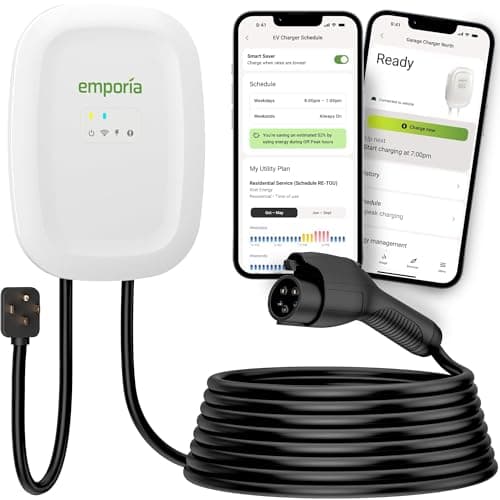
Most homes that want speed and smarts
Emporia Level 2 (48A)
The charger that refuses to charge you extra for being smart: full 48-amp speed and real energy monitoring at roughly the price of a plain plug-in box.
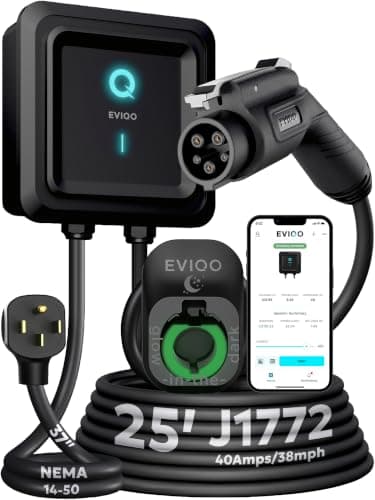
Budget buyers who still want smart features
EVIQO Level 2 (40A)
A double-listed (UL and ETL), IP66-weatherproof smart charger that keeps landing at the bottom of the price band — a lot of certified hardware for the money.
#ad · As an Amazon Associate we earn from qualifying purchases.
Questions
Frequently asked
Is a Level 2 charger worth it for a plug-in hybrid?
Often not. Plug-in hybrids have small batteries that a 120V outlet can usually refill overnight, so Level 2 mainly saves time you may not need. It becomes worth it if you drive enough electric miles that Level 1 cannot keep up, or you want the car full quickly between trips.
Does a home EV charger add value to my house?
A properly installed 240V circuit and charger is a genuine amenity that appeals to EV-owning buyers, much like a finished garage outlet. We do not claim a specific dollar figure - that varies by market - but a permanent, code-compliant install is more attractive than none, and the circuit itself outlasts any one charger.
How long until a home charger pays for itself versus public charging?
It depends on your electricity rate, your miles, and how much public DC fast charging you would otherwise use. Because home charging is typically far cheaper per mile, drivers who would rely heavily on paid public charging recoup the cost fastest. Run your own numbers with cost to charge at home.
I rent - is it still worth it?
A plug-in Level 2 charger on a dedicated 240V outlet can move with you, which softens the cost, but the install still requires the property owner's permission and a licensed electrician. If a move is likely soon, a portable unit or continued Level 1 charging may make more sense until you are settled.
Keep reading
Related
- Can You Own an EV Without Home Charging?The honest cost and routine for owning one with no charger at home.
- Asking a Landlord for a ChargerThe proposal that gets approved, and how to settle the electricity question first.
- Does an EV Charger Increase Home Value?The resale angle on the home-charging decision.
- Does a New EV Come With a Charger?Why the included cable is not a substitute for a Level 2 unit.
- Can a Portable Be Your Main Charger?The lower-cost route to daily home charging.
- Level 1 vs Level 2Where the slow outlet stops being enough for a daily driver.
- Cost to Charge at HomeThe per-mile math that makes a home charger pay for itself.
- Best Level 2 Home ChargersOur ranked picks once you have decided it is worth it.
- Best Budget ChargersThe cheapest capable units if cost is the deciding factor.
- EV Charging for BeginnersThe whole picture in plain English, for a first EV.
More in this section
More Charging Guides
Receipts
Sources
- US DOE / fueleconomy.gov - EV charging basics
- US DOE AFDC - charging at home
- US DOE Energy Saver - Electric Vehicles
We do not run a testing lab, and we do not pretend to. Where a measured number came from someone else's lab, we name them and link them. Where we could not verify something, we say so on the page rather than quietly leaving it out. Read our full method.