HUB 03 · Charging Guides
Can You Plug an EV Charger Into a Regular Outlet?
The short answer is: a Level 1 cord yes, a Level 2 wall charger no - and here is the difference between a wall outlet and the 240V circuit a real home charger needs.
We earn a commission when you buy through our Amazon links, at no extra cost to you. It never affects our rankings, and we say so when the cheaper product is the better buy. How this works.
This is one of the first questions a new EV owner asks, and the answer splits cleanly in two. Yes, you can plug the basic charging cord that came with your car into an ordinary household outlet - that is Level 1 charging, and it works out of the box. No, you cannot plug a Level 2 wall charger into a regular outlet, because a Level 2 unit needs a 240-volt circuit that a standard outlet simply does not provide. Understanding why saves you from both a disappointment and a genuine safety mistake.
What a regular outlet actually is
The standard outlets throughout your home are 120-volt receptacles, the type engineers call NEMA 5-15 - the three-prong socket your lamp, phone charger, and vacuum plug into. That is the only kind of outlet most rooms have. Every EV and plug-in hybrid ships with a Level 1 cordset designed to plug into exactly this outlet, so on day one you can charge with the wall socket you already own and spend nothing extra. This is Level 1 charging, and for the right driver it is genuinely enough.
The catch is speed. A 120-volt outlet delivers only about 1.4 kilowatts to the car, which adds roughly 3 to 5 miles of range per hour. Over a long overnight stretch that can still add up to a useful amount, but it is a trickle. If your daily driving is light - a plug-in hybrid with a small battery, a short commute, a second car that rarely leaves the neighborhood - Level 1 on a regular outlet can quietly cover it. We work through exactly where that line sits in Level 1 vs Level 2.
Why a Level 2 charger cannot use a regular outlet
A Level 2 wall charger runs on 240 volts, the same class of circuit as an electric dryer or range, and that is a fundamentally different circuit from a 120-volt wall outlet. It is not a matter of an adapter - the wiring, the breaker, and the voltage are all different. That extra voltage is what lets a Level 2 unit push roughly 7.7 to 11.5 kilowatts (at 32 to 48 amps) and add about 20 to 40 miles of range per hour, several times faster than Level 1. You cannot get 240 volts out of a socket that only carries 120, so a Level 2 charger has no way to run from a regular outlet.
This is also where a common point of confusion lives. Some Level 2 chargers are described as "plug-in," which sounds like they use a normal outlet - but they do not. A plug-in Level 2 charger uses a NEMA 14-50 receptacle, the large four-prong 240-volt outlet used for ranges, not the small three-prong wall socket. Installing that outlet is a 240-volt circuit job for a licensed electrician. The difference between hardwiring and using a 14-50 plug is laid out in hardwired vs plug-in.
Never run an EV charger through a household extension cord or off a regular outlet that shares a circuit with other loads. Continuous charging current is exactly what those are not rated for, and it is a real fire risk. A Level 2 charger needs its own dedicated 240V circuit, and even a Level 1 cord is happiest on its own grounded outlet - both are jobs to size and install per the NEC with a licensed electrician.
The outlets, side by side
| Outlet | Voltage | Runs | Typical speed |
|---|---|---|---|
| NEMA 5-15 (standard wall) | 120V | Level 1 cordset only | ~1.4 kW, ~3-5 mi/hr |
| NEMA 14-50 (range-style) | 240V | Plug-in Level 2 charger | Up to ~9.6 kW at 40A |
| Hardwired circuit | 240V | Hardwired Level 2 charger | Up to ~11.5 kW at 48A |
When a regular outlet is genuinely fine
Level 1 on a standard outlet is not a failure state - for the right driver it is the smart, cheap answer. A plug-in hybrid with a 30- or 40-mile electric range refills overnight on 120 volts with room to spare. A battery EV driven only ten or fifteen miles a day gets back everything it used and more while it sits parked. If that describes you, a simple Level 1 cord kept on the wall - or an inexpensive backup like the portable options we cover set to Level 1 - can be all you ever need. The decisive question is your daily mileage, not the technology.
Where Level 1 falls down is the long-range daily driver. If you regularly put 40, 50, or more miles on a battery EV, 3 to 5 miles of range per hour cannot always claw it back inside a normal overnight window, and you end up chasing charge. That is the moment a 240-volt Level 2 circuit stops being a luxury. If Level 1 is leaving you short and you find yourself rationing trips, read why home charging is slow before you conclude something is wrong - often nothing is broken, the outlet is just doing all a 120-volt outlet can.
Stepping up to 240 volts
If you decide Level 1 is not keeping up, the upgrade is a dedicated 240-volt circuit feeding either a hardwired charger or a NEMA 14-50 outlet for a plug-in unit like the plug-in chargers we rank. Both are Level 2, and both need an electrician - the choice between them is about permanence and portability, not speed. Start with our best Level 2 chargers for the shortlist, and the takeaway for this page stands: a regular outlet runs a Level 1 cord and nothing more.
The gear
Recommended gear for this guide
The products this guide refers to, with prices pulled live from Amazon and dated on each card.
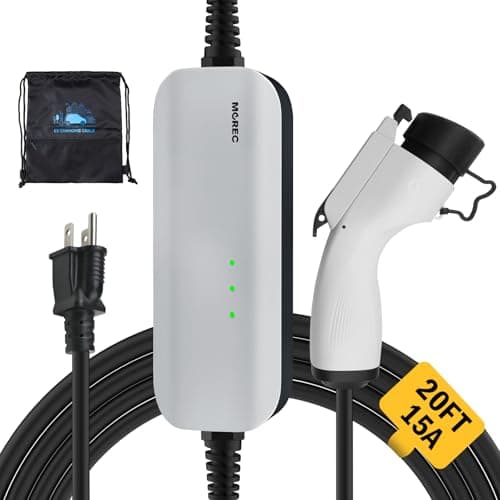
A 120V cord with a live readout
Morec Level 1 (15A)
A plain 15-amp household cord with an LCD that reports voltage, current and temperature while it charges — the one that tells you what the outlet is actually doing.
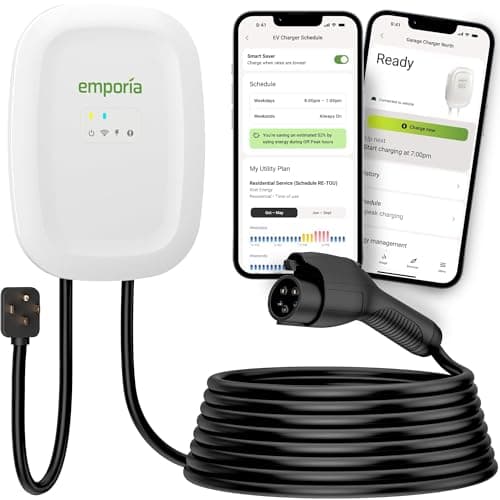
Most homes that want speed and smarts
Emporia Level 2 (48A)
The charger that refuses to charge you extra for being smart: full 48-amp speed and real energy monitoring at roughly the price of a plain plug-in box.
#ad · As an Amazon Associate we earn from qualifying purchases.
Questions
Frequently asked
Can I plug my EV charger into a normal wall outlet?
Only the Level 1 cordset that came with your car. It plugs into a standard 120V (NEMA 5-15) outlet and adds about 3-5 miles of range per hour. A Level 2 wall charger cannot use a regular outlet - it needs a 240V circuit.
What outlet does a plug-in Level 2 charger use?
A NEMA 14-50 receptacle - the large four-prong 240V outlet used for electric ranges - not a regular wall socket. Installing one is a 240V circuit job for a licensed electrician, sized to the charger you plan to run.
Can I use an extension cord to charge my EV?
No - not a household extension cord. EV charging draws continuous current for hours, which ordinary extension cords are not rated for, and it is a real fire hazard. Plug a Level 1 cord straight into a grounded outlet, and give a Level 2 charger its own dedicated circuit.
Is charging on a regular outlet ever enough?
Yes, for low-mileage drivers. A plug-in hybrid or a battery EV driven only ten to fifteen miles a day usually refills overnight on 120 volts. It is the long-range daily driver, needing 40-plus miles back each night, who outgrows a regular outlet and needs Level 2.
Keep reading
Related
- Best Level 1 (110V) ChargersThe 120V cords worth plugging into that regular outlet, ranked.
- Level 1 vs Level 2The daily-miles math on when the outlet stops being enough.
- Hardwired vs Plug-InThe two ways a 240V Level 2 charger connects.
- Best Level 2 Home ChargersThe shortlist when you step up from a 120V outlet.
- Best NEMA 14-50 ChargersThe plug-in route that uses a 240V range-style outlet.
- Why Home Charging Is SlowWhat to check before assuming a slow charge is a fault.
More in this section
More Charging Guides
Receipts
Sources
- US DOE / fueleconomy.gov - EV charging basics
- US DOE AFDC - charging at home
- EC&M - NEC requirements for EV equipment (Article 625)
- US DOE Energy Saver - Electric Vehicles
We do not run a testing lab, and we do not pretend to. Where a measured number came from someone else's lab, we name them and link them. Where we could not verify something, we say so on the page rather than quietly leaving it out. Read our full method.