HUB 03 · Charging Guides
Is It Safe to Charge an EV Overnight?
Overnight charging is the whole point of a home charger, and multiple independent safety systems back it up. Here is what protects you while you sleep, and the short checklist that keeps it that way.
We earn a commission when you buy through our Amazon links, at no extra cost to you. It never affects our rankings, and we say so when the cheaper product is the better buy. How this works.
Yes - charging your EV overnight, unattended, while you sleep is safe, and it is exactly what a home charger is designed to do. Plugging in at night and waking up to a full battery is not a workaround or a risk you are quietly taking; it is the primary use case the entire system was built around. The safety does not rest on you watching it, either. It comes from several independent layers that each guard against a different failure, so that no single thing going wrong turns into a problem. This guide explains those layers and the short list of best practices that keep them intact.
Why overnight is the design case, not the edge case
Home charging is deliberately slow compared with public fast charging - that is a feature. A Level 2 charger delivering a steady, moderate AC current over eight or ten hours is a gentle way to refill a battery, and the long window is precisely why it suits being left alone. Nobody expects you to stand in the garage while it works. The engineering assumption from the start is an unattended overnight session, and the protections are built for that reality rather than bolted on afterward.
The safety layers that back it up
What makes it safe is redundancy - several systems, each catching a different fault, none depending on the others.
| Layer | What it guards against |
|---|---|
| Dedicated circuit | Overload from sharing the line with other loads |
| Ground-fault protection (NEC 625) | Current leaking to ground; shock and fault risk |
| The car's battery management system (BMS) | Overcharging, cell imbalance, unsafe temperatures |
| Thermal cut-offs in the charger | The unit running too hot; it pauses itself |
| Scheduling and charge limits | Sitting full for hours; charging at costly peak times |
The dedicated circuit is the foundation - a charger gets its own breaker and its own run of properly sized wire, sized under the NEC to 125 percent of the charging load so it stays cool over a long session. On top of that, the code requires ground-fault protection for EV equipment under Article 625, which trips the moment it senses current going where it should not. The car's own battery management system independently governs the charge - stopping it at full, balancing the cells, and refusing to continue if temperatures stray. The charger adds thermal cut-offs that pause it if it overheats. And scheduling lets you finish the charge near your departure rather than sitting at full all night. Any one of these would help; together they are why overnight charging is routinely safe.
The best-practice checklist
The protections do their job when the install and the habits around them are sound. Keep to this short list and overnight charging stays as safe as it is designed to be.
Have it installed by a licensed electrician. A code-compliant dedicated circuit, correctly sized breaker and wire, and proper GFCI protection are the whole foundation. This is not DIY territory; it is standard NEC work.
Use an industrial-grade receptacle if you are plug-in. The cheap-outlet failure that causes a hot plug is the most common home-charging hazard, and it is entirely avoidable. Fit a properly rated, industrial-grade NEMA 14-50 or hardwire the unit. If you ever feel heat at the plug, read why an EV charger plug gets hot and act on it.
No extension cords or stacked adapters. Household extension cords are not rated for continuous EV current, and every extra connection is another point to loosen and heat. Plug the charger straight into its own outlet, or hardwire it.
Set a charge limit and schedule off-peak. Capping the charge and timing it for the early hours is easy money and easy on the battery - it is also where overnight charging turns into a cost saving, as we lay out in off-peak time-of-use charging. Where to set the limit is its own question, covered in should you charge to 100 percent.
Buy a properly listed charger. The safety layers assume a unit that actually carries its safety certifications. Cutting that corner is exactly the wrong place to save, as we argue in are cheap EV chargers safe.
The garage-ventilation myth
One worry deserves to be put to rest directly: an EV charging in a closed garage does not need ventilation the way a gas engine would. There is no combustion and no exhaust - the car is not running, it is just receiving electricity - so the carbon-monoxide concern that applies to idling a gas car simply does not apply here. A properly installed charger in a closed garage overnight is doing nothing that requires the door open or a fan running. This is one of the most common overnight-charging fears and it is genuinely unfounded.
The honest bottom line
Overnight, unattended home charging is safe because it was built to be - multiple independent protections, a slow and gentle charge, and no combustion to worry about. Your part is small and one-time: a proper licensed install, a good receptacle or a hardwired connection, no extension cords, and a sensible charge limit and schedule. Do those, and plugging in at night is as routine and low-risk as charging your phone on the nightstand. If you are choosing hardware to build that setup on, our value picks like the Emporia and the EVIQO are both properly listed units with the scheduling that makes overnight charging effortless - both place in the best Level 2 chargers for home - and how often you should charge rounds out the habit side.
The gear
Recommended gear for this guide
The products this guide refers to, with prices pulled live from Amazon and dated on each card.
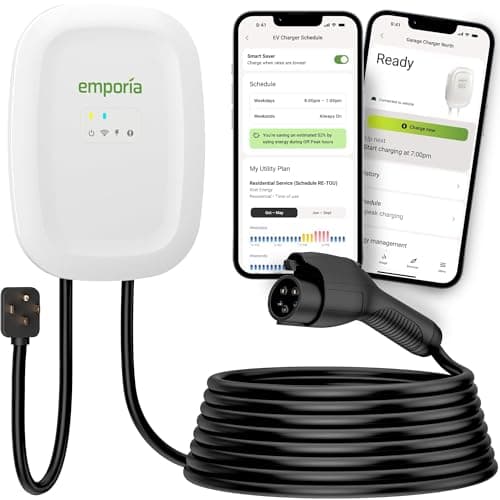
Most homes that want speed and smarts
Emporia Level 2 (48A)
The charger that refuses to charge you extra for being smart: full 48-amp speed and real energy monitoring at roughly the price of a plain plug-in box.
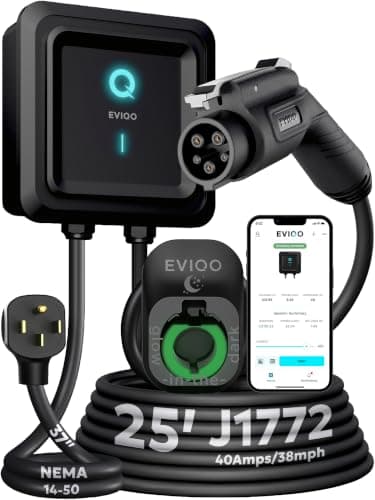
Budget buyers who still want smart features
EVIQO Level 2 (40A)
A double-listed (UL and ETL), IP66-weatherproof smart charger that keeps landing at the bottom of the price band — a lot of certified hardware for the money.
#ad · As an Amazon Associate we earn from qualifying purchases.
Questions
Frequently asked
Is it safe to leave my EV charging overnight unattended?
Yes. Unattended overnight charging is the primary use case a home charger is designed for. Multiple independent safety systems back it up - a dedicated circuit, required ground-fault protection, the car's battery management system, thermal cut-offs, and scheduling - so it does not depend on you watching it.
Do I need to ventilate my garage while charging overnight?
No. An EV charging produces no combustion and no exhaust - the car is not running, it is only receiving electricity - so the carbon-monoxide concern that applies to a gas engine does not apply. A properly installed charger in a closed garage overnight needs no special ventilation.
Will charging overnight every night hurt my battery?
No. Gentle, scheduled overnight charging is easy on the pack, and the car's battery management system stops the charge at full. If anything, setting a charge limit and timing the finish near your departure is kinder than leaving the battery sitting at 100 percent for hours - see should you charge to 100 percent.
What is the biggest overnight charging risk to avoid?
A poor connection - most often a cheap NEMA 14-50 receptacle that runs hot, or a household extension cord that is not rated for continuous EV current. Use an industrial-grade outlet or hardwire the unit, skip extension cords, and have the whole circuit installed by a licensed electrician.
Keep reading
Related
- Can You Overcharge an EV?Why the BMS makes overnight charging safe.
- Off-Peak Time-of-Use ChargingScheduling overnight charging for the cheapest hours.
- Should You Charge to 100 Percent?Where to set the overnight charge limit for battery health.
- EV Charger Plug Getting Hot?The one hazard to catch - a hot plug from a cheap outlet.
- Are Cheap EV Chargers Safe?Why a properly listed unit is the base of overnight safety.
- How Often Should You Charge Your EV?The nightly-versus-occasional habit that pairs with this.
More in this section
More Charging Guides
Receipts
Sources
- EC&M - NEC requirements for EV equipment (Article 625: continuous load, GFCI, terminations)
- US DOE AFDC - charging at home
- US DOE Energy Saver - Electric Vehicles
We do not run a testing lab, and we do not pretend to. Where a measured number came from someone else's lab, we name them and link them. Where we could not verify something, we say so on the page rather than quietly leaving it out. Read our full method.