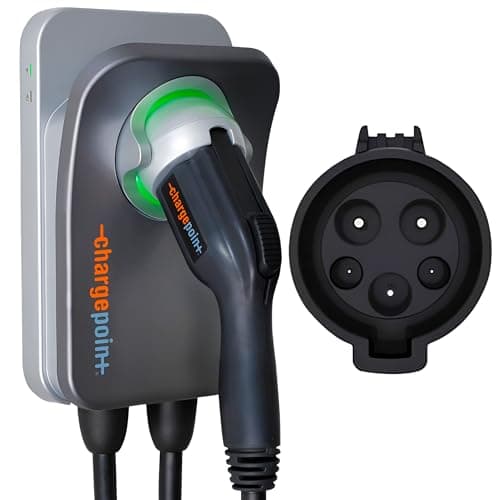
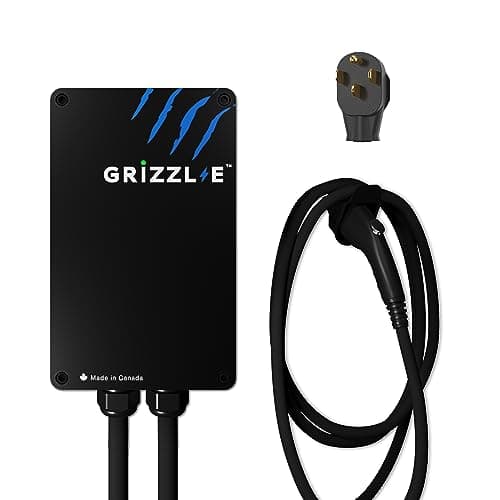
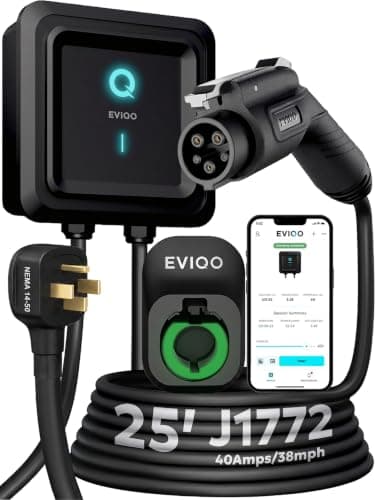
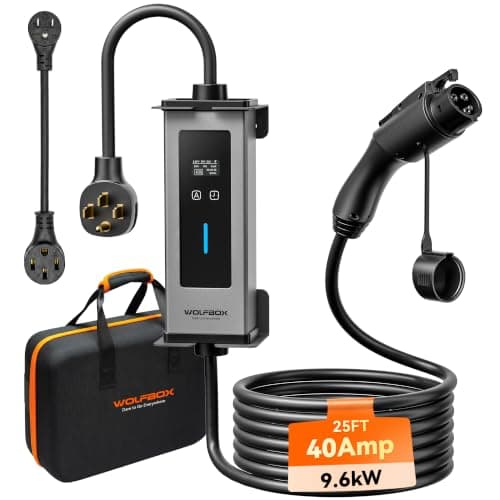
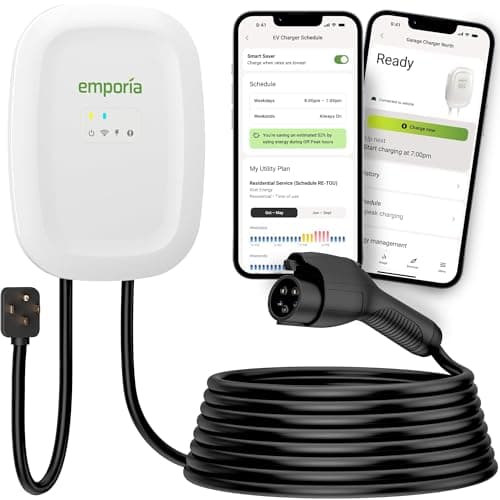
Buy the Emporia Level 2. It is the one pick here that covers every version of the mistake a first-time owner is likely to make: it runs at 48 amps if your panel can feed it and dials down if it cannot, it works plugged into a NEMA 14-50 outlet or hardwired, it is UL listed, and it tells you what the charging actually cost. If you would rather buy the established brand and the most mature app, the ChargePoint Home Flex is the one. If you never want to open an app at all, the Grizzl-E Classic. If money is tight, the EVIQO. And if your electrician cannot come for six weeks, the WOLFBOX portable charges from an ordinary wall socket until they can.
This page exists because the first charger gets bought at the worst possible moment - before you know your real daily mileage, before anyone has looked inside your panel, and often before the car has arrived. Our best Level 2 chargers roundup ranks the field on merit. This one ranks it on something narrower and more useful to you right now: how cheaply you can recover from guessing wrong.
The four ways a first charger goes wrong
Every regretted first purchase we see falls into one of four buckets, and all four are avoidable at the point of sale.
- Too many amps for the house. A 48-amp charger needs a 60-amp circuit, because the National Electrical Code treats EV charging as a continuous load and sizes the circuit at 125 percent of it. Plenty of panels have no 60 amps to spare. A charger that adjusts down still works; one that does not becomes an expensive fixture you cannot commission.
- Hardwired before you knew where the car would park. Hardwiring is neater and it is the only way to get 48 amps out of most units - but it is also permanent. A plug-in charger on a 14-50 outlet can move to the other wall, or to the next house.
- More charger than the car can accept.The car's onboard charger is a ceiling no wall unit can beat. Work out yours with how fast will my EV charge before you pay for amps it will never draw.
- No safety listing. This is the one that is not recoverable. A charger pulls 32 to 48 amps for hours, unattended, usually in an attached garage. Buy one listed by a Nationally Recognized Testing Laboratory to UL 2594 - a UL or an ETL mark both count - and verify it rather than believe a bullet point.
What we ranked on
| Criterion | Why it matters to a first-time owner |
|---|
| Adjustable amperage | Lets one unit match whatever circuit the load calculation allows, so the purchase survives the electrician's visit. |
| Plug-in or hardwired | A plug-in unit can be relocated or taken with you; hardwiring is the price of full 48-amp speed on most chargers. |
| Safety listing | UL or ETL listed to UL 2594. Non-negotiable, and not recoverable later. |
| No subscription | Nothing here charges a monthly fee, and none of them needs an account to deliver electricity. |
| Works with no Wi-Fi | Garages are where Wi-Fi goes to die. Every pick charges with the network down. |
How the five compare
| Charger | Max amps | Install | Adjustable? | App needed to charge? |
|---|
| Emporia Level 2 | 48A hardwired / 40A plug-in | Either | Yes, in the app | No |
| ChargePoint Home Flex | Selectable up to 50A | Either | Yes, amperage selectable at setup | No |
| Grizzl-E Classic | 40A | Plug-in (NEMA 14-50) | Yes, internal dial | No app exists |
| EVIQO Level 2 | 40A | Plug-in | Yes, in the app | No |
| WOLFBOX 40A portable | 40A (6A minimum) | Plugs into 14-50 or a 5-15 wall socket | Yes, on the unit | No app exists |
Do you even need Level 2 yet?
Sometimes not, and nobody selling chargers will tell you. The US Department of Energy is blunt about it: many EV owners meet their daily range needs by charging overnight on Level 1 equipment, with no installation cost at all, as long as there is an outlet on a dedicated branch circuit near where they park. If you drive twenty or thirty miles a day and park for twelve hours, the cordset in the trunk may genuinely be enough for a few months - which is exactly long enough to learn what you actually need.
The case for buying Level 2 in week one is not speed, it is margin: cold weather, an unexpected trip, a second driver, a garage you cannot leave a cord trailing across. Our Level 1 vs Level 2 guide runs the comparison properly, and is a home EV charger worth it does the payback math.
The order to do this in
- Find out what the car accepts. It is in the manual, usually as a kW figure. 7.2 kW means a 32-amp charger is the whole story; 11 kW or 11.5 kW means 48 amps is worth having.
- Get a load calculation. A licensed electrician adds up the house under NEC Article 220 and tells you what is spare. This number, not the box, decides your amperage - see the load calculation guide.
- Decide plug-in or hardwired with this comparison. If there is any doubt about where the car will park long-term, plug in.
- Then buy. Any of the five above is a defensible purchase at that point, and the one you pick becomes a question of app, budget and looks rather than of risk.
So, which one?
The Emporia for almost everyone - it is the adjustable, listed, plug-in-or- hardwired middle of the road, and it is the pick we would make again knowing nothing about your house. The ChargePoint Home Flex if the app and the brand matter and the budget stretches. The Grizzl-E Classic if you want a metal box with a dial and no software in your life. The EVIQO if the budget is the constraint and you still want a listed unit with scheduling. The WOLFBOX portable if the install is weeks away, or if you are renting and the charger has to leave when you do.