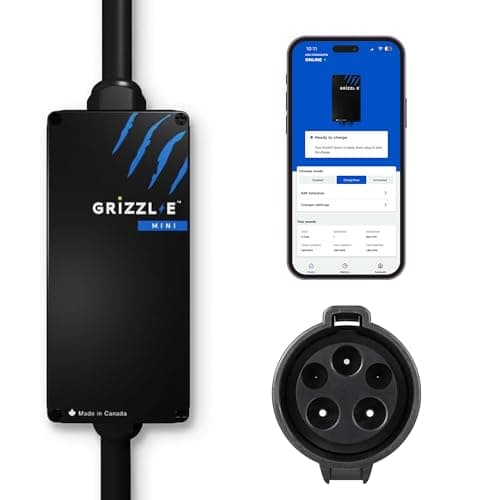
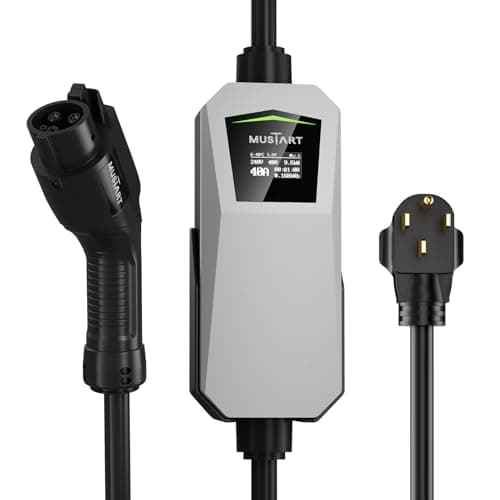
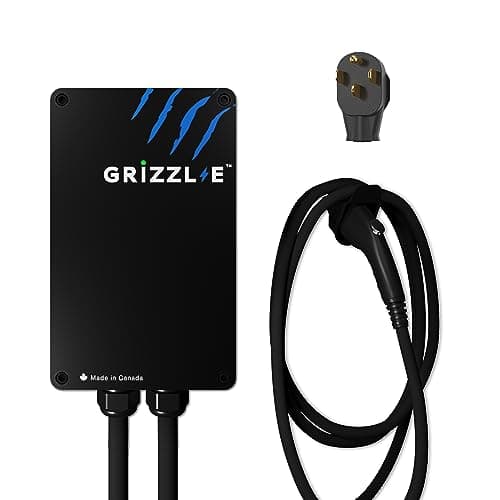
Buy the Grizzl-E Classic and a 10-gauge 6-50P to 14-50R adapter cord. That is the answer for almost everyone reading this. A NEMA 6-50 - the three-prong welder outlet - is a genuine 50-amp, 240-volt circuit, which means it can feed a charger at the full 40 amps the NEC allows on it. The catch is purely mechanical: the home-charger market standardised on the four-prong 14-50 plug, so the unit you want almost certainly will not fit the socket you have. An adapter cord fixes that for about the price of a takeout dinner, and once it is in the loop the entire 14-50 field is open to you. If you would rather not stack an adapter at all, ChargePoint is the one brand here that publishes a factory 6-50 plug variant of its Home Flex.
Why your garage has a 6-50 in the first place
Two hots, a ground, no neutral. That is a 6-50, and it is what electricians ran for decades to feed stick welders, plasma cutters, kilns and shop heaters - anything that wants 240 volts and has no use for a 120-volt leg. An EV charger is exactly that kind of load. It uses the two hots and the ground and never touches a neutral, so a 6-50 gives a charger everything it asks for with one fewer conductor in the wall.
Which makes the 6-50 the quiet bargain of home charging. You are not comparing a compromise against a 14-50 the way a dryer-outlet charger is a compromise - a 30-amp dryer circuit caps you at 24 amps, while a 50-amp 6-50 lets a charger pull 40. Same speed as the 14-50 everybody installs. Our 14-50 vs 6-50 guide has the wiring argument in full if you are still deciding what to install; this page assumes the 6-50 is already on the wall.
The one number that decides your setting: 40 amps, not 50
A 50-amp breaker does not mean 50 amps of charging. The NEC treats EV charging as a continuous load and sizes the branch circuit at 125 percent of it, which inverts to the familiar 80 percent rule: a 50-amp circuit supports a 40-amp charger, and no more. Every number on this page follows from that.
| What you have | Breaker | Max charging current | Power at 240V |
|---|
| NEMA 6-50 (welder outlet) | 50A | 40A | 9.6 kW |
| NEMA 6-50 on an older 40A breaker | 40A | 32A | 7.7 kW |
| NEMA 14-50 | 50A | 40A | 9.6 kW |
| NEMA 14-30 (dryer) | 30A | 24A | 5.8 kW |
| Hardwired 48A unit | 60A | 48A | 11.5 kW |
Note row two, because it catches people. Plenty of welder outlets were installed on a 40-amp breaker rather than a 50 - a 6-50 receptacle is legal on a 40-amp circuit - and the plug shape tells you nothing about what is behind it. Open the panel and read the breaker before you set the charger. If it says 40, your ceiling is 32 amps.
How we ranked these
- Can it reach 40 amps, and can it be dialled down? Adjustability is worth more here than on any other outlet page, because of that 40-versus-50 breaker ambiguity. A unit you can set to 32 amps is a unit that fits either circuit.
- A real safety listing. UL or ETL to UL 2594, tested by an OSHA-recognised laboratory. Non-negotiable on something that runs unattended overnight through an adapter.
- What the plug situation actually costs. A charger that needs an adapter is not disqualified - it is just the price of the adapter plus one more connection in the chain, and we say so per pick.
- Cable length from where the 6-50 is. Welder outlets tend to be bolted where the welder lived - a back wall, a workbench corner - not where a car parks. Measure before you choose.
- Whether the unit can move with you. A plug-in charger on a 6-50 is the most portable permanent setup there is.
The adapter is the real decision, so get it right
You are adding a connection to a circuit that carries 40 amps for hours. Three rules:
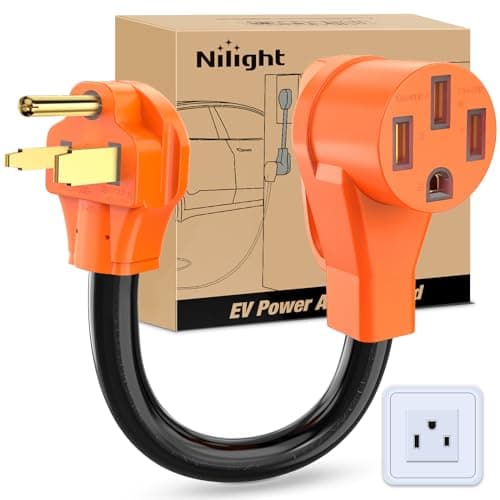
- 10-gauge copper, nothing thinner. At 40 amps continuous, conductor size is the whole safety story of an adapter cord. The Nilight cord on this page is 10 AWG pure copper.
- Short, or deliberately long - not accidentally long. A one-foot pigtail adds one connection. A 25-foot adapter cord is an extension cord with a different name, and our extension cord safety guide explains why that is a different risk conversation.
- Never run an RV off it. The adapter presents a 14-50 socket with no neutral behind it, because the 6-50 has none to give. For a car that is irrelevant. For an RV expecting 120 volts on that socket it is unsafe.
Check the plug and the connection temperature by hand after the first long session. A warm plug is normal; a plug you cannot hold is not, and our hot plug guide covers what to do.
The case for skipping the adapter entirely
Two honest alternatives, both worth a thought before you buy anything:
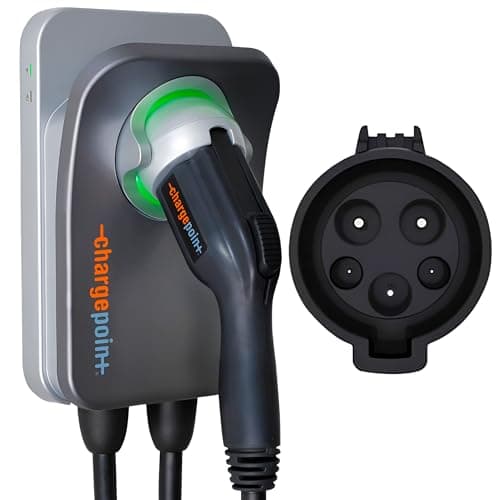
- A factory 6-50 plug.ChargePoint's own Home Flex datasheet lists NEMA 14-50 or 6-50 plug-in configurations alongside hardwired. If you want one plug and no adapter, that is the shortest path in this registry - just confirm which plug the specific listing ships with before you order, because the common retail variant is the 14-50.
- Hardwiring. If the 6-50 is already where the car parks and you never want to move the charger, an electrician can remove the receptacle and hardwire a 48-amp unit - but only after confirming the wire and breaker support 60 amps, which a 6-50 circuit usually does not. See hardwired vs plug-in.
The short version
- 50-amp breaker, car parks near the outlet: Grizzl-E Classic plus the 10-gauge adapter, set to 40 amps.
- 40-amp breaker: same hardware, set to 32 amps. Read the breaker first.
- You want zero adapters: a ChargePoint Home Flex ordered in its 6-50 plug configuration.
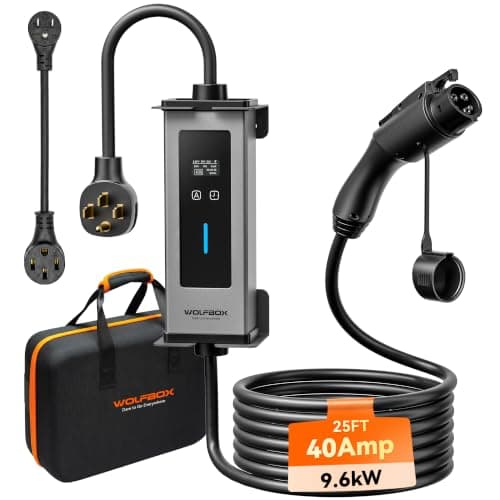
- You also want it in the trunk: a 14-50 portable plus the adapter, which is the most flexible 6-50 setup on this page.
Before you buy: three things to check in the garage
- The breaker number. 50 means a 40-amp charger setting; 40 means 32. The receptacle cannot tell you which, and setting a charger above what the circuit allows is the one mistake on this page that matters.
- The receptacle itself. Welder outlets are often decades old and have had a heavy plug worked in and out of them hundreds of times. Loose contacts generate heat under a continuous EV load in a way they never did under intermittent welding. If the plug feels sloppy going in, replace the receptacle before you charge through it.
- The distance to the car's charge port. Measure it with a tape, on the route the cable will actually take, with the car parked how you park it. This is the single most common post-purchase regret in this category, and the reason our cable length guide exists.
What we will not tell you
We have not put a welder outlet on a bench and measured contact temperatures - we do not have a lab. What is on this page is the published specification of each unit, the safety listing verified against the testing laboratory's own description of the standard, and the NEC continuous-load arithmetic, which is just arithmetic. Where a manufacturer does not publish something - such as which four adapters ship in the Grizzl-E Mini box - we say that instead of guessing. Prices below are live and carry the date they were checked.