HUB 03 · Charging Guides
Can You Install an EV Charger on a 200-Amp Panel?
Usually yes, and usually at full speed. The exceptions are specific and predictable - an all-electric house with a heat pump, a range, a dryer and a hot tub can run out of room even at 200 amps.
We earn a commission when you buy through our Amazon links, at no extra cost to you. It never affects our rankings, and we say so when the cheaper product is the better buy. How this works.
If your home has 200-amp service, a 48-amp EV charger fits comfortably in the large majority of cases. 200 amps is the modern default in North American housing, and a hardwired 48-amp charger on a 60-amp breaker is a load it was broadly designed to absorb. But "200-amp panel" is not a guarantee, and the homes where it fails are predictable enough that you can check yourself before anyone quotes you. Here is what actually decides it.
Two different limits people confuse
A panel has two separate ceilings, and only one of them is the 200-amp number:
- Service capacity - how much current the utility feed and the main breaker can carry. This is the 200 amps. It is about total simultaneous demand.
- Breaker spaces - how many physical slots are left in the box. A 200-amp panel that is physically full has plenty of capacity and nowhere to land a new double-pole breaker. That is a different problem with different fixes, covered in do I need a subpanel for an EV charger.
Plenty of people are told they "need a panel upgrade" when what they need is two free slots. Ask which one you are hitting.
The four loads that eat 200 amps
Capacity is only a problem when a house has stacked several large electric loads. In a typical home with gas heat, gas water heating and a gas range, a 48-amp charger is not close to a problem. The houses that get tight have some combination of:
- Electric resistance heat or a large heat pump with strip backup - by far the biggest single consumer, and the usual reason a 200-amp house runs out of room.
- An electric range and oven - typically a 40- or 50-amp circuit.
- An electric water heater - commonly 30 amps, and continuous when recovering.
- A hot tub, pool equipment, a welder, or a second EV charger - the discretionary loads that quietly push a calculation over the line.
Add an electric dryer to that list and you have the profile of an all-electric home where a 48-amp charger genuinely needs a conversation rather than an assumption.
The good news if you are tight: almost nobody needs 48 amps. Dialing an adjustable charger down to 40 or 32 amps costs you range-per-hour you will not miss overnight and can bring the calculation back inside the service. Our adjustable chargers page ranks the units that let you do it, and what amp charger do I need shows how little you actually lose.
How the answer gets proven
The decision is not made by opinion, it is made by a load calculation - and for an existing house that calculation has two accepted routes, both of which an electrician can run. One works from the connected loads on paper; the other works from what your house has actually drawn according to the utility meter. The second one is often far kinder to an older home, because paper calculations assume everything runs at once and real houses do not. We walk through both in the EV charger load calculation guide, and the decision framing is in do I need a panel upgrade.
What a 200-amp install typically involves
With capacity and space confirmed, a 48-amp charger on 200-amp service is a standard job: a 60-amp double-pole breaker, an appropriately sized copper run to the charger location, and a hardwired connection. Sizing is set by the continuous-load rule in wire and breaker sizing, the distance question is in how far the charger can be from the panel, and the paperwork is in permits and inspection. What it costs depends far more on the length and difficulty of that run than on the panel rating - what EV charger installation actually costs breaks down the drivers, and what to ask on a quote keeps the bids comparable.
The bottom line
200-amp service is the comfortable case. Confirm you have free breaker spaces, be honest about how electric your house is, and get a load calculation rather than a guess. If it is tight, dial the charger down before you spend money on a service upgrade - and if it is not tight, hardwire a 48-amp unit and stop thinking about it. The 48-amp-capable units, and the 40-amp ones that suit a tighter panel, are ranked together in the best Level 2 chargers for home.
The gear
Recommended gear for this guide
The products this guide refers to, with prices pulled live from Amazon and dated on each card.
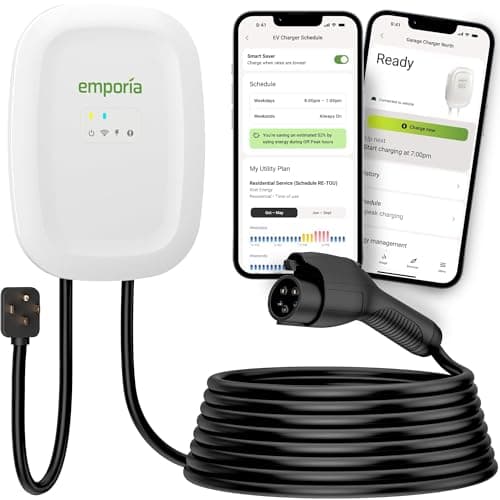
Most homes that want speed and smarts
Emporia Level 2 (48A)
The charger that refuses to charge you extra for being smart: full 48-amp speed and real energy monitoring at roughly the price of a plain plug-in box.
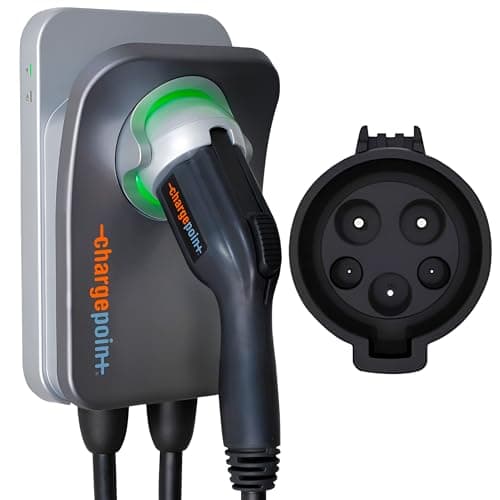
Buyers who want the established brand + one app
ChargePoint Home Flex
The mature, well-supported pick — amperage you dial in up to 50A, wired into the biggest public-charging app in North America. You pay for the polish.
#ad · As an Amazon Associate we earn from qualifying purchases.
Questions
Frequently asked
Is 200-amp service enough for an EV charger?
In most homes, yes - including a full 48-amp charger on a 60-amp breaker. It gets tight only when several large electric loads stack up, typically electric heat plus an electric range, water heater and dryer. A load calculation settles it.
Can I run two EV chargers on a 200-amp panel?
Often yes, but rarely at full speed on separate circuits. The usual answer is load management or power sharing so the two units divide available capacity - see chargers with load balancing.
My 200-amp panel is full. Do I need a service upgrade?
Probably not. A full panel is a breaker-space problem, not a capacity problem, and it is usually solved with a subpanel or tandem breakers where the panel allows them. See do I need a subpanel.
Should I install 48 amps just because the panel allows it?
Only if your car accepts it. Many EVs cap their onboard AC charger below 48 amps, and a bigger charger cannot push more than the car takes. Check the car first in what amp charger do I need.
Keep reading
Related
- EV Charger on a 100-Amp PanelThe harder case, and the three ways around it.
- The EV Charger Load CalculationThe arithmetic that actually decides whether it fits.
- Do I Need a Panel Upgrade?The decision, and the cheaper ways around it.
- Wire & Breaker SizingThe continuous-load rule behind a 60-amp circuit.
- What to Ask on an Install QuoteHow to compare electricians on the same basis.
More in this section
More Charging Guides
Receipts
Sources
- EC&M - NEC requirements for EV equipment (Article 625)
- Electrical Contractor Magazine - determining and calculating existing loads (NEC 220.83 and the 220.87 maximum-demand method)
- US DOE AFDC - charging an EV at home
We do not run a testing lab, and we do not pretend to. Where a measured number came from someone else's lab, we name them and link them. Where we could not verify something, we say so on the page rather than quietly leaving it out. Read our full method.