HUB 03 · Charging Guides
EV Charger Rough-In for New Construction
The cheapest EV charger install is the one done before the drywall goes up. Here is exactly what to put on the electrical plan, in the order the trades will ask for it.
We earn a commission when you buy through our Amazon links, at no extra cost to you. It never affects our rankings, and we say so when the cheaper product is the better buy. How this works.
Ask for one dedicated 240-volt circuit of at least 50 amps, terminated in a NEMA 14-50 receptacle on the garage wall nearest where the car's charge port will sit, run in 3/4-inch conduit with the conductors pulled, plus two spare breaker spaces and a second empty raceway to the opposite bay. That package costs a few hundred dollars during rough-in and several thousand after the drywall and the driveway are finished. You do not need to choose a charger now, and you should not let anyone tell you that you do. You need to choose the circuit now, because that is the part buried in a wall.
This is the one EV charging decision with a genuine deadline. Everything else on this site - amp class, brand, app, connector - can be revisited any Saturday. The circuit cannot. Our installation cost guide explains where the money goes in a retrofit, and reading it is the fastest way to understand why rough-in is the bargain of the whole project: in a retrofit you are paying someone to get inside a finished building. Right now, the building is not finished.
The five-line specification
Hand this to the electrician or put it on the plan. It is deliberately short.
- One dedicated 240-volt branch circuit, 50 amps minimum, 60 if the panel allows. Fifty amps supports a 40-amp charger; sixty supports a 48-amp charger. The 2023 NEC requires each outlet supplying EVSE above 16 amperes or 120 volts to be on an individual branch circuit, so this is a dedicated run by code, not by preference.
- Terminate in a NEMA 14-50 receptacle, not in a blank plate or a junction box. A receptacle gives you a working charging point on day one with a plug-in unit, and a hardwired charger can be fitted later by removing it.
- Run it in 3/4-inch conduit, even inside a stud bay. Conduit is cheap during rough-in and it means the conductors can be changed later without opening the wall.
- Leave two spare breaker spaces and note the service size on the panel schedule. This is what makes a second charger a one-day job instead of a panel upgrade.
- Add one empty 3/4-inch raceway to the opposite bay or the exterior wall, with pull string. It is the single highest-value thing on this list per dollar.
Where the box goes is a car question, not an electrical one
Electricians default to the wall nearest the panel, because that is the shortest run. That is the right answer for cost and frequently the wrong answer for use. Decide it with three measurements:
| Question | Why it decides the location |
|---|---|
| Which side is the charge port on? | Front-left, front-right and rear-quarter are all common. A cable that reaches one corner may not reach the diagonal. |
| Will the car park nose-in or nose-out? | Reversing in flips every distance in the garage. People do this habitually and never mention it. |
| Is there a second vehicle, now or later? | A charger centred between two bays with a 25-foot cable can serve both; one tucked in a corner serves one. |
Then mount height. Chargers want the connector at a comfortable reach with the cable hanging rather than dragging, which in practice means roughly chest height on the wall. Our where to mount an EV charger guide has the detail, and the cable length guide turns these three answers into a cable spec. Measure now; the box location is set the day the rough-in is inspected.
The detached garage and the long run
If the garage is detached, or the parking pad is beyond it, rough-in is not merely cheaper - it is the difference between a trench and a jackhammer. A spare conduit laid before the driveway is poured costs the price of the pipe. The same conduit afterwards costs the driveway. If there is any chance the car will park away from the house, put a raceway in the ground now, and read EV charger in a detached garage and how far can an EV charger be from the panel before you decide where it ends.
Long runs also change the conductor, because voltage drop stacks on top of the ampacity calculation. That is the electrician's call, and the raceway has to be sized for the conductor they choose - which is why conduit size and type is worth a look before you agree to 1/2-inch pipe to save a few dollars.
Panel capacity: ask the number out loud
A new build is usually specified with a 200-amp service, which is comfortable for one charger and often fine for two with load management. What matters is that someone has actually run the calculation rather than assumed it. A licensed electrician adds up the dwelling under NEC Article 220 and tells you what is left after the heat pump, the range, the dryer and the water heater - the all-electric house that the 2023 code cycle is written around is exactly the house where EV capacity gets squeezed last.
- Get the load calculation in writing. The load calculation guide explains what is being added up.
- Ask about a subpanel in the garage if the main panel is at the far end of the house. One feeder now beats three home runs later; do I need a subpanel covers when it pays.
- Ask whether the 2023 NEC allowance for multiple EVSE on one circuit applies. Section 625.42 permits it where an energy management system or the charger's own adjustable settings keep the total within the circuit - which is the code basis for the units in our load-balancing roundup.
- Ask about smart-panel options before you buy a bigger service. Smart panels vs a panel upgrade compares the two routes honestly.
What to specify at the outlet itself
The receptacle is the part of a plug-in install under the most stress, and it is the part most likely to be value-engineered by someone buying in bulk. A 14-50 receptacle on an EV circuit carries 40 amps continuously for hours at a time, night after night - a duty a plain range outlet was never designed for. Specify an EV-rated or industrial-grade receptacle, and if the location is a damp garage, a carport or an exterior wall, specify a weather-resistant unit or an all-in-one listed outlet box on the conduit.
That is the one line item on this page where paying up is unambiguously correct, and it is also the cheapest. The picks below are the receptacle, the EV-rated upgrade, the surface or outdoor box, and a plug-in charger that will work on the circuit the day you move in - our full 14-50 outlet roundup ranks the field.
The rough-in checklist, in trade order
| Stage | What has to be decided | Cost of changing it later |
|---|---|---|
| Service and panel sizing | Service amps, panel spaces, subpanel yes or no | High - a service upgrade and a utility coordination |
| Underground and slab | Any raceway leaving the building | Very high - trenching through finished hardscape |
| Rough electrical | Circuit, raceway, box location and height | Moderate - opening and patching finished walls |
| Trim and devices | Which receptacle, which cover | Low - a device swap |
| The charger itself | Brand, amps, app, connector | None - it is a purchase, not construction |
Read that table from the bottom up and the whole strategy falls out: spend your decision energy on the rows you cannot revisit, and leave the charger choice until you have a car. Our how to choose an EV charger guide will still be here.
The gear
Recommended gear for this guide
The products this guide refers to, with prices pulled live from Amazon and dated on each card.
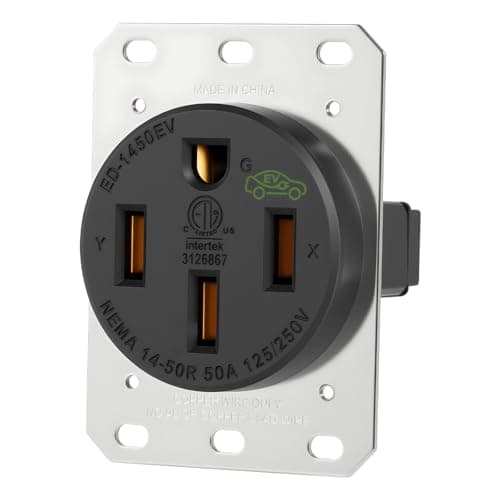
The outlet a plug-in charger needs
Industrial NEMA 14-50 Outlet
The receptacle a plug-in charger actually plugs into — buy the industrial-grade, listed version, because the cheap ones are the exact part that fails.
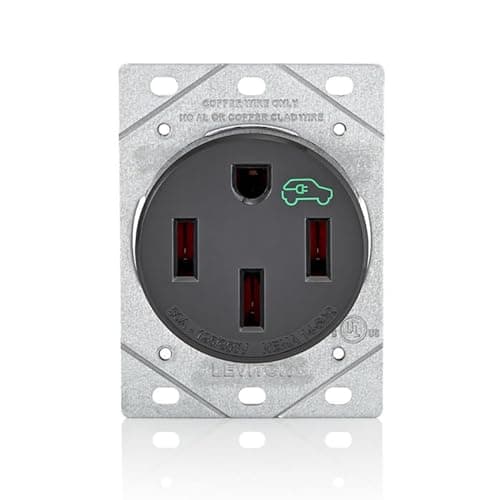
The dedicated EV-rated receptacle
Leviton 1450R EV Receptacle
The receptacle Leviton built specifically for EV charging - rated for the long charge sessions and constant plug cycles a home charger puts a range outlet through, from a brand electricians already trust.
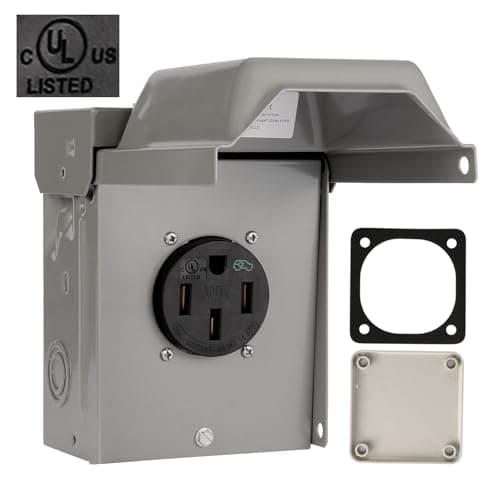
A surface-mount or outdoor install
Wayona 50A NEMA 14-50 Outlet Box
An all-in-one weatherproof outlet box - an EV-grade 14-50R receptacle inside an ETL-listed, lockable NEMA 3R metal enclosure - for mounting on exposed conduit or an outdoor wall where a recessed box is not an option.
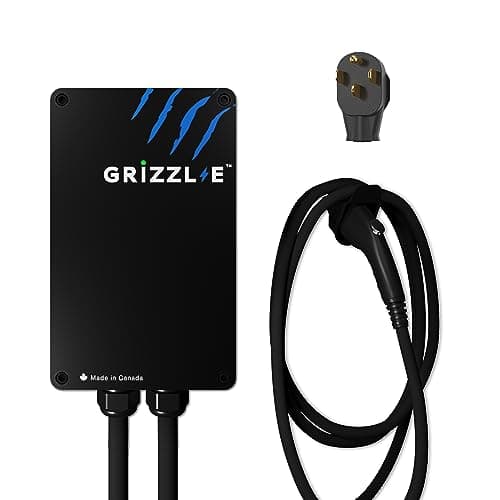
People who want a charger, not an app
Grizzl-E Classic (40A)
A UL-certified cast-aluminum box with no app to update and nothing in the cloud to fail — the durability default for people who want a charger, not a gadget.
#ad · As an Amazon Associate we earn from qualifying purchases.
Questions
Frequently asked
What should I rough in for an EV charger on a new house?
A dedicated 240-volt circuit of at least 50 amps in 3/4-inch conduit, terminated in a NEMA 14-50 receptacle on the garage wall closest to where the car's charge port will be, plus spare breaker spaces and one empty raceway with pull string to the opposite bay or exterior wall. That covers every charger you are likely to buy.
Should I rough in for 50 amps or 60 amps?
Sixty if the panel can spare it. A 50-amp circuit supports a 40-amp charger, a 60-amp circuit supports a 48-amp charger, and the extra capacity is nearly free while the walls are open. See 40 amps vs 48 amps for what the difference actually buys you.
Do I need to buy the charger before the electrician roughs in?
No, and you should not feel pushed into it. Rough-in is about the circuit, the raceway and the box. If you terminate in a 14-50 receptacle you can plug in almost any Level 2 charger later, or remove the receptacle and hardwire a 48-amp unit without touching the wall.
Does the 2023 NEC require an EV circuit in a new home?
The NEC governs how an EV circuit is built rather than mandating one in every dwelling; whether your jurisdiction requires EV-ready provisions comes from the local building code or energy code adopted on top of it. Ask your builder which code cycle your permit is under - and specify the circuit regardless, because it is cheap now.
Can I put two chargers on one roughed-in circuit?
Under the 2023 NEC, yes, where an energy management system or the chargers' own adjustable settings hold the combined load within the circuit's rating. That is the code basis for load-sharing hardware - two EV chargers in one garage walks through the options and best dual-port chargers ranks the one-box route.
Keep reading
Related
- EV charger conduit size and typeSizing the raceway you are about to have buried in a wall.
- EV charger installation costWhat the same work costs once the drywall is up.
- Permits and inspectionThe paperwork that runs alongside a rough-in.
- Best NEMA 14-50 outletsThe one line item at rough-in where paying up is clearly right.
More in this section
More Charging Guides
Receipts
Sources
- Leviton Captain Code - NEC 2023 sections 625.40, 625.42(A)(B) and 625.43 (each outlet supplying EVSE over 16 amperes or 120 volts is supplied by an individual branch circuit; 625.42 permits multiple EVSE on one circuit under an energy management system or adjustable settings)
- EC&M - NEC requirements for EV equipment (Article 625: EVSE is a continuous load, so the branch-circuit conductors and overcurrent device are sized at not less than 125 percent of the maximum load)
- EC&M - five ways the 2023 NEC is impacting the electrified home (the dwelling-unit changes behind EV, storage and service-capacity work)
- Conduit Fill Tool - what size conduit for a 50-amp EV charger (two 6 AWG THHN conductors plus a 10 AWG ground fit a minimum 3/4 inch EMT, Schedule 40 or 80 PVC, RMC or LFMC at the NEC 40 percent fill limit)
- US DOE AFDC - charging an electric vehicle at home
- US DOE / fueleconomy.gov - EV charging basics (Level 1, Level 2 and DC fast charging)
- Intertek - UL 2594 testing and certification for electric vehicle supply equipment
- United Chargers - Grizzl-E Classic (40A adjustable via internal dial, UL certified, NEMA 14-50 plug, cast aluminum)
We do not run a testing lab, and we do not pretend to. Where a measured number came from someone else's lab, we name them and link them. Where we could not verify something, we say so on the page rather than quietly leaving it out. Read our full method.