HUB 03 · Charging Guides
Does Home Insurance Cover an EV Charger?
Usually yes if it is bolted to the house, usually your auto policy if it lives in the trunk - and in both cases the install paperwork decides how the conversation goes.
We earn a commission when you buy through our Amazon links, at no extra cost to you. It never affects our rankings, and we say so when the cheaper product is the better buy. How this works.
A permanently installed wall charger is generally treated as part of your dwelling and covered by your homeowners policy against the perils the policy already names - fire, storm, vandalism - subject to your deductible. A portable cordset is generally treated as car equipment and falls under comprehensive auto coverage instead. The thing most likely to break that is the install: published insurance guidance warns that you may not be covered if a licensed electrician did not install the charging station. Nothing here is a substitute for reading your own policy or calling your agent, because insurers define this equipment differently and the definition is what decides a claim.
This question lands late, usually right after someone has priced the install and noticed they are about to attach a few thousand dollars of equipment and a 50-amp circuit to their house. It is a sensible moment to ask. Here is how the coverage actually sorts out, and the short list of things to do before you need it.
Which policy, by where the charger lives
| The charger | Usually covered under | Why |
|---|---|---|
| Hardwired on an attached garage or house wall | Homeowners - dwelling coverage | It is a permanent fixture of the structure |
| Installed in a detached garage or carport | Homeowners - other structures coverage | A separate coverage with its own limit, often a percentage of the dwelling limit |
| Plug-in wall unit on a 14-50 outlet | Varies - dwelling or personal property | Mounted and semi-permanent but removable, so it depends on how your insurer defines it |
| Portable cordset kept in the car | Auto - comprehensive coverage | Treated as car equipment rather than a home fixture |
That third row is the ambiguous one, and it is the most common install in America. A plug-in charger hanging on a bracket is physically removable, which is exactly why it might be read as personal property rather than part of the dwelling. If your charger is a plug-in unit, this is the sentence to ask your agent about specifically.
The two things that cause a denied claim
1. An unlicensed or unpermitted install
This is the one that comes up in every insurer explainer, and it is worth taking literally. An EV circuit is a 40-to-48-amp continuous load - the National Electrical Code requires the circuit to be sized at 125 percent of it for that reason - run to a device bolted to an attached structure. If the work was not done by a licensed electrician and signed off, an adjuster has an obvious and defensible question to ask about the cause of a fire.
So: use a licensed electrician, pull the permit, pass the inspection, and keep both documents with the receipt. Our permit and inspection guide covers the process, and can I install an EV charger myself is honest that the answer in many jurisdictions is legally yes and practically unwise - insurance being one of the main reasons.
2. Equipment with no safety listing
A charger listed by a Nationally Recognized Testing Laboratory to UL 2594 - a UL mark or an ETL mark both qualify - is third-party evidence that the device was built and tested for this duty. Unlisted equipment is not. It is the cheapest risk to eliminate on the whole project, and our UL-listed roundup and are cheap EV chargers safe cover how to verify a mark instead of believing a product bullet.
What a policy typically will not pay for
Coverage responds to sudden, accidental damage from a named peril. The usual exclusions on equipment like this are:
- Mechanical or electrical breakdown. A charger that simply fails is a warranty matter, not an insurance one - which is why the terms are worth comparing before you buy; our warranty comparison lays out who covers what for how long.
- Wear and tear, and freezing. Years of cable flexing and a cord left in the snow are maintenance, not perils. EV charger maintenance and care is the cheap preventative.
- Manufacturer defect or negligence.That is the manufacturer's liability.
- Improper installation or misuse. See above.
There is also a liability dimension people miss. If a visitor trips over a charging cable across your driveway, that is a liability question rather than a property one - and it is a good argument for a holster and a cable hook rather than a cord on the ground. If you rent the property out, the stakes change again, and chargers for rental properties is written for that reader.
Will installing a charger raise my premium?
Usually not meaningfully by itself, but it can change your coverage arithmetic in two ways worth raising with your insurer. First, you have added a few thousand dollars of equipment and electrical work to the property, which may matter against your dwelling limit - the same conversation you would have after adding solar. Second, if the unit sits in a detached garage, the relevant limit is the other-structures one, which is often a modest percentage of the dwelling limit and may already be committed.
Tell them you installed it. An undisclosed improvement is the easiest thing in the world for an adjuster to find after the fact. And if you are weighing the project as a whole, our does an EV charger increase home value guide looks at the other side of the ledger.
The five-minute checklist
- Buy a charger with a verifiable UL or ETL listing to UL 2594.
- Have a licensed electrician install it, on a permit, and keep the inspection record.
- Keep the receipt, the permit and the electrician's invoice together.
- Tell your insurer, and ask specifically how they classify your unit.
- If it is in a detached structure, ask what your other-structures limit is and whether it is enough.
Do those five and the insurance question stops being a risk. The picks below are the pieces that make the first item easy: three chargers whose listings are verifiable, and the EV-rated receptacle that is the real weak point in a plug-in install.
What to look for, specifically
| Requirement | What it looks like in practice |
|---|---|
| NRTL safety listing | A UL or ETL mark, to UL 2594, that you can confirm on the manufacturer's own page and not only in a listing bullet |
| Enclosure rating matched to location | NEMA 4 / 4X or IP65 and above if it is not under cover. Using an indoor-rated unit outdoors is a documented misuse |
| A permitted install | A licensed electrician, a permit number, a passed inspection |
| An EV-rated receptacle, if plug-in | An industrial-grade or EV-specific 14-50R, not a builder-grade range outlet |
| Documentation you can find | Receipt, permit, invoice, and the model and serial number photographed |
The gear
Recommended gear for this guide
The products this guide refers to, with prices pulled live from Amazon and dated on each card.
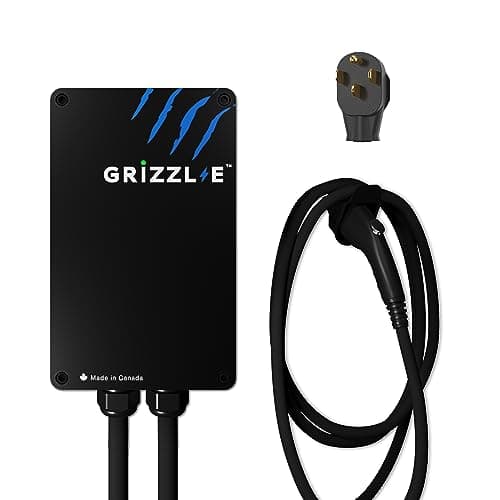
People who want a charger, not an app
Grizzl-E Classic (40A)
A UL-certified cast-aluminum box with no app to update and nothing in the cloud to fail — the durability default for people who want a charger, not a gadget.
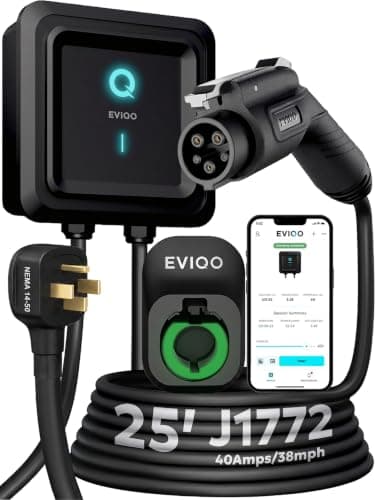
Budget buyers who still want smart features
EVIQO Level 2 (40A)
A double-listed (UL and ETL), IP66-weatherproof smart charger that keeps landing at the bottom of the price band — a lot of certified hardware for the money.
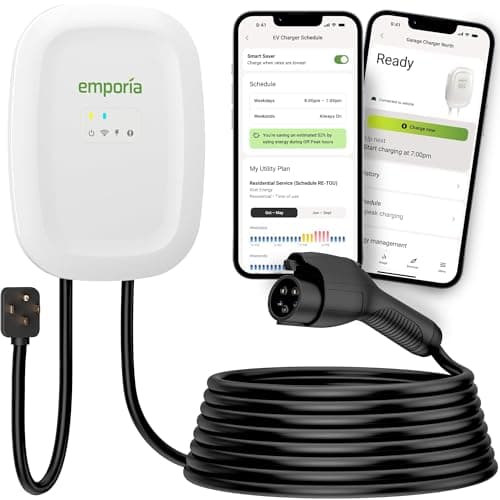
Most homes that want speed and smarts
Emporia Level 2 (48A)
The charger that refuses to charge you extra for being smart: full 48-amp speed and real energy monitoring at roughly the price of a plain plug-in box.
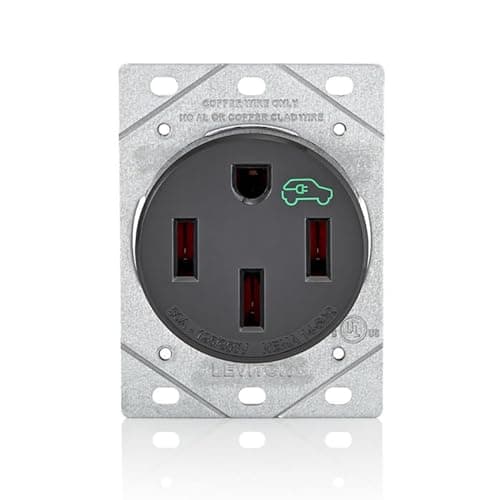
The dedicated EV-rated receptacle
Leviton 1450R EV Receptacle
The receptacle Leviton built specifically for EV charging - rated for the long charge sessions and constant plug cycles a home charger puts a range outlet through, from a brand electricians already trust.
#ad · As an Amazon Associate we earn from qualifying purchases.
Questions
Frequently asked
Is a home EV charger covered by homeowners insurance?
A hard-wired charger is generally treated as part of your dwelling and covered against the perils your policy names, subject to the deductible. A charger in a detached garage typically falls under other-structures coverage, and a portable cordset kept in the car is usually a comprehensive auto matter. Definitions vary between insurers, so confirm yours.
Does a DIY EV charger install void my home insurance?
It can. Published insurance guidance states plainly that you may not be covered if a licensed electrician did not install the charging station, and improper installation is a standard exclusion. If the charger is already in and you did it yourself, having it inspected and documented is the cheapest way to fix the exposure.
Do I need to tell my insurer I installed an EV charger?
Yes - tell them. You have added equipment and electrical work to the property, and an undisclosed improvement is an easy thing for an adjuster to find later. It is also the moment to ask the one question that matters: how do you classify my unit, dwelling or personal property?
Is a portable EV charger covered by home or auto insurance?
Usually auto. Standard home policies often exclude car accessories, and a cordset that lives in the trunk is treated as one, so comprehensive coverage on the vehicle is the usual path. If the same cordset is permanently mounted in the garage, ask - that is the case where the answer can go either way.
Does insurance cover an EV charger that just stops working?
No. Mechanical and electrical breakdown is a standard exclusion; a unit that fails on its own is a warranty claim. That makes the warranty term worth checking before purchase - see EV charger warranties compared.
Keep reading
Related
- EV charger warranties comparedThe policy that covers the failures insurance will not.
- Permits and inspectionThe paperwork that protects both the warranty and the claim.
- Can I install an EV charger myself?Why the legal answer and the sensible answer differ here.
- Does an EV charger increase home value?The other side of the ledger on the same install.
More in this section
More Charging Guides
Receipts
Sources
- SmartFinancial - does homeowners insurance cover charging stations (a hard-wired station is "considered a part of your dwelling"; portable chargers are "almost always covered by comprehensive auto insurance"; "You may not be covered by homeowners insurance if a licensed electrician did not install the charging station")
- Liberty Mutual - EV battery and charging equipment: what insurance covers (an insurer's own explainer on home charging equipment and auto-policy coverage)
- Freeway Insurance - does home insurance cover solar panels, smart homes and EV chargers (how eco-home upgrades are classified under dwelling, other structures and personal property)
- EC&M - NEC requirements for EV equipment (Article 625: EVSE is a continuous load, so the branch-circuit conductors and overcurrent device are sized at not less than 125 percent of the maximum load)
- Intertek - UL 2594 testing and certification for electric vehicle supply equipment
- Intertek - the ETL Listed Mark and OSHA Nationally Recognized Testing Laboratory (NRTL) status
- United Chargers - Grizzl-E Classic (40A adjustable via internal dial, UL certified, NEMA 14-50 plug, cast aluminum)
- EVIQO - Level 2 EV chargers (40A, UL and ETL listed, IP66 / NEMA 4)
- Emporia - adjusting the amperage / charge rate on your EV charger
We do not run a testing lab, and we do not pretend to. Where a measured number came from someone else's lab, we name them and link them. Where we could not verify something, we say so on the page rather than quietly leaving it out. Read our full method.